Home Blog Page 27

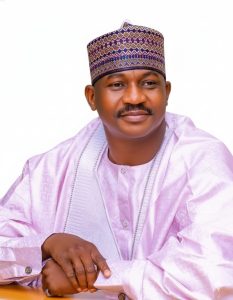
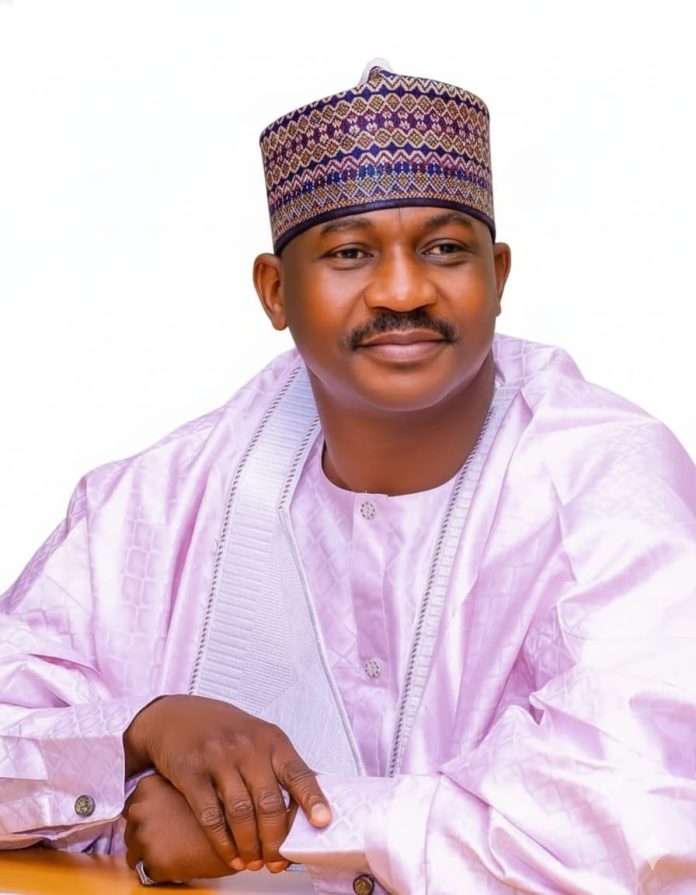
Power Within the Movement: Abba Kabir Yusuf and the Ideology of Loyalty Over Ambition

By Abdulkadir A. Ibrahim, FNGE., (Kwakwatawa)

Politics is not merely the contest of power; it is the discipline of choice. It is a terrain where patience is tested, loyalty is strained, and leadership is measured not by noise but by consequence. Within this demanding landscape, the delayed defection of Governor Abba Kabir Yusuf did not arise from indecision, opportunism, or personal ambition. It emerged from a deliberate and sustained attempt to align loyalty with strategy, principle with progress, and mentorship with the realities of governance.

From the very beginning, Abba Kabir Yusuf’s political life has been defined by obedience and restraint. His rise was neither abrupt nor rebellious. He stood firmly within the shadow of his political mentor, Senator Rabi’u Musa Kwankwaso, absorbing the culture of movement politics where discipline outweighs impulse and structure takes precedence over personal will. Even as governor of Kano, one of Nigeria’s most politically significant states, Abba remained ideologically grounded in the belief that leadership must not outgrow loyalty.

Yet politics evolves, and governance confronts leaders with questions that ideology alone cannot answer.

Governor Abba’s delay in defecting to the APC was rooted in a singular objective: he wanted Kano’s political realignment to be collective, dignified, and anchored around his mentor. On several occasions, he made deliberate and quiet efforts to soften Kwankwaso’s stance, urging him to look beyond rigid demands and toward the broader possibilities of national alignment. Abba understood what many pretended not to see: that Kwankwaso’s value within Nigerian politics was already established and did not require transactional bargaining to be affirmed.

In this pursuit, Abba became more than a governor; he became a bridge. His travels, both local and international, were not personal adventures but diplomatic missions. The planned meeting in France, the subsequent engagement attempts in the UAE, and the eventual discussion with President Bola Ahmed Tinubu in Abuja were all part of a calculated effort to create neutral ground for dialogue. Each step reflected Abba’s belief that reconciliation must be pursued persistently, even when outcomes are uncertain.

It is no longer a secret that political restructuring within the APC, including the removal of Dr Abdullahi Umar Ganduje as National Chairman, was widely interpreted as an opening gesture toward Kwankwaso. The intention was clear: to create space, reduce friction, and encourage reintegration. Yet, despite the overtures, the response remained distant. Even when a direct meeting between President Tinubu and Kwankwaso was proposed after Abba’s engagement with the President, it was deliberately declined.

At the heart of the impasse was rigidity. The insistence that any return to the APC must be predicated on a vice-presidential ticket revealed a fundamental misreading of political timing.

While Kwankwaso remains charismatic, influential, and a proven crowd mobilizer, succession politics is not dictated by entitlement but by alignment, trust, and gradual consensus. Abba saw this clearly and tried repeatedly to counsel moderation, patience, and realism.

Throughout this period, Abba Kabir Yusuf endured silently. He absorbed political marginalization within his own movement without public complaint. He exercised little to no influence over party structures, candidate selection, or even local government political arrangements. Yet, despite these constraints, he never uttered a single negative word against his mentor. On the contrary, he publicly warned commentators and social media actors against disparaging Kwankwaso. This was not weakness; it was character.

However, governance eventually demands a reckoning.

Kano State could no longer afford political isolation. Development, security, infrastructure, and economic revival require synergy with the centre. The cost of standing apart had become too visible to ignore. The Wuju-Wuju road project stands as a powerful symbol of this reality. Conceived during Kwankwaso’s tenure at an estimated cost of about five billion naira, the project languished for years in abandonment. Today, through federal intervention, the same project is being revived at a staggering cost of forty six billion naira. This is not merely inflation; it is the price of delay, distance, anddoel disconnection.

For Abba Kabir Yusuf, this was the turning point. Kano first ceased to be a slogan and became a moral imperative. Development cannot be sentimental. Security cannot be postponed. Governance cannot wait for perfect alignment when the people are paying the price of political stasis. His defection to the APC, therefore, was not a rejection of loyalty but an expansion of responsibility.

Even in switching paths, Abba remained faithful to his values. He left without insults, without bitterness, without revisionist attacks on his past. His silence spoke louder than justification. It reflected a leader who understands that respect does not end where agreement fails. That is humble AKY for you. Gentle and Courteous.

In the final reckoning, politics must answer to morality, and morality must answer to consequence. Leadership is not validated by how long one waits, but by when one chooses to act. Governor Abba Kabir Yusuf’s decision reflects a timeless truth: when loyalty begins to delay collective progress, conscience must intervene. Kano’s future could not remain hostage to prolonged negotiations or rigid postures, no matter how noble their origins.

History is unkind to leaders who confuse patience with prudence. It remembers instead those who understood that power is a means, not an inheritance, and alignment is not surrender when it unlocks development, security, and dignity for the people. Abba’s choice affirms that governance is a trust, one that demands difficult decisions taken in humility and restraint.

In choosing Kano first, prioritising peace, unity and the progress of the people over comfort, action above endless persuasion, and responsibility than loyalty, Abba Kabir Yusuf has placed himself on the harder side of leadership. And it is often on that harder side that the future is quietly secured.

𝘼𝙗𝙙𝙪𝙡𝙠𝙖𝙙𝙞𝙧 (𝙖𝙠𝙖 𝙆𝙬𝙖𝙠𝙬𝙖𝙩𝙖𝙬𝙖) 𝙖 𝙁𝙚𝙡𝙡𝙤𝙬 𝙤𝙛 𝙉𝙞𝙜𝙚𝙧𝙞𝙖𝙣 𝙂𝙪𝙞𝙡𝙙 𝙤𝙛 𝙀𝙙𝙞𝙩𝙤𝙧𝙨, 𝙁𝙉𝙂𝙀, 𝙞𝙨 𝙖 𝙑𝙚𝙩𝙚𝙧𝙖𝙣 𝙅𝙤𝙪𝙧𝙣𝙖𝙡𝙞𝙨𝙩 𝙖𝙣𝙙 𝙋𝙪𝙗𝙡𝙞𝙘 𝘼𝙛𝙛𝙖𝙞𝙧𝙨 𝘼𝙣𝙖𝙡𝙮𝙨𝙩. 𝙃𝙚 𝙬𝙧𝙤𝙩𝙚 𝙛𝙧𝙤𝙢 𝙆𝙖𝙣𝙤 𝘾𝙞𝙩𝙮.
NUJ Seeks Partnership With Sokoto LG Ministry On Capacity Building For Information Officers

The Nigeria Union of Journalists (NUJ), Sokoto State Council, has formally sought a partnership with the state Ministry for Local Government and Chieftaincy Affairs on capacity building for local government information officers, aimed at strengthening grassroots communication and improving information dissemination across Sokoto State.

The move was disclosed on Wednesday when the NUJ State Executive Council, led by its Chairman, Usman Mohammed Binji, paid a courtesy visit to the Commissioner for Local Government and Chieftaincy Affairs, Alhaji Ibrahim Dadi-Adare, in Sokoto.

Receiving the delegation, the Commissioner described journalists as critical stakeholders in governance, noting that their closeness to the grassroots makes them indispensable partners in development.

He said the administration of Governor Ahmed Aliyu has performed exceptionally well across key sectors, including education, health, construction of road networks, rural and urban water supply, provision of aesthetics in Sokoto metropolis, installation of street lights, among others.

According to him, these achievements reflect the Governor’s genuine commitment to improving the living standards of the people, particularly at the grassroots level.

“Governor Ahmed Aliyu is a man of principle who is genuinely committed to improving the living conditions of the people of Sokoto State.

“Meeting the needs of citizens at the grassroots has always been his priority, and we recognise the NUJ as a dependable partner in conveying government policies and programmes to the people,” he said.

Alhaji Dadi-Adare assured the union of the ministry’s readiness to collaborate with journalists to ensure wider publicity of government initiatives.

Earlier, NUJ Chairman, Usman Mohammed Binji, said the visit was aimed at seeking formal partnership with the ministry in the interest of strengthening grassroots communication.

He explained that the NUJ project tour had uncovered several underreported projects executed by the current administration, adding that Governor Ahmed Aliyu’s performance within a short period has exceeded public expectations.

Binji called on the ministry to grant the NUJ the opportunity to train local government information officers, stressing that such capacity building would enhance professionalism, improve the flow of information, and equip officers with the necessary skills to effectively publicise government policies and programmes.

He thanked the Commissioner for granting the union audience and assured him of the NUJ’s continued support and cooperation in promoting government activities across the state.

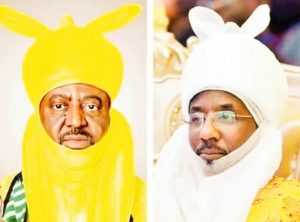
Kano Emirship Tussle Will Be Resolved Soon

Aminu Ado Bayero and Muhammadu Sanusi

The Kano Emirship tussle may finally be heading towards resolution, following Governor Abba Kabir Yusuf’s defection to the All Progressives Congress (APC).

The Commissioner for Information and Internal Affairs, Ibrahim Abdullahi Waiya, hinted this while speaking on a radio programme.

He said the state government had put concrete measures in place to restore lasting peace and stability, hinting that the “two emirs” stalemate was nearing its conclusion.

For nearly two years, Kano has been trapped in a deadlock as Emir Muhammadu Sanusi II and Emir Aminu Ado Bayero have been respectively laying claim to the throne.

While Sanusi has been operating from the main Gidan Rumfa palace, Ado Bayero has remained at the Nassarawa mini-palace.

Speaking on Muhasa, a local radio station in Kano, Waiya suggested that the political “unification” of the state and federal governments under the APC had removed the primary obstacles to a peaceful settlement.

“I assure you that very soon, the Kano government will resolve the dispute over the Kano Emirate, because we are now one,” he declared.

He further hinted that the contenders themselves might play a role in the resolution, noting that “it is possible that some will step down from the throne on their own, or others will seek reconciliation because a mutual understanding has been reached.”

The commissioner emphasised that the administration is committed to dialogue with all stakeholders, stressing that the matter would not be allowed to generate tension or hinder governance.

“Our approach is guided by respect for the rule of law, traditional institutions, and the collective interests of the people of Kano State,” he said.


Gov. Aliyu’s Security Adviser Turbanned  As Sadaukin Gwadabawa

From Abubakar Awwal

The Sarkin Gobir Gwadabawa, His Royal Highness Alhaji (Dr.) Lawal Zayyana, has turbaned the Special Adviser to the Governor of Sokoto State on Security Matters, Colonel Ahmed Usman (retd), as the Sadaukin Gwadabawa.

The colourful turbaning ceremony, held over the weekend at the palace of the Sarkin Gobir Gwadabawa in Gwadabawa Local Government Area, drew a large gathering of dignitaries from across the country.

In attendance were traditional rulers, serving and retired senior military officers, heads of security agencies, lawmakers, political appointees and community leaders.

Governor Ahmed Aliyu, who was represented by the Commissioner for Interior, Hon. Isa Muhammad Tambagarka, expressed appreciation to the Gwadabawa District for honouring some of its distinguished sons with traditional titles.

He explained that the Governor would have attended the ceremony personally but for the exigencies of official duties.

The Governor urged the newly installed title holders to rededicate themselves to the service and development of their people and the district, while praying for Allah’s guidance in the discharge of their responsibilities.

In his remarks, the Sarkin Gobir Gwadabawa said the conferment of the title of Sadauki was based on merit, outstanding achievements, proven integrity and commitment to the development of Gwadabawa District.

He noted that Colonel Ahmed Usman was selected in recognition of his impressive track record and dedication to public service.

The monarch advised the new Sadauki to always consult widely before taking decisions and to serve as a worthy ambassador of the district.

Also speaking, the Chairman of Gwadabawa Local Government Council described Colonel Usman as a people-oriented leader who has consistently supported community development.

He highlighted his contributions to youth and women empowerment, as well as his responsiveness to security challenges in the area.

On behalf of Special Advisers in the state, the Chairman of the SAs Forum, Hon. Sunusi Tukur Faru, said the title of Sadauki is traditionally reserved for individuals who are brave, dedicated and deeply committed to service, adding that the honour was well deserved.

The Majority Leader of the Sokoto State House of Assembly, Bello Idris Gwadabawa, also praised the celebrant, describing him as resilient, disciplined and committed to duty.
Similarly, the Emir of Kaura Namoda, Dr. Sanusi Mohammad, recalled his long association with Colonel Usman during their years in the Nigerian Army, noting that he distinguished himself as a disciplined and hardworking officer. He prayed for Allah’s continued guidance and success in his new role.

In his acceptance speech, Colonel Ahmed Usman expressed gratitude to Almighty Allah, the Sarkin Gobir Gwadabawa and the people of the district for the honour and confidence reposed in him.

He pledged to justify the title by redoubling his efforts towards the development of Gwadabawa District, Sokoto State and the nation at large.

He also appealed for continued prayers, guidance and support, assuring the people of his readiness to learn and serve.

Dignitaries at the ceremony included representatives of the APC leader in the state, Senator Aliyu Magatakarda Wamakko; former Deputy Governor of Sokoto State, Alhaji Chiso Dattijo; serving and retired senior officers of the Nigerian Army; district heads of Kware and Isa; members of the Sokoto State House of Assembly and other notable personalities.

Serious Journalism Is Not Harshness: Understanding Madina Maishanu’s Interview Style


By Muhammd Gazali

In recent times, some viewers have described BBC Hausa journalist Madina Maishanu as “too harsh” during interviews with high-profile personalities. This perception, however, requires a clearer and more informed understanding of what professional journalism truly entails.

Madina Maishanu’s interview style reflects the core values of responsible journalism—firmness, neutrality, clarity, and accountability. When journalists engage public office holders or influential figures on serious national issues, their duty is not to entertain or appease, but to ask the questions the public deserves answers to.

Her calm facial expression, direct eye contact, and pointed questioning are not signs of hostility. Rather, they demonstrate discipline, preparation, and respect for the seriousness of the subject matter. Sensitive and consequential issues demand a serious tone. Excessive friendliness, smiles, or emotional reactions in such settings can trivialize the discussion and weaken its impact.

It is also important to note that Madina’s approach aligns with international broadcast standards, particularly those of the BBC, where professionalism and impartiality are fundamental. Asking tough questions respectfully is not an act of disrespect; it is the essence of accountability in journalism.

Often, the label of “harshness” arises when public figures are confronted with uncomfortable truths. In such cases, the issue is not the journalist’s tone, but the discomfort of scrutiny. A composed, firm interviewer helps keep the focus on facts, not personalities.

Madina Maishanu exemplifies a form of journalism that understands that respect does not mean softness, and courtesy does not require avoidance of difficult questions. Her style reinforces public confidence in journalism as a tool for truth, balance, and responsibility.

At a time when misinformation and superficial reporting are widespread, such professionalism should be understood, protected, and appreciated—not misinterpreted.

Muhammad Gazali
Former Editor, ThePath Newspaper, Sokoto.

Police Intercept Vehicle With 954 Explosives In Zamfara


The Zamfara State Police Command has stopped a vehicle carrying 954 explosive materials suspected to be intended for bandits operating in the state.

This was disclosed by the state police command spokesperson, Yazid Abubakar, on Wednesday, adding that the driver of the vehicle, Mustapha Mohammad, had been arrested.

Abubakar said operatives of the Task Force on Illegal Mining, acting on credible intelligence, carried out the operation.

The statement reads, “On January 27, 2026, at about 4:15 p.m., operatives of the Task Force on Illegal Mining, led by ASP Aminu Aliyu, acting on credible and actionable intelligence, conducted a successful operation which resulted in the arrest of a suspect in connection with the unlawful possession of suspected explosive materials.

“The suspect, a 38-year-old man, was arrested while driving a Toyota Corolla with registration number KUJ 933 EJ. A search of the vehicle led to the recovery of 954 pieces of suspected explosives concealed in polyethene bags.

“Preliminary investigations suggest the items were to be used by bandits for the manufacture of improvised explosive devices.”

Abubakar said the suspect remains in custody, while the recovered exhibits have been handed over to the Police Explosive Ordinance Disposal Unit for safekeeping and further analysis.

He added that investigations were ongoing to determine the source, destination, and intended use of the explosives, as well as identify any accomplices.

“Further developments will be communicated as the investigation progresses,” he said.

APC Inaugurates 23 LG Renewed Hope Ambassadors In Sokoto

The All Progressives Congress (APC) in Sokoto State has inaugurated 23 local government coordinators to serve as ambassadors of President Bola Ahmed Tinubu’s Renewed Hope Agenda in the state.

The state coordinator of the Renewed Hope Ambassadors, Alhaji Haruna Adiya, who Inaugurated them , described the event as a pivotal moment in the collective journey towards a brighter future for Nigeria.

Alhaji Adiya urged the coordinators to uphold the values of integrity, transparency and selfless service and to embrace their responsibilities with passion and dedication.

“Your efforts will be instrumental in driving grassroots development, promoting social cohesion, and supporting government initiatives at both the federal and state levels for a better Nigeria.

“As we embark on this new chapter, I charge you to serve as torchbearers of hope, unity, and progress in your respective local governments,” Alhaji Adiya said.

He emphasised that the coordinators’ role was crucial in spreading the message of Renewed Hope and mobilising citizens towards collective action for national development.

According to him, Mr Tinubu’s administration is working tirelessly to reposition Nigeria through impactful reforms.

He said, “These include the unification of foreign exchange rates, reduction of inflation to manageable levels, fiscal deficit reduction, and increased national revenue generation.”

Alhaji Adiya stated that the federal government had also recorded significant achievements in infrastructure development, road networks, education, digital skills acquisition, electricity supply, social interventions, and healthcare, among other sectors.

He called on the residents of the state to support the ambassadors and renew their hope, stressing that the president is committed to rebuilding the nation and creating a brighter future for all Nigerians.

Earlier in his remarks, Sokoto State APC chairman Hon. Isah Sadiq-Achida conveyed the congratulations of Senator Aliyu Wamakko and Governor Ahmed Aliyu to the newly inaugurated coordinators.

Hon. Achida assured them of the party’s resolve to support their activities and ensure the success of their assignments, noting that the appointees were well-suited for the task.

Also speaking, a former member of the House of Representatives and executive secretary of the Nigeria Extractive Industries Transparency Initiative (NEITI), Musa S. Adar, called on the coordinators to discharge their duties with trust and dedication.

Hon. Adar, who serves as the Gada Local Government coordinator, has on behalf of his colleagues, pledged to work diligently for the success of the APC.

The inaugurated coordinators included former and serving members of the National Assembly, Commissioners, and other prominent politicians.

PWA Expresses Gratitude to Governor Aliyu for Continued Support

Gov. Ahmed Aliyu, Sokoto State

From Faruk Umar

Gov. Ahmed Aliyu, Sokoto State

The Management of the Sokoto State Pilgrims Welfare Agency (PWA) has commended the Executive Governor of Sokoto State, His Excellency Dr. Ahmad Aliyu Sokoto, FCNA, for his continuous support to the Agency and the welfare of Sokoto State pilgrims.

The commendation was made on Tuesday by the Chairman of the Agency, Alhaji Aliyu Musa alongside Permanent Secretary of the Agency Alhaji Ibrahim Umar JJ, when he led members of the management staff on an inspection visit to the ongoing reconstruction of the Agency’s headquarters.

According to a press release by the Agency’s head of information and communications, Faruk Umar, the Chairman revealed that since the assumption of office by Governor Ahmad Aliyu Sokoto, the welfare of pilgrims has been accorded top priority.

Alhaji Musa Aliyu highlighted several landmark interventions by the Governor, including the total renovation of the Aliyu Magatakarda Hajj Transit Camp, the provision of an annual Sallah welfare package of 1,000 Saudi Riyals to pilgrims during Hajj, as well as other numerous welfare initiatives aimed at improving the comfort and well-being of pilgrims.

According to the Chairman, these interventions reflect the Governor’s commitment to ensuring efficient service delivery and enhanced welfare for pilgrims from Sokoto State.

Earlier, the contractor handling the reconstruction project, Engineer Jafar Jega, assured the Agency that the project would be executed strictly in line with approved specifications and completed within the agreed timeframe.


REVIVAL OF SOKOTO CALIPHATE’S RICH CULTURE AND HISTORICAL SITES

By SANI UMAR

The decision of the Sokoto State Government to revive the rich cultural heritage and historical sites that formed the nucleus of the Sokoto Caliphate is both timely and commendable. It reflects a conscious effort to reconnect the present with a past that shaped not only Sokoto, but large parts of Northern Nigeria and West Africa.

Since assuming office, the current administration has worked deliberately to restore Sokoto’s image and reinforce its historical relevance as envisioned by the founding fathers of the Caliphate, led by the legendary Sheikh Usmanu Danfodio. A renowned reformer and scholar, Danfodio’s intellectual and spiritual influence transcended geographical boundaries, establishing Sokoto as a centre of Islamic learning, moral revival, and responsible leadership whose impact spread across West Africa and beyond.

Building on this enduring legacy and restoring the Caliphate’s influence as a stabilising force in national cohesion is therefore a significant step toward repositioning Sokoto in Nigeria’s socio-political and cultural landscape. The revival of historical sites is not merely an act of preservation, it is a reaffirmation of identity and a bridge between generations.

As the historic centre of leadership and Islamic jurisprudence, Sokoto’s evolution cannot be separated from the memory of its past. Reviving its monuments, traditions, and cultural symbols is consistent with the noble heritage bequeathed by Sheikh Usmanu Danfodio and reinforces Sokoto’s enduring role as a beacon of scholarship, morality, and unity.

In line with this vision, the Sokoto State Government has announced plans to revive historical sites across the state as part of broader efforts to strengthen the tourism sector and enhance revenue generation.

Governor Ahmad Aliyu who made this heartwarming disclosure, explained that the decision was informed by Sokoto’s status as the seat of the Caliphate, which is home to numerous historical monuments and artefacts, many of which predate the jihad period and deserve preservation for future generations.

“The revival and improvement of these historical sites will preserve the rich history of the Caliphate and its founders, while also providing a conducive environment for tourists, scholars, and researchers,” the Governor said.

The administration further revealed plans to engage the Federal Government in a closer partnership focused on the restoration and preservation of historical monuments across the state. This approach, according to the government, will leverage collective resources to safeguard heritage sites and unlock their tourism and economic potential.

Stakeholders overseeing these sites have equally been mandated to commence the development of a detailed roadmap for their rehabilitation and long-term sustainability.

Present day Sokoto hosts several important historical locations, including Hubbaren Shehu, Hubbaren Muhammadu Fodiyo in Degel, Tabkin Kwato, Alkalawa, and Surame, among others. These sites serve as enduring symbols of the Caliphate’s formative years and its contributions to scholarship, governance, and social reform.

Observers note that transforming these locations into well developed tourist destinations through effective collaboration between the Federal and State Governments could significantly boost internally generated revenue, create employment opportunities, and strengthen Sokoto’s position as a leading cultural and religious tourism hub in Nigeria.

Beyond economic benefits, the revival of these historical sites is widely seen as a strategic move to preserve identity, promote unity, and educate younger generations about the values of discipline, knowledge, and service that defined the Sokoto Caliphate.

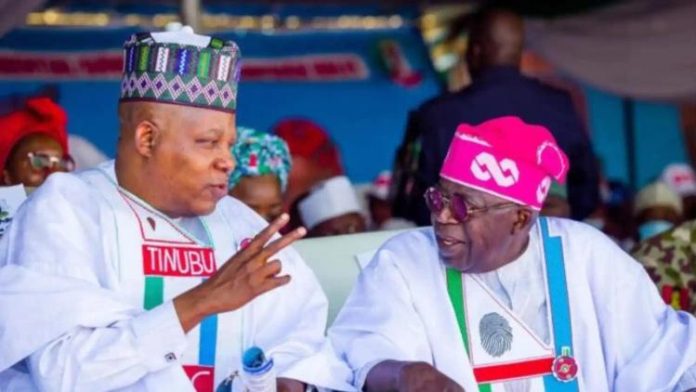
2027 Elections: No Plan To Replace Shettima As Tinubu’s Running Mate -APC

Shettima and Tinubu

The All Progressives Congress, APC, has dismissed as false and baseless reports suggesting a possible replacement of Vice President Kashim Shettima as President Bola Tinubu’s running mate ahead of the 2027 general elections.

Shettima and Tinubu

This was disclosed in a statement signed by the APC National Publicity Secretary, Felix Morka.

The party said it had observed a growing media speculation on the issue, noting that the rumours recently escalated with the circulation of names of alleged potential replacements for the Vice President.

“Our party states in categorical terms that the stories are purely speculative, untrue and utterly baseless,” the statement reads.

The APC urged media organisations to refrain from amplifying rumours from what it described as “mischievous news sources of questionable provenance”.

Morka noted that such reports were intended to promote discord and confusion in the polity.

The ruling party said the ban on political activities remains in force under existing laws and electoral regulations.

Morka said the party is focused on supporting Tinubu and Shettima in delivering the administration’s renewed hope agenda.

“At this time, our party remains focused on supporting President Bola Tinubu and Vice President Kashim Shettima in delivering the administration’s renewed hope agenda,” the statement added.

The APC said the administration’s reforms are steadily transforming the economy, building prosperity, and improving living conditions.

The party also cautioned ministers, senior government officials, and party leaders against fuelling unnecessary speculation.

The APC urged them to focus on diligent service and on bolstering the success of the Tinubu administration.


RECOMMENDED NEWS

POPULAR