Home Blog Page 28

RESTORING MODESTY IN MARRIAGE: THE SIGNIFICANCE OF SOKOTO GOVERNMENT’S ISLAMIC REFORM AGENDA

By Sani Umar

For many years, parents, Islamic scholars, and religious bodies across Northern Nigeria have raised deep concerns over the rising cost of marriage and the lavish ceremonies that now accompany what was once a simple and blessed union in Islam. Excessive bride price demands, extravagant wedding feasts, and ostentatious displays of wealth have placed unbearable pressure on young people, delayed marriages, and in many cases pushed society toward social vices that Islam strictly forbids.

These practices stand in clear contradiction to Islamic teachings, which encourage modesty, simplicity, and ease in marital unions. It is against this backdrop that the recent actions and pronouncements of the Sokoto State Government under Governor Ahmed Aliyu assume remarkable significance.

The announcement by Governor that his administration will tackle the problem of extravagant marriages and lavish ceremonies has been received with widespread approval as both timely and reassuring. The decision to bring together Islamic scholars and other relevant stakeholders on the matter further demonstrates the government’s proactive commitment to addressing social challenges that directly affect the well-being of citizens.

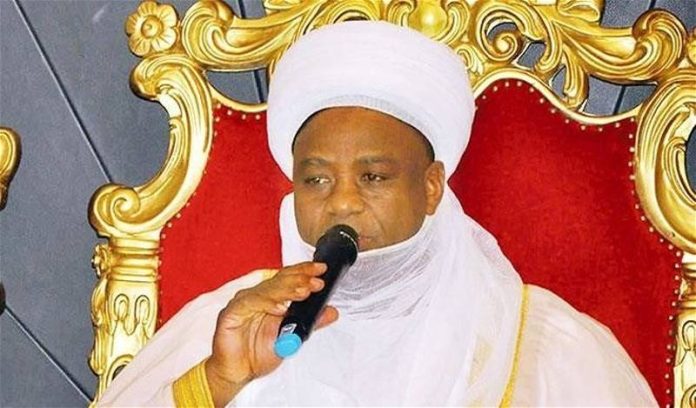
It is no wonder that the Sultan of Sokoto was point blank in his commendation of what Governor Ahmed Aliyu is focused on. Accordingly, the Sultan said, “Your policies and programmes on Islamic affairs speak volumes. You have followed the path of the founding fathers of the Sokoto Caliphate in Islamic propagation. Please keep it up.”

This is not merely ceremonial praise. It is a powerful endorsement of a governance approach that seeks to realign societal practices with authentic Islamic values. The government’s expanding investment in Islamic institutions, mosque construction, training of Imams and Mu’azzins, and engagement with Islamic scholars and preachers is a strategic foundation for moral and social reform.

By strengthening religious institutions and empowering Islamic educators, the state is creating credible platforms through which harmful cultural practices, including extravagant marriage ceremonies, can be addressed with authority and consistency.

The continuous commissioning of Jumu’ah mosques and training programmes for religious leaders is especially relevant. Imams and Islamic preachers are the moral compass of society. When they are organized, enlightened, and supported by government policy, they can effectively guide communities toward reforms that reduce the cost of marriage, discourage wasteful ceremonies, and promote Islamic moderation.

However, for such reforms to move beyond advocacy and become truly enforceable, a multi layered strategy is required.

First, government can collaborate with the Sultanate Council, Islamic scholars, and traditional institutions to develop unified guidelines on marriage practices, including limits on bride price demands, wedding feast expenditures, and unnecessary ceremonial additions. When such guidelines are endorsed by respected religious authorities, community acceptance becomes easier.

Beyond government action, the success of the law against extravagant and lavish weddings depends largely on community participation, particularly the roles of women, students’ Islamic organisations, and the Hisbah Board. Women’s groups and mothers’ associations can serve as powerful advocates for moderation by encouraging simple and affordable marriage ceremonies within families and neighbourhoods.

Students’ Islamic organisations, especially in tertiary institutions, can use sermons, campus lectures, and outreach programmes to promote Islamic teachings on modesty and responsible marriage, shaping attitudes among young people before harmful customs take root.

The Hisbah Board, as the moral enforcement institution of the state, is positioned to monitor compliance, mediate disputes, and provide guidance rather than punishment, ensuring that the law is implemented with wisdom, fairness, and community trust. Together, these groups form a social coalition capable of turning the policy from a legal directive into a shared moral responsibility.

Additionally, public sensitization through mosques, media, schools, and community gatherings will ensure that citizens understand that simplifying marriage is not a government imposition but a return to Islamic ideals.

In the same vein, community level enforcement mechanisms can be introduced. Traditional rulers, ward heads, and mosque committees can be empowered to mediate marriage arrangements and discourage violations of agreed standards. Social accountability within communities often proves more effective than legal sanctions.

Furthermore, the government can lead by example. Official marriage ceremonies conducted for public servants or supported by government institutions can strictly follow modest Islamic standards, setting a visible precedent for society.

Finally, partnerships with NGOs and Islamic organizations, such as the planned workshops for preachers, can help sustain continuous advocacy and monitoring of progress.

The commissioning of religious infrastructure, alongside policies that advance social well-being, signals Sokoto’s renewed commitment to its historic mission as a centre of Islamic reform and moral guidance in West Africa.

In essence, the Sokoto State Government’s actions signal more than infrastructural development in Islamic affairs; they represent a deliberate attempt to rebuild societal values. If sustained, these initiatives can ease the burden on families, encourage timely marriages, reduce social pressures on youth, and restore dignity and simplicity to a sacred institution.

By listening to the yearnings of the people and aligning governance with faith-based values, Sokoto is charting a path that blends tradition, reform, and responsible leadership, a path worthy of the legacy of the Sokoto Caliphate.
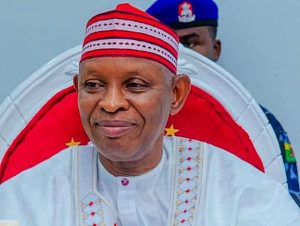

Governor Abba: A Choice Made. A future Secured


Governor Abba Kabir Yusuf , Kano State

By Abubakar Muhammad

There are moments in politics when hesitation becomes costly and clarity becomes inevitable. Such moments demand firm decisions, not half measures. For Kano State, that moment has arrived. And the die is cast.

The Governor of Kano State, Alhaji Abba Kabir Yusuf, has formally resigned his membership of the New Nigeria People’s Party (NNPP), bringing to a close a significant chapter in the state’s political journey and opening the door to a new phase defined by stability, wider engagement, and the overriding interest of the people.

The resignation was conveyed in a letter addressed to the Chairman of Diso Chiranchi Ward, NNPP, Gwale Local Government Area, and took effect from Friday, 23rd January, 2026.

In the letter, Governor Yusuf expressed gratitude to the NNPP for the opportunity it provided him and for the support he received throughout his engagement with the party since 2022.

“I write with a deep sense of gratitude to formally notify the leadership of the New Nigeria People’s Party, NNPP, of my decision to resign my membership of the party, with effect from Friday, 23rd January, 2026.”

While appreciative of the platform offered by the party, the Governor made it clear that persistent internal disputes and prolonged legal battles have weakened the NNPP’s cohesion and capacity to function effectively as a vehicle for governance.

According to him, leadership disagreements and unresolved court cases have continued to unsettle the party’s structure across the country, creating divisions that now appear difficult to heal.

“The growing disenfranchisement among party members has created deep divisions within the party structure, resulting in cracks that appear increasingly irreconcilable and have generated uncertainty at both state and national levels.”

Indeed, for a state as strategic and populous as Kano, uncertainty is a luxury it cannot afford. Governance demands focus, stability, and a political environment that supports service delivery rather than distracts from it.

Governor Yusuf emphasized that his decision followed careful reflection and was guided solely by public interest.

“After careful reflection, and without prejudice to the party’s capacity to resolve its internal challenges, I have come to the conclusion that my resignation is in the best interest of the people of Kano State.”

This decision, he stressed, was taken in good faith and without bitterness, reaffirming his commitment to peace, unity, and the continued progress of the state.

Significantly, the Governor is not alone in this decision. He is resigning alongside 21 members of the Kano State House of Assembly, 8 members of the House of Representatives, and 44 Local Government Chairmen, underscoring the depth of consensus behind the move and the collective resolve to place Kano above party turbulence.

The resignation letter was acknowledged by the Secretary of Diso Chiranchi Ward, Hon. Kabiru Zubairu, who commended Governor Yusuf for his achievements in infrastructure development, urban renewal, healthcare delivery, education, and economic empowerment. While noting efforts to manage the party’s internal crisis, he accepted the Governor’s decision, describing him as one of the most performing leaders produced by the NNPP.

Perhaps, history teaches that when leaders delay hard choices, events eventually force them. Governor Abba Kabir Yusuf has chosen decisiveness over drift. With this step, Kano signals its readiness for a new political direction, one anchored on stability, cooperation, and results.

The die is cast. Kano moves forward.

Abubakar Muhammad writes from Kano

Gov. Yusuf Quits NNPP


Governor Abba Kabir Yusuf , Kano State

Kano State Governor, Alhaji Abba Kabir Yusuf, has formally resigned his membership of the New Nigeria People’s Party (NNPP), citing deepening internal crises and the need to safeguard the broader interest of the people of Kano State.

This was contained in a statement signed by the governor’s spokesperson, Sunusi Bature Dawakin Tofa on Friday.

The Governor, in a letter addressed to the Chairman of Diso-Chiranchi Ward, NNPP, Gwale Local Government Area, officially communicated his decision to withdraw from the party with effect from Friday 23rd January 2026.

“I write with a deep sense of gratitude to formally notify the leadership of the New Nigeria People’s Party (NNPP) of my decision to resign my membership of the party, with effect from Sunday, 25 January 2026.”

Governor Yusuf expressed appreciation to the party for the platform and support extended to him throughout his political engagement with the NNPP.

“I remain sincerely appreciative of the opportunity given to me by the party, its leadership, and members across Kano State to be part of its political journey since 2022, as well as the support, goodwill, and cooperation extended to me during my time in the party.”

He pointed to persistent internal disputes and legal challenges that have continued to unsettle the party’s structure nationwide.

“In recent times, the party has been confronted with persistent internal challenges arising from leadership disagreements and ongoing legal processes, many of which are presently before the courts for judicial determination.”

According to the Governor, the internal disagreements have widened divisions and weakened cohesion within the party.

“The growing disenfranchisement among party members has created deep divisions within the party structure, resulting in cracks that appear increasingly irreconcilable and have generated uncertainty at both state and national levels.”

Governor Yusuf stated that his decision followed careful reflection and was guided strictly by public interest considerations.

“After careful reflection, and without prejudice to the party’s capacity to resolve its internal challenges, I have come to the conclusion that my resignation is in the best interest of the people of Kano State.”

He emphasized that the decision was taken in good faith and without bitterness.

“This decision is taken in good faith, without any ill will, and with a continued commitment to peace, unity, and the progress of Kano State.”

The Governor is resigning today along with 21 members of the State Assembly, 8 members of the House of Representatives and 44 Local Government Chairmen of Kano state.

The resignation letter was acknowledged by the party Secretary, Diso-Chiranchi Ward, Hon. Kabiru Zubairu who commended the Governor for his laudable projects on infrastructure, urban renewal, health, education and economic empowerment.

“I wish to concur with His Excellency on the lingering crisis in our party, though we are trying our best to contain it, but we have no option than to accept the resignation of a one and most performing Governor of the NNPP.”


FROM ALMAJIRI TO ASSET- SOKOTO’S QUIET EDUCATION REFORMS

By Sani Umar

For decades, the almajiri phenomenon has symbolized one of Northern Nigeria’s most complex social challenges, deeply rooted in culture, faith, and economic realities. In Sokoto State, however, a quiet but deliberate shift is underway, redefining the narrative from one of neglect to one of structured human capital development.

Rather than approaching the issue through abrupt disruption, the Sokoto State Government has adopted a complementary reform model, one that recognises the place of Arabic and Islamic education while aligning it with modern educational standards. This balanced approach has helped ease resistance and foster cooperation among traditional institutions, religious leaders, and policymakers.

At the heart of the reforms is the strengthening of Arabic education. Rather than treating it as parallel or inferior to western education, the government has worked to standardise curricula, improve learning materials, and integrate basic numeracy, literacy, and civic education into Arabic schools. This ensures pupils acquire both religious grounding and practical life skills.

Teacher retraining has been another critical pillar of the reform. Many instructors within the traditional system, though respected, lacked exposure to modern teaching and instructional skills.Through targeted workshops and certification programmes, Arabic and conventional school teachers alike are being equipped with improved teaching methods, classroom management skills, and child centred learning approaches.

School rehabilitation has complemented these efforts. Across several communities, dilapidated learning spaces are being renovated to provide safer and more conducive environments for learning. Improved classrooms, sanitation facilities, and learning aids have helped restore dignity to schools that once mirrored the vulnerability of their pupils.

Beyond infrastructure, the reforms reflect a growing emphasis on inclusion. Rather than isolating almajiri children from the broader education ecosystem, policies are encouraging gradual integration, allowing pupils to transition smoothly between Arabic and formal education streams without stigma or disruption.

Partnerships with non-governmental organisations have further strengthened the reform agenda. NGOs bring technical expertise, monitoring capacity, and additional funding support, particularly in areas such as child welfare, nutrition, and informal education. These collaborations ensure that reforms extend beyond classrooms into the lived realities of the children.

Community engagement has also played a decisive role. Parents, traditional rulers, and religious scholars are increasingly involved in dialogue, helping to shape policies that reflect shared values. This consultative approach has helped build trust and sustain momentum, especially in rural areas.

Importantly, the reforms are framed not as social welfare alone but as strategic investment. Education, the government argues, is the foundation upon which all other sectors, such as healthcare, agriculture, security, and economic growth must rest. A child properly educated today becomes a productive citizen tomorrow.

Early indicators suggest gradual progress. Increased enrolment, improved attendance, and reduced street exposure among school aged children point to a system beginning to correct long-standing imbalances. While challenges remain, the direction is clear and deliberate.

The reforms also signal a broader shift in governance philosophy, one that prioritises prevention over reaction. By investing in education early, the state reduces future burdens associated with unemployment, social unrest, and dependency.

Sokoto’s experience demonstrates that sensitive social issues need not be addressed through forceful or simplistic measures. With patience, structure, and collaboration, long standing challenges can be transformed into opportunities for growth.

The reforms are expected to yield the desired results, as the almajiri education system has been redesigned and a new focus is in place, whereby agencies such as the Arabic Board and the Almajiri Department in the Ministry of Religious Affairs will synergize with the Special Adviser on Almajiri Education to achieve optimum success.

Ultimately, the transition from almajiri to asset is not merely about education policy, it is about redefining value. By recognising every child as human capital, Sokoto is quietly laying the groundwork for sustainable development, one classroom at a time.

Sultan Declares Tuesday As First Day Of Sha’aban 1447 AH

Sultan Sa’ad Abubakar III

The Sultan of Sokoto and President-General of the Nigeria Supreme Council for Islamic Affairs (NSCIA), Muhammad Sa’ad Abubakar, has declared Tuesday, January 20, 2026, as the first day of Sha’aban 1447 AH.

This is contained in a press statement issued on Monday, January 19, 2026, and signed by the Wazirin Sokoto and Chairman of the Advisory Committee on Religious Affairs, Sultanate Council, Sokoto, Professor Sambo Wali Junaid.


CAF Must Act as African Football Bleed


By: Lamara Garba

What was meant to be a crowning moment for African football on Sunday 18 January 2026 in Rabat instead became a painful reminder that the game can be wounded not only by defeat but by injustice. The final between host Morocco and Senegal should have been decided by courage skill and tactical brilliance. Sadly it was overshadowed by poor and biased officiating that has left a deep scar on the conscience of the continent.

At the heart of this controversy was the centre referee from the Democratic Republic of Congo Jean Jacques Ndala. His performance fell far below the standard expected of a match of such magnitude. Decisions were not merely debatable they were devastating and their cumulative effect tilted the balance of the game away from fairness and into suspicion.

Senegal scored what many saw as a legitimate and clean goal a moment that should have changed the course of the final and crowned honest effort. Instead the goal was cancelled under circumstances that defied football logic and offended the basic principles of the game. No convincing explanation followed only confusion anger and disbelief. In football when a whistle silences a rightful goal it also silences trust.

As the game drifted into its twilight another decision poured salt into an open wound. A controversial penalty was awarded to Morocco at a moment when tension was already stretched to breaking point. The call lacked clarity and consistency and once again Senegal found itself punished not by superior play but by the authority of the whistle. Football is cruel at times but it should never be unjust.

Worse still was the manner in which Senegalese players were treated for daring to question decisions that were clearly questionable. Yellow cards were handed out generously not for violent conduct or dissent that crossed the line but for simple protests born out of frustration. It appeared as though authority was being used to intimidate rather than to manage the game. When players are punished for asking for fairness then something is fundamentally wrong.

This painful episode reopened old wounds. Africans have not forgotten the semi final clash between Nigeria and Morocco officiated by Ghanaian referee Daniel Nii Ayi Laryea whose performance also drew heavy criticism and raised serious concerns among fans and observers. That match like the final in Rabat left a bitter aftertaste and strengthened the feeling that certain teams enjoy invisible advantages. When controversy repeats itself it stops being coincidence and begins to look like a pattern.

The reaction from Senegal was telling. The threat to boycott the competition was not an act of arrogance but a cry of protest against glaring injustice. It was the language of a team that felt robbed stripped of dignity and pushed to the wall. African football should never reach a point where players consider withdrawal as their only voice against bias.

While the officials must bear the heaviest responsibility the conduct of some Moroccan players during and after the match also deserves condemnation. Even in victory sportsmanship should reign supreme. The attitude displayed particularly during the medal presentation was unbecoming unsportsmanlike and lacking in discipline. Winning without respect empties victory of its meaning.

CAF now stands at a moral crossroads. Silence will only deepen suspicion and erode confidence in African competitions. This is the moment for courage not convenience. Both Jean Jacques Ndala and Daniel Nii Ayi Laryea must be sanctioned and referred to CAF and FIFA disciplinary bodies. More importantly an in depth transparent investigation must be launched to examine the officiating of these matches and to determine whether bias compromise or even match manipulation played any role. African football cannot grow on shaky foundations.

Football is a shared inheritance. It belongs to the streets and stadiums to the poor and powerful alike. When justice is denied on the pitch the whole continent feels the pain. CAF must act decisively to restore credibility strengthen officiating standards and reassure Africans that the game they love is not a scripted drama but an honest contest of skill and spirit.

Let Rabat be remembered not only as a place of controversy but as the turning point where African football chose truth over convenience and integrity over silence. Only then can the game breathe again and only then can trust return to the hearts of its people.

Lamara Garba,
Former Chairman
Kano State Sports Writers Association of Nigeria (SWAN)

Governor Aliyu Empowers LG Chairmen with 23 Brand New Toyota Jeeps

From M G Gazali

Sokoto State Governor, Dr. Ahmed Aliyu, has presented 23 brand new Toyota Jeeps to the chairmen of the 23 local government areas in the state.

The presentation ceremony was held at the Government House, Sokoto, with the Secretary to the State Government (SSG), Alhaji Muhammad Bello Sifawa, representing the Governor.

The SSG explained that the vehicles were provided to enhance effective governance and strengthen service delivery at the grassroots level. This move, he said, would enable local government chairmen to better supervise projects, monitor activities, and respond promptly to the needs of their people.

Governor Aliyu’s commitment to empowering local government administrations was reiterated by the SSG. He emphasized that grassroots development remains a top priority of the current administration. The SSG urged the beneficiaries to use the vehicles judiciously for official duties and to ensure proper maintenance.

The ALGON Chairman in the state, Alhaji Abba Shehu Tambuwal, expressed gratitude to the Governor on behalf of the local government chairmen.

He pledged that the vehicles would be used responsibly to enhance governance and bring development closer to the people at the grassroots.

The presentation ceremony was attended by notable government officials, including the state APC Chairman, Alhaji Isah Sadiq Achida, Commissioners, and Special Advisers among others.

Governor Aliyu Condoles Shagari Over Death of Elder Brother

From M G Gazali

Sokoto State Governor, Dr. Ahmed Aliyu, has extended his heartfelt condolences to former Deputy Governor of the state, Barrister Mukhtar Shagari, following the death of his elder brother, Alhaji Sani Ayya Shagari.

The deceased passed away on Sunday at the age of 75 and is survived by his wife and other members of the family.

Governor Aliyu described the loss as a painful one, noting that Alhaji Sani Ayya Shagari was not only a respected member of the Shagari community but also a personality whose passing would be deeply felt across Sokoto State.

He prayed that Almighty Allah forgives the shortcomings of the deceased, grants him Aljannatul Firdaus, and gives the family the strength to bear the loss.
Responding, Barrister Mukhtar Shagari expressed appreciation to the Governor for the condolence visit and commended his administration for the numerous development projects being executed in Shagari Local Government Area, as well as the people-focused initiatives being implemented across the state.

Also speaking, the Chairman of Shagari Local Government Area, Barrister Mai Dawa, thanked the Governor for the visit and prayed that Almighty Allah rewards him abundantly and continues to guide him in steering the affairs of the state.

In a similar gesture, Governor Ahmed Aliyu also condoled with the family of the late Alhaji Hali Sahabi Sifawa, popularly known as Mai Nasara, who died at the age of 65 and is survived by two wives and fifteen children.

At all the locations visited, special prayers were offered for the peaceful repose of the souls of the departed.

OLD MARKET FIRE: GOV. ALIYU VISITS SCENE, ASSURES VICTIMS OF GOVERNMENT SUPPORT

From M G Gazali

Sokoto State Governor, Dr. Ahmed Aliyu, has expressed sympathy with traders affected by the fire outbreak that gutted parts of the Old Market in Sokoto, assuring them of the state government’s support.

During a visit to the scene, the Governor described the incident as regrettable and urged the affected traders to accept it as the will of Almighty Allah.

Governor Aliyu said the consequences of the inferno extend beyond individual losses, noting that the incident also has serious implications for the state and its people.

He explained that the Old Market remains a vital economic hub and a major source of livelihood for many residents, stressing the need to assist traders in recovering from the unfortunate setback.

The Governor assured the leadership of the Sokoto State Traders Association of his administration’s readiness to support those whose businesses were affected by the fire.

He prayed to Almighty Allah to avert future occurrences and encouraged traders to continue to seek divine guidance and protection over their businesses.

Governor Aliyu also praised the prompt intervention of the Sokoto State Fire Service and the collective efforts of traders, which helped to contain the fire and prevent it from spreading further.

Earlier, the Chairman of the Sokoto State Traders Association, Alhaji Chika Sarkin Gishiri, revealed that the fire started at about 10:00 a.m. on Sunday, destroying about 50 shops and goods valued at hundreds of millions of naira. He added that no life was lost.
Alhaji Sarkin Gishiri appealed to the state government to assist the affected traders so they can resume normal business activities.

He further commended Governor Ahmed Aliyu for his continuous support to traders across the state, pledging the association’s unwavering support for the current administration.

The fire was still burning in some sections of the market at the time of the Governor’s visit.

RECOMMENDED NEWS

POPULAR