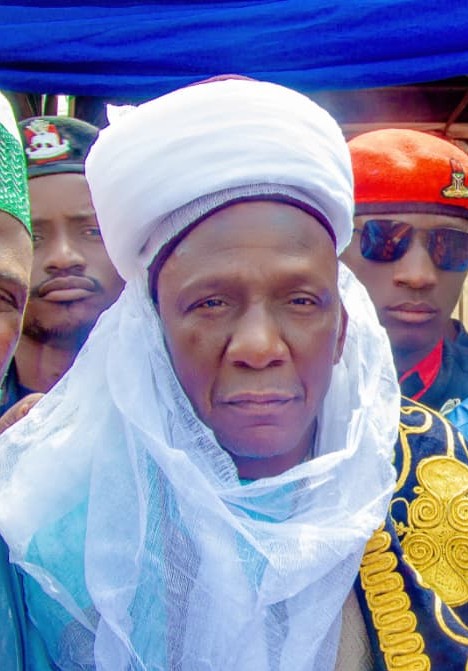
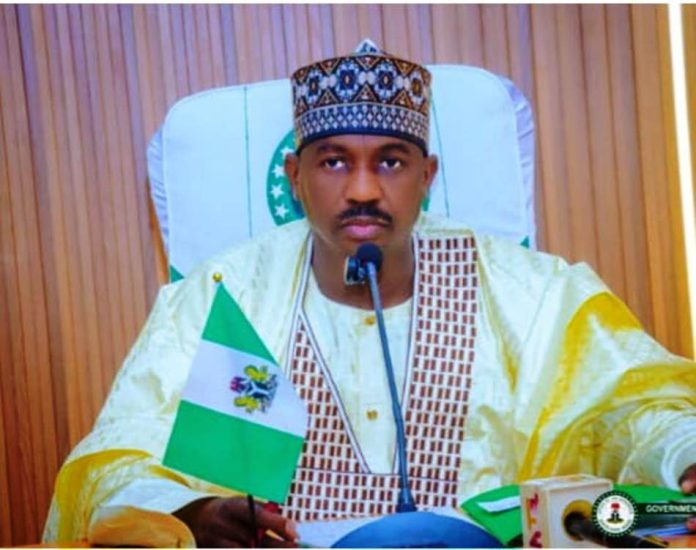
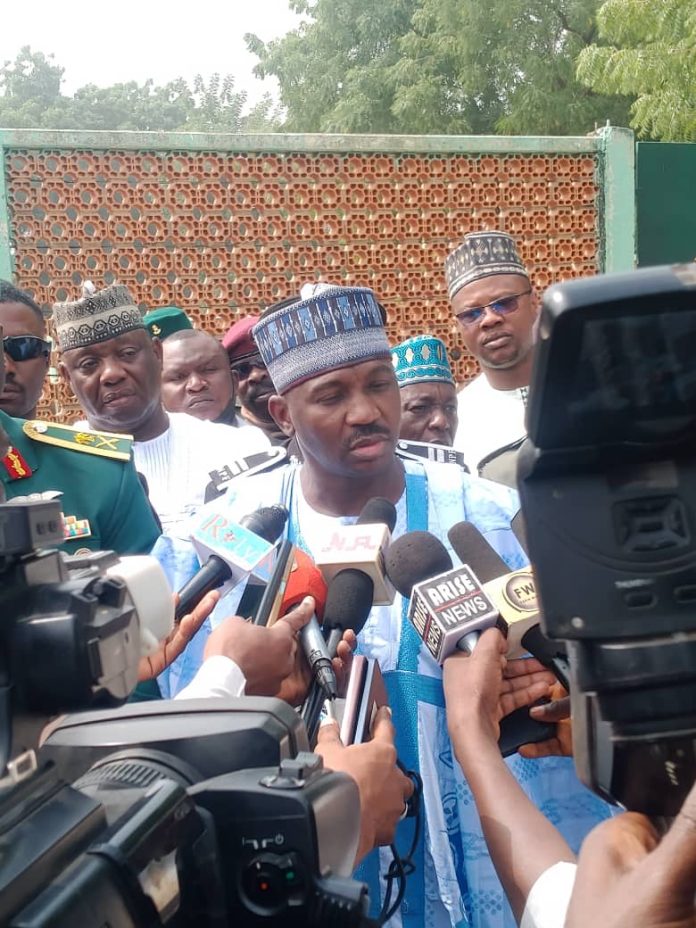
The Special Adviser to Governor Ahmed Aliyu on Protocol Matters, Faruk Ahmed Shuni, has been turbaned as the 4th Galadiman Shuni.
The turbaning ceremony, which took place at the palace of the District Head of Shuni, Alhaji Muhammad Harande II, attracted dignitaries from across the state.
Notable among them was the Sokoto State Governor, Ahmed Aliyu Sokoto, who was represented by the Commissioner for Local Government and Chieftaincy Affairs, Ibrahim Dadi Adare, alongside the Commissioner for Home Affairs, Isa Muhammad Tambagarka and some members of the state legislature. Also on hand to rejoice with the new Galadima were ,Amb Abubakar Shehu Wurno, Secretary to the State Government Muhammad Bello Sifawa, Chief of Staff Government House Sokoto, Aminu Haliru Dikko mni, prof.Mustapha Aliyu, Special Advisers, Senior Special Assistants, top government functionaries, as well as friends and relatives of the newly turbaned Galadiman Shuni.
Speaking shortly after the ceremony, Governor Ahmed Aliyu, through the Commissioner for Local Government and Chieftaincy Affairs, charged the new Galadiman Shuni to uphold the norms and values of the traditional institution in the interest of the entire Shuni community.
He further urged him to work closely with other traditional rulers and other title holders in the area, and to bring his wealth of experience in public service to bear in the discharge of his new responsibilities.
The Governor congratulated the new Galadima on his appointment and wished him Allah’s continued guidance and protection.
In his words of advice, the District Head of Shuni, Alhaji Muhammad Harande II, stated that the appointment of Faruk Ahmed Shuni as Galadiman Shuni was purely based on merit. He charged him to conduct himself with integrity and to live above board.
The monarch also called on the new Galadima to follow in the footsteps of his predecessors in promoting development in Shuni District and beyond.
The turbanning ceremony of the fourth Galadiman Shuni was marked with pomp and pageantry, as praise singers entertained guests throughout the event.
As part of efforts to promote peaceful coexistence and national development, the Sokoto State Government has held a special prayer session for the peace, unity, and progress of Nigeria. The prayer session took place at the Sultan Bello Jumu’at Mosque, Sokoto, immediately after the two raka’at Jumu’at prayers. The Chief Imam of the Sultan Bello Jumu’at Mosque, Sheikh Malami Bello Akwara, led the special prayers, seeking Allah’s intervention in addressing the challenges hindering Nigeria’s march toward greatness, with particular emphasis on insecurity. Also contributing to the prayer session, the Sarkin Malaman Sokoto, Sheikh Yahaya Na Malam Boyi, prayed for Allah’s protection and guidance for the nation’s leaders, to enable them to steer the country toward greater heights. He further prayed to Almighty Allah to continue guiding Governor Ahmad Aliyu Sokoto in his efforts to transform the state. The special prayer session was attended by Governor Ahmad Aliyu Sokoto, his Deputy, Idris Mohammed Gobir, former Deputy Governor, Barrister Mukhtar Shagari, the Speaker, Sokoto State House of Assembly, Rt. Hon. Tukur Bala Bodinga, the Wazirin Sokoto, Prof. Sambo Wali Junaid, Galadiman Gari, Aliyu Attahiru, Magajin Rafin Sokoto, Alhaji Lirwanu Bello, the Deputy Speaker, Kabir Ibrahim Kware, the State APC Chairman, Isa Sadiq Achida, members of the legislature, the Secretary to the State Government, Muhammad Bello Sifawa, the Chief of Staff, Government House, Sokoto, Aminu Haliru Dikko, mni, Commissioners, Q Advisers, Senior Special Assistants, top government functionaries, politicians, and other dignitaries.
Governance in contemporary Nigeria is often judged by the gap between promises made and realities delivered. In Sokoto State, the 9-Point Smart Agenda of Governor Ahmed Aliyu was introduced not merely as a campaign document but as a governing framework intended to redefine priorities, restore public confidence and give clear direction to state administration. Nearly two years into its implementation, the agenda is increasingly shaping both the tone and substance of governance in the state.
At its core, the 9-Point Smart Agenda represents a deliberate shift from ad-hoc governance to structured planning. By clearly identifying focus areas, ranging from security and education to infrastructure, health and economic empowerment, the administration signalled an intention to anchor governance on measurable goals rather than broad political rhetoric. This clarity has helped align ministries, departments and agencies around shared objectives.
One of the most visible impacts of the agenda has been in fiscal governance. Budgetary allocations under the current administration have reflected stated priorities, particularly in education, infrastructure and social services. This alignment between policy direction and financial commitment has strengthened credibility, ensuring that government programmes are not only announced but funded and pursued with intent.
Institutional discipline has also emerged as a defining feature of the agenda’s governance approach. By emphasizing coordination, supervision and accountability, the administration has sought to restore efficiency within the civil service. The insistence on due process and clearer lines of responsibility has gradually improved service delivery and reduced the culture of policy inconsistency that often hampers public institutions.
In the education sector, the agenda’s governance impact goes beyond infrastructure or enrolment figures. It reflects a broader understanding of human capital as a long-term investment in stability and development. Policies targeting out of school children, teacher support and curriculum balance demonstrate a governance philosophy that links education directly to social order and economic productivity.
The 9-Point Smart Agenda has also reframed infrastructure development as a governance tool rather than a standalone achievement. Road construction, urban renewal and public facility rehabilitation have been pursued with an emphasis on connectivity, economic utility and urban order. This approach underscores the administration’s view of infrastructure as an enabler of commerce, security and quality of life.
Health and social protection initiatives under the agenda further illustrate a governance model that prioritizes inclusion. By focusing on primary healthcare, maternal services and support for vulnerable groups, the administration has reinforced the idea that governance must be felt at the grassroots, where citizens encounter the state most directly.
Security, a critical concern in the wider North-West, has been approached within the agenda through both enforcement and prevention. Beyond conventional security measures, the administration has emphasized social reorientation, youth engagement and moral regeneration, recognizing that sustainable security is closely tied to education, livelihoods and community cohesion.
Importantly, the 9-Point Smart Agenda has provided a basis for measuring government performance. Citizens, civil society and development partners now have a clearer framework against which policies and projects can be assessed. This openness to scrutiny reflects a maturing governance culture that understands accountability as a strength rather than a threat.
Another defining governance feature under the 9-Point Smart Agenda is the structured scrutiny of projects before execution. Major initiatives are subjected to detailed evaluation and deliberation at the State Executive Council level, where their relevance, cost implications and alignment with policy priorities are thoroughly examined. This collective decision-making process has helped to minimize arbitrariness, ensure value for money and reinforce the principle that public resources must be committed only to projects that serve clear developmental objectives.
Equally significant is the administration’s emphasis on executing projects without resorting to borrowing. By relying largely on internally generated revenue, statutory allocations and prudent financial management, the government has pursued development within its fiscal capacity. This approach not only reduces future debt burdens but also reflects a disciplined governance philosophy that prioritizes sustainability and financial independence, ensuring that development today does not become a liability for future administrations.
Ultimately, the significance of the 9-Point Smart Agenda lies in its attempt to move Sokoto beyond promises to practice. While challenges remain and outcomes will continue to evolve, the agenda has already begun to reshape governance by promoting clarity, discipline and purpose. In doing so, it offers a model of leadership that prioritizes direction, responsibility and long-term impact over short-term political gains.
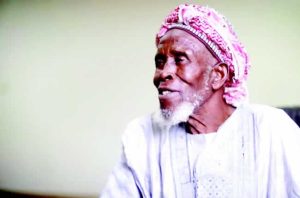
Abubakar Abdullahi,the imam of Nghar village in Barkin Ladi Local Government Area of Plateau State, who saved 262 Christians during a violent communal attack, has died at the age of 90.
Saleh Abubakar, the son of the deceased, confirmed the death, saying the Imam passed away on Thursday night at the Plateau Specialist Hospital,Jos.
Late Imam Abubakar Abdullahi
He disclosed that his father died about ten days after being admitted to the hospital, following complications linked to a heart condition that had affected his health for some time.
He said, “He died ten days after he was admitted. He was initially diagnosed with a heart problem. He’d go for check-ups and return. His health hadn’t been stable since the heart disease diagnosis.”
Imam Abdullahi is survived by 19 children, 12 boys and seven girls.
In June 2018, during deadly communal clashes that swept through 10 villages in Barkin Ladi, the late imam hid 262 Christians in a mosque and his private residence until the violence subsided, preventing them from being killed.
His actions earned him local and international recognition, including the International Religious Freedom Award presented by the United States Department of State in 2019.
Imam Abdullahi will be buried today in his Nghar village after Jumu’at prayer
authorities of the Kingdom of Saudi Arabia has warned the Nigerian government that neglecting of its orphans and vulnerable children may potentially pose serious threats to her national security, as such elements can be easily recruited into criminal activities.
This warning came from representatives of the Kingdom during an intervention programme that empowered over 1,000 vulnerable orphans in Kwara State, in support of the Federal Government’s efforts to reduce hardship and improve the welfare of orphaned children across Nigeria.
Speaking during the distribution of food items and empowerment kits in Ilorin, the Kwara State capital, the Project Manager of the Orphan Support Project, Farid Salman, said the initiative was designed to meet immediate welfare needs of the vulnerable children and youths, while promoting long-term self-reliance, stressing that neglecting vulnerable children endangers society at large.
Salman explained that the beneficiaries were trained in vocational skills including tailoring, catering, and information and communication technology, and were provided with relevant tools and starter packs to help them become self-sufficient.
Coordinators of some of the benefiting orphanage homes described the intervention as timely and life-saving, noting that it would significantly ease the burden on vulnerable children.
Over 1,000 orphans drawn from both Muslim and non-Muslim orphanages benefited from the gesture, helping to keep vulnerable children off the streets and away from criminal influences.
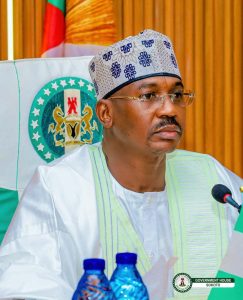
Sokoto State Governor, Dr. Ahmed Aliyu, has paid glowing tributes to Nigeria’s fallen heroes, describing them as true patriots whose supreme sacrifice ensured the peace, unity, and stability of the country.
The Governor made the remarks while answering questions from journalists at this year’s Armed Forces Remembrance Day celebration held at Maigero threatre in Sokoto.
The solemn event brought together serving and retired members of the armed forces, top government officials, traditional rulers, and representatives of various security agencies.
Governor Aliyu said the annual remembrance serves as a solemn reminder of the courage, loyalty, and devotion of officers and men of the Nigerian Armed Forces who laid down their lives in defence of the nation’s sovereignty and territorial integrity.
He reaffirmed his administration’s unwavering commitment to supporting security agencies operating in the state, stressing that the government has continued to provide logistics, vehicles, and other operational support to enhance their capacity in combating banditry and other forms of criminality.
The Governor appealed to Nigerians to always remember the families of fallen heroes in their prayers and to extend support to the widows and dependants left behind.
He also urged citizens to remain vigilant and cooperate with security personnel to sustain peace and order across the state.
The ceremony featured the laying of wreaths in honour of the fallen heroes by the Governor, the Commander of the 8 Division of the Nigerian Army, heads of security agencies, and representatives of the Nigerian Legion. A minute of silence was observed, followed by a symbolic release of pigeons to signify peace.
Sokoto State Governor, Dr. Ahmed Aliyu, has debunked a video clip circulating on social media alleging that residents of Tidibali village in Isah Local Government Area were chased out of their homes by bandits.
The governor described the video as false, misleading, and deliberately fabricated by individuals who derive pleasure from politicising security challenges in the state.
He stressed that at no time were the people of Tidibali forcefully displaced by bandits. According to Governor Aliyu, the temporary evacuation of the villagers was a proactive decision taken by local government authorities after receiving credible intelligence that bandits were planning to attack the community.
He explained that the move was purely a precautionary measure aimed at safeguarding lives and property.
He further disclosed that security presence in the area had since been significantly reinforced, leading to the restoration of calm in the community. As a result, the evacuated residents have safely returned to their homes and are going about their normal activities.
The governor reassured the people of Sokoto State of his administration’s unwavering commitment to ensuring the safety and security of lives and property across all parts of the state.
He warned against the spread of unverified information, noting that such reports could cause unnecessary panic and undermine ongoing security efforts.
Governor Aliyu spoke while responding to questions from journalists during the 2025 Armed Forces Remembrance Day ceremony held in Sokoto, where he paid tribute to fallen heroes who sacrificed their lives in defence of the nation.
Sokoto State Governor, Ahmed Aliyu, has condoled with the family of the late Village Head of Gada, Alhaji Ibrahim Isah, who passed away a few weeks ago.
The Governor described the late Village Head as a pious, humble, honest, and God-fearing leader who devoted his life to the service of his community.
Governor Aliyu noted that the death of Alhaji Ibrahim Isah is a great loss, not only to the Gada community but also to the entire state and beyond.
He prayed to Almighty Allah to forgive the deceased his shortcomings, grant him Aljannatul Firdaus, and comfort his immediate family and the entire Gada community.
Responding on behalf of the family, the younger brother of the deceased, Ambassador Sahabi Isa Gada, thanked the Governor for the condolence visit and prayed to Almighty Allah to reward him abundantly and continue to guide him in the task of leadership.
He also commended the Governor for the various people-oriented projects being executed across the state, noting that Gada Local Government Area is equally benefiting from such initiatives.
Special prayers were later offered for the repose of the soul of the late Village Head of Gada, Alhaji Ibrahim Isah, and for sustained peace and peaceful coexistence in Sokoto State.
Sokoto State Governor, Dr. Ahmed Aliyu, has reiterated his administration’s unwavering commitment to sustaining the execution of laudable, people-oriented projects across the 23 local government areas of the state.
The Governor gave the assurance during an inspection of the ongoing construction work at the Gada Central Jumu’at Mosque in Gada Local Government Area.
Dr. Aliyu said his administration remains focused on initiating and completing projects that will positively impact the lives of citizens, stressing that governance must translate into tangible development at the grassroots.
Aliyu expressed satisfaction with the quality and speed of work on the mosque project and commended the contractor for adhering to specifications.
He, however ,urged the contractor to maintain the tempo to ensure timely completion, adding that the state government will continue to monitor projects closely to guarantee value for money.
He appreciated the support and prayers of residents of Gada Local Government Area and assured them that his government will not relent in fulfilling its campaign promises.
Earlier, the Permanent Secretary, Ministry for Religious Affairs, Dr. Sani Labaran, briefed the Governor on the project.
He explained that the project was initially awarded in 2012 to Messers Abu Kure at a cost of ₦200 million and reviewed further to ₦249 million in March 2014.
However, due to the escalation in the cost of building materials, the contractor sought a further review of the project, but it was not approved by the administration of Aminu Waziri Tambuwal, which led to the abandonment of the project.
He explained that the project was re-awarded by the present administration to Alhaji Aminu Kure at a cost of ₦210,496,451.20 on May 22, 2025, and has now reached 75% completion.
The contractor, Alhaji Aminu Kure, assured Governor Aliyu and the people of Gada that the work will be completed before the commencement of this year’s Ramadan fast.
He said all necessary arrangements have been made to accelerate the pace of work without compromising quality and standards.
Kure further disclosed that the project is being executed in line with approved specifications and modern architectural designs that will provide a conducive environment for worshippers.
The Sokoto State Governor, Dr. Ahmed Aliyu, has called on Muslims to intensify efforts in seeking religious knowledge. He described it as the surest path to strengthening faith, promoting moral conduct, and building a peaceful society.
He made this call during the graduation ceremony of 137 students of Madarasatul Sheikh Habibu Darul Qur’an Wal Hadis, Gidan Salanke.
The Governor commended the school’s management for their commitment to Quranic education and the moral upbringing of young people.
He emphasized that Islam places a high value on learning and that no society can achieve meaningful development without knowledge.
The Governor urged parents to encourage their children to attend Islamiyya and Quranic schools alongside Western education. He stressed that balanced knowledge produces disciplined, God-fearing, and productive citizens.
In a significant gesture of support, the Governor directed the Ministry for Religious Affairs to construct two blocks of classrooms for the school. He also ordered that the school’s teachers be enrolled in the state government’s payroll as permanent and pensionable staff.
The Governor congratulated the graduating students on successfully completing their studies and prayed that they would become ambassadors of Islamic values.
Dr. Aliyu reiterated his administration’s commitment to supporting religious institutions and Quranic schools across the state.
The Member representing Wamakko and Kware Federal Constituency, Ahmed Abdullahi Kalambaina, announced the approval of the headmaster’s request for a solar-powered system and the replacement of the existing 300KVA transformer with a 500KVA transformer. This gesture is expected to enhance the school’s infrastructure and provide a conducive learning environment.
The Commissioner for Religious Affairs, Professor Jabir Sani Maihulla, said the state government places high premium on the recitation and memorization of the Glorious Quran. He noted that the state government recognizes the importance of Quranic education in shaping the moral fabric of society.
Earlier, the school Headmaster,Malam Kasim, said seven out of the 137 students had fully memorized the Glorious Quran. He thanked the Governor for honoring the occasion and for the support his administration continues to render to religious activities.
Prizes were presented to outstanding students and teachers, including brand new motorcycles, refrigerators, and brocades. The event was attended by Islamic scholars, traditional rulers, parents, and well-wishers, who celebrated the achievements of the graduating students.