Gov. Aliyu, Senator Wamakko Condole Yari Over Maternal Aunt’s Death

From: Muhammad Gazali Garba

It was a solemn atmosphere in Talata Mafara, Zamfara State, on Wednesday, as Sokoto State Governor, Dr. Ahmed Aliyu, led a high-powered delegation on a condolence visit to Senator Abdul-Aziz Yari Abubakar, over the death of his maternal aunt, Hajiya Rakkiya Jibrin.

The governor was accompanied by the leader of the All Progressives Congress (APC) in Sokoto State, Senator Aliyu Magatakarda Wamakko.

Hajiya Rakkiya Jibrin, the younger sister of Senator Yari’s mother, died on Tuesday at the age of 85 at the Usmanu Danfodiyo University Teaching Hospital (UDUTH), Sokoto, after a brief illness.

The delegation comprised commissioners, special advisers, top APC chieftains, politicians and members of the business community from Sokoto State.

Speaking during the visit, Senator Wamakko conveyed the heartfelt condolences of Governor Aliyu, as well as the government and people of Sokoto State, to Senator Yari and the entire bereaved family.

Wamakko described the death of the 85-year-old matriarch as a great loss not only to Senator Yari and his family but to the entire Muslim Ummah.

He said the late Hajiya Rakkiya lived a fulfilled life devoted to family values, community service and the worship of Allah (SWT).

He prayed to Allah (SWT) to forgive her shortcomings, grant her Aljannatul Firdaus and give Senator Yari and the family the strength and fortitude to bear the irreparable loss.

In his response, Senator Yari, who is the Director-General of the APC 2027 Presidential Campaign Council, expressed profound gratitude to Governor Aliyu, Senator Wamakko and the entire delegation for standing with him in his moment of grief.

He said their presence in Talata Mafara and their fervent prayers had brought comfort and solace to him and his family.

He particularly appreciated Governor Aliyu and Senator Wamakko for demonstrating uncommon solidarity and brotherhood by travelling from Sokoto to commiserate with the family.

Senator Yari prayed to Allah (SWT) to reward the visitors abundantly, bless their journey back home and grant his late aunt eternal rest in Aljannah.

The condolence visit underscored the strong bond of brotherhood and political solidarity between the Sokoto State leadership and Senator Yari.

Governor Umaru Bago Holds Meeting With APC Stakeholders In Kwara State

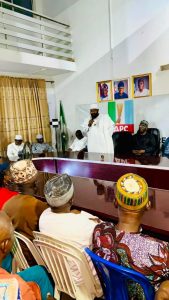
The executive governor of Niger State and the North Central Coordinator, Presidential Campaign Council, farmer Mohammed Umaru Bago has held a special meeting with the Kwara State APC Chapter at the Party Secretariat in Ilorin.

A statement signed by the Chief Press Secretary to the Governor, Bologi Ibrahim, said the meeting centred on strengthening unity and cohesion among party members, while promoting the ideals and programmes of the APC across Kwara State, the North Central Zone, and Nigeria at large.

Farmer Umaru Bago emphasized on the need for all APC members in the North central region to step up and put in their best to make sure that the region delivers APC in next year’s general elections.

He equally informed the gathering that a program has already been designed to ensure the party’s success adding that, he will be coordinating with other governors from the North central on how best to approach the elections.

Chairman, Nigeria Governors’ Forum and Governor of Kwara State, Abdulrahman AbdulRazaq appreciated the North Central Coordinator of the APC Presidential Campaign Council, farmer Umaru Mohammed Bago for his giant strides in grassroots mobilization.

He also acknowledged the governor Bago’s role in party coordination, and his continued efforts toward strengthening the APC across the North Central Zone and his commitment to building a stronger and more united party ahead of the 2027 general elections.

Stakeholders also strategized on how to move the APC party forward and deliver APC in the State for President Bola Ahmed Tinubu and all APC Candidates vying for different political seats.

The meeting had in attendance key APC figures including the Chairman of the Nigeria Governors’ Forum and Governor of Kwara State, Abdulrazak Abdulrahman, the North Central Zonal Vice Chairman of the APC, Alhaji Mu’azu Bawa Rijau, Kwara State APC Chairman, Prince Sunday Fagbemi and his counterpart from Niger, Aminu Musa Bobi alongside other top government and party officials.

Sultan Urges Politicians To Avoid Politicising Insecurity Ahead Of 2027 Elections

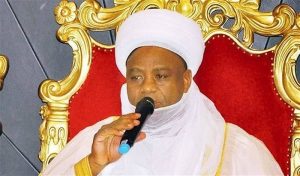
Sultan Muhammad Sa’ad Abubakar

From Muhammad Gazali Garba

The Sultan of Sokoto, Alhaji Sa’ad Abubakar, has called on politicians in the country to avoid politicising insecurity in their campaigns ahead of the 2027 general elections.

The Sultan made the call when he received a high-powered delegation led by the Director-General of the APC 2027 Campaign Council, Senator Abdul-Aziz Yari Abubakar, who paid a courtesy visit to his palace in Sokoto today, Monday.

Alhaji Sa’ad Abubakar said no government in the world could completely eradicate insecurity and poverty, but could only work towards reducing their effects on the people.

He urged politicians to conduct peaceful and issue-based campaigns, respect the choices of the electorate and play politics positively in the interest of national unity and development.

The Sultan wished the APC Campaign Council success in justifying the confidence reposed in its members and urged Nigerians to listen carefully to and assess politicians’ promises during the electioneering period.
He also prayed for the country’s leaders and for continued peace and stability in Nigeria.

Speaking earlier, the Director-General of the APC 2027 Campaign Council, Senator Abdul-Aziz Yari Abubakar, said the delegation was at the Sultan’s palace to seek his fatherly guidance, advice and prayers ahead of the party’s 2027 electioneering campaign.

Senator Yari added that even before becoming President, Tinubu had demonstrated his commitment to the development of the North in particular and the country in general by supporting other leaders.

Senator Yari said the APC-led Federal Government had many achievements to showcase to Nigerians, particularly under President Bola Ahmed Tinubu.

He maintained that since assuming office, President Tinubu had remained committed to promoting peace, unity and cohesion across the country.
Senator Yari assured that the party would conduct peaceful campaigns and appealed to the Sultan for his continued support and prayers.

Also speaking, Sokoto State Governor, Dr Ahmed Aliyu, said the 2027 electioneering process had officially commenced across the country in line with the timetable and guidelines of the Independent National Electoral Commission (INEC).

The governor said, considering the Sultan’s position as the spiritual leader of the Muslim Ummah and his longstanding commitment to peace and national unity, the APC Campaign Council deemed it necessary to pay an early visit to him to seek his fatherly guidance, prayers and royal blessings ahead of the elections.

Members of the delegation included the governors of Kebbi and Zamfara states, Senator Aliyu Magatakarda Wamakko, Senator Adamu Aliero, Senator Ali Modu Sheriff, former Katsina State Governor Aminu Masari and former APC National Chairman, Abdullahi Umar Ganduje, among others.

Sokoto First Lady Supports 17 Mothers of Triplets with N17m, Food Items

From Muhammad Gazali Garba

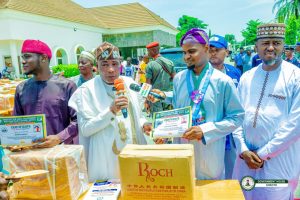
The wife of the Sokoto State Governor, Hajiya Fatima Ahmed Aliyu, on Saturday presented N17 million, food items and baby-care materials to 17 mothers of triplets across the state.

The gesture, organised under the Ministry of Women and Children Affairs, was aimed at supporting the families in meeting the nutritional and other essential needs of their newborn children, while easing the financial burden associated with caring for multiple births.

At the presentation ceremony held at Government House, Sokoto, Hajiya Fatima, who was represented by the Commissioner for Women and Children Affairs, Hajiya Khadija Ahmad Shagari, described children as precious gifts from Almighty Allah.

She said the birth of triplets should be regarded as a special blessing rather than a burden, noting that the initiative was designed to provide immediate relief to families facing the challenges associated with caring for multiple newborns.

According to her, each of the 17 beneficiaries received N1 million, three bags of rice, two bags of millet, 30 sets of baby clothes, large-size diapers, a carton of milk and soap.

She added that each mother also received 10 sets of guinea brocade, stressing that the package was intended to provide immediate relief to the affected families.

The First Lady said the state government had consistently prioritised the welfare of women and children, particularly those from less privileged households, through various humanitarian, empowerment and social intervention programmes.

She urged the beneficiaries to make judicious use of the financial assistance and materials, particularly for the feeding, healthcare and general wellbeing of their triplets.

Hajiya Fatima also appealed to wealthy individuals to support vulnerable members of society, saying collective assistance would promote compassion, solidarity and peaceful coexistence in the state.

Earlier, the Permanent Secretary of the Ministry of Women and Children Affairs, Alhaji Aliyu Ladan Isa, said the intervention demonstrated the government’s commitment to improving the welfare of women, children and vulnerable families.

He commended the First Lady for her humanitarian initiatives and advocacy on issues affecting women, children, orphans and other vulnerable groups in the state.

Ladan Isa also praised Governor Ahmed Aliyu for creating an enabling environment for programmes aimed at improving the living conditions and livelihoods of citizens.

He disclosed that the ministry had recently supported 500 women with livelihood interventions, while more than 16,000 people had benefited from N-CARES cash-transfer interventions.

He said the ministry had also continued to provide food support to women during Ramadan, implement skills-acquisition programmes and improve facilities, including the renovation and transformation of the Women Development Centre into a modern facility.

The beneficiaries were drawn from Shagari, Gwadabawa, Tangaza, Yabo, Gada, Wurno, Goronyo, Wamakko and Binji Local Government Areas.

Beyond the Fields: WOFAN’s Investment in Africa’s Agricultural Future

By Lamara Garba


Agricultural transformation rarely begins with a seed. It begins with an idea, an invitation, or the decision to place ordinary people in extraordinary rooms.


That is what the Women Farmers Advancement Network, WOFAN, did this week in Kigali.


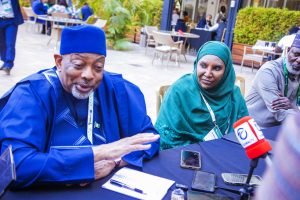
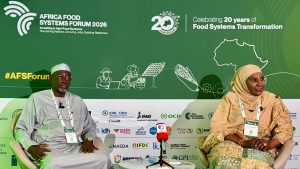
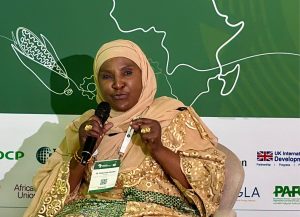
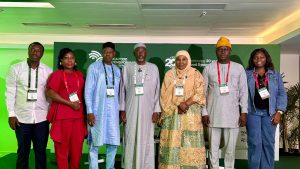
As policymakers, investors, researchers and development leaders gathered for the 2026 Africa Food Systems Forum under the theme, “Investing in Africa’s Agri-Food Systems: Nourishing Nations, Growing Jobs, Building Resilience,” WOFAN brought a substantial delegation of the very people those conversations are meant to serve: rural women, young people and grassroots practitioners.

In a continent where smallholder farmers still produce most of the food, that choice was not ceremonial. It was strategic.

Exposure is an input. Knowledge is capital. A farmer who has never encountered a working innovation is unlikely to demand it. A young person who has never met an agricultural entrepreneur may continue to see farming as a last resort. A woman excluded from networks and knowledge remains locked out of the prosperity she is capable of creating.

WOFAN has long understood this.

It was an investment in people.

It was an investment in exposure.

And it was an investment in the capacity of ordinary people to encounter extraordinary ideas and carry them back to the communities where they are needed most.

For WOFAN, the significance of Kigali was never simply about occupying seats in a conference hall.

It was about connecting farmers, women, young people and agricultural stakeholders with the ideas, innovations and opportunities shaping the future of Africa’s food systems.

On September 3, 2026, WOFAN Founder and Global Advocate, Dr Salamatu Garba, took that story to the Innovation Hub. She spoke of more than one million rural women reached across nine Nigerian states: Kano, Katsina, Kaduna, Jigawa, Bauchi, Yobe, Gombe and Nasarawa, as well as the Federal Capital Territory.

The numbers matter less than what they represent: technology moving from research stations into daily use; productivity gains that turn subsistence plots into enterprises; better quality produce that opens access to higher value markets; and income that travels beyond the farm gate into families and communities.

Rwanda’s Prime Minister, Dr Justin Nsengiyumva, reminded the Forum that agriculture is no longer just what happens in the field. It is also about irrigation, logistics, energy, mechanisation, finance, processing and markets.

WOFAN’s work has always reflected that wider view.

The organisation does not treat the smallholder as a passive recipient of inputs. It sees her as the foundation of any food system that hopes to nourish nations, create jobs and build resilience.

There is a useful lesson here. Development is not a finished product that can simply be imported. Models can be studied and technologies borrowed, but the decisive step lies in translating them into local soil and local hands.

The real value of Kigali is not the conference itself. It is what delegates do when they return: the practices tested, the partnerships formed and the confidence transferred.

Africa’s agricultural potential is frequently celebrated and just as frequently left unrealised. But potential does not feed people. Organised, financed and skilled people do.

When a woman farmer succeeds, the impact rarely stops at her plot.

When young people see agriculture as an enterprise rather than an inheritance, employment follows. When rural communities are connected to knowledge and markets, poverty begins to lose ground.

This explains why WOFAN’s presence carries weight beyond the size of its delegation.

Every participant is a potential bridge between global conversation and village practice, between policy and the farm, and between the Africa that exists and the Africa that is still possible.

Agriculture is not the occupation of those with no other options. It is business. It is industry. It is technology. It is national security.

And when deliberately supported, it remains one of the most powerful instruments of social and economic transformation available to this continent.

The panels will disperse and the statements will be issued. But the quieter work will continue.

One rural woman at a time.

One community at a time.

One opportunity carried home.

That is where the real harvest begins.

Lamara Garba is Director of Public Affairs at Bayero University, Kano_

HUNDREDS OF PDP, ADC MEMBERS DEFECT TO APC IN SOKOTO

From Muhammad Gazali Garba

Hundreds of men and women who were members of the Peoples Democratic Party and the African Democratic Congress on Thursday defected to the All Progressives Congress in Kware Local Government Area of Sokoto State.

The defectors, comprising former top state and local government officials, business tycoons, politicians and other party members, announced their defection during a brief reception held in Kware in connection with the flag-off of the construction of the Kware–Gidan Madi Road project.

They were formally presented to the party by the leader of the APC in Kware Local Government Area and Deputy Speaker of the Sokoto State House of Assembly, Alhaji Kabiru Ibrahim Kware, who led them into the APC.

Speaking while presenting the defectors to the governor, Alhaji Kabiru Ibrahim Kware said their decision to join the APC was informed by their confidence in the leadership of Governor Ahmed Aliyu and the direction of his administration.

He said the defectors were particularly encouraged by the governor’s leadership style and his commitment to the development of Sokoto State and the welfare of its people, adding that the administration’s projects and programmes had demonstrated a strong commitment to improving the lives of citizens.

The defectors were subsequently received by the State Deputy Chairman of the APC, Alhaji Yahaya Buhari Sirridawa, on behalf of Senator Aliyu Magatakarda Wamakko and the State Chairman, Alhaji Haruna Sarkin-Gobir Adiya.

The State Deputy Governor, Engr. Idris Muhammad Gobir, who represented Governor Ahmed Aliyu at the occasion, assured the new members of equality, equity and fairness within the party.

Gobir welcomed the defectors into the APC, saying their decision to join the ruling party would further strengthen its structure and broaden its support base in Kware Local Government Area and across the state.

He urged the new members to work harmoniously with existing APC members for the progress and development of Kware and Sokoto State, assuring them that the party would provide a level playing field for all members and accommodate their aspirations within the principles of justice, unity and inclusiveness.

The new APC members pledged their loyalty to the party and expressed their readiness to work with other members to promote its growth while contributing to the development of Kware Local Government Area of Sokoto State.

Ambassador Gada Flags Off N12.7bn Kware–Gidan Madi Road Project in Sokoto

From Muhammad Gazali Garba

The Sokoto State Government has flagged off the construction of the 36-kilometre Kware–Gidan Madi Road at a cost of N12.708 billion, with Governor Ahmed Aliyu saying the project will enhance rural connectivity and stimulate agricultural and economic activities in the benefiting communities.

The flag-off ceremony, held in Kware on Wednesday, marked another major infrastructure intervention by the state government aimed at opening up rural communities and improving access to markets, schools, healthcare facilities and other essential services.

The project is being executed under the Rural Access and Agricultural Marketing Project (RAAMP) and is jointly financed by the World Bank and the Sokoto State Government.

Speaking at the ceremony, Governor Aliyu said the road was part of his administration’s commitment to improving rural infrastructure and accelerating socio-economic development across the state.

He said the project would comprise road construction, hydraulic structures, a 30mm asphaltic wearing course, surface-dressed shoulders and road furniture.

According to the governor, the road traverses communities in Kware and Tangaza Local Government Areas, providing a vital link for residents, farmers and businesses in the area.

Governor Aliyu described the project as “a road of hope” and “a road of economic prosperity”, stressing that its benefits would extend beyond the 36-kilometre stretch.

He said the road would facilitate the movement of agricultural produce to markets, improve access to schools and healthcare facilities, and ease transportation challenges confronting residents of the benefiting communities.

The governor noted that the area was predominantly agrarian, adding that improved road infrastructure would enable farmers to move their produce more efficiently, reduce transportation costs and minimise post-harvest losses.

He said road development had remained a major priority of his administration since assuming office, resulting in the construction and commissioning of several township, transit and rural roads across the state.

Among the completed projects, he listed the recently commissioned Garin Magaji–Gittarana Road in Silame Local Government Area, as well as the Dandamu–Tukatuku Road and Ungwar Maidaji–Kaurare–Gagariyaya–Gagardikko Road in Tambuwal Local Government Area.

He also cited the Wamakko–Bunkari and Kwakwalawa–Binji roads as part of the administration’s efforts to open up rural areas and create opportunities for economic growth.

Governor Aliyu charged the contractor and other stakeholders involved in the Kware–Gidan Madi project to ensure timely completion and strict adherence to approved specifications and quality standards.

He assured residents that his administration would sustain its development drive across the state, while appealing for continued prayers and support.

The governor also commended President Bola Ahmed Tinubu for the Federal Government’s infrastructure interventions in Sokoto State, particularly the Sokoto–Gusau and Illela–Badagry Coastal road projects.

The Special Adviser to the Governor on Rural Roads, Malami Muhammad Galadanchi, said the state government had, since 2022, surveyed, designed and awarded contracts for rural roads covering 1,365 kilometres across the state.

Galadanchi said several of the projects had been completed and commissioned, while others had reached completion and were awaiting formal commissioning.

He disclosed that Governor Aliyu had also directed the identification of an additional 130 kilometres of rural roads, which had been designed and handed over to contractors for execution.

The Special Guest at the ceremony, Ambassador Gada, commended Governor Aliyu for what he described as purposeful leadership and the transformation recorded across the state.

Gada said the governor had justified the confidence reposed in him by APC political leader, Senator Aliyu Magatakarda Wamakko, who encouraged him to seek the governorship.

“We are indeed very proud of you. Please keep it up, for the sky will be your starting point,” he said.

He stressed that good road infrastructure was critical to rural development, noting that it would reduce transportation costs, minimise post-harvest losses, improve farmers’ incomes and enhance access to markets and social services.

Gada urged the contractor to adhere strictly to the approved specifications, quality standards and completion schedule, while calling on residents of the benefiting communities to support the project and cooperate with the contractor.

Also speaking, the Chairman of Kware Local Government Area, Alhaji. Ibrahim Attahiru, commended Governor Aliyu for initiating the project, saying it would improve transportation, facilitate the movement of agricultural produce and stimulate economic activities in the area.

The Sultan of Sokoto, represented by Sarkin Yakin Binji expressed support for the governor’s development initiatives and urged the people to intensify prayers for the success of the administration.

According to him,the Sultan was pleased with the government’s interventions targeting ordinary citizens, particularly women, youths, vulnerable groups and other less-privileged members of society.

Sokoto Govt Graduates 300 Women, Youths in Tailoring


From Muhammad Gazali Garba

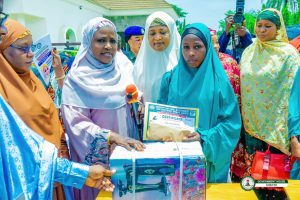
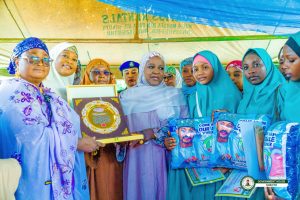
The Sokoto State Government has graduated 300 women and youths trained in tailoring as part of its efforts to equip residents with practical skills that will enable them to become self-reliant and earn sustainable livelihoods.

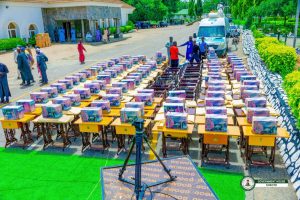
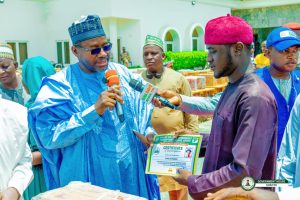
Each of the beneficiaries received a tailoring machine, N50,000 cash and a certificate at the graduation ceremony to support them in putting their newly acquired skills into practice.

Speaking at the ceremony, the wife of the Sokoto State Governor, Dr Fatima Ahmed Aliyu, said the programme was part of the administration’s broader efforts to empower women and youths with vocational skills and productive means of livelihood.

She said the administration considered youth and women empowerment a key priority, noting that providing practical skills was essential to tackling unemployment, reducing idleness and creating opportunities for economic independence.

According to her, the government has trained thousands of women and youths through various ministries, departments and agencies, while the establishment of the Ministry for Skills Acquisition and Entrepreneurship was aimed at further strengthening vocational training and entrepreneurship development in the state.

Dr Fatima also highlighted the Ahmad Aliyu Initiative, which she said supports small and medium-scale businesses, aspiring entrepreneurs and other livelihood activities.

She urged the graduands to make judicious use of the machines and cash provided to them, stressing that the training should serve as a foundation for building sustainable businesses.

“Take your business seriously, stay committed and use the skills you have acquired to become financially independent and, eventually, create employment opportunities for others,” she told the beneficiaries.

She commended the Ministry of Local Government and Chieftaincy Affairs and the Department of Community Development for implementing the programme, and assured that the government would continue to expand skills acquisition opportunities for women and youths across the state.

The Commissioner for Local Government and Chieftaincy Affairs, Ibrahim Dadi Adare, said the ministry had, in the last three years, implemented various vocational training programmes aimed at equipping youths with skills in tailoring, welding, vulcanising, soap making, knitting and jewellery production.

He said the interventions were designed to enable beneficiaries to establish sources of livelihood, support their families and contribute meaningfully to the socio-economic development of the state.

Adare said the initiative was consistent with Governor Ahmed Aliyu’s Nine-Point SMART Agenda, which, he noted, places emphasis on improving the welfare and economic wellbeing of residents.

Also speaking, the Special Adviser on Community Development, Garba Maitumbi Kebbe, said the 300 beneficiaries were trained specifically to acquire skills that would enable them to become self-reliant and establish sustainable livelihoods.

Kebbe said the graduation marked the sixth batch of the programme and disclosed that 1,750 young men and women had so far been trained in various vocational skills under the Department of Community Development.

He listed the trades to include tailoring, welding, tea making, perfumery, jewellery and crown making for women, as well as vulcanising, plumbing and electrical work for men.

He said the objective was to provide young people with practical skills that would enable them to earn legitimate incomes, support their families and avoid idleness and other undesirable activities.

NASARAWA GOV. COMMISSIONS N5.6BN BRIDGE, RURAL ROAD PROJECTS IN SOKOTO

From Muhammad Gazali Garba

Governor Abdullahi Sule, Nasarawa State

From Muhammad Gazali Garba


Governor Abdullahi Sule of Nasarawa State has commissioned two major infrastructure projects executed by the Sokoto State Government in Silame Local Government Area, reaffirming the administration’s commitment to opening up rural communities and strengthening economic activities across the state.

The projects, comprising the N2.4 billion Silame Bridge and the 9.4-kilometre Garin Magaji-Gittarana rural road, have a combined value of N5.6 billion.

Sule was in Sokoto at the invitation of his counterpart, Governor Ahmed Aliyu, as part of activities marking the third anniversary of the Aliyu administration.

Speaking at the commissioning ceremony, Governor Sule commended the Sokoto State Government for prioritising rural infrastructure, describing roads and bridges as critical to the socio-economic development of communities.

He said the projects would ease the movement of people and agricultural produce, improve access to markets, schools and healthcare facilities, stimulate commercial activities, create employment opportunities and ultimately raise the living standards of residents.

According to him, the projects were particularly significant to Silame, where farming and livestock production constitute major sources of livelihood.

“I can see smiles on the faces of all the good people who are here, as well as all the beneficiaries. I am also aware of the numerous township and rural roads that you have executed,” Sule said.

He commended Governor Aliyu for what he described as remarkable investments in road infrastructure across Sokoto State, urging the administration to sustain the tempo of development.

Sule also called for stronger collaboration among governors in the northern states to develop common strategies for addressing the region’s infrastructure and socio-economic challenges.

He appealed to residents to protect the newly commissioned facilities, stressing that public infrastructure belongs to the people and should be preserved for future generations.

“Government projects should no longer be regarded as nobody’s property. Let us all develop the culture of protecting public infrastructure because it is meant for our common good,” he said.

Earlier, Governor Ahmed Aliyu described the commissioning as another significant milestone in his administration’s determination to provide infrastructure capable of improving the living conditions and economic prospects of people at the grassroots.

Aliyu said the Silame Bridge fulfilled a campaign promise to the people of the area, explaining that the project comprised two six-cell box culverts, a retaining wall and asphalt overlay from Silame Police Station to Silame Bridge.

He said the bridge was strategically important to residents of Silame, Wamakko, Bodinga and Kware local government areas because of the agricultural and commercial activities taking place in the area.

According to him, the infrastructure would enhance connectivity between Sokoto and Kebbi states while complementing the ongoing Illela-Badagry Superhighway being undertaken by the Federal Government.

On the 9.4-kilometre Garin Magaji-Gittarana road, Aliyu said the project was executed in partnership with the Rural Access and Agricultural Marketing Project (RAAMP).

He said the road would improve access to markets for farmers, facilitate the movement of students and patients to schools and health facilities, and connect businesses in the communities to wider markets.

The governor added that the road would also facilitate the evacuation of agricultural produce, reduce travel time, improve road safety and stimulate commercial activities within the area.

Gov Aliyu listed other rural roads executed by his administration to include Buzallega, Lukuwa, Yar Gaga-Malakawa Shellar, Kakatuku-Dandamu and Unguwar Midaji-Kaurare-Gwagwar Yaya-Gwagwar Dikko, as well as Gande-Mali-Gwahitto-Fakko.

He said several other road projects had also been awarded, with some completed and commissioned while others were at various stages of construction.

The governor commended the Ministry of Works, contractors and other stakeholders for their commitment and professionalism in the execution of the projects.

He also appreciated residents and community leaders in Silame for their patience and cooperation during construction, urging them to take ownership of the infrastructure.

Aliyu warned road users and residents against damaging public facilities, stressing that the projects were funded with taxpayers’ money and must be protected for the benefit of present and future generations.

He further commended President Bola Ahmed Tinubu for creating what he described as a conducive environment for state governments to implement development projects, noting that improved allocations and revenue had strengthened the financial capacity of states.

Aliyu urged Nigerians to continue supporting the Federal Government’s efforts towards sustainable economic growth and national development, saying the impact of the ongoing reforms was increasingly being felt.

Also speaking, the state Deputy Governor and Supervising Commissioner, Ministry of Works, Engineer Idris Muhammad Gobir, said the projects reflected the administration’s commitment to providing infrastructure that would boost socio-economic development, improve connectivity and create opportunities for residents.

Gobir thanked Nasarawa State Governor, Dr Abdullahi A. Sule, for honouring the invitation despite his official engagements, assuring residents that the ministry would continue to ensure quality execution and value for public resources in road projects.

TREES: THE LIVING SHIELD AGAINST DESERTIFICATION AND CLIMATE CHANGE

By Sani Umar

There are few gifts of nature so ordinary in appearance yet so extraordinary in their contribution to human existence as the humble tree. Standing silently in our surroundings, trees rarely demand attention, yet every breath of fresh air, every moment of shade, every fruit-bearing branch and every patch of protected soil reminds humanity of their priceless contribution to life. From the smallest village to the most sophisticated city, human existence remains inseparably connected to vegetation.

Trees are, in many respects, the silent custodians of the earth. They provide oxygen, absorb carbon dioxide, moderate temperatures, protect the soil, reduce the impact of erosion, support agriculture and provide food, medicine, shelter and livelihoods. They also provide habitats for countless species of birds and animals, thereby helping to preserve the delicate balance of nature. Their importance goes far beyond their physical presence, they are fundamental to the ecological system upon which human survival depends.

It was against this background that the flag-off of this year’s tree-planting campaign by the Sokoto State Government at the Gidan Man Ada 500 Housing Units assumes particular significance. The initiative, as Governor Ahmed Aliyu explained, is not simply about putting seedlings into the soil. It is about planting hope, protecting the future and preserving the environment for generations yet unborn.

Indeed, the Governor’s description of trees as the “lungs of the earth” captures their indispensable role in sustaining life. They provide clean air, shade, fruits and timber, while their roots hold the soil together and their canopies help regulate the environment. Trees also contribute to the water cycle, support biodiversity and help communities withstand the increasingly harsh effects of climate variability.

For Sokoto State, the environmental significance of tree planting is even greater. Located within the Sahelian ecological zone, the state is particularly vulnerable to desert encroachment, land degradation, drought and other consequences of environmental degradation. The steady loss of vegetation exposes farmlands and settlements to wind erosion and gradually reduces the productivity of land on which millions of people depend.

The expansion of desert-like conditions is not merely an environmental concern. It is also an economic and social challenge. When productive farmland is degraded, agricultural output is threatened, when pasture disappears, livestock production suffers, and when rural livelihoods become increasingly difficult, pressure on communities grows. In this sense, the battle against desertification is simultaneously a battle for food security, economic stability and the preservation of rural livelihoods.

This explains why afforestation has evolved from being regarded primarily as an environmental beautification exercise into a critical component of public policy. Governments across the world are increasingly using tree planting and forest restoration to combat climate change, protect degraded land, conserve biodiversity and strengthen the resilience of communities.

In Northern Nigeria, the urgency is particularly compelling. The loss of vegetation through indiscriminate tree felling, overgrazing, bush burning, expansion of settlements and other human activities has accelerated the degradation of the natural environment. Trees are cut for firewood, charcoal, construction and other domestic purposes, often without adequate consideration of the environmental cost or provision for replacement.

The danger is that a tree that takes years to mature can be destroyed within minutes. When thousands of such trees disappear without replacement, the cumulative effect becomes devastating. The land loses its protective vegetation cover, becomes more vulnerable to erosion and gradually loses its capacity to support productive human activity.

This is why Governor Ahmed Aliyu’s call for greater responsibility in protecting trees deserves serious attention. His directive that where it becomes absolutely necessary to cut down a tree, a replacement should be provided is not merely an environmental prescription, it is a principle of responsible development. Development should not mean destroying nature without restoring what has been lost.

The Sokoto State Government has therefore taken steps to make afforestation an important part of its environmental policy. Through the Ministry of Environment, tree seedlings comprising both environmental and economic species are being procured for distribution across the state’s 23 local government areas. The Governor has directed the local government chairmen to collect their allocations and commence plantation, while emphasizing that the seedlings must not simply be planted and abandoned but properly nurtured and protected until they mature.

That emphasis on nurturing is critical. Tree planting without tree protection is little more than symbolism. The real success of an afforestation campaign should be measured not by the number of seedlings distributed or planted, but by the number that survive, mature and eventually perform the environmental and economic functions for which they were planted.

Sokoto’s wider environmental efforts also include collaboration with the National Agency for the Great Green Wall and participation in programmes designed to restore degraded landscapes and strengthen climate resilience. Shelter belts and green corridors in desert prone areas are particularly important because they serve as protective barriers against wind erosion while helping to preserve farmlands and settlements.

However, government intervention alone cannot win the battle. The greatest threat to many afforestation efforts remains the persistent destruction of trees by individuals who fell them for firewood, charcoal and other purposes. In some places, even shelter belts established at considerable public expense have reportedly been destroyed or deliberately set ablaze.

Such acts amount to more than the destruction of trees. They undermine public investment, weaken environmental protection and expose communities to the very dangers government is spending resources to prevent. Every tree destroyed from a shelter belt or newly established plantation potentially creates a gap through which erosion, wind and desertification can advance.

The experience should therefore compel a stronger partnership between government and communities. Rural dwellers, traditional institutions, religious leaders, schools, farmers, youth organizations and local government authorities all have important roles to play. Environmental protection cannot succeed if communities see government plantations as government property rather than as assets belonging to the people themselves.

Public enlightenment must consequently move beyond occasional campaigns. People need to understand the connection between trees and their daily lives, the farmer needs vegetation to protect his soil, the livestock owner needs trees and pasture, the urban resident needs trees to moderate heat, and every citizen needs the oxygen that trees help provide.

There is also a profound moral dimension to tree planting. In Islam, acts that continue to benefit others after one’s death are regarded as a form of enduring charity. The planting of a tree whose shade, fruit or other benefits continue to serve people and animals can therefore be viewed within the broader concept of Sadaqatul jariyyah. Thus, protecting and planting trees is not only an environmental responsibility but can also become an enduring legacy.

Governor Aliyu’s appeal should therefore be understood in the context of both environmental necessity and intergenerational responsibility. The tree planted today may provide shade to someone who has not yet been born. A tree protected today may help preserve farmland for a future farmer. A forest restored today may become a natural shield for communities decades from now.

This is the deeper meaning of afforestation. It is a commitment by one generation to leave the next generation a habitable environment rather than an exhausted one.

The support of President Bola Ahmed Tinubu’s administration for the Great Green Wall initiative also underscores the national dimension of the challenge. Desertification does not respect political boundaries, and neither does climate change. The response must therefore involve sustained cooperation between the Federal Government, states, local governments, development partners and communities.

For Sokoto, the task is particularly urgent. The state’s Sahelian location makes environmental degradation a challenge that cannot be postponed. Every year of inaction allows the desert to advance, farmland to deteriorate and the cost of reversing environmental damage to increase.

The tree-planting campaign should therefore become more than an annual ceremony. It should evolve into a sustained environmental culture in which every institution, household and community considers the planting, protection and nurturing of trees a civic responsibility.

RECOMMENDED NEWS

POPULAR