Home Blog Page 3

What Nigeria Must Do To Tackle Insecurity -Fashola

From our Senior Correspondent

Former Lagos State Governor, Babatunde Raji Fashola (SAN), has called for a radical and comprehensive approach to tackling insecurity in Nigeria, stressing that the country must restore respect for law and order, strengthen law enforcement institutions and address the social values influencing citizens’ behaviour.

Fashola spoke while delivering the keynote address at the 12th Triennial National Conference of Jama’at-ul Islamiyya of Nigeria, held at the organisation’s mosque in Magodo, Lagos.

The conference, themed “Nigeria’s Political Adventure, Insecurity and Need for More Radical Approach to Stability,” brought together Islamic scholars, members of the organisation’s leadership, women and youth leaders, as well as other stakeholders.

The conference also witnessed the launch of the Jama’at-ul Islamiyya Centenary School Project, aimed at strengthening the organisation’s schools and promoting quality education grounded in Islamic values.

Fashola said insecurity could not be solved simply by deploying more security personnel.

According to him, Nigeria must address the institutional, social and behavioural factors that continue to undermine stability.

He identified the restoration of law and order as the first major step towards achieving lasting security, urging Nigerians to embrace the principle that nobody should be above the law, regardless of political affiliation, religion or ethnicity.

He questioned the values being transmitted to younger generations, particularly attitudes towards law enforcement and obedience to legitimate authority.

He urged citizens to “reset” their mindset and develop greater respect for law and order.

The former governor also noted that misconduct by security personnel could damage public confidence in government because a uniform represents the authority of the state.

He therefore stressed that both security agencies and citizens had responsibilities in building an orderly society.

Fashola explained that government faced an enormous challenge in protecting citizens because it was expected to succeed almost all the time, while criminals needed only one opportunity to cause significant harm.

He said the imbalance demonstrated why government must remain effective in preventing, detecting and responding to crime.

He also identified drug abuse and youth idleness as major factors requiring urgent attention. He called for stronger preventive measures against substance abuse and greater investment in programmes that would engage young Nigerians productively.

Fashola cited the National Youth Sports Festival as an example of an initiative capable of bringing large numbers of young people together for constructive activities.

He argued that leaving hundreds of thousands of young Nigerians without meaningful engagement could create conditions that make them vulnerable to crime and other social problems.

On the proposed establishment of state police, Fashola said the idea should be viewed as an opportunity to build a new professional cadre within the public sector rather than merely increase the number of security personnel.

He advocated proper recruitment, training and professional development for officers who would serve in state police formations. According to him, policing should be treated as a professional career, just as Nigeria has developed professional cadres in engineering and medicine.

Earlier, the President of Jama’at-ul Islamiyya of Nigeria, Engr. Hashim Oyekan, described the conference as timely, given Nigeria’s security and socio-political challenges.

He stressed that stability could not be achieved through rhetoric alone but required justice, practical solutions and collective responsibility.

Oyekan said education remained a powerful instrument for social transformation and appealed to members, donors and guests to support the project as an investment in future generations.

The gathering also marked a leadership transition within Jama’at-ul Islamiyya of Nigeria.

Oyekan described leadership as an Amanah, or sacred trust, and expressed appreciation to members, scholars and the Executive Council for their support during his tenure.

He prayed for wisdom, strength and guidance for the incoming leadership as it takes the organisation forward.


Ratko Mladić: The Butcher of Bosnia and the Shadow He Leaves Behind

By Lamara Garba Azare

Some names are written into history because of courage, sacrifice and service to humanity. Others become forever associated with suffering, destruction and the darkest chapters of human history. Ratko Mladić belongs to the latter category.

The bull necked Bosnian Serb general, remembered across much of the world as the “Butcher of Bosnia”, died on Thursday, 27 August 2026, at the age of 84 while serving a life sentence in United Nations custody in The Hague. His death closes the physical life of one of the most notorious military commanders of the Bosnian War, but it does not close the history of the crimes for which he was convicted.

Ratko Mladić

Born in 1942, Mladić rose through the Yugoslav military establishment before becoming Commander of the Army of Republika Srpska during the Bosnian War of 1992 to 1995. Under his command, Bosnian Serb forces pursued a campaign of territorial conquest, persecution and ethnic cleansing against Bosnian Muslims, Croats and other non Serbs.

“Ethnic cleansing” became a chilling euphemism for a campaign marked by killings, forced displacement, detention, persecution and the destruction of communities. Behind those words were ordinary human beings driven from their homes, families torn apart and thousands of lives extinguished.

For Mladić and the nationalist project he served, the violence was presented as part of a historic struggle for territory and the creation of what became known as Greater Serbia. The pursuit of that objective transformed Bosnia and Herzegovina into a landscape of fear and suffering. International justice would ultimately determine that Mladić played a central role in a criminal campaign involving genocide, persecution, extermination, murder, deportation and other crimes against humanity.

His fanaticism was fuelled by a narrative of fear. He portrayed Bosnian Muslims as an existential threat to Serbs, helping to turn neighbours into enemies and communities that had lived alongside one another into targets of suspicion and hatred.

As the war intensified, Sarajevo became one of the most enduring symbols of the brutality of the conflict. For almost four years, the city was subjected to bombardment and sniper fire by Bosnian Serb forces. Civilians were killed and wounded as the city endured one of the longest sieges in modern European history. Ordinary people trying to live, work, attend school or obtain food and water were exposed to constant danger.

The siege demonstrated the terrifying consequences of Mladić’s command: civilian suffering became a weapon through which an entire population was terrorised.

Yet nothing defines his place in history more profoundly than Srebrenica.

In July 1995, Bosnian Serb forces overran the United Nations designated safe area of Srebrenica, where thousands of Bosnian Muslims had sought protection. Mladić appeared before frightened civilians, projecting an image of reassurance. What followed became one of the darkest episodes in Europe since the Second World War.

More than 8,000 Bosniak Muslim men and boys were killed in the days that followed. Their bodies were buried in mass graves, while efforts were later made to conceal evidence by moving remains from some graves to secondary locations. International courts determined that the Srebrenica killings constituted genocide.

The horror was not simply the number of lives destroyed. It was the deliberate organisation of the killings, the separation of families, the betrayal of those who believed they were under international protection and the systematic destruction of a community.

It was a crime that stripped away every pretence of military honour.

What makes Mladić’s legacy particularly disturbing was his apparent lack of remorse. Even when eventually brought before the court in The Hague, he remained defiant, rejecting the authority of the tribunal and continuing to present himself as a defender of his people.

To some Serbian nationalists, he remained a hero. To the victims of his forces, survivors and international justice, he became something entirely different: a symbol of the catastrophic consequences of nationalism transformed into violence.

That contradiction remains one of the most troubling aspects of his legacy. How can a man celebrated by some as a defender of his people simultaneously be remembered by others as the commander associated with some of the worst crimes committed on European soil in generations?

The answer lies in the difference between propaganda and historical record.

On 22 November 2017, the International Criminal Tribunal for the former Yugoslavia sentenced Mladić to life imprisonment after convicting him of genocide, crimes against humanity and war crimes. In 2021, the appeals chamber upheld his convictions and life sentence.

Thus, after years of hiding, arrest, trial and imprisonment, Ratko Mladić died behind the walls of a prison hospital in The Hague.

The man who once commanded armies ended his life as a convicted war criminal.

The general who once possessed enormous power could not command history to forget.

Mladić’s life offers one of history’s starkest warnings about what happens when hatred is organised, armed and given authority. He demonstrated how military power can become an instrument of persecution when human life is subordinated to ideology. He showed how propaganda can transform neighbours into enemies and how the language of national destiny can be manipulated to justify the destruction of homes, communities and lives.

Military rank does not confer moral greatness.

A uniform cannot make cruelty noble.

A battlefield victory cannot turn genocide into heroism.

And the passage of time cannot cleanse the record of atrocity.

His death therefore should not be remembered as the end of the story. The real story belongs to the victims.

It belongs to the families who waited for fathers and sons who never returned. It belongs to mothers who buried children. It belongs to survivors who carried memories that no prison sentence could erase. It belongs to Srebrenica, Sarajevo and the countless communities whose lives were shattered during the Bosnian War.

Mladić is gone, but the graves remain.

The memories remain.

The testimonies remain.

And the historical record remains.

Those who wield power through terror may imagine that their authority will last forever. They may believe that fear will silence their victims and that time will bury their crimes. But history has another function. It exposes. It remembers. It judges.

Ratko Mladić died at 84, far removed from the power and command that once surrounded him, carrying the historical weight of convictions for genocide, crimes against humanity and war crimes.

May his death remind humanity that no political ambition, ethnic grievance or military command can ever justify the deliberate destruction of innocent human lives.

May Srebrenica never be forgotten.

May Sarajevo never be forgotten.

May the victims never be forgotten.

And may the world remember Ratko Mladić not as a hero or a symbol of military greatness, but as a warning from history: when hatred is given power and cruelty is mistaken for strength, humanity itself becomes the casualty.

His life has ended.

But the testimony of his victims must never end.Their memory must outlive him.And the truth must remain buried nowhere.

Lamara Garba Azare, a veteran journalist, writes from Kano

SOKOTO FIRST LADY SEEKS PRAYERS FOR AN END TO INSECURITY

From Muhammad Gazali Garba

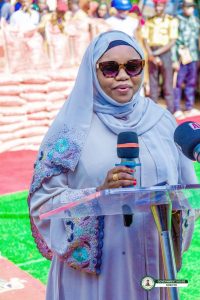
The Wife of the Sokoto State Governor, Hajiya Fatima Ahmed Aliyu, has urged residents of the state to intensify prayers for an end to insecurity and the restoration of lasting peace and stability in the State.

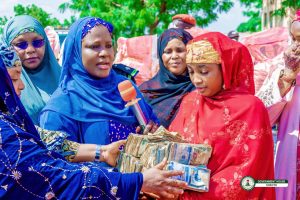
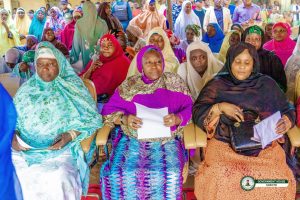
Hajiya Fatima made the call on Wednesday in Wurno and Rabah Local Government Areas while flagging off the distribution of relief items and financial assistance to women displaced by insecurity.

She said the visit was aimed at identifying with women and families affected by insecurity, reassuring them of the government’s concern and support, and strengthening their morale during the difficult period.

According to her, the affected people remained an important part of the wider community, stressing that the government was aware of the challenges they faced and would continue to support them within its capacity.
She emphasised the importance of unity, patience and mutual support among communities affected by insecurity, urging the people not to lose hope despite the difficulties they were experiencing.

The First Lady said addressing the challenges posed by insecurity required collective prayers, compassion and cooperation among government, traditional leaders, community members and other stakeholders.

She assured the affected women that the government remained committed to supporting vulnerable families and providing interventions to cushion the impact of displacement and hardship.

Hajiya Fatima said the assistance was not only intended to address immediate needs but also to give the beneficiaries hope and reassurance that they remained valued members of society.

“We want you to understand that we are with you throughout this difficult period. You are always part of our community, and we are aware of the situation you are going through,” she said.

She urged the beneficiaries to use the assistance judiciously and continue supporting one another, particularly women and children who are often more vulnerable during periods of displacement and hardship.

Hajiya Fatima called on the people to remain steadfast in prayer, asking Almighty Allah to protect them, bring relief to those affected and put an end to insecurity.

She also prayed for divine guidance for state and national leaders and for lasting solutions to the challenges confronting Sokoto State and Nigeria as a whole.

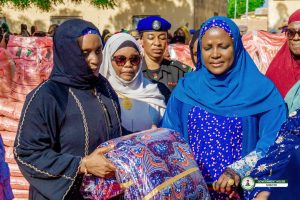
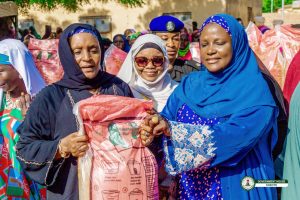
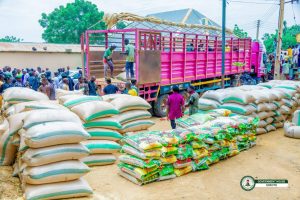
In Wurno Local Government Area, 250 bags of rice, 200 pieces of atamfa, 50 cartons of spaghetti and ₦3 million were distributed to the affected women.

Similarly, beneficiaries in Rabah Local Government Area received 250 bags of rice, 200 pieces of atamfa, 50 cartons of spaghetti and ₦3 million.

Speaking at the two occasions, the Commissioner for Women and Children Affairs, Hajiya Hadiza Ahmed Shagari, commended the state government for its continued efforts to address challenges confronting women and children across the state.

She said the ministry would continue to support programmes and policies aimed at protecting vulnerable women and children, particularly those facing difficult circumstances, while working with relevant stakeholders to promote their welfare and improve their living conditions.

Hajiya Hadiza also appreciated the First Lady for her continued concern for vulnerable women and children, noting that interventions of this nature would help alleviate hardship and restore hope among beneficiaries.

In their separate remarks, the wives of the Wurno and Rabah Local Government Chairmen, Hajiya Nafisa Abba Isa Sadik and Hajiya Aishatu Abdullahi Rabah, respectively, expressed appreciation to the First Lady for the gesture.

They described the intervention as timely and significant, saying it would provide much-needed relief to women affected by insecurity and ease some of the hardship they were experiencing.

Also, the wife of the member representing the Rabah/Wurno Federal Constituency, Hajiya Aisha Ibrahim Rabah, commended the First Lady for the gesture, describing it as a timely and compassionate response to the plight of women affected by insecurity.

The intervention is part of the state government’s broader efforts to support vulnerable women and families affected by insecurity and help them cope with the challenges arising from displacement.

JUSTICE UMARU ATU KALGO: THE PASSING OF A JURIST WHO LIVED ABOVE REPROACH

Justice Umaru Atu Kalgo,

By Sani Umar

The death of Justice Umaru Atu Kalgo, former Justice of the Supreme Court of Nigeria, marks the end of an extraordinary chapter in the history of Nigeria’s judiciary. He was not merely a judicial officer who rose through the ranks; he was a jurist whose professional life was defined by intellectual depth, discipline, integrity and an uncommon commitment to the administration of justice.

Justice Kalgo, who died at the age of 89, was born on May 12, 1937, in Kalgo, in present-day Kebbi State. His early education took him through schools in Kalgo, Sokoto and Birnin Kebbi before he proceeded to Government College, Zaria. His pursuit of knowledge eventually led him to legal studies at the Institute of Administration, Ahmadu Bello University, Zaria, and subsequently to the United Kingdom, where he undertook further legal training. He was called to the English Bar before returning to Nigeria, where he was enrolled as a barrister and solicitor of the Supreme Court of Nigeria in 1965.

His legal career began in the public service, where he worked as a State Counsel and later rose to become a senior legal officer and Deputy Solicitor-General in the Ministry of Justice of the then North-Western State. It was the beginning of a career that would eventually place him among the most distinguished judicial figures produced by Northern Nigeria and, indeed, by the country.

In 1974, Justice Kalgo was appointed a Judge of the High Courts of Kano and the North-Western States. He subsequently served on the Sokoto State High Court and, in January 1981, became Chief Judge of Sokoto State. His appointment to that position came at a time when the Nigerian judiciary was undergoing important institutional developments, requiring judges who combined legal competence with courage, maturity and a deep understanding of society.

In 1988, he was elevated to the Court of Appeal. He served at the Lagos Division and later became Presiding Justice of the Abuja Division. A decade later, in 1998, he reached the pinnacle of his judicial career when he was appointed a Justice of the Supreme Court of Nigeria.

At the Supreme Court, Justice Kalgo became part of a generation of eminent jurists whose judgments helped shape Nigerian jurisprudence during an important period in the country’s constitutional and democratic development. Court records show him sitting on several important cases involving constitutional questions, electoral disputes, criminal justice, commercial matters and questions of legal procedure.

His contribution to jurisprudence was not limited to the judgments he delivered. His interventions in cases demonstrated the painstaking approach expected of a Supreme Court Justice, examining the facts, interrogating the law and seeking conclusions founded on established legal principles. In one Supreme Court judgment concerning the Sokoto State Government and Kamdex Nigeria Limited, for example, Justice Kalgo expressly concurred with the reasoning and conclusion of the lead judgment after considering the central legal question before the Court.

But perhaps the most enduring aspect of Justice Kalgo’s legacy was not the number of judgments he participated in or the offices he occupied. It was the reputation he built around his name. In a profession where public confidence is indispensable, he was widely regarded as a man of principle, restraint and personal integrity.

His public service also extended beyond the bench. His knowledge of legal drafting and the development of Nigerian law saw him participate in important law reform and constitutional processes. He was a member of the committee involved in the revision and preparation of the Laws of the Federation of Nigeria and served in other national assignments. He later became Chairman of the Nigerian Law Reform Commission.

This dimension of his career is particularly significant. It demonstrated that Justice Kalgo understood law not merely as an instrument for resolving disputes after they occurred, but also as a framework for building institutions, regulating society and strengthening governance. His contribution therefore went beyond the courtroom to the broader development of Nigeria’s legal system.

His achievements earned him several recognitions, including national and professional honours. He was listed among recipients of the Commander of the Order of the Federal Republic (CFR), one of Nigeria’s prominent national honours. Yet, for a man of his generation, perhaps the greatest honour was the respect that followed him long after leaving the bench.

Justice Kalgo belonged to an era when public office was often regarded primarily as a responsibility rather than a privilege. His career offers a useful reminder that authority becomes meaningful when it is accompanied by character. He occupied some of the most powerful judicial offices in the country, but his legacy is better measured by the confidence and respect he commanded than by the titles attached to his name.

His death therefore represents more than the loss of a retired Supreme Court Justice. It is the departure of an elder whose professional journey connected several important phases of Nigeria’s legal history, from the old Northern Nigeria administrative structure, through the development of the state judiciaries, the Court of Appeal and ultimately the Supreme Court.

For Sokoto and the wider North, his passing is particularly poignant. He was part of a generation of Northern professionals who demonstrated that excellence, intellectual capacity and national service could coexist with humility and a strong sense of responsibility to society.

Justice Umaru Atu Kalgo has now returned to his Creator. His earthly responsibilities have ended, but the institutions he served remain, as does the example he left behind. In an age when public trust in institutions is increasingly precious, the life of a man who rose to the highest levels of judicial authority and remained respected for his integrity is a legacy worth remembering.

He lived a long and consequential life, served his country at the highest level and left behind a name that, for many who knew him and followed his career, stood for competence, dignity and probity.

As he is laid to rest according to Islamic rites, the appropriate tribute may therefore not be an elaborate celebration of office, but a simple acknowledgement of a life well spent in the service of justice and humanity.

May Allah forgive his shortcomings, accept his good deeds, grant him Aljannatul Firdaus and give his family, colleagues, friends and the people he served the fortitude to bear the loss.

Justice Umaru Atu Kalgo has left the bench, but his legacy remains seated in the history of Nigerian jurisprudence.

FIRST LADY COMMISERATES WITH FAMILIES AFFECTED BY BANDITRY, DISTRIBUTES N6M, FOOD ITEMS TO VULNERABLE WOMEN IN KEBBE, YABO

From Muhammad Gazali Garba

The Wife of the Sokoto State Governor, Hajiya Fatima Ahmad Aliyu, on Tuesday commiserated with families of victims of the recent bandit attack in Kebbe Local Government Area of the state.

She also flagged off the distribution of ₦6 million in cash, food items and clothing materials to women among internally displaced persons and other vulnerable women in Kebbe and Yabo Local Government Areas.

Speaking during the visit, the First Lady expressed sympathy with the families of the victims over the loss, pain and hardship caused by the attack, noting that the incident affected not only the immediate families but the wider community.

She urged residents of Kebbe to remain patient, united and steadfast in prayer, expressing confidence that Almighty Allah would bring an end to the security challenges confronting the area.

Hajiya Fatima said citizens must continue to support one another and maintain hope, assuring them that the government would continue to explore measures aimed at easing the difficulties faced by people affected by insecurity.

She prayed for the repose of the souls of those who lost their lives, the speedy recovery of the injured, and strength and comfort for the bereaved families. She also prayed for an end to banditry and lasting peace across Sokoto State.

Under the humanitarian intervention, beneficiaries in Kebbe Local Government Area received 250 bags of rice, 200 bundles of Atamfa, 50 cartons of spaghetti and ₦3 million in cash.

Similarly, beneficiaries in Yabo Local Government Area received 300 bags of rice, 200 bundles of Atamfa, 50 cartons of spaghetti and ₦3 million in cash.

In total, 550 bags of rice, 400 bundles of Atamfa, 100 cartons of spaghetti and ₦6 million in cash were distributed to internally displaced women and other vulnerable women across the two local government areas.

The Atamfa bundles constituted the clothing component of the intervention.

The First Lady said the intervention was aimed at cushioning the economic hardship faced by vulnerable women and displaced persons, stressing the importance of providing immediate assistance to families affected by insecurity.

She urged the beneficiaries to make judicious use of the support and assured them of the government’s continued concern for their welfare.

The Commissioner for Women and Children Affairs, Hajiya Hadiza Ahmed, commended the First Lady for visiting and commiserating with the families of the victims, as well as ensuring the distribution of cash, clothing materials and food items to the beneficiaries.

Hajiya Hadiza said the intervention demonstrated the government’s commitment to supporting vulnerable members of society, particularly women displaced by insecurity.

She noted that the assistance would provide immediate relief to the beneficiaries and help them cope with the challenges arising from displacement, insecurity and economic hardship.

In their separate welcome remarks, the wives of the Chairmen of Kebbe and Yabo Local Government Areas, Hajiya Maimuna Musa Garba kuchi and Hajiya Hadiza Bazar, thanked the First Lady for visiting the affected families and providing cash, clothing materials and food support to internally displaced and other vulnerable women in the two local government areas.

They described the gesture as a demonstration of compassion and concern for the people, noting that the intervention would help ease the hardship confronting the beneficiaries.

They prayed that Almighty Allah would reward the First Lady, protect the communities and bring an end to banditry and other forms of insecurity.

Food Security: Wamakko Provides Rice Seeds To Small-Scale Farmers 

From Dan Alhaji Sokoto

Senator Aliyu Magatakarda Wamakko representing Sokoto North Senatorial district, has distributed improved rice seeds to small-scale farmers across Wamakko Local Government Area to boost wet-season farming and food production.

The Permanent Secretary and Overseer of the Senator’s Administration Office, Alhaji Almustapha Abubakar Alkali, said the intervention was designed to improve crop yields, strengthen food security and enhance rural livelihoods.

The initiative, according  to the Senator’s SA on Media and Publicity, Bashar Abubakar, was aimed to complement the Sokoto State Government’s free fertiliser distribution programme.

Beneficiaries from several communities thanked Senator Wamakko for supporting agricultural development and improving the livelihoods of rural farmers.

The permanent secretary was assisted by the General Manager of FASCO, Umar Yari, and Executive Secretary, Arabic Board, Ahmed Baba Altine.


Boat Mishap: Gov. Aliyu Donates Relief to Victims’ Families, Warns Boat Operators Against Overloading

From Muhammad Gazali Garba

Sokoto State Governor, Dr. Ahmed Aliyu, has warned boat operators in Goronyo Local Government Area against overloading, and directed relevant authorities to enforce safety measures to prevent further loss of lives on the state’s waterways.

The Governor gave the warning during a condolence visit to Gorau town in Goronyo LGA following a recent boat mishap that claimed several lives.

Speaking through APC leader in the state, Senator Aliyu Magatakarda Wamakko, Governor Aliyu said the safety of lives and property remains a top priority of his administration.

He stated that government would not fold its arms and watch innocent lives lost to negligence, and directed relevant agencies to take proactive steps to ensure the safety of passengers on waterways across the state.

Senator Wamakko, who conveyed the Governor’s message, expressed deep sorrow over the mishap and urged bereaved families to take solace in the will of Allah.

He prayed Allah to forgive the departed, grant them Aljannatul Firdaus, and give their families the fortitude to bear the loss.

Receiving the delegation on behalf of the people, the Minister of State for Works, Muhammad Bello Goronyo, thanked the APC leader and the state government for the visit and concern.

He also appreciated the government’s continued efforts to address security challenges in the area, particularly bandit attacks.

The delegation earlier visited Dinawa village to commiserate with residents over a bandit attack that claimed seven lives and left several others injured.

Other communities visited included Birjingo in Goronyo LGA and Tsamaye in Sabon Birni LGA, where the team condoled with residents over bandit attacks and the death of the APC Chairman in the area, Abdullahi Yarima.

Speaking during the visits, Sokoto State Deputy Governor, Engr. Idris Muhammad Gobir, reaffirmed the state government’s commitment to ensuring safety on waterways and addressing lingering security challenges in affected communities.

Also speaking, the Secretary to the State Government, Muhammad Bello Sifawa, announced the donation of food items and ₦1 million to each of the families of the 65 victims of the boat mishap and bandit attacks.

He said the gesture was aimed at providing immediate relief and demonstrating government’s solidarity with the affected families in their moment of grief.

The condolence visits concluded with special prayers for Allah’s mercy on the departed and for His protection, guidance, and continued support for the administration of Governor Ahmed Aliyu and APC leader, Senator Aliyu Magatakarda Wamakko.

WOFAN: Walk the Talk

By Lamara Garba

There are people who speak about changing society, and there are those who quietly roll up their sleeves and get to work. There are institutions that make promises about human development, and there are organisations that turn those promises into opportunities. In the long journey of nation building, the difference between the two is often the difference between words and deeds, between aspiration and achievement, between talking the talk and walking the talk.

The Women Farmers Advancement Network (WOFAN), under the leadership of its Director, Dr Salamatu Garba, belongs unmistakably to the second category. Her story is not merely about an organisation implementing development programmes across communities. It is also a story about a woman who understands that the most enduring investment any society can make is an investment in people, knowledge and human capacity.

That philosophy has found a remarkable expression in the relationship between WOFAN and Bayero University, Kano. Over the years, the organisation has supported several dozens of members of staff of the University, both teaching and non teaching, providing opportunities for them to develop their careers, acquire new knowledge, strengthen their intellectual capacity and contribute more meaningfully to society.

This may appear, at first glance, to be another institutional intervention. But beneath the surface lies something much deeper: a deliberate belief that education is not an expense but an investment; that knowledge is not a private possession but a social resource; and that when one person acquires the capacity to do more, an entire community ultimately stands to benefit.

Dr Salamatu Garba appears to understand this timeless truth: when you light another person’s candle, you do not make your own light dim. Rather, you create a brighter environment in which everyone can see more clearly.

For an academic institution such as Bayero University, Kano, where teaching, research and community service constitute the foundation of its mission, capacity building is not a luxury. It is oxygen. Universities thrive when their people are continually exposed to new ideas, new technologies, new methodologies and new intellectual frontiers. A university cannot remain relevant by merely preserving yesterday’s knowledge. It must constantly prepare its people for tomorrow.

It is against this background that WOFAN’s intervention in the development of university staff deserves recognition.

The significance goes beyond the number of beneficiaries. Every member of staff supported represents a potential multiplier. A lecturer who acquires additional knowledge transfers it to students. A researcher who develops new competence may generate ideas capable of influencing policy or solving community problems. A non teaching staff member who receives professional development can improve institutional efficiency and service delivery. In this sense, the impact of capacity building travels far beyond the individual beneficiary.

It is the old African philosophy of “I am because we are” expressed through modern institutional development.

And this is where Dr Salamatu Garba’s leadership philosophy becomes particularly compelling. Her approach suggests that development is not about standing at the centre of attention; it is about creating opportunities for others to stand taller. It is not about being the loudest voice in the room, but about ensuring that more voices are equipped to speak with knowledge, confidence and competence.

There is a political dimension to such philanthropy, but not necessarily the politics of party colours or electoral contests. It is the higher politics of social investment: the politics of empowering citizens, strengthening institutions and expanding the frontiers of opportunity.

In a country where conversations about education often revolve around funding gaps, infrastructure deficits, unemployment and the migration of talented young people, interventions that strengthen the human beings behind the institutions deserve serious attention. Nigeria cannot build a knowledge economy with buildings alone. Laboratories, libraries and lecture theatres are important, but the most valuable asset of any educational institution remains the quality, capacity and imagination of its people.

This is why WOFAN’s partnership with members of the Bayero University community carries a message larger than the immediate beneficiaries.

It says that development must begin with people.

It says that the classroom must not be disconnected from society.

It says that knowledge must be given the opportunity to travel from the university to the marketplace, the farm, the community, the public institution and the policy arena.

And it says that those who have the capacity to help others rise have a moral responsibility to do so.

Dr Salamatu Garba has, through this commitment, demonstrated the spirit of a good neighbour. A good neighbour does not wait for a problem to knock loudly before offering a helping hand. A good neighbour notices potential, recognises need and responds with compassion. A good neighbour understands that the prosperity of one household contributes to the peace and prosperity of the entire neighbourhood.

There is a beautiful African wisdom which says that a person does not become great by pulling others down; greatness is measured by how many people rise because of one’s presence.

This is perhaps the most appropriate lens through which to view the WOFAN Director’s commitment to educational and professional development.

The Amazon, as she is widely regarded, has chosen to spend part of her institutional resources developing other people. In doing so, she is building a legacy that cannot be measured only in financial figures. Her real balance sheet is written in human lives, professional achievements, new ideas, improved competencies and the countless beneficiaries who may themselves go on to touch other lives.

That is the beauty of investment in knowledge: it multiplies.

Money spent on a physical structure may produce a building. Money invested in human capacity can produce teachers, researchers, administrators, innovators, entrepreneurs, policy thinkers and future leaders. The return is therefore not merely economic. It is intellectual, social, institutional and ultimately national.

For Bayero University, Kano, this support also reflects the importance of strong relationships between universities and development organisations. The university is not an island. It exists within a wider ecosystem of government, industry, civil society, development agencies and communities. When these institutions work together, the boundaries of what is possible become wider.

WOFAN’s engagement demonstrates that the development organisation can look beyond its immediate programme beneficiaries and recognise the university as a strategic partner in the production and dissemination of knowledge.

That is an important model for Nigeria.

Our universities need partners who believe in them. Our researchers need opportunities to sharpen their tools. Our administrators need exposure to contemporary practices. Our young people need mentors and institutions that can prepare them for a rapidly changing world. And our development organisations need universities capable of transforming knowledge into solutions.

The circle is complete when these interests meet.

Perhaps the most inspiring aspect of Dr Salamatu Garba’s intervention is the philosophy behind it. It reflects an understanding that societal progress is rarely achieved through one dramatic gesture. It is built brick by brick, person by person, opportunity by opportunity.

Little drops of water make the mighty ocean.

One staff member supported today may train hundreds of students tomorrow. One researcher empowered today may develop an intervention that improves thousands of lives. One administrator given an opportunity to acquire new skills may help an institution serve tens of thousands of people more effectively.

That is how seemingly modest interventions become instruments of transformation.

In this age of public relations, where institutions sometimes announce more than they accomplish, WOFAN offers a refreshing reminder that credibility is earned through action. The most convincing press release is often not a document. It is the evidence left behind in the lives of people who have benefited.

WOFAN has, over time, created such evidence.

Its support for university staff speaks to a leadership style that appears to place people at the heart of development. It is a philosophy that does not merely ask, “What can we achieve?” but also asks, “Who can we help become capable of achieving more?”

That distinction is profound.

For Dr Salamatu Garba, the work therefore goes beyond managing an organisation. It is about cultivating possibilities. It is about making the road easier for others to travel. It is about understanding that society advances when its people are given the tools to advance themselves.

And perhaps this is the essence of Walk the Talk.

To talk about education is easy. To commit resources to education is different.

To speak about human capital development is easy. To invest in the people who carry institutions forward requires conviction.

To celebrate knowledge is easy. To create opportunities for people to acquire more of it requires sacrifice.

WOFAN has chosen the harder path.

It has chosen to walk.

As Nigeria searches for pathways out of unemployment, poverty, institutional weakness and underdevelopment, stories such as this deserve to be told because they offer a different narrative about what is possible when compassion meets capacity, when leadership meets responsibility and when resources are directed towards human beings.

The story of WOFAN and Bayero University is therefore not simply a story of institutional support. It is a story about the philosophy of giving, the politics of development and the poetry of human possibility.

Dr Salamatu Garba’s intervention reminds us that leadership is not always found behind a podium. Sometimes it is found in the quiet decision to pay for someone’s training, support someone’s academic journey, strengthen someone’s professional capacity or open a door that might otherwise have remained closed.

And when that door opens, the beneficiary may not be the only one who walks through it. Students, families, communities, institutions and future generations may follow.

That is why the work matters.

That is why the gesture is bigger than the grant.

That is why the investment is bigger than the individual.

And that is why WOFAN’s relationship with Bayero University deserves to be seen as a model of purposeful partnership.

In the final analysis, societies are remembered not only for the monuments they build, but for the people they empower.

Dr Salamatu Garba appears to understand this.

She has chosen to invest in people.

She has chosen to strengthen knowledge.

She has chosen to nurture capacity.

She has chosen to make others happy by helping them become better equipped to fulfil their potential.

And in doing so, she has demonstrated a simple but powerful truth: the greatest measure of what we possess is not what we keep, but what we help others become.

That is the philosophy behind the walk.

That is the meaning behind the talk.

And that is the story of WOFAN: Walk the Talk.

*Lamara Garba, is Director, Public Affairs at Bayero University, Kano*

SOKOTO FIRST LADY FLAGS OFF DISTRIBUTION OF CASH AND FOOD ASSISTANCE TO 3,000 WOMEN -Says Intervention Targets Economic Hardship, Promotes Self-Reliance

From Muhammad Gazali Garba

The Wife of the Sokoto State Governor, Hajiya Fatima Ahmad Aliyu, on Saturday flagged off the distribution of cash grants and food assistance to 3,000 women and other vulnerable groups across the 23 Local Government Areas of the state.

The intervention is aimed at cushioning the effects of the current economic hardship and improving the welfare and living conditions of vulnerable citizens, with particular focus on women.

Speaking at the flag-off ceremony in Sokoto, Dr. Fatima Aliyu said the initiative reflects the present administration’s commitment to providing practical support to vulnerable members of society and helping them cope with economic challenges.

She recalled that on July 7, 2026, a similar exercise involving food items and cash assistance was carried out for vulnerable women as part of efforts to mitigate the impact of economic hardship.

According to her, the latest intervention complements several other support programmes implemented over the last three years for the needy, persons with disabilities, internally displaced persons, widows, and other vulnerable groups across the state.

Dr. Fatima Aliyu expressed optimism that sustained interventions of this nature would reduce the number of women compelled to engage in street begging or to rely constantly on assistance to feed themselves and their families.

She stressed that the objective was not only to provide immediate relief but also to empower women to become self-reliant, economically productive, and better able to support their families.

The Governor’s wife said the administration of Governor Ahmad Aliyu has, since its inception, prioritized the welfare of citizens, with special attention to vulnerable and disadvantaged members of society.

She noted that through various initiatives and intervention programmes, thousands of beneficiaries have received palliative support aimed at improving living conditions, reducing hardship, and promoting more dignified and productive lives.

She further disclosed that thousands of women have been trained in different trades and vocational skills to enable them to become self-reliant, support their families, and contribute meaningfully to the economic development of Sokoto State.

Dr. Fatima Aliyu also acknowledged the interventions being implemented under the Renewed Hope Initiative of the First Lady of the Federal Republic of Nigeria, Senator Oluremi Tinubu, describing them as part of collective efforts to improve the lives of underprivileged families nationwide.

She commended the First Lady for her programmes targeting needy families, internally displaced persons, persons with disabilities, the elderly, and other vulnerable groups.

While urging beneficiaries to make judicious use of the cash and food items, Dr. Fatima Aliyu encouraged them to deploy the support responsibly to cater for their families and, where possible, to invest part of it in income-generating activities to improve their livelihoods.

She reassured women and children in the state that the administration would continue to prioritize their welfare and empowerment through sustainable intervention programmes.

Dr. Fatima Aliyu also appealed to beneficiaries and women across the state to continue supporting government policies and programmes, stressing that their cooperation is critical to achieving sustainable development in Sokoto State.

She thereafter officially flagged off the disbursement of cash grants and the distribution of food items to beneficiaries across the 23 Local Government Areas of the state.

In her welcome address, the Honourable Commissioner for Women and Children Affairs, Hajiya Hadiza Shagari, described the occasion as an important milestone in the government’s efforts to support women groups across Sokoto State through the laudable initiative of Her Excellency, Dr. Fatima Ahmad Aliyu.

“This support will go a long way in alleviating the difficulties faced by many families and empowering our women to improve their livelihoods,” she said.

The Commissioner also expressed profound appreciation to His Excellency, the Executive Governor of Sokoto State, Dr. Ahmad Aliyu, for his unwavering support and commitment to the welfare, empowerment, and development of women since the inception of his administration.

She noted that the administration has consistently demonstrated that women are a critical pillar of political participation and socio-economic development in the state.

The Commissioner urged beneficiaries to make judicious use of the food items, financial assistance, and other support provided through the initiative.

“Let us continue to support one another, remain united, and contribute positively to the development of Sokoto State,” she added.

In her goodwill message, the Special Adviser to the Governor on Women Engagement, Hajiya Zainab Dasuki, described the intervention as timely, impactful, and a clear demonstration of the administration’s commitment to women empowerment.

Hajiya Zainab commended Her Excellency, Dr. Fatima Ahmad Aliyu, for her consistency in initiating programmes that directly impact the lives of women and vulnerable households across Sokoto State.

“This distribution is not just about cash and food. It is about restoring dignity, building hope, and giving our women the tools to stand on their own. Her Excellency has shown that when you empower a woman, you empower a family and indeed the entire state,” she said.

She urged beneficiaries to use the support wisely and to serve as ambassadors of peace, unity, and development in their respective communities.

Also speaking, the Special Adviser to the Governor on Internally Displaced Persons, Hajiya Maryam D-mas, lauded the intervention and described it as a reflection of Governor Ahmad Aliyu’s compassion and concern for displaced and vulnerable families across the state.

Hajiya Maryam noted that many IDPs and host communities have continued to benefit from various support programmes initiated by the administration, adding that the inclusion of vulnerable women in the distribution underscores the government’s inclusive approach to governance.

“This gesture will go a long way in bringing relief to displaced women and their children who are struggling to cope with the harsh economic realities. We are grateful to His Excellency for remembering the plight of IDPs and to Her Excellency for leading this humanitarian effort,” she said.

The event was attended by top government officials, women leaders, and beneficiaries from across the state.

Dingyadi Commissions Bodinga Jumu’at Mosque, Commends Gov Aliyu for Promoting Islamic Affairs

From Muhammad Gazali Garba

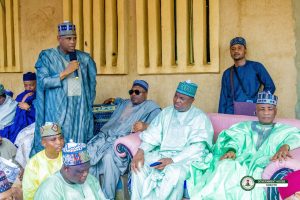
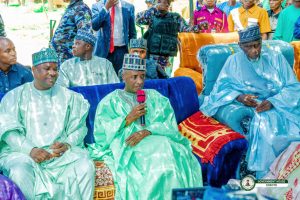
The Minister of Labour and Employment, Alhaji Muhammad Maigari Dingyadi, has commissioned Izala Jumu’at Mosque in Bodinga Local Government Area of Sokoto State, renovated and remodeled by the Speaker of the Sokoto State House of Assembly, Rt. Hon. Tukur Bala Bodinga.


Speaking Muhammad Maigari Dingyadi commended the Speaker for undertaking the renovation of the mosque, describing the project as an investment in the spiritual wellbeing of the community and a contribution towards strengthening the faith of the Muslim Ummah.

He said the project went beyond the provision of a physical structure, as it would provide a conducive environment for worship, Islamic learning, moral guidance, peaceful coexistence and unity among members of the community.

Dingyadi said he and other political leaders in the area had maintained a strong and cordial relationship with the mosque management committee adding that they had worked together on issues concerning the well-being and development of the community.


The minister urged political office holders and other well-meaning individuals to emulate the Speaker by investing in projects that address the needs and aspirations of their communities.

Dingyadi also commended Governor Ahmed Aliyu for his commitment to the development of Sokoto State and the implementation of people-oriented projects across various sectors.

He said the impact of the administration’s interventions was being felt in education, healthcare, infrastructure, agriculture, security and social development, describing the initiatives as evidence of the government’s commitment to improving the lives and welfare of the people.

The minister particularly praised Governor Aliyu for giving Islamic affairs and education the attention and support they deserved through the construction of new mosques, renovation and modernization of existing ones, as well as planned support for Islamic schools across the state.

He also commended the state government’s initiative of providing monthly stipends to mosques, as well as allowances to Imams, their deputies and muezzins, saying the support would strengthen religious institutions and enable religious leaders to continue promoting Islamic teachings, morals and values.

Dingyadi urged the community to take ownership of the newly renovated mosque and ensure its proper maintenance so that it could continue to serve as a centre of worship, learning, knowledge, moral guidance and peaceful coexistence.

.
He also called on religious leaders to use mosques as platforms for promoting peace, unity, tolerance and responsible citizenship among members of the community.

In his remarks, Governor Ahmed Aliyu commended the Speaker for undertaking the project, describing it as a commendable contribution to Islamic propagation, religious affairs and the spiritual wellbeing of the people.

The governor said the promotion of Islamic affairs remained the second pillar of his administration’s nine-point SMART agenda, noting that his government had, since inception, commissioned and constructed model mosques across the state, while several others were at various stages of completion.

He disclosed that the government would soon extend its mosque rehabilitation programme to additional communities, including Isa, Sabon Birni, Balle,Tangaza,Binji ,Bunkari among Others as part of efforts to ensure that communities across the state had decent places of worship.

Governor Aliyu further disclosed that his administration had introduced monthly stipends for mosques, ranging from ₦300,000 to ₦500,000 depending on the size and needs of each mosque.

According to him, the support was in addition to monthly allowances provided to Imams, Islamic scholars and other religious leaders in recognition of their invaluable services to the community.

He also announced plans to renovate existing Islamic schools and construct new ones with suitable facilities, saying the initiative was aimed at promoting Islamic education and instilling good morals and values in children.

The governor said his administration would continue to implement development initiatives that would transform communities while promoting the noble values of Islam.

He urged the management of the newly commissioned mosque and members of the community to take proper care of the facility and ensure that it remained a centre of worship, learning, moral guidance, peace, unity and the fear of Allah.

Governor Aliyu also called on political office holders and other well-meaning members of society to emulate the Speaker by giving back to their communities through projects that address the needs and aspirations of the people.

He expressed appreciation to the Speaker for his contribution to the development of the community and prayed that Almighty Allah would accept the project as an act of worship and reward him abundantly.

Speaking on the project, the Speaker of the Sokoto State House of Assembly, Rt. Hon. Tukur Bala Bodinga, said the renovation of the mosque was undertaken as part of his commitment to giving back to the community and supporting initiatives that promote the religious and social wellbeing of the people.

He said the mosque was an important institution in the community and that renovating it into a befitting place of worship would provide residents with a conducive environment for performing their religious obligations while strengthening unity and peaceful coexistence.

The Speaker expressed appreciation to Governor Ahmed Aliyu, Minister Muhammad Maigari Dingyadi, traditional rulers, Islamic scholars, political leaders and members of the community for their support and for honouring the invitation to the commissioning.

He urged the beneficiaries to protect and maintain the facility, assuring them of his continued commitment to supporting initiatives that would contribute to the development and wellbeing of the people of Bodinga and Sokoto State.

Representing the Sultan of the Wazirin Sokoto, Professor Sambo Wali Junaidu, commended the Speaker for the initiative and described the renovation of the mosque as a laudable contribution to the promotion of Islamic affairs and the spiritual wellbeing of the community.

He urged the management and members of the community to sustain the proper maintenance of the facility and use it to promote Islamic teachings,peace and unity among people.

RECOMMENDED NEWS

POPULAR