Home Blog Page 4

2027 Elections: Why Governor Ahmed Aliyu Remains the Indispensable Choice

By Mohammed Umar

As Nigeria gears up for the 2027 elections, the political landscape is becoming increasingly dynamic, particularly in Sokoto State. With the upcoming gubernatorial race, it appears that Governor Ahmed Aliyu has solidified his position as the frontrunner, leaving many analysts to speculate that there may be no viable alternative to his leadership.

With a track record of transformative governance, strategic vision, and grassroots connection, the incumbent has established himself as the only adequately prepared candidate capable of steering Sokoto toward sustained stability and progress.

Governor Aliyu’s administration has been marked by deliberate, people-centered policies that address the core needs of Sokoto’s citizens. From infrastructure development, including the rehabilitation of major roads in the state capital and rural access roads, to investments in education, healthcare and agriculture, the governor has delivered tangible results. His security initiatives, in partnership with federal agencies and vigilantes, have significantly reduced banditry and cattle rustling, restoring confidence in rural communities.

While opposition parties have fielded candidates, none can match the governor’s combination of experience, local knowledge, and a working relationship with both the federal government and traditional institutions. The political calculations in Sokoto is clear: continuity under Aliyu means ongoing projects, uninterrupted progress, and a stable administrative framework.
An untested alternative would risk resetting the wheel of development, causing delays and uncertainty.

Governor Aliyu’s popularity stems not from political machinery alone but from his accessibility and responsiveness to the people. His open-door policy, regular interactions with people, and swift response to community concerns have built a bond of trust with voters across the 23 local government areas. In a state where loyalty is earned through service, not slogans, the governor remains the undisputed choice.

Any aspirant hoping to unseat Governor Aliyu faces formidable obstacles: lack of name recognition outside their immediate constituencies, limited resources and the absence of a robust party structure. Moreover, the ruling APC remains united in Sokoto, while opposition parties are factionalized and grappling with internal crises.

As 2027 approaches, the governor’s record of visionary leadership, security gains, and inclusive development makes him the only viable option. In the battle for Sokoto’s future, the choice is clear: no alternative comes close.

Senator Hassan Nasiha Flags Off Construction of ₦16.8bn University Gate–Kwalkwalawa–Inname–Binji Road in Sokoto

From Muhammad Gazali Garba

Former deputy governor of Zamfara State,Senator Hassan Muhammad Nasiha Gusau has flagged off the construction of the ₦16.8 billion, 41.27-kilometre University Gate–Kwalkwalawa–Inname–Binji Road in Sokoto State, a major rural infrastructure project initiated by the administration of Governor Ahmed Aliyu to improve connectivity, boost agricultural activities and stimulate economic development in the state.

Speaking at the flag-off ceremony, Governor Ahmed Aliyu said the project was being implemented through a partnership involving the Sokoto State Government, the Rural Access and Agricultural Marketing Project (RAAMP), SCALE-UP and the World Bank.

He said the partnership reflected his administration’s commitment to expanding rural infrastructure, opening up communities and creating an enabling environment for agricultural and economic activities to thrive across the state.

According to him the road, which traverses parts of Wamakko and Binji Local Government Areas, is expected to connect several communities along the corridor and improve access to markets, schools, healthcare facilities and other essential services, while facilitating the movement of agricultural produce.


He said the project was part of his administration’s sustained commitment to infrastructure development, particularly the construction and rehabilitation of township and rural roads across Sokoto State.

According to the governor, the project comprises road works, hydraulic structures, asphaltic wearing course, surface dressing, culverts and road furniture.

Governor Aliyu explained that the project area was predominantly agrarian, with many residents engaged in farming and other agricultural activities.

He said the completion of the road would make it easier for farmers to transport their produce to markets, reduce transportation difficulties, improve mobility and enhance access to essential social services.

“Though the University Gate–Inname–Binji Road may appear modest, its significance and socio-economic implications are immense. It is a road of hope, a road of economic prosperity and a road that connects communities with opportunities,” Governor Aliyu said.

He noted that his administration had continued to prioritise road projects as part of efforts to open up rural communities, facilitate economic activities and connect residents to markets and social services.

The governor listed some of the roads already commissioned or under construction to include the Dandume–Kurro Road, Zauro–Wurno–Daji Road, Kaura Road, Gongoreya Road, Goringwa Road, Wamakko–Bunkure Road and Zengewa–Dari Road.

Governor Aliyu commended the contractor, engineers, consultants, planners and other professionals involved in the University Gate–Kwalkwalawa–Inname–Binji Road project, urging them to execute the work according to specifications and complete it within the stipulated timeframe.

He also appealed to the benefiting communities to cooperate with the contractor, consultants and project implementation team to facilitate the smooth and successful completion of the project.

The governor assured the people of Sokoto State that his administration would continue to implement development projects aimed at improving infrastructure, opening up rural communities and enhancing the quality of life of residents.

Governor Aliyu further acknowledged the support of President Bola Ahmed Tinubu for infrastructure development in Sokoto State, particularly federal projects such as the Sokoto–Gusau and Illela–Badagry corridors.

In his remarks while flagging off the road construction,Senator Hassan Muhammad Nasiha commended the Federal Government, the Sokoto State Government and development partners for their commitment to infrastructure development, agricultural production and poverty reduction.

He described the road project as an important intervention that would contribute significantly to the socio-economic development of the benefiting communities.

Nasiha urged the contractor to execute the project in accordance with the approved specifications, within the agreed timeframe and to the required quality standards.

He also appealed to the benefiting communities to support the project, cooperate with the contractor and protect the infrastructure upon completion.

The senator pledged his support for the successful implementation of the project and urged the people of Sokoto State to continue supporting initiatives aimed at improving the welfare and development of their communities.

Representing the Sultan of Sokoto at the ceremony, the District Head of Gwadabawa, Alhaji Muhammad Lawal Zayyana, commended the Sokoto State Government, RAAMP, the World Bank and other development partners for initiating the project.

Zayyana described the road as an important development intervention for the benefiting communities, noting that improved rural connectivity would enhance agricultural production, facilitate the movement of people and goods and strengthen access to essential services.

He urged the contractor and other stakeholders to ensure that the project was executed to the required standards and completed within the stipulated timeframe.

Earlier, the State Coordinator of RAAMP, Engineer Malami Umar Tambuwal, described the project as another important milestone in the state’s efforts to improve rural infrastructure and enhance the socio-economic well-being of its people.

Tambuwal said the road was more than a transportation corridor, describing it as an investment in the future of the benefiting communities.

He said the project would reduce travel time and transportation costs while improving access to markets, schools, healthcare facilities and other essential services.

According to him, improved road access would boost agricultural productivity by enabling farmers to transport their produce more efficiently, reduce post-harvest losses and encourage increased economic activities along the corridor.

The RAAMP coordinator added that the project would create employment opportunities during construction and contribute to poverty reduction in the benefiting communities.

He expressed appreciation to the Federal Government and the World Bank for their continued partnership and support towards the implementation of RAAMP projects in Sokoto State.

Tambuwal appealed to the beneficiary communities to take ownership of the project by cooperating fully with the contractor, consultants and project implementation team to ensure its timely and successful completion.

He reaffirmed the commitment of the Sokoto State Road Implementation Unit to transparency, accountability and quality service delivery, stressing that projects entrusted to the unit would be implemented to deliver maximum value to the people of the state.

Subsidized Food Sale: Cushioning Hardship

By Sani Umar

Democracy is ultimately about good governance and the responsible deployment of public resources for the benefit of the people. Beyond the provision of infrastructure and public institutions, the success of any democratic government is also measured by its ability to respond to the immediate needs of citizens, protect their welfare and create opportunities for them to live decent and productive lives.

This is particularly important in periods of economic difficulty, when rising prices and declining purchasing power place additional pressure on households. For many ordinary families, food is the most immediate concern. When the prices of basic commodities rise beyond their reach, government intervention becomes necessary, not as a replacement for the market, but as a temporary mechanism for protecting vulnerable citizens and maintaining social stability.

It is against this backdrop that the decision of the Sokoto State Government under Governor Ahmed Aliyu to procure essential food commodities for sale to residents at subsidised prices should be understood. The policy is designed to cushion the effects of economic hardship and rising food prices while ensuring that rice, millet and maize remain available and affordable to a significant number of households across the state.

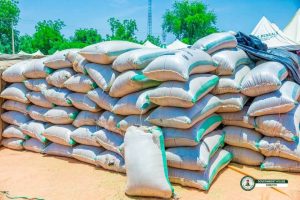
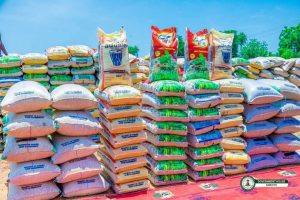
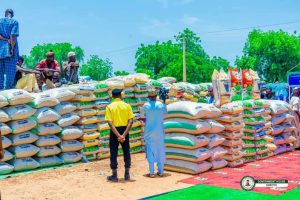
The scale of the intervention is significant. The state government procured 550 truckloads of rice, millet and maize at a total cost of ₦9.078 billion, including logistics, for distribution across the 23 local government areas. The commodities are not being distributed free of charge; rather, the government is absorbing a substantial portion of the cost so that residents can purchase them at prices considerably below the procurement cost.

Under the arrangement, a bag of rice procured at ₦53,375 is being sold to residents for ₦30,000, meaning that the state government is subsidising each bag by ₦23,375. Similarly, millet and maize procured at ₦43,625 per bag are being sold for ₦25,000, with the government absorbing ₦18,625 on each bag. These figures demonstrate that the intervention is not merely a symbolic gesture but a substantial financial commitment to household welfare.

The structure of the programme is also important because it demonstrates that government intervention in food security does not necessarily have to mean undermining farmers, traders or other participants in the food supply chain. By procuring the commodities from producers and the market, the government creates demand for agricultural produce while simultaneously making the commodities more affordable to consumers.

This creates a potentially beneficial chain of economic activity. Farmers and producers receive value for their produce, suppliers and contractors engaged in the procurement process earn legitimate income, transporters participate in the movement of commodities, while consumers benefit from lower prices. In this sense, the intervention goes beyond simply putting food on the table, it also injects resources into the local economy.

The decision to sell rather than give out the commodities entirely free of charge is equally significant. According to the Governor, the state expects to recover approximately ₦4.539 billion, representing 50 per cent of the total procurement cost, while the other ₦4.539 billion represents the subsidy borne by the government. The arrangement therefore combines social protection with a measure of cost recovery, making it possible for the intervention to reach more people than a completely free distribution model might allow.

Equitable distribution is another critical component of the programme. Each of the 23 local government areas is expected to receive between 12 and 16 truckloads, depending on population and size. Such an arrangement is intended to ensure that the intervention is not concentrated in the state capital or a few major communities, but reaches residents across the state.

Perhaps more importantly, Governor Aliyu has made it clear that the programme is not intended to compete with or destroy the activities of traders. This distinction is important. Government intervention in the food market must be carefully designed so that while consumers are protected from excessive prices, farmers, wholesalers, retailers and other market participants are not driven out of business. The objective should be to complement the market, not replace it.

The Governor’s appeal to traders to continue reducing the prices of essential commodities also reflects this understanding. Food security is not achieved through government procurement alone. It requires production, transportation, storage, marketing and affordability. This was aptly captured by the Minister of Budget and Economic Planning, Senator Abubakar Atiku Bagudu, who noted during the flag-off that food security goes beyond production to include distribution, marketing and affordability.

The Minister’s intervention also places the Sokoto initiative within the broader national economic context. International conflicts, energy and fertiliser price fluctuations, trade disruptions and domestic economic reforms can all affect food production and prices. These challenges require coordinated responses from the Federal, State and Local Governments, as well as farmers, traders and consumers.

The Sokoto initiative therefore represents one aspect of a broader strategy to address the immediate consequences of economic hardship while supporting the state’s longer term food security objectives. It complements other interventions under Governor Aliyu’s 9-Point SMART Agenda, particularly those relating to agriculture, economic empowerment and the welfare of citizens.

However, the effectiveness of such a programme ultimately depends on implementation. Subsidised commodities can only achieve their intended purpose if they actually reach the people for whom they are meant. This explains the Governor’s directive for transparency and accountability and his warning against diversion, manipulation and abuse. The monitoring mechanisms announced by the committee overseeing the exercise will consequently be as important as the procurement itself.

The intervention also presents an opportunity to strengthen public confidence in government. When citizens see public resources translated into tangible benefits, such as affordable food at a time when household budgets are under pressure, they are more likely to appreciate the practical meaning of governance. The real measure of the programme, therefore, will not only be the number of trucks procured or the amount of money spent, but the number of households that genuinely experience relief.

Ultimately, the subsidised sale of food items should be viewed as both a social intervention and an economic strategy. It provides immediate relief to households, supports the food market, creates demand for agricultural produce and demonstrates the willingness of government to deploy public resources in response to citizens’ needs. If implemented transparently and sustained alongside investments in agricultural production, storage, irrigation, rural infrastructure and market development, such interventions can contribute meaningfully to building a more resilient food system in Sokoto State.

For Governor Ahmed Aliyu’s administration, the challenge now is to ensure that the good intentions behind the programme are matched by effective implementation. With 550 truckloads of essential commodities and a substantial ₦4.539 billion government subsidy at stake, the people of Sokoto deserve a distribution process that is transparent, equitable and free from abuse. If that objective is achieved, the programme will stand not merely as a response to economic hardship, but as an example of how government can use its resources to cushion citizens while simultaneously strengthening the economic ecosystem that feeds them.

Bagudu Flags Off Subsidised Sale of 550 Truckloads of Food Items in Sokoto

From Muhammad Gazali Garba

Sokoto State Governor, Dr. Ahmed Aliyu, has disclosed that his administration procured 550 truckloads of rice, millet and maize at a total cost of ₦9.078 billion, inclusive of logistics, for sale to residents at subsidised prices across the state.

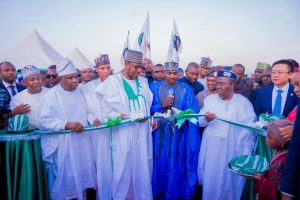
Governor Aliyu made the disclosure in Bodinga Local Government Area of Sokoto State during the flag-off of the programme by the Special Guest of Honour, the Minister of Budget and Economic Planning, Senator Abubakar Atiku Bagudu.

He said the intervention was designed to cushion the effects of economic hardship, reduce the burden of rising food prices and make essential commodities more affordable and accessible, particularly to low-income and vulnerable households.

Under the programme, a bag of rice procured by the state government at ₦53,375 will be sold for ₦30,000, representing a subsidy of ₦23,375 per bag.
Similarly, bags of millet and maize procured at ₦43,625 each will be sold for ₦25,000, representing a subsidy of ₦18,625 per bag.

The Governor explained that the programme was carefully designed to support the people without undermining the activities of traders, stressing that the intervention was aimed at ensuring that essential food items reached consumers at affordable prices.

He commended traders across the state who had responded positively to government appeals to reduce the prices of essential commodities, particularly during periods of increased demand.

Governor Aliyu said the initiative was part of his administration’s broader efforts to strengthen food security, cushion economic hardship and improve the welfare of citizens under the Nine-Point SMART Agenda.

He directed officials and local government coordinators involved in the exercise to ensure transparency and accountability, stressing that the commodities must reach the intended beneficiaries.

The Governor warned against diversion, manipulation or abuse of the programme and urged all those entrusted with its implementation to strictly adhere to the approved guidelines.

Flagging off the programme, Senator Abubakar Atiku Bagudu, Minister of Budget and Economic Planning, commended Governor Aliyu for initiating what he described as a timely and people-oriented intervention.

Bagudu said he was deeply honoured to have been invited to Sokoto and given the opportunity to participate in the programme and perform the flag-off.

He noted that making essential food commodities available at affordable prices was critical to food security and the wellbeing of citizens, stressing that food security went beyond production to include distribution, marketing and affordability.

The Minister explained that food security was a shared responsibility of the three tiers of government, with the Federal, State and Local Governments all having important roles to play.

He noted that global developments, including international conflicts, disruptions in energy and fertiliser prices, trade tensions and domestic economic reforms, had continued to put pressure on food production, distribution and prices.

Bagudu commended the Sokoto State Government for responding to these challenges by supporting food producers and traders while ensuring that commodities reached consumers at affordable prices.

He said the approach demonstrated the role of government in balancing support for food production, trade and consumer welfare.


The minister also commended Governor Aliyu for the achievements recorded by his administration over the past three years, saying he was proud to be associated with the progress made in Sokoto State.

Bagudu commended the state’s leaders for their contributions to national development and unity, as well as their support for President Bola Ahmed Tinubu and Vice President Kashim Shettima.


Earlier in his remarks the Chairman of the Sales of Food Items and Other Essential Commodities Committee, Alhaji Chuso Abdullahi Dattijo, said the programme was part of the Governor’s efforts to make essential commodities available to residents at affordable prices.

Dattijo recalled that Governor Aliyu inaugurated the committee on October 13, 2024, and said monitoring mechanisms had been put in place to ensure that the commodities reached the intended beneficiaries.

He urged local government coordinators to ensure that vulnerable and less-privileged residents benefited from the exercise.


The Commissioner for Agriculture, represented by the Permanent Secretary of the Ministry, Mustapha Alkali, commended Governor Aliyu for approving the initiative and his continued commitment to the welfare of the people.

He said the programme would help make essential food items more affordable, reduce hunger and cushion the effects of rising food prices, particularly among vulnerable households.

Sultan’s Representative
The District Head of Kilgori, Dr. Muhammad Jabbi Kilgori, who represented the Sultan of Sokoto, conveyed the Sultan’s goodwill to Governor Aliyu and congratulated him on the successful completion of three years in office.

He urged the Governor to sustain his administration’s development programmes and assured him of the support and cooperation of traditional rulers across the state.

Dr. Jabbi Kilgori also urged officials handling the subsidised commodities to discharge their responsibilities with the fear of Allah and ensure that the food items reached the intended beneficiaries.

He prayed for continued guidance and success for Governor Aliyu and prosperity for the people of Sokoto State.

The intervention is expected to provide relief to residents across Sokoto State by making essential food commodities available at substantially reduced prices, particularly for vulnerable households.

Sokoto Govt Pledges Support for EFCC-Led Terrorism Financing Risk Assessment

From Muhammad Gazali Garba

Sokoto State Governor, Dr. Ahmed Aliyu, has pledged the full support and cooperation of the state government to the Economic and Financial Crimes Commission (EFCC) and other relevant agencies conducting the National Terrorism Financing Risk Assessment of the Non-Profit Sector in Nigeria.

Governor Ahmed Aliyu gave the assurance when he received the technical team, led by Erinomo Temitope, at the Council Chamber, Government House, Sokoto.

The Governor commended the EFCC and other participating agencies for undertaking the important exercise, describing it as a significant initiative aimed at strengthening efforts to prevent terrorism financing and safeguard the integrity of the non-profit sector in Nigeria.

He acknowledged the important role played by non-profit organisations in national development, particularly their contributions to supporting vulnerable communities and complementing government efforts in the provision of essential social services.

Governor Aliyu assured the delegation that the Sokoto State Government would provide the necessary cooperation and facilitate access to relevant government institutions, non-profit organisations and other stakeholders to enable the team to effectively carry out its assignment.

He also urged relevant non-profit organisations operating in the state to extend maximum cooperation to the technical team and provide the necessary information and feedback required for a successful assessment.

The Governor expressed confidence that the outcome and recommendations of the exercise would further strengthen collective efforts to promote integrity, accountability, transparency, good governance and sustainable development in Sokoto State and the country at large.

Earlier, the leader of the technical team, Erinomo Temitope, explained that the National Terrorism Financing Risk Assessment of the Non-Profit Sector was being conducted across Nigeria’s six geopolitical zones by an inter-agency committee constituted for that purpose.

He said the exercise was designed to identify and assess potential vulnerabilities within the non-profit sector that could be exploited by terrorists and their financiers, as well as develop appropriate measures to mitigate the identified risks.

According to him, the team would engage relevant government agencies, security institutions, non-profit organisations and other stakeholders in Sokoto to obtain feedback on the challenges they face in carrying out their legitimate activities.

He added that the engagement would also provide an opportunity to sensitise non-profit organisations on measures they could adopt to protect their operations and resources from being exploited for terrorism financing.

Temitope emphasised that terrorism financing remained a collective challenge requiring coordinated efforts among government institutions, security agencies, non-profit organisations, civil society groups and other stakeholders.

He noted that Nigeria was not alone in the fight against terrorism financing, explaining that the country’s efforts were also being undertaken within the broader international framework for combating money laundering and terrorism financing, including the standards of the Financial Action Task Force (FATF).

He expressed appreciation to Governor Ahmed Aliyu and the Sokoto State Government for the warm reception and support extended to the delegation, stressing that the cooperation of stakeholders was essential to the success of the assessment.

The engagement is expected to provide valuable insights into the risks and challenges facing the non-profit sector and contribute to the development of effective measures to prevent terrorism financing while ensuring that legitimate humanitarian and charitable activities continue unhindered.

Sokoto PWA Announces ₦7,672,882 Final Fare for 2027 Hajj

Sokoto PWA Announces ₦7,672,882 Final Fare for 2027 Hajj

Alhaji Musa Aliyu, Chairman, Sokoto PWA

The Sokoto State Pilgrims Welfare Agency has announced ₦7,672,882 (Seven Million, Six Hundred and Seventy-Two Thousand, Eight Hundred and Eighty-Two Naira) as the final fare for the 2027 Hajj.
This was contained in a press statement released by Faruku Umar, head of information and communications of the Agency.

According to the press release, the final fare was announced Monday by the Chairman of the Agency, Alhaji Aliyu Musa, following a management meeting of the Agency held to review preparations for the forthcoming 2027 Hajj operation.

The Chairman also announced 26th September 2026 as the deadline for the registration of intending pilgrims for the 2027 Hajj.

Alhaji Aliyu Musa therefore called on all intending pilgrims who have registered for the pilgrimage to hasten the submission of their valid International Passports and ten (10) copies of recent passport photographs to their respective Hajj Registration Officers.

He explained that the Saudi Arabian Nusuk Masar portal is currently open for electronic registration and uploading of pilgrims’ details, stressing the need for intending pilgrims to submit the required documents without further delay.

The Chairman further cautioned that payment of Hajj fare alone, without submission of a valid International Passport, does not guarantee participation in the 2027 Hajj.

He urged intending pilgrims to comply with all registration requirements and deadlines to avoid being excluded from the electronic registration process and subsequent arrangements for the pilgrimage.

The management meeting was attended by the Permanent Secretary, Alhaji Ibrahim Umar JJ, and all Directors of the Sokoto State Pilgrims Welfare Agency.

The Agency reaffirmed its commitment to ensuring a smooth, well-organised and successful 2027 Hajj operation for the people of Sokoto State.

SECOND TERM AND THE SCOREBOARD

Gov. Ahmed Aliyu of Sokoto State

BY Sani Umar

As another election season approaches, public attention naturally shifts from promises to performance. Across democratic societies, incumbents seeking re-election are expected to present convincing evidence of what they have achieved during their tenure, while citizens assess whether those achievements justify another mandate.

In Sokoto State, this conversation has become increasingly important as political activities gather momentum ahead of the next general elections. When Governor Ahmed Aliyu assumed office in May 2023, he inherited a state confronted by multiple challenges, including insecurity, inadequate infrastructure, unemployment, pressure on healthcare and educational facilities, and growing public expectations for improved governance and service delivery.

Armed with his Nine-Point Smart Innovative Agenda and the support of the All Progressives Congress (APC), the governor pledged to pursue people-oriented policies that would accelerate development, restore public confidence in government, and improve the living conditions of citizens.

As the administration approaches the end of its first term, attention has naturally shifted from campaign promises to measurable outcomes, with public discussion increasingly focused on whether the Governor’s performance has been sufficient to warrant another mandate from the people of sokoto state.

Any fair assessment of his administration must begin with infrastructure development, an area where the government has recorded some of its most visible achievements. Across the state, major road construction and rehabilitation projects have transformed both urban and rural communities. Several township roads have been completed, while strategic rural roads have improved connectivity, enhanced trade, and facilitated access to social services. Housing projects and urban renewal programmes have further changed the physical landscape of Sokoto State.

The administration has also demonstrated a strong commitment to education. Recognising that education remains the foundation of sustainable development, the government has invested heavily in school rehabilitation, classroom construction, provision of furniture, and expansion of educational opportunities. The renovation of schools under various intervention programmes and increased support for learning infrastructure have contributed to improving the educational environment across the state.

In the health sector, significant investments have been made to strengthen service delivery. Hospitals and primary healthcare centres have undergone rehabilitation, while additional healthcare workers have been recruited and deployed to underserved communities. Programmes targeting maternal and child health, routine immunisation, and primary healthcare have further enhanced access to medical services, particularly in rural areas.

Agriculture, which remains the backbone of Sokoto State’s economy, has received unprecedented attention under the current administration. The procurement and distribution of 250 tractors, fertilisers, improved seeds, agrochemicals, and farming equipment have provided critical support to farmers. These interventions have not only boosted agricultural productivity but have also contributed to broader efforts aimed at enhancing food security and improving rural livelihoods.

Security remains one of the greatest challenges facing Sokoto State and the entire North-West region. Although the problem predates the current administration and continues to pose serious difficulties, the government has invested substantially in supporting security agencies through the provision of vehicles, motorcycles, communication equipment, and other logistics. The establishment and strengthening of community based security structures have also complemented ongoing efforts to safeguard lives and property. Another commendable effort of the Governor was the procurement of 62 Armoured Vehicles to add to the fleet of vehicles given to security forces to tackle banditry and other criminalities.

One of the administration’s notable achievements is its emphasis on social welfare and economic empowerment. Through various intervention programmes, thousands of women, youths, artisans, and vulnerable persons have benefited from financial assistance, skills acquisition initiatives, and empowerment schemes designed to improve household incomes and reduce poverty.

The government has also maintained a productive relationship with development partners, including the World Bank, UNICEF, Nutrition International, and other international organisations. These partnerships have attracted additional resources and technical support to critical sectors such as education, healthcare, nutrition, water supply, and rural development, thereby expanding the reach and impact of government programmes.

Another area deserving recognition is the administration’s investment in water supply. Although challenges remain, significant resources have been committed to the rehabilitation of water facilities and the revitalisation of the state’s water infrastructure. These efforts are aimed at addressing one of the most persistent concerns of residents across the state.

Supporters of Governor Ahmed Aliyu argue that these achievements demonstrate a government focused on development rather than political distractions. They point to the widespread distribution of projects across the 23 local government areas as evidence of an administration determined to ensure equitable development and inclusive governance.

From a broader governance perspective, Governor Ahmed Aliyu has demonstrated a clear commitment to development-oriented spending, fiscal discipline, and the implementation of policies aligned with his campaign promises. The consistency with which projects have been executed across multiple sectors suggests an administration determined to leave a lasting developmental footprint.

Viewed against the record of the past three years, there is a strong argument that Governor Ahmed Aliyu has earned the opportunity to present himself before the electorate for another term in office. His administration has recorded visible achievements in infrastructure, education, healthcare, agriculture, security support, social welfare, and rural development, providing a credible basis upon which voters can assess his request for a renewed mandate.

Based on the available evidence, there is a strong case to be made that he is justified to seek for a renewed mandate. No doubt, his administration has recorded visible achievements in infrastructure, education, healthcare, agriculture, security support, social welfare, and rural development. These accomplishments provide a credible foundation upon which he can seek another mandate from the electorate.

As Sokoto State moves closer to another electoral cycle, Governor Ahmed Aliyu’s greatest advantage may well be the body of work he has assembled during his first term.

Whether that record is sufficient to earn him another four years will be determined by the voters. What is beyond dispute, however, is that he enters the contest with substantial achievements to defend and a developmental record that will undoubtedly shape the political debate in the months ahead.

SOSG Approves N1.759bn For 1,000 Motorcycles In Fresh Push Against Banditry

From Muhammad Gazali Garba

The Sokoto State Government has approved N1,759,250,000 for the procurement of 1,000 Bajaj motorcycles to be distributed to security agencies as part of measures to enhance mobility and strengthen ongoing efforts to combat banditry across the state.

The approval was among the key decisions reached at the 6th Regular Meeting of the Sokoto State Executive Council for 2026, held on Wednesday,at the Council Chamber, Government House,Sokoto,and chaired by the Deputy Governor, Idris Muhammad Gobir.

The motorcycle procurement is expected to complement the state government’s recent investment in security equipment, including the acquisition of 62 armoured vehicles valued at N27 billion, which have already been distributed to security agencies to improve their operational capacity, particularly in areas affected by banditry.

In the education sector, the Council approved N723,171,671.23 for the renovation of Government Technical College, Runjin Sambo. It also approved N498,995,000 for the rehabilitation of A.A. Raji Special School and N489,319,380 for the renovation of Phase I of the College of Nursing Sciences.

Similarly, N229,363,455 was approved for the renovation of the male and female hostels at the College of Basic and Remedial Studies, while N174,642,000 was approved for the renovation of staff quarters and upgrading of the perimeter fence at the College of Agriculture and Animal Science, Wurno.

The Council further approved N133,665,861.32 for the construction of a perimeter fence at Wamakko Primary Health Centre and N93,880,000 for the procurement of vocational learning equipment for 46 women’s vocational centres across the state’s 23 local government areas.

In the water sector, the Council approved N90,208,410 for the procurement of PVC pipes and plumbing fittings to support the maintenance of 142 semi-urban water supply schemes across the 23 local government areas.

The meeting, which lasted about two hours, considered and approved the various projects as part of the administration’s continued efforts to strengthen security, improve public infrastructure and enhance the delivery of essential services to the people of Sokoto State.

FERTILIZER AND THE QUEST FOR FOOD SECURITY

By Sani Umar

Agriculture remains the foundation of human survival and economic development. From the earliest civilizations to modern industrial societies, the ability of nations to produce sufficient food for their populations has been a critical measure of stability, prosperity, and national security. No country can attain sustainable development without investing in a productive and resilient agricultural sector.

Across the world, governments continue to support agriculture through various intervention programmes aimed at increasing productivity, improving farmers’ livelihoods, and guaranteeing food security. These interventions often include subsidies on fertilizers, improved seeds, mechanized equipment, agrochemicals, irrigation facilities, and extension services designed to help farmers adopt modern farming techniques.

Fertilizer, in particular, has become an indispensable component of modern agriculture. With declining soil fertility and increasing pressure on available farmland, farmers depend on fertilizers to replenish nutrients, improve crop yields, and enhance the quality of agricultural produce. Without adequate access to fertilizer, achieving optimum agricultural productivity becomes difficult.

For developing countries such as Nigeria, agricultural support programmes are even more critical. The sector remains one of the largest employers of labour, providing livelihoods for millions of households while contributing significantly to national economic growth. It also serves as a reliable source of raw materials for industries and a major contributor to rural development.

Recognizing the strategic importance of agriculture, both the Federal Government and state governments have consistently implemented subsidy programmes to support farmers. These interventions cover fertilizers, improved seedlings, farm implements, herbicides, pesticides, and other agricultural inputs. The objective is to reduce production costs, encourage higher cultivation levels, and increase food availability.

Government support in agriculture is not merely a social welfare initiative, it is an economic investment. When farmers receive the necessary inputs at affordable rates, they are able to cultivate larger areas, improve productivity, and generate higher incomes. Increased agricultural output also helps stabilize food prices, reduce dependence on food imports, and strengthen national food security.

In Sokoto State, agriculture remains the backbone of the economy, engaging a significant percentage of the population. Farming, livestock production, fishing, and related activities constitute the primary means of livelihood for many families across the state’s twenty three local government areas.

It is against this backdrop that Governor Ahmed Aliyu Sokoto, placed agriculture among the key priorities of his administration under the 9-Point Smart Agenda. Since assuming office, the Governor has introduced policies and programmes aimed at revitalizing the sector and empowering farmers to increase production.

The administration’s agricultural strategy focuses on ensuring that farmers have access to essential inputs needed to improve productivity. Through various intervention programmes, the government has continued to provide fertilizers, improved seeds, herbicides, pesticides, and other agricultural materials to support both rainy season and dry season farming.

One of the most notable aspects of the government’s intervention is the free distribution of fertilizers and agricultural inputs during the rainy season. This initiative has enabled thousands of farmers to reduce production costs and cultivate larger portions of land than they otherwise would have been able to manage.

In addition, the government has maintained a fertilizer subsidy programme during the dry farming season, ensuring that farmers can continue production activities throughout the year. This approach promotes all season farming and helps increase agricultural output beyond the traditional rainy season.

The scale of the intervention demonstrates the administration’s commitment to agricultural development. For the 2026 farming seasons alone, each of the twenty-three local government areas reportedly received at least six trailers of fertilizers and other agricultural inputs, representing an investment running into billions of naira.

Beyond the immediate benefit to farmers, such interventions generate wider economic gains. Increased agricultural production creates employment opportunities along the value chain, including transportation, processing, storage, marketing, and agro-allied industries. This contributes to economic growth and poverty reduction in rural communities.

Furthermore, enhanced food production helps strengthen food security by ensuring a steady supply of essential commodities in local markets. In a period marked by rising food prices and global economic uncertainties, investments in agriculture offer one of the most effective pathways to protecting vulnerable populations from hunger and hardship.

As population growth continues to place increasing demands on food systems, sustained government support for agriculture will remain indispensable. Sokoto State’s fertilizer distribution and input support programmes illustrate how strategic public investment can empower farmers, boost productivity, stimulate economic activity, and advance the broader goal of food security. By supporting those who feed the nation, government is ultimately investing in the prosperity and stability of society itself.

In Memory of Late Alhaji Abubakar Alhaji KBE, ( Sardaunan Sokoto)


Late Alhaji Abubakar Alhaji KBE, Sardaunan Sokoto

By Junaidu Sambo Wali

I first came to know the late Alhaji Abubakar Alhaji during my childhood. At the time, I often caught glimpses of him at his family house on Diori Hammani Road in the Kofar Marke area of Sokoto North Local Government Area, Sokoto State.

Whenever I left our home in Gidadawa Quarters, which was only a few metres from the residence of the late Sardauna’s father, I always looked forward to passing by his house whenever I heard he was in town. I admired him greatly because of his generosity, charisma, and the respect he commanded.

The late octogenarian also regularly visited the then Waziri of Sokoto, the late Dr. Junaidu, at Gidadawa whenever he came to Sokoto, as a mark of respect for the traditional institution.

As children, it became a cherished tradition for us to gather at the Waziri’s Palace to witness his arrival. We were always delighted to have a man of such integrity in our midst.

As a journalist, I had the privilege of meeting and interviewing him on three different occasions at his residence on Wurno Road.

My first visit came when my former General Manager at The Path Newspaper, Ibrahim Gidado Sokoto, assigned me to interview him. It was a Friday after the Jumu’ah prayer. When I arrived, he was with the renowned Sokoto businessman, the late Tsoho Dan Amale. After his guest departed, Alhaji Abubakar Alhaji graciously granted me a full-page interview.

I still remember the headline vividly:

“Safiya Hussaini Tungar Tudu Not a Threat to Islam.”
The interview centred on the case of Safiya Hussaini, who had been sentenced to death by stoning by a Sharia Court for adultery but later left the country.

By the time we concluded the interview, it was time for the Asr prayer. As I prepared to leave, he asked, “Have you prayed?” I replied, “No.” He then instructed me to perform ablution. After I did so, he led the prayer as Imam, and I joined him in congregation. That gesture remains one of my most treasured memories of him.

My second attempt to interview him was unsuccessful. I informed the security man of my visit, but he advised me to submit my request in writing rather than verbally, explaining that Alhaji preferred written requests because he always took time to read them, regardless of their length.
When I was eventually ushered in, he asked me my name. I replied, “Junaidu.” He smiled and said, “You are lucky. If your name were not Junaidu, I would not have allowed you to come in.”

Nevertheless, he politely declined the interview.
I later understood that he was deeply engaged in reciting the Holy Qur’an and preferred not to be interrupted.

My third and final visit was with two of my colleagues, Lawal Garba Alkanci and our photographer, Moh’d Idris. On that occasion, he was in high spirits, enjoying a bowl of thick pap. We had a pleasant off-camera conversation before commencing the official interview.

During our discussion, I called my late father, Muhammadu Sambo Wali, on the telephone so they could exchange greetings.

Being contemporaries, they spoke warmly with one another. Alhaji Abubakar Alhaji was delighted and remarked, “Your son Junaidu is here with me, and I will send you a gift.”
True to his word, he generously gave me some money to deliver to my father.

His kindness, humility, generosity, and deep sense of faith will forever remain etched in my memory.

May the gentle soul of the late Sardauna of Sokoto rest in perfect peace. May Almighty Allah forgive his shortcomings, grant him Aljannatul Firdaus, and give his family the strength to bear this irreparable loss. Ameen.

Junaidu Sambo Wali
Editor, The Path Newspaper, Sokoto

RECOMMENDED NEWS

POPULAR