Home Blog Page 5

In Memory of Late Alhaji Abubakar Alhaji KBE (Sardaunan Sokoto)


Late Alhaji Abubakar Alhaji KBE, Sardaunan Sokoto

By Junaidu Sambo Wali

I first came to know the late Alhaji Abubakar Alhaji KBE, Sardaunan Sokoto

during my childhood. At the time, I often caught glimpses of him at his family house on Diori Hammani Road in the Kofar Marke area of Sokoto North Local Government Area, Sokoto State.

Whenever I left our home in Gidadawa Quarters, which was only a few metres from the residence of the late Sardauna’s father, I always looked forward to passing by his house whenever I heard he was in town. I admired him greatly because of his generosity, charisma, and the respect he commanded.

The late octogenarian also regularly visited the then Waziri of Sokoto, the late Dr. Junaidu, at Gidadawa whenever he came to Sokoto, as a mark of respect for the traditional institution.

As children, it became a cherished tradition for us to gather at the Waziri’s Palace to witness his arrival. We were always delighted to have a man of such integrity in our midst.

As a journalist, I had the privilege of meeting and interviewing him on three different occasions at his residence on Wurno Road.

My first visit came when my former General Manager at The Path Newspaper, Ibrahim Gidado Sokoto, assigned me to interview him. It was a Friday after the Jumu’ah prayer. When I arrived, he was with the renowned Sokoto businessman, the late Tsoho Dan Amale. After his guest departed, Alhaji Abubakar Alhaji graciously granted me a full-page interview.

I still remember the headline vividly:

“Safiya Hussaini Tungar Tudu Not a Threat to Islam.”
The interview centred on the case of Safiya Hussaini, who had been sentenced to death by stoning by a Sharia Court for adultery but later left the country.

By the time we concluded the interview, it was time for the Asr prayer. As I prepared to leave, he asked, “Have you prayed?” I replied, “No.” He then instructed me to perform ablution. After I did so, he led the prayer as Imam, and I joined him in congregation. That gesture remains one of my most treasured memories of him.

My second attempt to interview him was unsuccessful. I informed the security man of my visit, but he advised me to submit my request in writing rather than verbally, explaining that Alhaji preferred written requests because he always took time to read them, regardless of their length.
When I was eventually ushered in, he asked me my name. I replied, “Junaidu.” He smiled and said, “You are lucky. If your name were not Junaidu, I would not have allowed you to come in.”

Nevertheless, he politely declined the interview.
I later understood that he was deeply engaged in reciting the Holy Qur’an and preferred not to be interrupted.

My third and final visit was with two of my colleagues, Lawal Garba Alkanci and our photographer, Moh’d Idris. On that occasion, he was in high spirits, enjoying a bowl of thick pap. We had a pleasant off-camera conversation before commencing the official interview.

During our discussion, I called my late father, Muhammadu Sambo Wali, on the telephone so they could exchange greetings.

Being contemporaries, they spoke warmly with one another. Alhaji Abubakar Alhaji was delighted and remarked, “Your son Junaidu is here with me, and I will send you a gift.”
True to his word, he generously gave me some money to deliver to my father.

His kindness, humility, generosity, and deep sense of faith will forever remain etched in my memory.

May the gentle soul of the late Sardauna of Sokoto rest in perfect peace. May Almighty Allah forgive his shortcomings, grant him Aljannatul Firdaus, and give his family the strength to bear this irreparable loss. Ameen.

Junaidu Sambo Wali
Editor, The Path Newspaper, Sokoto

INVESTING IN THE FUTURE

By Sani Umar

Development economists have long maintained that no society attains sustainable prosperity by relying solely on political promises or short-term consumption. Lasting progress is built through deliberate investment in human capital and physical infrastructure.

Education equips citizens with the knowledge and skills to drive innovation and productivity; healthcare preserves a healthy and productive workforce; while infrastructure provides the foundation upon which commerce, agriculture and industry flourish. Governments that consistently invest in these sectors are, in reality, investing in the future rather than merely financing the present.

This development philosophy appears to have shaped the policy direction of the Sokoto State Government under Governor Ahmed Aliyu. Since assuming office in 2023, the administration has consistently prioritised education, healthcare and infrastructure as the pillars of its Nine-Point Smart Innovative Agenda. Rather than treating these sectors as routine expenditure, the government has approached them as strategic investments capable of transforming the state’s economic and social landscape.

Nothing illustrates this commitment better than the state’s budgeting pattern. The 2026 Appropriation Law, valued at N758.7 billion, demonstrates a deliberate emphasis on capital development. Education received approximately N116 billion , representing about 15 per cent of the total budget and broadly aligning with UNESCO’s benchmark for education financing. The health sector received over N122.7 billion, accounting for more than 16 per cent of the budget, surpassing the 15 per cent target agreed upon by African leaders under the Abuja Declaration.

Equally significant is the administration’s decision to keep recurrent expenditure at only 19 per cent, thereby directing the overwhelming majority of public resources towards capital projects and long-term development.

These figures are more than budgetary statistics, they reveal government priorities. Budgets are policy statements expressed in financial terms, and the allocation of substantial resources to education, healthcare and infrastructure sends a clear signal that the administration recognises these sectors as the principal drivers of sustainable development.

Education has perhaps emerged as one of the greatest beneficiaries of this policy orientation. Across the state, schools are being renovated and reconstructed, classrooms furnished, teaching materials supplied and learning environments improved. Through the AGILE programme, hundreds of schools have undergone rehabilitation, while thousands of pieces of classroom furniture have been distributed to create more conducive learning conditions.

The administration has equally demonstrated that educational development extends beyond physical infrastructure. Recognising that motivated teachers remain central to quality education, the government recently approved a 40 per cent increase in the consolidated Academic Tools Allowance (CATA) for lecturers in Sokoto State University and Shehu Shagari University of Education. This intervention, which received commendation from the Academic Staff Union of Universities, reflects an appreciation that quality education depends as much on human resources as it does on physical facilities.

From a public policy perspective, this distinction is significant. Economists differentiate between expenditure and investment. Expenditure merely consumes public resources, whereas investment creates assets that continue generating value for many years. A renovated school continues producing educated citizens, a motivated lecturer shapes generations of graduates, and strengthened tertiary institutions contribute to research, innovation and technological advancement. Viewed from this perspective, education funding should be regarded as capital formation rather than recurrent expenditure.

The health sector reflects a similar commitment. Considerable resources have been invested in renovating hospitals, upgrading primary healthcare centres, expanding access to essential medical services and recruiting healthcare personnel. Thousands of nurses, midwives and community health workers have been recruited and deployed across the state, particularly to underserved rural communities. New general hospitals are also being established to improve access to specialised healthcare services.

These investments carry implications that extend beyond healthcare alone. A healthier population is inherently more productive. Improved maternal and child healthcare reduces preventable deaths, effective disease control lowers healthcare costs for families, and accessible medical services enhance labour productivity. In development economics, healthcare spending is widely recognised not merely as social welfare but as an investment in human capital capable of stimulating long-term economic growth.

Infrastructure development represents another defining feature of the administration. Across Sokoto State, numerous road construction projects have connected communities, facilitated agricultural activities and improved transportation. Urban renewal projects have transformed sections of the state capital, while rural roads have opened farming communities to larger markets and public services.

Equally important is the ongoing investment in water supply infrastructure. The rehabilitation of ageing water facilities, expansion of distribution networks and modernisation of water schemes seek to address challenges that have accumulated over several decades. Reliable water supply improves public health, supports commercial activities and enhances the overall quality of urban life.

Infrastructure possesses what economists describe as a “multiplier effect.” Every kilometre of road constructed reduces transportation costs, facilitates trade, attracts private investment and generates employment opportunities. Improved water systems reduce the prevalence of water-borne diseases, lower business operating costs and encourage industrial development. Infrastructure spending, therefore, should not be viewed merely as construction activity but as an economic stimulus capable of producing returns far beyond its initial cost.

The cumulative effect of these investments extends directly to the quality of governance itself. Good governance is measured not only by political stability or administrative efficiency but by the ability of government to utilise public resources in ways that improve citizens’ lives. Schools, hospitals, roads and water facilities are tangible indicators of responsive governance because they directly address the everyday needs of the people.

Citizens ultimately evaluate governments through practical experience rather than political rhetoric. Parents judge educational policies by the schools their children attend. Patients assess healthcare reforms by the quality of medical services they receive. Farmers measure infrastructure development by the ease with which they transport produce to markets. It is these everyday experiences that determine public confidence in government far more than speeches or campaign promises.

Perhaps one of the administration’s most commendable fiscal decisions has been its emphasis on capital expenditure. By limiting recurrent spending and allocating a larger proportion of available resources to development projects, the government has demonstrated an appreciation that sustainable growth depends upon building durable public assets rather than expanding administrative consumption. Such fiscal discipline strengthens the state’s development capacity while laying a foundation for future economic expansion.

Nevertheless, sustaining this momentum requires deliberate policy choices. Development is not a one-off achievement but a continuous process requiring consistency, accountability and institutional strength.

First, future budgets must continue prioritising education, healthcare and infrastructure despite fluctuations in national revenue. Development gains accumulated over several years can easily be reversed through inconsistent funding or abrupt policy changes.

Second, greater emphasis should be placed on maintenance. Roads, hospitals, schools and water facilities represent substantial public investments whose value can only be preserved through routine maintenance. Without a strong maintenance culture, governments often incur enormous costs replacing assets that could have remained functional for decades.

Third, transparency and accountability must continue to guide project implementation. Regular monitoring, independent evaluation and public disclosure of project performance will strengthen public confidence while ensuring that budgetary allocations produce measurable outcomes.

Fourth, collaboration with development partners, the private sector and local communities should be expanded. Such partnerships bring additional financial resources, technical expertise and community ownership, all of which enhance the sustainability of development programmes.

Equally important is the need to institutionalise these development priorities beyond the tenure of any single administration. History offers numerous examples of promising projects abandoned following political transitions, resulting in wasted resources and lost opportunities. Sustainable development requires continuity. Successive administrations should view ongoing investments as state assets rather than partisan initiatives.

Ultimately, the hallmark of visionary leadership is not simply the number of projects initiated but the number of lives transformed. By prioritising education, healthcare and infrastructure, the Sokoto State Government has demonstrated an understanding that development begins with investment in people and the systems that support them.

If this commitment is sustained through prudent financial management, policy consistency, effective maintenance and unwavering accountability, Sokoto State will not only consolidate its developmental gains but also emerge as a compelling example of how strategic public investment can serve as the foundation of enduring good governance. The true beneficiaries will not merely be today’s citizens but future generations whose opportunities will be shaped by the decisions being made today.

Free Fertilizer Distribution:Goronyo Records Success

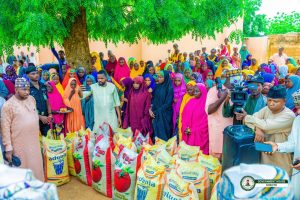
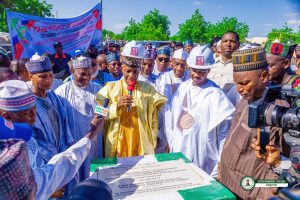
Goronyo LG Coordinator, Aminu Shu'aibu Launching distribution of free fertilizer to farmers The Coordinator of the sale and Distribution of Rice and Fertilizer for
Goronyo local government area of Sokoto state has successfully launched distribution of free fertilizer to famers in the area.

The coordinator, Aminu Shu’aibu, said the state governor, Dr Ahmed Aliyu FCNA gave 3,600 assorted fertilizer to be distributed free of charge to farmers in the area for wet season farming in order to boost food production.
Adding that, each polling of the 172 units in the council will get 20 bags of assorted fertilizer. While appreciating the gesture, the coordinator warned the beneficiaries against diversion or sale of the commodity.
Also speaking, the secretary of the local, Alhaji Shehu Garba Taloka, thanked the state governor Dr. Ahmed Aliyu FCNA, for the gesture and advised the beneficiaries to utilize the fertilizer for the purpose it was meant for. Adding strong warning against selling the commodity.
Similarly, the APC Chairman of Goronyo local, government, Alhaji Sa’idu Mohammed, expressed appreciation to the state governor and prayed for the party’s success in the forthcoming elections. He also revealed that in appreciation to the good will gesture by the state governor, the state minister of works, Hon.Mohammed Bello Goronyo, has paid for the transportation of the fertilizer to all the 11 wards and 172 polling units of the local government.
Many farmers who got the free fertilizer prayed for the state governor for the success of all his people-oriented policies and programs.
The beneficiaries wards are Goronyo, Shinaka,Birjingo, Gorau/Takakume, Rimawa, Kwakwazo, Kojiyo, Kagara, Sabon Garin Dole, Boye Kai and Giyawa.
In each ward, the party chairman, the councillor and a coordinator supervised the transportation and distribution of the commodity.

BEYOND RELIEF: CONFRONTING THE HUMANITARIAN COST OF BANDITRY

By Sani umar

The scourge of banditry and kidnapping has become one of the defining security and humanitarian challenges confronting North-West Nigeria. What began as localized criminal activities has evolved into an organized campaign of terror that has devastated communities, displaced thousands of families, destroyed livelihoods, and left countless widows, orphans, and vulnerable children struggling to survive. Across Sokoto, Zamfara, Katsina, Kebbi, Kaduna and parts of Niger State, entire villages have been emptied as frightened residents flee repeated attacks in search of safety.

Beyond the grim statistics of deaths and kidnappings lies a painful human story. Farmers have abandoned fertile farmlands, businesses have collapsed, children have dropped out of school, and communities that once thrived on agriculture and commerce now depend largely on humanitarian assistance. The social and economic consequences of the crisis continue to deepen with every attack.

Despite sustained military operations, intelligence gathering, community policing initiatives, and increased investment in security by both the Federal Government and the affected state governments, these criminal elements continue to unleash violence on innocent citizens. Their attacks are characterized by killings, kidnappings for ransom, cattle rustling, arson, and the destruction of public infrastructure.

Perhaps the most disturbing aspect of these attacks is the apparent absence of humanity among the perpetrators. They derive no visible restraint from the suffering they inflict. Women, children, the elderly and even religious leaders have become targets. Entire communities are traumatized, with survivors forced to rebuild lives shattered by violence they neither invited nor deserved.

Yet amid this tragedy, governments across the North-West have increasingly recognized that providing security alone is not enough. Victims of violence require immediate humanitarian support to restore hope, alleviate suffering, and help them begin the difficult process of rebuilding their lives. Relief interventions have therefore become an important complement to security operations.

A recent intervention by the Sokoto State Government in Bodinga Local Government Area illustrates this humanitarian approach. Following a deadly security incident that affected several communities, the state government donated N15 million and two trucks loaded with assorted bags of rice to 1,550 internally displaced persons from Bangi, Danchadi, Kolodo, Kwamtse, Keluje and Luge communities.

Presenting the relief materials in Sifawa, the Secretary to the State Government, Alhaji Muhammad Bello Sifawa, conveyed the sympathy and condolences of Governor Ahmad Aliyu to the affected families. He urged the victims to remain steadfast in faith while assuring them that the government shared in their grief and would continue to stand by them during this difficult period.

The scale of the tragedy was heartbreaking. Fourteen persons lost their lives, while four others sustained injuries. In response, each bereaved family received three bags of rice and N500,000, while each injured victim was given two bags of rice and N200,000. Every other displaced person received one bag of rice together with a transportation allowance of N5,000 to facilitate their return to their respective communities.

Similar humanitarian interventions have been undertaken by several Northern governors over the past few years. Food supplies, financial assistance, temporary shelters, medical support and rehabilitation programmes have become regular responses whenever communities suffer attacks. These initiatives provide immediate relief, reduce hardship and reassure victims that government has not forgotten them.

An important question nevertheless arises: Can the challenge of banditry be overcome through sustained humanitarian interventions by government?

The answer lies in appreciating the complementary nature of the response. Relief packages such as those being provided by the Sokoto State Government and other Northern states are not merely acts of charity, they are vital components of responsible governance. They provide immediate succour to grieving families, restore hope to displaced persons, reduce hardship, and reassure affected communities that government stands firmly with them in their hour of need.

The intervention in Bodinga is a clear demonstration that compassionate leadership remains an essential pillar of public service. By providing financial assistance, food supplies and transportation support, the Sokoto State Government has not only eased the burden on victims but also reinforced the bond between government and the people. Similar initiatives across the North-West reflect the determination of governors to stand by their citizens while security agencies intensify efforts to restore lasting peace.

It is encouraging that these humanitarian interventions are being implemented alongside sustained security operations, improved collaboration among security agencies, intelligence-driven strategies, and investments aimed at addressing the socio-economic conditions that often fuel insecurity. Together, these efforts represent a comprehensive response that combines compassion with decisive action.

While the road to ending banditry remains challenging, every successful security operation, every community restored, and every family supported brings the region one step closer to lasting peace. The assistance being extended to victims today not only helps them recover from their losses but also strengthens public confidence and reinforces the resolve of governments to ensure that criminal elements do not prevail over law abiding citizens.

The people of North-West Nigeria have shown remarkable resilience in the face of adversity. With sustained commitment from the Federal Government, the affected state governments, security agencies, traditional institutions, community leaders and citizens themselves, there is every reason to remain hopeful that peace, stability and prosperity will ultimately return to the region.

SOSG Donates ₦15 Million, Rice to 1,550 IDPs in Bodinga, Assures Victims of Continued Support

From Muhammad Gazali Garba

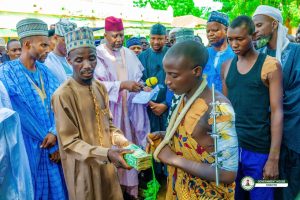
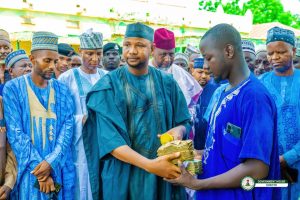
The Sokoto State Government has donated ₦15 million and two trucks loaded with assorted bags of rice to 1,550 Internally Displaced Persons (IDPs) affected by a recent security incident in Bodinga Local Government Area.

The beneficiaries were drawn from Bangi, Danchadi, Kolodo, Kwamtse, Keluje, and Luge communities.

Presenting the relief items in Sifawa, the Secretary to the State government,Alhaji Muhammad Bello Sifawa, conveyed Governor Ahmad Aliyu’s heartfelt sympathy and condolences to the victims.

He urged them to accept the unfortunate incident as the will of Allah and remain steadfast in faith and hopeful for a better future.

He disclosed that 14 persons lost their lives during the incident, while four others sustained injuries.

According to the SSG, each family of the deceased received three bags of rice and ₦500,000, while each of the four injured victims was presented with two bags of rice and ₦200,000 as support from the state government.

He added that every other displaced person received one bag of rice and a transportation allowance of ₦5,000 to enable them return to their respective communities.

Speaking earlier, the Speaker of the Sokoto State House of Assembly, Alhaji Tukur Bala Bodinga, who is a member of the relief committee, assured the displaced persons that the state government was taking concrete steps to restore normalcy and facilitate their safe return to their communities.

He said the intervention was aimed at cushioning the hardship faced by the victims and urged them to continue praying for lasting peace, unity, and security in Sokoto State and Nigeria.

Other members of the relief committee include the Minister of Labour and Employment, Alhaji Muhammad Maigari Dingyadi; the Commissioner for Science and Technology, Professor Attahiru Ahmad Sifawa; the Chairman of Bodinga Local Government Area; district heads; and APC elders from the area.

The committee reaffirmed the Sokoto State Government’s unwavering commitment to supporting affected communities and ensuring that displaced persons receive the necessary assistance as they rebuild their lives.

A major highlight of the event was the formal presentation of cash assistance and relief materials to the victims.

Families of the 14 deceased victims each received three bags of rice and ₦500,000, while the four injured persons received two bags of rice and ₦200,000 each.

The remaining displaced persons were presented with one bag of rice each, in addition to ₦5,000 transportation allowance to facilitate their return to their respective villages.

Oluremi Tinubu Visits Sultan , Commends Monarch’s Fatherly Advice, Guidance

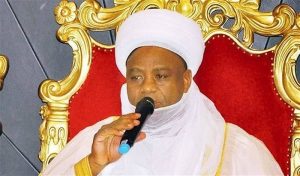
Sultan Muhammad Sa’ad Abubakar

From Muhammad Gazali Garba

Nigeria’s First Lady, Senator Oluremi Tinubu, on Saturday paid a homage to the Sultan of Sokoto, His Eminence Alhaji Muhammad Sa’ad Abubakar III, during her official visit to Sokoto State, describing the visit as a long-overdue opportunity to personally appreciate the revered monarch for his unwavering support, fatherly guidance and prayers for the administration of President Bola Ahmed Tinubu.

The First Lady was received on arrival at the Sultan Abubakar III International Airport by Governor Ahmed Aliyu of Sokoto State, alongside the Deputy Governor, Engr. Idris Muhammad Gobir, members of the State Executive Council, traditional rulers and other top government officials.

She subsequently proceeded to the Sultan’s Palace, where she paid a courtesy and homage visit to the Sultan before continuing with her official engagements in the state.

Speaking at the palace, Senator Tinubu said she had long desired to visit the Sultan to personally thank him for his steadfast support, wise counsel and prayers since the inception of the present administration.

She recalled that although she visited Sokoto during the 2023 presidential campaign, she was unable to meet the Sultan because he was out of the country at the time.

“This visit is long overdue. I came here simply to thank His Eminence for everything he has done since the beginning of this administration.

He has consistently supported the government with prayers, wise counsel and encouragement,” she said.

The First Lady described the Sultan as a symbol of peace, unity and national cohesion whose leadership has continued to foster harmony and stability across the country.

She also recalled the Sultan’s visit to Ile-Ife during the conferment of a traditional title on her by the Ooni of Ife, describing the gesture as a remarkable demonstration of goodwill that strengthened her resolve to reciprocate the courtesy by visiting Sokoto.

Senator Tinubu further reminisced about her first meeting with the Sultan many years ago in Dubai during the commissioning of the Burj Khalifa, noting that the cordial relationship established then has continued to flourish over the years.

She prayed to Almighty Allah to grant the Sultan long life, sound health and continued wisdom in the discharge of his responsibilities, while also praying for lasting peace, unity and prosperity in Sokoto State and Nigeria.

The First Lady expressed appreciation to Governor Ahmed Aliyu for the warm reception accorded to her and members of her delegation despite his family engagement, and thanked the women of Sokoto State, members of the Sultanate Council and the people of the state for their hospitality.

Earlier, Governor Ahmed Aliyu welcomed the First Lady to the Seat of the Caliphate on behalf of the government and people of Sokoto State, describing her visit as a great honour and a testament to the cordial relationship between the Presidency and the state.

He commended Senator Tinubu for the impactful interventions of the Renewed Hope Initiative, noting that the programme has continued to improve the lives of women, youths, children and other vulnerable groups through economic empowerment, educational support, healthcare services, humanitarian assistance and other people-centred initiatives across the country.

Governor Aliyu said the initiative complements the efforts of governments at all levels in improving the welfare of Nigerians and lauded the First Lady for her compassion and commitment to national development.

He also paid glowing tribute to the Sultan of Sokoto, describing him as a father figure whose moral authority, exemplary leadership and unwavering commitment to peace, unity and national cohesion continue to inspire millions of Nigerians.

The governor noted that although the First Lady’s visit was private, it provided an opportunity to acknowledge the Sultan’s invaluable contributions to religious harmony, peaceful coexistence and national stability.

Responding, the Sultan of Sokoto warmly welcomed Senator Tinubu to the Seat of the Caliphate, describing her visit as a homecoming.
He thanked Almighty Allah for blessing Sokoto State with abundant rainfall and pleasant weather ahead of the visit, which he described as a sign of divine favour.

The Sultan said the First Lady was not a stranger to Sokoto, recalling that he had known her and President Bola Ahmed Tinubu for nearly two decades, dating back to the period when the President served as Governor of Lagos State.

“I welcome you home because Sokoto is your home. We have maintained a cordial relationship over the years—from your days as First Lady of Lagos State, through your service as a Senator, and now as the First Lady of the Federal Republic of Nigeria,” the Sultan said.

He commended Senator Tinubu for her humility, dedication to public service and commitment to improving the lives of ordinary Nigerians through the Renewed Hope Initiative.

The Sultan prayed for Allah’s continued guidance and protection for the First Lady, President Bola Ahmed Tinubu and the nation, while wishing her a successful stay in Sokoto State.

The visit underscored the cordial relationship between the Presidency, the Sokoto State Government and the Sultanate Council, while reaffirming the vital role of traditional institutions in promoting peace, national unity and sustainable development.

DISPLACEMENT, DIGNITY AND THE CHALLENGE OF REBUILDING LIVES

By Sani Umar

The global refugee and displacement crisis has reached unprecedented proportions, making it one of the defining humanitarian challenges of the 21st century. Across Africa, particularly in the sub-Saharan region, millions of people have been forced to flee their homes as a result of armed conflict, terrorism, ethnic tensions, communal violence and other forms of insecurity. What was once considered an occasional humanitarian emergency has evolved into a protracted crisis requiring sustained national, regional and international responses.

For decades, the international community, working through governments and humanitarian organizations, managed refugee movements with varying degrees of success. However, the nature of modern conflicts has become increasingly complex. Civil wars, violent extremism, climate-related pressures and organized criminal activities have combined to create a cycle of displacement that continues to grow across the continent.

Nigeria is among the countries that have experienced the devastating consequences of this crisis. In the North-East, the Boko Haram insurgency has displaced millions, while the North-West and parts of the North-Central continue to grapple with banditry, kidnapping and violent communal conflicts. Entire communities have been attacked, homes destroyed, livelihoods lost and thousands of innocent men, women and children forced to abandon their ancestral homes in search of safety.

Beyond the tragic loss of lives, these conflicts have inflicted enormous social and economic costs. Agricultural production has declined in many affected communities, businesses have collapsed, schools and health facilities have been destroyed, and families have been separated. Many displaced persons now depend largely on government support, humanitarian assistance and the generosity of host communities for survival.

Federal and state governments, working alongside international humanitarian agencies and development partners, have made considerable efforts to address the crisis. Internally Displaced Persons (IDP) camps have been established, relief materials distributed, healthcare services provided and educational opportunities created for displaced children. Vocational training, entrepreneurship programmes and livelihood support initiatives have also been introduced to enable displaced persons rebuild their lives with dignity and regain economic independence.

Among the organizations making significant contributions to humanitarian response in Nigeria is the Danish Refugee Council (DRC), an internationally respected humanitarian organization that has worked for decades to protect and support refugees, internally displaced persons and vulnerable communities affected by conflict and natural disasters.

In Nigeria, the organization has partnered with governments, local communities and other humanitarian agencies to provide emergency relief, livelihood support, vocational training, protection services, shelter assistance and community resilience programmes aimed at helping displaced families rebuild their lives.

Beyond providing food and other relief materials, the DRC has placed considerable emphasis on restoring self-reliance among displaced persons. Through skills acquisition programmes, entrepreneurship training, business start-up support and vocational education, the organization seeks to equip beneficiaries with practical means of earning sustainable incomes. These interventions are designed not merely to alleviate immediate suffering but to reduce long-term dependence on humanitarian assistance and restore the dignity of families whose lives have been disrupted by violence.

It is against this backdrop that humanitarian officials have expressed concern over the persistence of street begging among some beneficiaries. Their concern is not a criticism of the displaced population as a whole but a reflection of the desire to see the substantial investments made in empowerment programmes translate into meaningful and lasting improvements in people’s lives.

These interventions deserve recognition. They reflect the commitment of governments and their humanitarian partners to ensure that those affected by violence are not abandoned during their most difficult moments. However, humanitarian assistance alone cannot provide a lasting solution unless it is complemented by genuine efforts on the part of beneficiaries to embrace opportunities for self-reliance.

One concern increasingly expressed by residents of several northern cities, as well as officials working in the humanitarian sector, is the growing incidence of street begging among some internally displaced persons. Despite the numerous interventions aimed at restoring livelihoods, many displaced women and children can still be seen along major roads, markets and commercial centres soliciting alms. This trend has generated concern over whether some beneficiaries are taking full advantage of the opportunities made available to them.

Officials of humanitarian organizations acknowledge that many displaced persons have successfully rebuilt their lives through vocational training and livelihood support. Nevertheless, they are worried that a number of beneficiaries continue to rely on street begging despite receiving skills acquisition training, start-up support and other forms of assistance. According to them, programmes designed to restore dignity and economic independence risk being undermined if beneficiaries abandon productive ventures in favour of begging.

The concern extends beyond official reports. It is a reality witnessed daily by many residents in northern cities. In some cases, displaced women and children spend long hours on the streets appealing for alms. Observers also report instances where children are sent out to beg while their parents remain at the camps or other designated meeting points until late in the evening. Whether driven by poverty, trauma or entrenched dependency, such practices raise important social and humanitarian questions that deserve serious attention.

These concerns are reinforced by those directly involved in training displaced persons. Engineer Garba Saidu, a vocational trainer with the Danish Refugee Council (DRC), in Sokoto State expressed disappointment that some individuals who attended his skills acquisition programmes later returned to the streets to beg. He recalls encountering several of his former and present trainees soliciting alms in public places instead of applying the vocational skills they had acquired to earn a living. For humanitarian workers who devote their expertise to helping displaced persons regain self-sufficiency, such experiences are understandably discouraging.

This should not, however, diminish the remarkable resilience of the many displaced persons who have embraced vocational training, established small businesses and are working diligently to rebuild their lives. Their success stories demonstrate that, given the right support and personal determination, recovery is possible. Unfortunately, the actions of a number who continue to depend on begging often shape public perception of the larger displaced population.

Governments and humanitarian agencies should therefore strengthen monitoring and evaluation of empowerment programmes to ensure that beneficiaries effectively utilize the opportunities provided. Beyond providing training, greater emphasis should be placed on mentorship, follow-up support, access to markets, affordable credit and psychosocial services that help displaced persons transition successfully into sustainable livelihoods.

At the same time, community leaders, religious institutions, traditional rulers and civil society organizations should intensify public enlightenment campaigns that encourage dignity through productive work while discouraging street begging. Such campaigns must be accompanied by policies that protect vulnerable children from exploitation and ensure that every child has access to education rather than life on the streets.

Ultimately, the long-term solution lies not only in humanitarian assistance but also in restoring lasting peace and security. As long as terrorism, banditry and communal violence continue to displace communities, humanitarian agencies will remain overwhelmed and governments will continue to spend enormous resources on emergency relief instead of long-term development.

The displaced are victims of circumstances beyond their control. They deserve compassion, protection and opportunities to rebuild their lives. At the same time, every opportunity offered for empowerment should be embraced with determination and responsibility. Only through a genuine partnership between governments, humanitarian organizations, host communities and displaced persons themselves can the cycle of dependency be broken and replaced with hope, dignity and self-reliance.

Ekiti Governor Hails Ahmed Aliyu as Sokoto Passes Out 1,550 Marshals

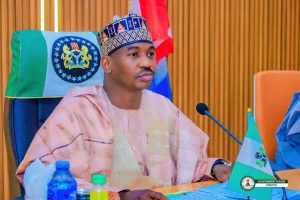
Gov. Ahmed Aliyu, Sokoto State

From Muhammad Gazali Garba

Governor Ahmed Aliyu of Sokoto State has reaffirmed his administration’s commitment to strengthening security and empowering young people with the passing-out parade of the second batch of 1,550 Sokoto Marshals, describing the initiative as a major step towards enhancing public safety and creating sustainable employment opportunities across the state.

The colourful ceremony, attended by the Governor of Ekiti State, Dr. Biodun Abayomi Oyebanji, who served as the Special Guest of Honour, attracted traditional rulers, senior government officials, security chiefs and other dignitaries.

In his remarks, Governor Ahmed Aliyu said the recruitment of the 1,550 marshals from all the 23 Local Government Areas of the state formed part of his administration’s youth empowerment agenda and determination to complement the efforts of conventional security agencies in safeguarding lives and property.

He disclosed that the recruits underwent intensive training in Security and Intelligence, Traffic Management, Environmental Protection, and the Protection of Government Infrastructure to prepare them for effective service.

The Governor recalled that the Sokoto Marshals initiative was first introduced during the administration of his mentor and political leader, Distinguished Senator Aliyu Magatakarda Wamakko, but had remained dormant for years without fresh recruitment.

He said his administration revived the programme to provide employment opportunities for youths while strengthening the state’s security architecture.

Governor Aliyu explained that the agency now operates under Sokoto State Law No. 5 of 2026 and assured that his administration would continue to provide operational vehicles, communication gadgets and other logistics necessary for effective service delivery.

According to him, the marshals will be deployed to markets, motor parks, business districts, public institutions and other strategic locations across the state to support intelligence gathering, traffic management, environmental sanitation and the protection of government infrastructure.

He expressed satisfaction that the current recruitment included female marshals for the first time, describing the development as a demonstration of his administration’s commitment to gender inclusion and equal opportunities in public service.

The Governor charged the newly graduated marshals to discharge their responsibilities with discipline, integrity and professionalism, warning them against intimidation, extortion and abuse of members of the public.

He also directed the Commandant to deploy them to security flashpoints and other critical areas across the state.

Governor Aliyu further highlighted the establishment of the Sokoto State Community Guard Corps as part of his administration’s efforts to strengthen grassroots security, revealing that additional recruitment was being considered to consolidate the successes already recorded.

He thanked President Bola Ahmed Tinubu for the Federal Government’s continued support in addressing security challenges across the country and paid glowing tribute to Distinguished Senator Aliyu Magatakarda Wamakko for conceiving the Sokoto Marshals initiative.

He also commended the Commandant, training consultant, instructors and all members of the training team for their commitment to producing disciplined and competent personnel.

Speaking as the Special Guest of Honour, the Governor of Ekiti State, Dr. Biodun Abayomi Oyebanji, congratulated Governor Ahmed Aliyu for what he described as a bold and visionary initiative that addresses two critical national challenges—youth unemployment and insecurity.

He noted that the Sokoto Marshals programme demonstrates that meaningful investment in young people can significantly contribute to peace, stability and socio-economic development while complementing the efforts of conventional security agencies.

Governor Oyebanji described the graduation of the second batch of marshals as evidence of Governor Aliyu’s commitment to protecting lives and property through proactive and community-based security initiatives.

He said responsible community security structures have become increasingly important in supporting intelligence gathering, crime prevention and the protection of public infrastructure, adding that the Sokoto Marshals initiative stands as a model worthy of emulation by other states.

The Ekiti Governor also commended the inclusion of women in the agency for the first time, describing it as a progressive step that promotes gender inclusion and broadens participation in public service.

He urged the newly graduated marshals to justify the confidence reposed in them by serving with honesty, discipline, professionalism and respect for the rule of law.

Governor Oyebanji thanked Governor Ahmed Aliyu, the Sultan of Sokoto and the people of the state for the warm reception accorded to him and his delegation, expressing optimism that the cordial relationship between Sokoto and Ekiti States would continue to grow.

He also prayed for sustained peace, unity and prosperity in Sokoto State.

Earlier, the Sultan of Sokoto, His Eminence Muhammadu Sa’ad Abubakar III, described the graduation ceremony as another historic milestone in the state’s efforts to promote youth empowerment and strengthen community security.

The Sultan said the initiative had taken more than 1,500 young people off the streets, equipped them with valuable skills and provided them with meaningful employment, describing it as an investment in the future of the state’s youth.

He commended Governor Ahmed Aliyu for his visionary leadership in reviving and strengthening the Sokoto Marshals, noting that the programme would significantly complement existing security efforts across the state.

The revered monarch also praised the training consultant and instructors for producing disciplined and well-trained personnel within a short period, saying the parade was a reflection of the quality of training received by the graduates.

The Sultan observed that the Sokoto Marshals share similar community policing principles with the Amotekun Corps in the South-West and expressed hope that both organisations would collaborate and exchange ideas to improve security nationwide.

He urged Governor Oyebanji to share the positive experiences he witnessed in Sokoto, stressing that the state remains peaceful, welcoming and hospitable to people of all ethnic and religious backgrounds, contrary to negative narratives often portrayed on social media.

Delivering his remarks, the training consultant, retired Colonel Shehu Ya’u, disclosed that the newly graduated marshals had been organised into three operational departments comprising Security and Intelligence, Traffic Control and Management, and Environmental Protection and Sanitation.

He explained that the Environmental Protection Department would work closely with the Ministry of Environment to enforce sanitation regulations, prevent illegal construction, protect drainage systems and promote a cleaner and healthier environment across the state.

According to him, the personnel possess the capacity to contribute meaningfully to the development of Sokoto State and also support lawful revenue generation through the effective discharge of their statutory responsibilities.

Colonel Ya’u said Governor Ahmed Aliyu directed him to identify and train the best candidates from across the 23 Local Government Areas, adding that the quality, discipline and competence displayed by the graduates reflected the successful implementation of that mandate.

He commended the inspectors and instructors for their commitment throughout the training programme and appreciated Dr. A. A. Ladan for his support and cooperation, which contributed immensely to the success of the exercise.

Meanwhile, as part of his visit to Sokoto State, the Governor of Ekiti State, Dr. Biodun Abayomi Oyebanji, also commissioned the newly completed Gidan Fulani Road project executed by the administration of Governor Ahmed Aliyu. He commended the quality of the project and described the governor’s ongoing investment in road infrastructure as a clear demonstration of his commitment to improving the living conditions of the people and accelerating socio-economic development across the state.

The high point of the ceremony was the inspection of the parade by the Special Guest of Honour, the presentation of awards to outstanding trainees, the decoration of exceptional graduates and the official passing-out of the 1,550 Sokoto Marshals, who are expected to be deployed to various parts of the state to commence their duties in support of security, environmental protection and traffic management.

Senator Wamakko Flags Off ₦11.84b Gidanmadi–Binji–Gande Road Project, Commends Governor Ahmed Aliyu’s Development Agenda

From Muhammad Gazali Garba

The Leader of the All Progressives Congress (APC) in Sokoto State and former Governor of the state, Senator Dr. Aliyu Magatakarda Wamakko, has flagged off the construction of the 35.7-kilometre Gidanmadi–Binji–Gande Road Project, valued at ₦11,836,593,885.14, describing it as another milestone in the ongoing transformation of Sokoto State under the administration of Governor Ahmed Aliyu Sokoto.

The project, which is being executed through a partnership between the Sokoto State Government and the Rural Access and Agricultural Marketing Project (RAAMP), forms part of activities marking the third anniversary of Governor Ahmed Aliyu’s administration.

Addressing the gathering, Governor Ahmed Aliyu expressed delight over the commencement of the strategic road project and warmly welcomed Senator Wamakko, thanking him for honouring the invitation to perform the flag-off ceremony.

The Governor explained that the project is being financed under RAAMP, a joint initiative of the World Bank and the Sokoto State Government.

He disclosed that the 35.7-kilometre road traverses Gidanmadi, Tatali, Binji, Miyuki, Bunkidi, Gidan Magaji and Gande, cutting across Tangaza, Binji and Silame Local Government Areas.

According to him, the project includes the construction of hydraulic structures, a 30-millimetre asphaltic wearing course, surface dressing, road shoulders and road furniture to ensure durability, safety and improved accessibility.

Governor Ahmed Aliyu noted that the road is one of several strategic infrastructure projects being implemented through partnerships with development partners to complement the numerous township and rural road projects currently under construction across the state.

He recalled that since assuming office, his administration has completed and commissioned several township and rural roads in Silame, Binji, Gada, Wurno, Kware, Tambuwal, Wamakko, Dange-Shuni and Rabah, among other local government areas, to improve transportation, facilitate commerce and enhance access to essential social services.

The Governor observed that the benefiting communities are predominantly agrarian and stressed that the road would enable farmers to transport their produce to markets more easily, reduce post-harvest losses and improve access to healthcare, education and other essential services.

He charged the contractor, supervising engineers, consultants and the entire project team to adhere strictly to the approved specifications and complete the project within the stipulated timeframe, emphasizing that quality and timely delivery remain paramount.

Governor Ahmed Aliyu reaffirmed his administration’s commitment to implementing people-oriented projects across every part of the state and appealed to the people to continue supporting and praying for the government as it sustains its development agenda.

He also expressed appreciation to President Bola Ahmed Tinubu for his continued support to Sokoto State through the execution of major Federal Government infrastructure projects, including the Sokoto–Gusau Road and the Badagry–Sokoto Super Highway.

In his remarks, Senator Aliyu Magatakarda Wamakko thanked Almighty Allah for witnessing another important milestone in the development of Sokoto State and commended Governor Ahmed Aliyu for inviting him to perform the flag-off ceremony.

He praised the Governor’s commitment to executing people-centred projects across key sectors, including road infrastructure, education, healthcare, agriculture, water supply and security, noting that the administration has consistently demonstrated that the welfare of the people remains at the centre of its policies and programmes.

The former Governor stated that Governor Ahmed Aliyu had justified the confidence reposed in him, recalling that some critics had questioned his capacity because of his age before assuming office.

“Today, Alhamdulillah, you have silenced those critics through your outstanding performance. Within just three years, you have demonstrated exceptional leadership, and I remain proud of your achievements.

I am confident that even greater accomplishments lie ahead, In Sha Allah.”
Senator Wamakko said the Gidanmadi–Binji–Gande Road Project would open up rural communities, facilitate the movement of people and agricultural produce, stimulate commercial activities and improve the socio-economic well-being of residents across the benefiting communities.

He also commended Governor Ahmed Aliyu’s social intervention programmes, particularly the distribution of over 200 truckloads of food items and more than 200 trailer loads of fertiliser, describing the initiatives as unprecedented and highly beneficial to the people.

The APC leader further applauded the Governor’s commitment to promoting Islam through the construction and renovation of mosques, as well as his prudent management of the state’s finances, noting that despite executing numerous capital projects, the administration had avoided unnecessary borrowing.

He also conveyed the goodwill of members of the Sokoto State House of Assembly, who commended the cordial relationship between the Executive and the Legislature, describing the harmony as essential for sustainable development.

While appreciating President Bola Ahmed Tinubu for improving the financial capacity of states through his economic reforms, Senator Wamakko urged the contractor to execute the project according to specification and complete it within schedule, assuring Governor Ahmed Aliyu of his continued support and prayers.

Earlier, the Special Adviser to the Governor on Rural Roads, Malami Galadanci, described the Gidanmadi–Binji–Gande Road Project as one of the landmark rural infrastructure initiatives of the Ahmed Aliyu administration.

He said the project underscores the Governor’s unwavering commitment to opening up rural communities, improving agricultural productivity and accelerating socio-economic development across Sokoto State.

Malami Galadanci commended Governor Ahmed Aliyu for giving priority to rural road development and appreciated RAAMP, the World Bank and other development partners for their continued support.

He assured the people that the project would be closely monitored to ensure strict compliance with approved specifications, timely completion and the delivery of a durable road that would stand the test of time.

Speaking on behalf of the benefiting communities, the District Head of Binji, Alhaji Usman Dan Sarki, expressed profound appreciation to Governor Ahmed Aliyu for approving the construction of the 35.7-kilometre Gidanmadi–Binji–Gande Road.

He described the project as a life-changing intervention that would ease transportation, boost agricultural production, facilitate trade and improve access to healthcare, education and other essential services for thousands of residents across Tangaza, Binji and Silame Local Government Areas.

The traditional ruler also commended Senator Aliyu Magatakarda Wamakko for his unwavering support, mentorship and commitment to the development of Sokoto State.

He assured the state government that the people of the benefiting communities would cooperate fully with the contractor and safeguard the project to ensure its successful completion for the benefit of present and future generations.

The ceremony climaxed with the official reception of hundreds of defectors from the African Democratic Congress (ADC) and the People’s Democratic Party (PDP) in Gudu Local Government Area into the ruling All Progressives Congress (APC). The defectors pledged their loyalty to the APC and expressed confidence in the leadership of Governor Ahmed Aliyu and Senator Aliyu Magatakarda Wamakko, citing the administration’s developmental achievements and people-oriented programmes as the reasons for their decision.

The flag-off ceremony was attended by members of the National and State Assemblies, commissioners, special advisers, heads of government agencies, traditional rulers, political leaders, development partners, community representatives and residents from Tangaza, Binji and Silame Local Government Areas, all of whom applauded the Ahmed Aliyu administration’s sustained investment in road infrastructure aimed at improving rural connectivity, stimulating economic growth and enhancing the living standards of the people of Sokoto State.

Sokoto ‘s 3 Years  of Marvelous Enhancement 

By Aminu Binji

It will be understating the obvious to posit that Sokoto state has witnessed and is witnessing terrific enhancement in all spheres of social and physical development over these years of purposeful leadership by the Ahmed Aliyu-led administration. When the good people of Sokoto state trooped out enmass to vote-in Ahmed Aliyu as their governor in the 2023 general elections, what was paramount in their minds was to bring in a government that will make things easier for them and right a lot of wrongs that were normalized in the course of the immediate past administration.
It’s not a misnomer to relate that, Ahmed Aliyu’s emergence as governor of the state was a by-product of divine intervention as countless booby traps and smear campaigns were mounted and championed to derail his journey to the government house. However, and fortunately the people were disenchanted with the manner in which the then outgoing administration conducted it affairs particularly in the twilight of its time.
Many projects were left strategically abandoned by the then outgoing administration to the chagrin of the general public. The Diplomat area and the Dandima flyovers were notably two of such projects, in a swift response to the clamour of the people, Ahmed Aliyu decisively moved in and within the first one hundred days in office was able to complete the two flyovers.

History will watermark Ahmed Aliyu’s in its annals for his remarkable strides in constructing the road networks in the Sahara area within the metropolis. Sahara area being a commercial hub peopled by automobile spare parts dealers and retailers most of whom are from the south-west part of the country, making the access roads there more passable has eased the transportation of goods and services there, and by extension made the transactions of business very easy. Before the historic construction and reconstruction of the road networks there, movement within the expansive commercial area was difficult especially in the rainy season.
The Mabera area in the metropolis was rather infamous for its poor road networks which made movement in the bustling community painful and tedious during the rainy season. It was Ahmed Aliyu who circumvented the odds and opened up the area with beautiful roads, culverts and even roundabouts where necessary. As I write this, Mabera area is today one of the finest in the state capital in terms of motorable roads adorned with solar-powered streetlights.
The Arkilla area was equally another community in the metropolis that enjoyed a touch of Ahmed Aliyu’s improvement strategy as the road networks in the area were terrible and almost impassable. The same laudable treatment was applied to the famous Mai-kahon karo road that links Diplomat area to the Shehu Kangiwa square. I had a talk with an elderly resident of the area who told me that, the road constructed decades ago was neither reconstructed nor repaired until when Ahmed Aliyu came and did the marvelous job within the first one hundred days in office.
Looking at Bodinga road, the road behind UDUTH that runs from off the NIPOST complex to the roundabout connecting to the Western bypass, was to say the least in a deplorable state. It was Ahmed Aliyu who constructed the road into what it’s today; comfortably passable.
We were all witnesses including visitors to the state capital to the deplorable state of our metropolitan roads and roundabouts, it still beats our imagination how the past administration was nonchalant and unconcerned to the plight of people plying those terrible metropolitan roads. The horrible state of the round Mai-ruwa in the state capital with its unique strategic location was left in a sorry situation of disrepair. Today, that roundabout stand tall bedecked with aesthetics and lighting to the admiration of both inhabitants and visitors alike.
We still recall how within record time the Kara and Abbatoir road networks were improved to pave way for easy access to the commercial outlets.
As a pupil of history, I’m tempted to wonder how fast our people forget things, otherwise, how would any person living in Sokoto identify with the vestiges of the past administration to side with the opposition, opposing Ahmed Aliyu’s second term bid ❗
In the sphere of moving against the tide of insecurity, Ahmed Aliyu has done remarkably well in the last three years that he’s comparable to no other governor at least in the core north. Apart from the timely payment of stipends and other financial commitments due to security operatives stationed at the flashpoints, he floated and created the Sokoto State Community Guards with about 2000 able-bodied men to augment the efforts of other security personnel in confronting the problem of banditry and kidnapping. Just recently, the Nigeria’s defence minister was in Sokoto to commission 62 security vehicles fitted with high-tech equipment and 320 motorcycles to support anti-banditry and kidnapping operations in the state. That singular stride did no doubt demonstrated Ahmed Aliyu’s unalloyed vow to fight the menace of banditry and kidnapping. The truth is, from day one in office, Ahmed Aliyu has never relaxed his resolve to effectively wrestle insecurity as he undertook in his campaign days.
In the concern of social engineering, Ahmed Aliyu has in the last three years left no one in doubt as to his unflagging determination to positively rewrite history. Before his coming, the monthly stipends payable to our people with various disabilities were halted for more than a year without cogent explanation; on assumption of office, Ahmed Aliyu instituted a committee which verified all those entitled and promptly settled the backlog of their denied stipends. This same magnanimous treatment by Ahmed Aliyu was extended to the Imams , their deputies and Muezzims, including key Arabic Mallams across the state. It will not be out of tune to recall how the deductions from the salary of civil servants in the state employ in the name of State of Emergency on Education was halted, in response to the clamour of the civil servants who expressed displeasure with the deductions that did not produce any tangible results commensurate with the volume of the deductions over the almost 7 years the Emergency functioned. Similarly, knotty issues about the inability of the immediate past administration to settle school fees of state indigines studying in institutions of higher learning like the Usman Danfodio University, Sokoto were resolved. Civil servants too had it so good in the first hundred days in office of Ahmed Aliyu as backlog of unpaid salaries were defrayed, and since then salary and pension are being paid from 19th of every month unlike in the immediate past when uncertainty and excitement were the norm whenever it’s month’s end. The release of monthly cash allocations to MDAs which was stopped for months on end was restored as a booster to the morale of the civil servants. We still recall how gratuities of retired and dead civil servants were left unpaid and allowed to accumulate into billions of naira. Governor Ahmed Aliyu came up with a workable template of settling the humongous debt of gratuities and concurrently paying those civil servants who retired or died during his time. This payment of gratuities has restored confidence and hope in the retirees and families of deceased civil servants. I’m good to submit that, this particular noble act should be enough to garner tremendous support from the people for Ahmed Aliyu’s second coming.

Renovation of schools and colleges across the state has equally received noticeable attention from this administration these three years, we commend the monthly release of imprest to school principals for routine running of their schools, and of course with the provision of school buses to some schools in the state alongside the introduction of metropolitan School bus system to facilitate easy transport of students in the morning and after closing time.

The Wamakko-Bunkari-Binji road has for long remained abandoned in a state of serious disrepair as the movement of goods, people and services suffered untold torment. Finally, Ahmed Aliyu has resolved to reconstruct and put the road in a new shape. That particular act has won him applause and commendation from people including his political opponents. Another road worthy of mention is the Gidan Madi- Binji road also penciled for reconstruction, we cannot but salute Ahmed Aliyu for this and many more laudable projects as a lot of road construction projects are either ongoing or in the pipeline for execution.
The State Mass Transport Authority that was moribund before the coming of this administration is now fully functional with buses plying state and inter-state routes, and this has gone extra miles in bringing succour to the people in their transportation needs.
These three years, the Ahmed Aliyu administration has done well to command the commendation and praise of people of goodwill across the state and even beyond.

The various interventions of this administration in terms of the provision of foodstuffs to the vulnerable and the needy, free fertilizer for farmers, skills acquisition programmes with starter packs and financial support and other such projects are too voluminous to accommodate here. The crux of the matter is, posterity will certainly engrave Ahmed Aliyu’s name in the best of calligraphy as a governor who came, saw and conquered.
Now that the chips are coming down, it’s unmistakable that by the grand grace of our Creator, Ahmed Aliyu’s second journey to the government house which is in God’s hands is assured, if populist policies, programmes and overwhelming goodwill of the people do count.

It was Abraham Lincoln who in his Temperance address on July 1st, 1842, said, ” the legitimate object of government, is to do for a community of people, whatever they need to have done, but cannot do, at all, or cannot so well do for themselves in their separate and individual capacities”.

Binji writes from the desk of Sokoto Liberal Democrats Media Foundation (SOLID)

RECOMMENDED NEWS

POPULAR