
Home Blog Page 8

GOV.ALIYU DIRECTS MINISTRIES TO COLLABORATE WITH SSU ON CONVOCATION ARENA PROJECT

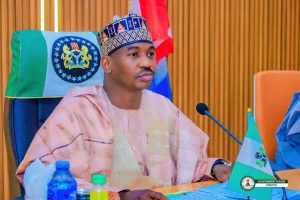
Gov. Ahmed Aliyu of Sokoto State

From Muhammad Gazali Garba

The Governor of Sokoto State and Visitor to Sokoto State University, Dr. Ahmed Aliyu Sokoto, has directed the State Ministries of Works and Higher Education to liaise with the management of the University to facilitate the construction of a befitting convocation arena for the institution.

Governor Ahmed Aliyu gave the directive while delivering his remarks at the university’s 8th Combined Convocation Ceremony, which brought together graduates from the 4th, 5th, 6th, 7th and 8th academic sessions.

The Governor described the combined convocation as a historic milestone celebrating the achievements of thousands of graduates and reflecting the remarkable progress recorded by the university since its establishment in 2009 by former Governor of Sokoto State, Senator Dr. Aliyu Magatakarda Wamakko.

He reaffirmed that education remains one of the cardinal pillars of his administration’s development agenda, stressing that no society can attain sustainable development without sustained investment in quality education and human capital development.

Governor Ahmed Aliyu said that since assuming office, his administration has implemented several interventions aimed at repositioning the university.

These include the clearance of outstanding salary arrears and staff entitlements, partial payment of Earned Academic Allowances for academic staff, settlement of outstanding allowances owed to members of the Senior Staff Association of Nigerian Universities (SSANU), implementation of the 40 per cent salary increase for academic staff, renovation and rehabilitation of staff quarters, and the construction of a modern sports complex.

He also reaffirmed his administration’s policy of automatic employment for graduates of Sokoto State University who obtain First Class honours, describing the initiative as a deliberate strategy to reward academic excellence and retain exceptional talent within the state’s public service.

The Governor further disclosed that additional projects addressing the university’s priority needs had already been captured in the 2026 Appropriation Law, assuring the institution of his administration’s continued support towards realising its vision of becoming one of Nigeria’s leading centres of teaching, research and innovation.

Earlier, the Commissioner for Higher Education, Professor Isa Muhammad Maishanu, described the convocation as a celebration of excellence, resilience and the transformative power of education.

He congratulated the Governing Council, management, Senate, staff, students, alumni and the entire university community for sustaining the vision upon which Sokoto State University was founded.
Professor Maishanu also welcomed traditional rulers, visiting governors and their representatives, vice-chancellors, captains of industry, distinguished scholars, parents and guardians, noting that their presence reflected a shared commitment to advancing higher education.

He described education as the most powerful instrument for societal transformation and the foundation for peace, sustainable economic growth, technological advancement and responsible leadership.

The Commissioner disclosed that approximately 6,000 students graduated across the university’s five faculties, comprising 779 graduates from the Faculty of Arts, 347 from the Faculty of Computing, 1,187 from the Faculty of Education, 1,886 from the Faculty of Science, and 1,377 from the Faculty of Social and Management Sciences.

He further announced that 42 graduates earned First Class honours, including eight from the Faculty of Arts, six from the Faculty of Computing, seven from the Faculty of Education, 17 from the Faculty of Science and four from the Faculty of Social and Management Sciences.

In his address, the Vice-Chancellor, Professor Mohammed Bello Yarima, highlighted the university’s remarkable growth since it commenced academic activities in 2011 with three pioneer faculties.

According to him, the institution now operates five faculties and has submitted proposals for 22 new academic programmes to the National Universities Commission (NUC). He explained that, upon approval, the programmes would expand the university’s academic structure to between eight and nine faculties, with new programmes in Software Engineering, Cybersecurity, Engineering, Medical Sciences and Law.
Professor Yarima appealed to Governor Ahmed Aliyu to approve the recruitment of additional qualified academic and non-academic staff to support the planned expansion.

He also expressed appreciation to the Governor for approving and releasing funds for the combined convocation within three days of the university’s request, describing the prompt intervention as instrumental to the successful organisation of the ceremony.

The Vice-Chancellor disclosed that the university recently secured a ₦35 million National Research Fund grant and is working towards establishing a Centre of Excellence for Solid Minerals Research, with technical collaborations already initiated with institutions in India and China.

He added that the university has continued to benefit from interventions by the Tertiary Education Trust Fund (TETFund) in infrastructure development, research, library expansion and staff training.

According to him, many members of the academic staff have received advanced training in the United Kingdom, Malaysia and India, while the university has also institutionalised a monthly public lecture series to promote research, innovation and intellectual engagement.

Delivering his Convocation Address, the Chancellor of Sokoto State University, His Royal Highness Alhaji Hamid Nuhu Sanusi, Emir of Dutse, described the ceremony as one of the most significant milestones in the life of any university, noting that it symbolises the transformation of learning into leadership and education into service to humanity.

The Chancellor congratulated the graduating students and urged them to uphold integrity, discipline, professionalism and patriotism as worthy ambassadors of the university. He reminded them that the award of a degree marks the beginning of lifelong learning and encouraged them to deploy the knowledge and skills they had acquired to address societal challenges and contribute meaningfully to national development.

He also called on governments, the private sector and development partners to continue investing in higher education, research and innovation, stressing that universities remain indispensable to national development, technological advancement and economic prosperity.

The Chancellor commended Governor Ahmed Aliyu for his unwavering support for higher education and paid tribute to the Founder of the university, Senator Dr. Aliyu Magatakarda Wamakko, for his foresight in establishing an institution that has continued to expand access to quality university education in Sokoto State.

A major highlight of the ceremony was the conferment of honorary doctorate degrees (Honoris Causa) on three distinguished Nigerians in recognition of their outstanding contributions to public service, leadership and national development.

The honorary doctorate recipients were the Governor of Kogi State, Alhaji Ahmed Usman Ododo; former Governor of old Sokoto State, Malam Yahaya Abdulkarim; and renowned businessman and philanthropist, Alhaji Umar Ajiya.

The ceremony also featured the conferment of degrees, presentation of awards to outstanding graduates and the graduation of approximately 6,000 students across various disciplines, underscoring Sokoto State University’s steady emergence as one of Nigeria’s leading centres of academic excellence.

The event attracted several distinguished personalities, including the Governor of Jigawa State, Alhaji Umar Namadi, FCA; the Founder of Sokoto State University and former Governor of Sokoto State, Senator Dr. Aliyu Magatakarda Wamakko; the Sultan of Sokoto and President-General of the Nigerian Supreme Council for Islamic Affairs, His Eminence Muhammadu Sa’ad Abubakar III; the representative of the Governor of Kogi State; the Honourable Minister of Labour and Employment; the Deputy Governor of Sokoto State, Engr. Idris Mohammed Gobir; former Governor of old Sokoto State, Malam Yahaya Abdulkarim; members of the National and State Assemblies; traditional rulers; heads of government agencies; academics; captains of industry; parents; alumni; and other invited guests.
GOV.ALIYU DIRECTS MINISTRIES TO COLLABORATE WITH SSU ON CONVOCATION ARENA PROJECT

From Muhammad Gazali Garba

The Governor of Sokoto State and Visitor to Sokoto State University, Dr. Ahmed Aliyu Sokoto, has directed the State Ministries of Works and Higher Education to liaise with the management of the University to facilitate the construction of a befitting convocation arena for the institution.

Governor Ahmed Aliyu gave the directive while delivering his remarks at the university’s 8th Combined Convocation Ceremony, which brought together graduates from the 4th, 5th, 6th, 7th and 8th academic sessions.

The Governor described the combined convocation as a historic milestone celebrating the achievements of thousands of graduates and reflecting the remarkable progress recorded by the university since its establishment in 2009 by former Governor of Sokoto State, Senator Dr. Aliyu Magatakarda Wamakko.

He reaffirmed that education remains one of the cardinal pillars of his administration’s development agenda, stressing that no society can attain sustainable development without sustained investment in quality education and human capital development.

Governor Ahmed Aliyu said that since assuming office, his administration has implemented several interventions aimed at repositioning the university.

These include the clearance of outstanding salary arrears and staff entitlements, partial payment of Earned Academic Allowances for academic staff, settlement of outstanding allowances owed to members of the Senior Staff Association of Nigerian Universities (SSANU), implementation of the 40 per cent salary increase for academic staff, renovation and rehabilitation of staff quarters, and the construction of a modern sports complex.

He also reaffirmed his administration’s policy of automatic employment for graduates of Sokoto State University who obtain First Class honours, describing the initiative as a deliberate strategy to reward academic excellence and retain exceptional talent within the state’s public service.

The Governor further disclosed that additional projects addressing the university’s priority needs had already been captured in the 2026 Appropriation Law, assuring the institution of his administration’s continued support towards realising its vision of becoming one of Nigeria’s leading centres of teaching, research and innovation.

Earlier, the Commissioner for Higher Education, Professor Isa Muhammad Maishanu, described the convocation as a celebration of excellence, resilience and the transformative power of education.

He congratulated the Governing Council, management, Senate, staff, students, alumni and the entire university community for sustaining the vision upon which Sokoto State University was founded.
Professor Maishanu also welcomed traditional rulers, visiting governors and their representatives, vice-chancellors, captains of industry, distinguished scholars, parents and guardians, noting that their presence reflected a shared commitment to advancing higher education.

He described education as the most powerful instrument for societal transformation and the foundation for peace, sustainable economic growth, technological advancement and responsible leadership.

The Commissioner disclosed that approximately 6,000 students graduated across the university’s five faculties, comprising 779 graduates from the Faculty of Arts, 347 from the Faculty of Computing, 1,187 from the Faculty of Education, 1,886 from the Faculty of Science, and 1,377 from the Faculty of Social and Management Sciences.

He further announced that 42 graduates earned First Class honours, including eight from the Faculty of Arts, six from the Faculty of Computing, seven from the Faculty of Education, 17 from the Faculty of Science and four from the Faculty of Social and Management Sciences.

In his address, the Vice-Chancellor, Professor Mohammed Bello Yarima, highlighted the university’s remarkable growth since it commenced academic activities in 2011 with three pioneer faculties.

According to him, the institution now operates five faculties and has submitted proposals for 22 new academic programmes to the National Universities Commission (NUC). He explained that, upon approval, the programmes would expand the university’s academic structure to between eight and nine faculties, with new programmes in Software Engineering, Cybersecurity, Engineering, Medical Sciences and Law.
Professor Yarima appealed to Governor Ahmed Aliyu to approve the recruitment of additional qualified academic and non-academic staff to support the planned expansion.

He also expressed appreciation to the Governor for approving and releasing funds for the combined convocation within three days of the university’s request, describing the prompt intervention as instrumental to the successful organisation of the ceremony.

The Vice-Chancellor disclosed that the university recently secured a ₦35 million National Research Fund grant and is working towards establishing a Centre of Excellence for Solid Minerals Research, with technical collaborations already initiated with institutions in India and China.

He added that the university has continued to benefit from interventions by the Tertiary Education Trust Fund (TETFund) in infrastructure development, research, library expansion and staff training.

According to him, many members of the academic staff have received advanced training in the United Kingdom, Malaysia and India, while the university has also institutionalised a monthly public lecture series to promote research, innovation and intellectual engagement.

Delivering his Convocation Address, the Chancellor of Sokoto State University, His Royal Highness Alhaji Hamid Nuhu Sanusi, Emir of Dutse, described the ceremony as one of the most significant milestones in the life of any university, noting that it symbolises the transformation of learning into leadership and education into service to humanity.

The Chancellor congratulated the graduating students and urged them to uphold integrity, discipline, professionalism and patriotism as worthy ambassadors of the university. He reminded them that the award of a degree marks the beginning of lifelong learning and encouraged them to deploy the knowledge and skills they had acquired to address societal challenges and contribute meaningfully to national development.

He also called on governments, the private sector and development partners to continue investing in higher education, research and innovation, stressing that universities remain indispensable to national development, technological advancement and economic prosperity.

The Chancellor commended Governor Ahmed Aliyu for his unwavering support for higher education and paid tribute to the Founder of the university, Senator Dr. Aliyu Magatakarda Wamakko, for his foresight in establishing an institution that has continued to expand access to quality university education in Sokoto State.

A major highlight of the ceremony was the conferment of honorary doctorate degrees (Honoris Causa) on three distinguished Nigerians in recognition of their outstanding contributions to public service, leadership and national development.

The honorary doctorate recipients were the Governor of Kogi State, Alhaji Ahmed Usman Ododo; former Governor of old Sokoto State, Malam Yahaya Abdulkarim; and renowned businessman and philanthropist, Alhaji Umar Ajiya.

The ceremony also featured the conferment of degrees, presentation of awards to outstanding graduates and the graduation of approximately 6,000 students across various disciplines, underscoring Sokoto State University’s steady emergence as one of Nigeria’s leading centres of academic excellence.

The event attracted several distinguished personalities, including the Governor of Jigawa State, Alhaji Umar Namadi, FCA; the Founder of Sokoto State University and former Governor of Sokoto State, Senator Dr. Aliyu Magatakarda Wamakko; the Sultan of Sokoto and President-General of the Nigerian Supreme Council for Islamic Affairs, His Eminence Muhammadu Sa’ad Abubakar III; the representative of the Governor of Kogi State; the Honourable Minister of Labour and Employment; the Deputy Governor of Sokoto State, Engr. Idris Mohammed Gobir; former Governor of old Sokoto State, Malam Yahaya Abdulkarim; members of the National and State Assemblies; traditional rulers; heads of government agencies; academics; captains of industry; parents; alumni; and other invited guests.

GOV ALIYU FLAGS OFF FREE DISTRIBUTION OF 157,800 BAGS OF FERTILISER WORTH ₦7.7BN FOR 2026 WET SEASON FARMING

From Muhammad Gazali Garba

The Governor of Sokoto State, Dr. Ahmed Aliyu, has flagged off the free distribution of 157,800 bags of assorted fertiliser for the 2026 wet season farming, reaffirming his administration’s unwavering commitment to agricultural transformation, food security and economic prosperity.

The flag-off ceremony, held in Wamakko Local Government Area, marked the commencement of the distribution of free fertiliser to genuine farmers across the 23 local government areas of the state.

Addressing the gathering, Governor Aliyu described Sokoto as an agrarian state where a large percentage of the population depends on farming and related agricultural activities for their livelihoods. He said agriculture remains the backbone of the state’s economy and occupies a central position in his administration’s Nine-Point SMART Agenda.

According to the governor, the state government, in collaboration with the Ministry for Local Government and Chieftaincy Affairs, procured 157,800 bags of assorted NPK and urea fertiliser, equivalent to 263 truckloads, at a total cost of ₦7,706,800,000, for distribution to farmers across the state’s 23 local government areas.

He explained that each local government area had been allocated six truckloads of fertiliser, while the remaining 22 truckloads had been reserved for vulnerable and less-privileged farmers to ensure that the intervention reached more beneficiaries across the state.

Governor Aliyu recalled that upon assuming office, his administration introduced the free distribution of fertiliser to support farmers. However, he said the programme was later abused by middlemen and other unscrupulous individuals who diverted the commodity for personal gain, thereby denying genuine farmers the intended benefits.

He explained that the government subsequently introduced a subsidised sales arrangement to curb the activities of middlemen and strengthen accountability in the distribution process. According to him, with improved monitoring mechanisms now in place to ensure that only genuine farmers benefit, the administration has resumed the free distribution of fertiliser across the state.

The governor further disclosed that the state government had procured 7,800 bags of improved seeds, including millet, hybrid maize, sorghum, cowpea, beans and FARO 44 rice, as well as herbicides and insecticides, all of which would be distributed free of charge to farmers to boost agricultural productivity during the 2026 wet season.

He said the intervention was aimed at increasing crop yields, reducing production costs, strengthening food security and improving the incomes and livelihoods of farmers across Sokoto State.

Speaking on agricultural mechanisation, Governor Aliyu announced that the state government had awarded a contract worth ₦22,125,938,207.05 for the procurement of 250 Massey Ferguson MF375 tractors and their implements. He disclosed that 75 per cent of the contract value had already been paid to facilitate prompt delivery, adding that about 90 per cent of the tractors had already been delivered.

The governor further announced that the Federal Government, under the leadership of President Bola Ahmed Tinubu, GCFR, had approved an additional 100 Belarus tractors for Sokoto State through the Bank of Agriculture under a special financing arrangement to further boost mechanised farming.

Governor Aliyu appealed to beneficiaries to make judicious use of the free fertiliser, improved seeds, herbicides and insecticides to improve agricultural production and their livelihoods.

He,however,directed security agencies to intensify efforts to arrest and prosecute anyone found diverting agricultural inputs meant for genuine farmers, warning that his administration would not tolerate any act capable of undermining its agricultural transformation agenda.

He expressed appreciation to President Bola Ahmed Tinubu, for his continued support to Nigeria’s agricultural sector through policies and interventions aimed at achieving food sufficiency and improving the welfare of farmers.

In his remarks, the Commissioner for Agriculture, Hon. Tukur Alkali, said the Ahmed Aliyu administration had continued to demonstrate an unwavering commitment to transforming agriculture through the provision of improved farm inputs, fertilisers and agrochemicals.

He disclosed that the government had commenced the rehabilitation of long-abandoned irrigation schemes in the state while new irrigation projects in Wamakko, Bodinga, Silame, Tambuwal, Rabah and Binji Local Government Areas had been captured in the 2026 approved budget with adequate funding.

According to the commissioner, the Ministry of Agriculture had also strengthened collaboration with the Bank of Agriculture, the National Agricultural Land Development Authority (NALDA), the National Biotechnology Development Agency (NABDA), the World Bank, Action Against Hunger and other development partners to promote agricultural development.

He added that the Bank of Agriculture had approved a 30 per cent subsidy on farming equipment and expressed readiness to partner with the Sokoto State Government on agricultural financing initiatives.

Alkali also commended Governor Aliyu’s investment in rural road infrastructure, saying it would improve farmers’ access to markets and attract more investment into the agricultural sector.

He acknowledged the contributions of former Governor of Sokoto State and Senator, Dr. Aliyu Magatakarda Wamakko, Sarkin Yamman Sokoto, for his advocacy for increased federal investment in agriculture. He also commended President Bola Ahmed Tinubu for supporting agricultural development initiatives across the country.

Also speaking, the Chairman of the Committee on the Sales and Distribution of Fertiliser and Other Essential Commodities, Alhaji Chuso Abdullahi Dattijo, assured farmers that transparent and effective measures had been put in place to ensure that the fertiliser reached genuine beneficiaries across the 23 local government areas.

He said the committee was working closely with relevant ministries, local government councils, security agencies and farmers’ associations to ensure a smooth, transparent and accountable distribution process. He commended Governor Aliyu for his unwavering commitment to agricultural development and the welfare of farmers across the state.

The Chairman of Wamakko Local Government Area, Alhaji Ahmad Umar, commended the governor for his sustained investment in agriculture, describing the fertiliser distribution programme as another demonstration of the administration’s determination to improve farmers’ livelihoods, strengthen food security and stimulate rural economic growth.

Representing the Sultan of Sokoto, the Baraden Wamakko, Alhaji Ahmed Barade, praised Governor Aliyu for prioritising agriculture and implementing programmes aimed at improving the welfare of farmers.

He urged beneficiaries to make proper use of the free agricultural inputs and prayed to Almighty Allah to bless the 2026 farming season with abundant rainfall, bumper harvests and continued peace, progress and prosperity in Sokoto State and Nigeria.

The ceremony was attended by former Governor and APC leader,Senator Aliyu Magatakarda Wamakko,the state deputy governor,Idris Muhammad Gobir,members of the State Executive Council, members of the National and State Assemblies, traditional rulers, local government chairmen, farmers’ associations, agricultural stakeholders, development partners and members of the public.

KEBBI GOV FLAGS OFF TWO MAJOR ROAD PROJECTS IN SOKOTO AS GOV ALIYU MARKS THIRD ANNIVERSARY

From Muhammad Gazali Garba

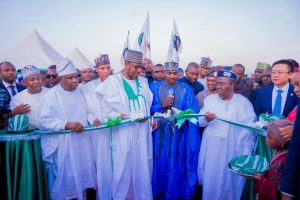
The Governor of Kebbi State, Dr. Nasir Idris, on Thursday performed the groundbreaking ceremony for the construction of two major rural road projects in Sokoto State, reaffirming the strong relationship between the neighbouring states and the commitment of Governor Ahmad Aliyu to expanding infrastructure and improving the lives of rural communities.

The projects, flagged off as part of activities marking the third anniversary of the Ahmad Aliyu administration, are the 7.5 kilometre Kajiji–Sanyinnawal Road, awarded at a contract sum of ₦3,829,964,521.37, and the 13.5-kilometre Mandera–Darin Guru–Jabo Road, awarded at ₦4,756,771,942.89.

Speaking during the ceremony, Dr. Nasir Idris described the projects as another clear demonstration of Governor Ahmad Aliyu’s unwavering commitment to delivering meaningful dividends of democracy.

He commended the Sokoto State Governor for prioritising rural infrastructure, noting that good roads remain the backbone of agricultural development, trade, improved security, and socio-economic growth.

He described the invitation to perform the groundbreaking ceremony as a great honour and a reflection of the cordial relationship between Kebbi and Sokoto states.

The Kebbi State Governor noted that the construction of the roads would significantly improve connectivity among rural communities, reduce transportation costs, facilitate the movement of people and goods, and stimulate economic activities. He urged the benefiting communities to support the contractors and ensure the projects were protected for the benefit of present and future generations.

In his address, Governor Ahmad Aliyu said the road projects formed part of his administration’s determination to fulfil campaign promises and ensure that development reaches every corner of Sokoto State.

He explained that the construction of the roads would ease the movement of people and goods, boost agricultural production, encourage commercial activities, improve access to healthcare and education, and enhance the overall standard of living of the people.

Governor Ahmad Aliyu reaffirmed his administration’s commitment to investing in critical infrastructure capable of transforming the state’s economy and improving the welfare of its citizens. He stressed that rural road construction remains one of the cardinal priorities of his government because of its direct impact on agriculture, commerce, security, and social development.

The governor further directed the contractor and consultant handling the projects to ensure strict compliance with the approved specifications and contract agreements. He emphasised that quality, professionalism, transparency, and timely completion must remain the guiding principles throughout the execution of the projects.

He also appealed to residents of the benefiting communities to cooperate fully with the contractors by providing the necessary support and safeguarding the projects against vandalism.

The Sultan of Sokoto, His Eminence Muhammad Sa’ad Abubakar III, represented by the District Head of Tambuwal, Alhaji Ahmad Dahiru Tambuwal, commended Governor Ahmad Aliyu for sustaining the momentum of infrastructural development across the state.

He described the road projects as a major milestone that would improve the socio-economic well-being of the people and urged residents to continue supporting government policies while protecting public infrastructure.

Earlier, the Chairman Shagari Local government,Barrister Maidawa Shagari, said the projects were carefully selected to address the transportation challenges facing rural communities.

He explained that the roads would facilitate the evacuation of agricultural produce, improve access to markets, schools, and healthcare facilities, strengthen inter-community relations, and accelerate economic development in the affected areas.

He assured that the projects would be closely monitored to ensure strict adherence to quality standards and timely completion.

The Chairman of Shagari Local Government, Barrister Maidawa Shagari, expressed profound appreciation to Governor Ahmad Aliyu for approving and flagging off the road projects, describing them as a historic intervention for the people of the area.

He said the construction of the Kajiji–Sanyinnawa and Mandera–Darin Guru–Jabo roads would address decades of transportation challenges, improve access to markets, schools, and healthcare facilities, and boost agricultural and commercial activities.

Barrister Maidawa assured the state government of the full support and cooperation of the people of Shagari Local Government towards the successful execution and protection of the projects, while pledging the council’s commitment to complementing the government’s development efforts.

The groundbreaking ceremony attracted top government officials, members of the National and State Assemblies, traditional rulers, political leaders, community representatives, and other dignitaries from within and outside Sokoto State.

The event marked another significant milestone in the Ahmad Aliyu administration’s drive to expand rural infrastructure, promote inclusive development, and improve the quality of life for the people of Sokoto State.

Gov. Nasir Idris Commissions 14.54km Zawuyya–Gwangwan Dikko Road in Tambuwal LGA of Sokoto State

From Muhammad Gazali Garba

The Governor of Kebbi State, Dr. Nasir Idris, has commissioned the 14.54-kilometre New Zawuyya–Unguwar Maidaji–Kaurare–Gwangwan Yaya–Gwangwan Dikko Road in Tambuwal Local Government Area of Sokoto State.

The road project, awarded at a cost of ₦4,535,456,179.27, was executed under the Rural Access and Agricultural Marketing Project (RAAMP) through a partnership involving the Sokoto State Government, the Federal Government and the World Bank.

The project is expected to improve rural connectivity, facilitate the transportation of agricultural produce, stimulate economic activities and enhance the socio-economic well-being of the benefiting communities.

Speaking at the commissioning ceremony, Dr. Nasir Idris expressed appreciation to the Governor of Sokoto State, Dr. Ahmed Aliyu, for inviting him to inaugurate the road project, describing the invitation as a great honour and a reflection of the cordial relationship between Kebbi and Sokoto States.

He stated that rural roads remain the backbone of grassroots development because they provide access to markets, schools, healthcare facilities and other essential services.

According to him, such infrastructure facilitates the movement of people and agricultural produce, stimulates economic activities, creates employment opportunities and improves the standard of living of rural dwellers.

The Kebbi State Governor observed that the people of Tambuwal Local Government Area are predominantly farmers and livestock rearers, stressing that the newly commissioned road would significantly boost agricultural production, trade and commercial activities, thereby contributing to the socio-economic development of Sokoto State.

Dr. Idris commended Governor Ahmed Aliyu for his massive investment in road infrastructure across the state, noting that numerous township and rural roads have been constructed under his administration. He urged him to sustain the momentum and appealed to the benefiting communities to take ownership of the road by protecting it against vandalism and misuse, emphasizing that public infrastructure belongs to the people and should be preserved for future generations.

Earlier, Governor Ahmed Aliyu said the construction of the road was another demonstration of his administration’s unwavering commitment to providing quality infrastructure capable of transforming the lives of the people.

He explained that the project was implemented under the Rural Access and Agricultural Marketing Project (RAAMP) in partnership with the Federal Government of Nigeria and the World Bank, describing the collaboration as a strategic intervention aimed at improving rural accessibility, promoting agricultural productivity and enhancing economic development.

Governor Ahmed Aliyu noted that the road would ease transportation, facilitate the movement of agricultural produce, improve access to schools and healthcare facilities, stimulate commercial activities and create greater economic opportunities for the benefiting communities.

He reaffirmed his administration’s determination to continue investing in critical infrastructure across Sokoto State and expressed appreciation to the Federal Government, the World Bank, RAAMP officials, the contractor, supervising consultants and members of the host communities for their support throughout the execution of the project.

The Governor also thanked Dr. Nasir Idris for accepting the invitation despite his busy schedule and urged residents of the area to protect the road from vandalism and misuse to ensure it serves generations to come.

In his remarks, the Special Adviser to the Governor on Rural Roads, Hon. Malami Galadanci, said the project forms part of the Ahmed Aliyu administration’s commitment to expanding rural road infrastructure and improving agricultural development across Sokoto State.

He explained that the 14.54-kilometre road, awarded at a cost of ₦4,535,456,179.27, was jointly funded by the World Bank, the Federal Government of Nigeria and the Sokoto State Government under the RAAMP programme.
Hon. Galadanci disclosed that about 60 kilometres of rural roads are currently being executed in Tambuwal Local Government Area, with the majority of the projects already completed.

He said the projects would improve connectivity, reduce transportation costs, facilitate the movement of agricultural produce and transform the socio-economic fortunes of the benefiting communities.
According to him, the Sokoto State Government has fully settled all financial obligations to the contractor, reflecting Governor Ahmed Aliyu’s commitment to honouring contractual agreements and ensuring the timely delivery of quality infrastructure projects.

He commended Governor Ahmed Aliyu for prioritising rural infrastructure and appreciated the support of the Federal Government, the World Bank, the RAAMP National and State Project Implementation Units, the contractor, supervising consultants and the benefiting communities for their cooperation throughout the execution of the project. He also appealed to residents to safeguard the road against vandalism and misuse.

Delivering a goodwill message on behalf of the Sultan of Sokoto,Alhaji Muhammad Sa’ad Abubakar III, the District Head of Tambuwal, Alhaji Ahmad Dahiru Tambuwal, commended Governor Ahmed Aliyu for his unwavering commitment to rural development and the provision of critical infrastructure across Sokoto State.

He described the newly commissioned road as a landmark project that would improve access to markets, healthcare facilities, schools and other essential services, thereby enhancing the socio-economic well-being of the people.

The District Head also lauded the partnership between the Sokoto State Government, the Federal Government and the World Bank under the RAAMP programme, saying it would further promote agricultural development and accelerate rural transformation.
He urged the benefiting communities to protect the road and make proper use of it, stressing that public infrastructure is a collective asset that should be preserved for future generations.

He prayed for sustained peace, unity and prosperity in Sokoto State and asked Almighty Allah to continue granting Governor Ahmed Aliyu the wisdom, strength and good health to deliver more dividends of democracy to the people.

Sokoto Government Receives Five Deportees from Côte d’Ivoire, Assures Them of Support

Gov. Ahmed Aliyu of Sokoto State

From Muhammad Gazali Garba

The Sokoto State Government has received five indigenes of the state who were deported from Côte d’Ivoire after spending about 10 months in detention.

The deportees arrived at Sultan Abubakar III International Airport, Sokoto, where they were received by a government delegation led by the Senior Special Assistant to the Governor on Legal and Administrative Matters, Barrister Gandhi Umar, on behalf of Governor Ahmed Aliyu.

Receiving the deportees at the Government House, Sokoto, Governor Ahmed Aliyu thanked Almighty Allah for their safe return and expressed appreciation to the Federal Government, particularly the Nigerian Embassy in Côte d’Ivoire, for its efforts in securing their release and facilitating their return to Nigeria.

The Governor described their safe return as a source of relief and joy to their families and the people of Sokoto State. He assured them that his administration would provide the necessary support to help them rebuild their lives and become self-reliant.

Governor Ahmed Aliyu further stated that those among the deportees who wished to continue their education would be assisted to return to school, while those who were not interested in formal education would be empowered through business support and other livelihood programmes to enable them become productive members of society.

Speaking on behalf of the deportees, Lukman Sani said they travelled to Côte d’Ivoire in search of better economic opportunities. He explained that they earned a living by moving from one community to another, collecting damaged and non-functional mobile phones in exchange for Indomie noodles or plastic household items.

According to Lukman, they were arrested by the authorities on allegations of involvement in drug trafficking and detained for 10 months. He said subsequent investigations established that they were not involved in any drug-related offence.

He added that following the intervention of the Federal Government of Nigeria through the Nigerian Embassy in Côte d’Ivoire, they were released from detention and subsequently deported to Nigeria.
Lukman further alleged that all their personal belongings were confiscated by the authorities before their deportation.

He disclosed that they had travelled to Côte d’Ivoire as a group of six. According to him, after they regained their freedom but before they could return to Nigeria, one of their colleagues fell ill and died. He was buried in Côte d’Ivoire, while the remaining five were eventually repatriated to Nigeria.

Lukman expressed gratitude to Almighty Allah for preserving their lives throughout the ordeal. He also thanked the Federal Government, particularly the Nigerian Embassy in Côte d’Ivoire, the Sokoto State Government, and everyone who contributed to their release and safe return home.

Speaking on behalf of the parents and relatives of the deportees, Alhaji Sa’adu Tudun Wada expressed profound appreciation to the Sokoto State Government and the Federal Government for their tireless efforts in securing the release and safe return of the young men.

He thanked Governor Ahmed Aliyu and the Nigerian Embassy in Côte d’Ivoire for their timely intervention, describing the reunion with their loved ones as a great relief and a moment of gratitude to Almighty Allah.

The Sokoto State Government reaffirmed its commitment to the welfare of its citizens and pledged to continue implementing programmes and initiatives aimed at improving the lives of vulnerable residents .

Shagari Flags Off 7.5km Dange–Fajaldu–Wababe Road as Gov Aliyu Deepens Infrastructure Drive

From Muhammad Gazali Garba

Former Deputy Governor of Sokoto State and Chairman of the Nigerian Inland Waterways Authority (NIWA), Barrister Mukhtari Shagari, on Wednesday flagged off the construction of the 7.5-kilometre Dange–Fajaldu–Wababe Road in Dange Shuni Local Government Area of Sokoto State, in a move that underscores Governor Ahmed Aliyu’s commitment to expanding rural infrastructure and accelerating socio-economic development across the state.

The road project, awarded at the cost of ₦5,330,954,918, is being executed by the state government in partnership with Rural Access and Agricultural Marketing Project (RAAMP), a World Bank-supported initiative.When completed, the road is expected to improve rural accessibility, facilitate the movement of agricultural produce, reduce transportation costs, stimulate commercial activities and improve access to schools, healthcare facilities and other essential services.

Speaking at the flag-off ceremony, Governor Ahmed Aliyu described the project as another milestone in his administration’s resolve to deliver people-oriented infrastructure that directly improves the lives of citizens. He said the construction and rehabilitation of roads remain central to his administration’s development agenda because of their critical role in promoting economic growth, reducing rural poverty, attracting investment and connecting communities to opportunities.

The governor explained that the Dange–Fajaldu–Wababe Road is among several strategic projects being executed through partnerships with development agencies, in addition to numerous township and rural roads funded directly by the Sokoto State Government. He noted that within the last three years, his administration has completed and commissioned several road projects across the state while many others are progressing steadily.

Governor Aliyu observed that Dange Shuni Local Government Area is predominantly agrarian, with farming and livestock production serving as the major sources of livelihood.

He said the new road would ease the transportation of farm produce to markets, reduce post-harvest losses, improve household incomes and open up the area for greater economic activities.

Aliyu stressed that investment in rural infrastructure remains one of the most effective ways of stimulating development at the grassroots, adding that communities with good road networks attract businesses, improve access to education and healthcare, and enjoy greater economic opportunities.

The governor described the collaboration between the Sokoto State Government, the World Bank, the Federal Government of Nigeria and the Rural Access and Agricultural Marketing Project (RAAMP) as a demonstration of confidence in the state’s commitment to transparency, accountability and effective project implementation.

He appreciated the support of the development partners and assured that the project would receive close supervision to ensure strict compliance with approved standards.

Governor Aliyu also directed the contractor to deliver quality work within the stipulated timeframe, reiterating that his administration would not compromise on standards.

He reaffirmed his commitment to extending development projects to all parts of Sokoto State and thanked President Bola Ahmed Tinubu, for the Federal Government’s continued support for infrastructure development and other interventions benefiting the state.

In his remarks at the Occasion,Barrister Mukhtari Shagari commended Governor Ahmed Aliyu for prioritising infrastructure development, particularly in rural communities.

He described the Dange–Fajaldu–Wababe Road project as a strategic investment that would improve connectivity, facilitate agricultural production and marketing, and transform the socio-economic fortunes of Dange, Fajaldu, Wababe and neighbouring communities.
Shagari said the commencement of the project was another clear demonstration of Governor Ahmed Aliyu’s determination to fulfil his campaign promises and deliver the dividends of democracy to the people. He noted that the road would provide easier access to markets, schools, healthcare facilities and other essential services while creating new opportunities for economic growth, investment and rural transformation.

He charged the contractor and the supervising consultant to execute the project strictly in accordance with the approved specifications and the terms of the contract. According to him, quality, professionalism and timely completion must remain the guiding principles throughout the execution of the project to ensure that it serves the people for generations.

Barrister Shagari also appealed to residents of Dange, Fajaldu, Wababe and neighbouring communities to cooperate fully with the contractor by providing a peaceful and enabling environment for the smooth execution of the project. He urged them to exercise patience over any temporary inconveniences during construction, assuring them that the short-term inconvenience would ultimately give way to lasting economic and social benefits.

The former Deputy Governor further applauded Governor Ahmed Aliyu’s vision, determination and commitment to the development of Sokoto State, saying the numerous projects executed across different parts of the state are evidence of purposeful and people-centred leadership. He thanked the governor for inviting him to perform the flag-off ceremony and wished him continued success in his efforts to transform the state.

Barrister Shagari also used the occasion to extol the leadership qualities of former Governor of Sokoto State, Senator Aliyu Magatakarda Wamakko. He described the senator as a visionary leader, seasoned administrator and outstanding mentor whose contributions to the political and socio-economic development of Sokoto State remain remarkable.

According to him, Governor Ahmed Aliyu’s commitment to infrastructure development, prudent management of public resources and people-oriented governance reflects the sound leadership values and mentorship he received from Senator Wamakko.

In a goodwill message, the Sultan of Sokoto,Alhaji Muhammad Sa’ad Abubakar III, represented by the District Head of Kilgori, Dr. Muhammad Jabbi Kilgori, commended the Sokoto State Government for its sustained investment in rural infrastructure. He described the road project as a timely intervention that would improve the socio-economic well-being of the benefiting communities and appealed to residents to support the contractor and protect the project for the benefit of present and future generations.

The flag-off ceremony was attended by the State APC Leader, Senator Aliyu Magatakarda Wamakko,the deputy governor ,Idris Muhd Gobir, members of the State Executive Council, traditional rulers, religious leaders, political stakeholders, representatives of development partners, party officials and hundreds of residents.

Sokoto at Three: Assessing Ahmed Aliyu’s Development Footprints and the Journey Ahead

By M.A. Dangusau

Three years after assuming office as the Governor of Sokoto State, Ahmed Aliyu’s administration stands at a defining moment. Having completed three years in office and entered the final year of its first term, the government is increasingly being assessed on the impact of its policies, programmes, and development initiatives across the state.

Since taking office in May 2023, Governor Ahmed Aliyu has anchored his administration on the 9-Point Smart Agenda, a comprehensive policy framework designed to accelerate development across key sectors, including infrastructure, education, healthcare, agriculture, security, youth and women empowerment, economic development, environmental sustainability, and good governance.

Across Sokoto metropolis and many rural communities, the footprints of government are increasingly visible.

New roads, rehabilitated public facilities, expanded educational and healthcare infrastructure, agricultural support programmes, and security interventions reflect an administration determined to bridge infrastructural deficits while improving the quality of life of the people.
Infrastructure development has remained the administration’s most visible achievement.

Recognising that roads are critical to economic growth, trade, and social integration, the government has embarked on the construction and rehabilitation of township and rural roads, drainage systems, bridges, and other public infrastructure. These projects are expected to improve connectivity, facilitate commerce, reduce travel time, and stimulate economic activities across the state.

Urban renewal has also received considerable attention. The ongoing beautification and modernisation of public spaces, alongside improvements to public facilities, is aimed at making Sokoto a cleaner, safer, and more attractive state for residents, investors, and visitors.

In the education sector, the administration has demonstrated a strong commitment to revitalising learning institutions.

Investments in the renovation and construction of classrooms, the provision of instructional materials, payment of examination fees for eligible students, scholarship programmes, and improvements in teachers’ welfare underscore the government’s recognition that education remains the cornerstone of long-term development. Given Sokoto’s youthful population, these investments are expected to strengthen human capital development and prepare future generations for greater economic opportunities.

Healthcare has equally remained a priority. The government has continued to upgrade hospitals and primary healthcare centres, procure medical equipment, improve access to essential healthcare services, and implement programmes targeted at women, children, and other vulnerable groups.

These interventions are intended to strengthen the healthcare system and improve health outcomes across the state.

Security continues to occupy a central place in the administration’s agenda. Like many states in northern Nigeria, Sokoto faces security challenges that require sustained collaboration among government, security agencies, and local communities.

Through the provision of operational support, logistics, vehicles, communication equipment, and other interventions, the administration has sought to strengthen the capacity of security agencies while supporting community-based security initiatives.

A safer environment remains essential for farming, commerce, investment, and overall social stability.

Agriculture, the backbone of Sokoto State’s economy, has also received renewed government attention.

Through the distribution of agricultural inputs, support for irrigation farming, mechanisation initiatives, livestock development programmes, and extension services, the administration seeks to improve productivity, enhance food security, increase farmers’ incomes, and create employment opportunities.

Recognising the importance of social inclusion, the government has also implemented empowerment programmes targeting youths, women, artisans, and small-scale entrepreneurs. Access to financial support, vocational training, and business development initiatives is expected to strengthen household incomes and stimulate local economic growth.

Fiscal discipline and prudent management of public resources have equally featured prominently in the administration’s governance philosophy. By prioritising responsible spending and directing available resources towards critical sectors, the government aims to maximise the impact of public investment while promoting transparency and accountability.

Nevertheless, the true measure of any administration extends beyond the number of projects executed or funds committed. Ultimately, citizens assess governance through the tangible improvements they experience in their daily lives. Employment opportunities, the cost of living, access to quality education and healthcare, security, and overall economic well-being remain the key indicators by which the success of the administration will continue to be judged.

Development experts also emphasise that the sustainability of ongoing projects will depend not only on their timely completion but also on effective maintenance, sound institutional management, and continuity of government policies. Ensuring that development reaches both urban and rural communities remains essential for achieving inclusive growth.

As Governor Ahmed Aliyu enters the final year of his first term, expectations remain high. The challenge before the administration is not only to sustain the momentum already established but also to consolidate existing gains, complete ongoing projects, deepen reforms where necessary, and ensure that every community benefits from the dividends of democratic governance.

Three years into the journey, Sokoto’s development story is still unfolding. It is a story shaped by ambition, strategic planning, expanding infrastructure, institutional reforms, and the aspirations of millions of citizens who look to government for improved living standards and greater opportunities. The year ahead will be crucial in determining the enduring impact and legacy of the administration’s first term.

BUILDING A STRONGER SOKOTO: THREE YEARS OF VISION, SERVICE AND PROGRESS

Gov. Ahmed Aliyu, Sokoto State

By M. A. Dangusau

Three years after assuming office as Governor of Sokoto State, Ahmed Aliyu has remained focused on implementing a governance agenda aimed at addressing some of the state’s most pressing challenges. Guided by his development blueprint, the administration has prioritised agriculture, healthcare, education, infrastructure, religious affairs and security—sectors widely recognised as the foundation of sustainable development.

While governance is often viewed through political lenses, the true measure of leadership lies in its impact on the lives of ordinary citizens. It is against this backdrop that the first three years of Governor Aliyu’s administration deserve careful reflection.

Cultivating Prosperity Through Agriculture

For decades, agriculture has remained the backbone of Sokoto State’s economy. From crop cultivation to livestock production, the sector provides livelihoods for thousands of families and serves as a critical driver of economic activity.
Recognising this reality, the administration has placed considerable emphasis on agricultural development. Through various interventions designed to support farmers and enhance productivity, the government seeks not only to boost food production but also to improve rural livelihoods, create employment opportunities and strengthen food security.
When farmers prosper, local economies flourish. Markets become more vibrant, household incomes improve and communities become more resilient. Agriculture therefore remains one of the most effective instruments for inclusive growth and sustainable development.

Healthcare: Investing in Human Well-Being
No society can attain meaningful progress without a healthy population. Healthcare remains one of the clearest indicators of a government’s commitment to the welfare of its people.
Over the last three years, efforts to improve healthcare infrastructure and service delivery have been geared towards bringing quality medical services closer to communities across the state. These interventions are particularly significant for women, children and vulnerable groups who often face challenges in accessing healthcare.
A healthy population is a productive population. By investing in healthcare, the administration is strengthening the human capital required for long-term social and economic advancement.

Education:

Building the Future
Education remains the cornerstone of every prosperous society. Every classroom provides an opportunity to nurture future leaders, professionals, innovators and entrepreneurs.

The administration’s commitment to educational development is reflected in its investment in learning infrastructure and efforts aimed at creating a more conducive environment for teaching and learning.

The benefits of education extend far beyond academic achievement. It promotes economic growth, reduces poverty, encourages social mobility and equips citizens with the knowledge and skills needed to succeed in an increasingly competitive world.
For Sokoto State, investment in education is ultimately an investment in the future.

Infrastructure:

Connecting Communities to Opportunity
Infrastructure plays a vital role in driving economic and social development. Roads do more than connect locations; they connect people to opportunities, markets, schools and healthcare facilities.
Infrastructure development has therefore remained a key component of the state’s development strategy. Through road construction and rehabilitation projects, the administration has sought to improve mobility, facilitate commerce and strengthen connectivity among communities.
For traders, farmers, students and workers, improved infrastructure translates into reduced travel time, lower transportation costs and expanded economic opportunities.
The impact of these projects extends beyond the present generation, laying the foundation for future growth and prosperity.

Religious Affairs: Preserving Values and Strengthening Unity

As the seat of the Caliphate, Sokoto occupies a unique position in Nigeria’s religious and cultural landscape. Religion continues to serve as a powerful source of moral guidance, unity and social stability.

The administration’s support for religious institutions demonstrates an appreciation of their role in promoting peace, moral values and community development.
Strong societies are built not only on economic progress but also on shared values and mutual respect. By supporting religious and community institutions, the government contributes to strengthening social harmony and cohesion.

Security: Safeguarding Lives and Development
Development can only thrive in an atmosphere of peace and stability. Without security, progress in every other sector becomes difficult to achieve and sustain.
Over the past three years, the administration has continued to support initiatives aimed at enhancing public safety and strengthening collaboration with security agencies in addressing emerging security challenges.
The importance of security cannot be overstated. Farmers need safe access to their farmlands, businesses require secure environments to operate and families deserve the assurance that their communities are protected.
Security therefore remains the bedrock upon which sustainable development is built.

A Vision for a Greater Sokoto

Three years into his administration, Governor Ahmed Aliyu’s development agenda reflects a clear commitment to improving the quality of life of the people of Sokoto State. Through sustained investments in agriculture, healthcare, education, infrastructure, religious affairs and security, the administration has continued to lay the foundation for a more prosperous and resilient society.

These sectors are interconnected and mutually reinforcing. Together, they form the pillars upon which a stronger Sokoto can emerge—one where opportunities are expanded, institutions are strengthened and development reaches every community.

As the administration enters its fourth year, the focus remains not merely on completing projects but on creating lasting impact.

The ultimate measure of success will be seen in the lives transformed, the opportunities created and the brighter future secured for generations yet unborn.

SOKOTO’S EMERGING DEVELOPMENT STORY

Gov. Ahmed Aliyu of Sokoto State

By Sani Umar

In every democratic setting, governments are often judged not by the promises they make during campaigns but by the tangible projects they deliver to the people. Infrastructure development, social interventions, and economic empowerment initiatives become the yardsticks through which history assesses leadership.

For decades, Sokoto State, despite its historical significance as the seat of the Caliphate and one of Nigeria’s most influential states politically and culturally, struggled with inadequate infrastructure, limited industrial growth, and insufficient investments in critical sectors. Many communities yearned for improved roads, better healthcare facilities, quality educational institutions, and modern agricultural interventions capable of unlocking the state’s enormous potential.

Since assuming office in May 2023, Governor Ahmed Aliyu has embarked on an ambitious development agenda aimed at changing this narrative. Across the state, roads are being constructed and rehabilitated, schools are being renovated, hospitals are receiving much needed upgrades, and new projects are emerging in both urban and rural communities.

However, beyond the projects themselves, another aspect of the administration’s development strategy that has attracted considerable attention is the elaborate commissioning of these projects and the decision to invite prominent personalities from outside Sokoto State to formally inaugurate them.

Far from being mere ceremonial activities of ribbon cutting, project commissioning exercises carry significant political, economic, and developmental implications. They serve as a public audit of government performance, allowing citizens to physically see how public resources are being utilised and providing evidence that campaign promises are being translated into concrete achievements.

In an era where public trust in government is often low, the inauguration of completed projects reinforces the principle of accountability. It gives the administration an opportunity to showcase results and allows the people to assess whether government expenditures are yielding meaningful benefits. By commissioning projects after completion, Governor Ahmed Aliyu is effectively creating a visible scorecard of his administration’s performance.

The commissioning of projects also boosts public confidence in governance. When citizens witness completed roads, schools, hospitals and other developmental projects being put to use, they develop greater trust in government institutions. Such confidence has far-reaching implications, encouraging citizens to support government policies, participate in community development initiatives and maintain faith in democratic processes. For many residents of Sokoto State, the commissioning ceremonies have become symbols of a government that is determined to deliver on its promises.

One of the most strategic aspects of Governor Ahmed Aliyu’s approach is his decision to invite governors, ministers, senators and other distinguished personalities from across Nigeria to commission projects in Sokoto. This goes beyond protocol. Each visiting dignitary becomes an ambassador of Sokoto’s development story.

When prominent national figures visit the state and witness ongoing transformations firsthand, they often leave with a renewed perception of Sokoto as a state that is serious about development and prudent management of resources. Their public commendations and media engagements help project a positive image of Sokoto to the rest of the country. In the modern world, perception itself is an important economic asset. States that are seen as stable, progressive and development oriented often attract greater investments and partnerships.

The presence of influential personalities at project commissioning ceremonies can also create new economic opportunities. Such visits provide avenues for strengthening inter-state collaborations, attracting federal interventions, encouraging private sector investments, building development partnerships with international organisations and promoting Sokoto as an emerging destination for business, tourism and agriculture.

Investors generally seek environments where government demonstrates seriousness, stability and commitment to infrastructure development. Frequent commissioning of projects sends a strong signal that the state is moving forward and is open for business.

Politics and development are closely linked, and when leaders from across Nigeria repeatedly visit Sokoto to commission projects, it elevates the state’s visibility and political relevance on the national stage. It portrays Sokoto not as a peripheral state waiting for development but as a state actively driving its own transformation.

This renewed prominence can translate into stronger relationships with federal authorities and development partners, potentially attracting more projects and interventions to the state. The commissioning ceremonies themselves also generate economic activities. Hotels record increased patronage, transport operators benefit from increased movement, local vendors make sales, artisans and service providers experience temporary economic gains.

More importantly, the projects being commissioned often create long-term economic benefits by improving transportation, facilitating trade, enhancing agricultural productivity and creating employment opportunities. For many years, Sokoto was largely known for its historical and religious significance. While these remain invaluable assets, the state is increasingly gaining recognition for its development initiatives.

The regular commissioning of projects, coupled with the attendance of high-profile personalities, is helping to build a new narrative, one of progress, transformation and purposeful leadership. This positive image can have long-term implications for tourism, investment and national perception.

No state becomes economically transformed solely because projects are commissioned or because dignitaries visit. However, these activities contribute significantly to building confidence, attracting attention and enhancing the state’s reputation. Governor Ahmed Aliyu’s strategy appears to be creating an ecosystem where development projects are not only executed but are also deliberately showcased to the nation.

The repeated commendations from visiting leaders and the increasing national attention being directed towards Sokoto suggest that the state is gradually positioning itself as one of the emerging centres of development in Northern Nigeria. Project commissioning is therefore far more than ribbon-cutting and ceremonial speeches. It is a statement of intent, a demonstration of accountability and an instrument for promoting a state’s economic and political interests.

Again, by inviting respected personalities from across the country to commission projects, Governor Ahmed Aliyu is not merely celebrating completed infrastructure, he is marketing Sokoto, enhancing its visibility and repositioning it as a state open to investment, partnership and progress. If sustained, this approach could leave behind not only physical infrastructure but also a stronger reputation and a more competitive economic identity for Sokoto State in the years to come.

RECOMMENDED NEWS

POPULAR