Several worshippers have been killed as suicide bomber detonated explosives at Gambarou Jumu’at mosque in Maiduguri, the Borno State capital.
Some of the worshippers, who survived the blast, said the assailants sneaked into the mosque and detonated the bomb during the Maghrib congregational prayer on Wednesday.
“The bomber detonated when the first raka’at of the Maghrib prayer was observed. Many worshippers died, others sustained various injuries,” he said
However, there was no immediate claim of responsibility for the attack, but among the suspects will be the Boko Haram armed group, which has launched a large number of suicide attacks in region over the past few months.
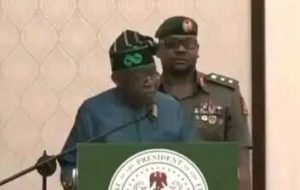
President Bola Ahmed Tinubu, on Wednesday in Lagos, inaugurated a Committee on Strategy, Conflict Resolution and Mobilisation to resolve conflicts within the All Progressives Congress as it approaches the 2027 general elections.
The committee, which comprises Governors of the party, members of the Federal Executive Council, and other notable stakeholders, has the Governor of Yobe State, Mai Bala Buni, as Chairman, and Muiz Banire, former Legal Adviser of the APC, as Member/Secretary.
Other members include Senator Adamu Aliero, Chairman of the Nigeria Governors Forum and Governor of Kwara State, Abdulrahman AbduRazak, Chairman of Progressive Governors Forum and Governor of Imo State, Hope Uzodimma, Governors Hyacinth Alia (Benue), Umar Namadi (Jigawa), Bassey Otu (Cross River), Abiodun Oyebanji (Ekiti) and Sheriff Oborevwori (Delta).
Governors Uba Sani (Kaduna), Siminalayi Fubara (Rivers), Minister of Marine and Blue Economy, Adegboyega Oyetola, Minister of State for Defence, Bello Matawalle and former Governor of Kogi State, Yahaya Bello, are also members.
At the inauguration, Governor Mai Mala Buni expressed gratitude for being chosen as the chairman and for the party’s confidence in the members. He said the committee would execute the assignment with utmost responsibility and dedication.
“The committee will engage in strategic engagements and consultations to develop an all-encompassing, productive and result-oriented strategy that will stand the test of time. We shall implement a system that gives everyone, especially aggrieved parties, a sense of belonging and inclusion, with a renewed hope.
“Similarly, the committee will consider proactive measures, solutions, and the potential threats in our conflict resolution approach,” Buni said.
He urged members “not to allow personal interest and sentiments to override the general interest and purpose for which this committee is constituted.”
President Tinubu had on Friday, December 19, at the 15th National Executive Committee meeting of the All Progressives Congress, held at the State House Conference Centre, Abuja, harped on the need for cohesion within the ruling party. He reminded party leaders that the APC was built on the ideals of progressive politics, broad-based participation, and respect for diversity of opinion.
The President had said at the meeting: “We must continue to be resolute that this democracy that we take in our hands must not fail. We say we are bigger. We are larger and taller. But it should now be in our hearts to be accommodating. That’s the only way we can be resilient, we must be tolerant.”
CHRISTMAS MESSAGE: GOVERNOR ALIYU SEEKS PRAYERS FOR END TO INSECURITY
Governor Ahmed Aliyu of Sokoto state
From MG Gazali
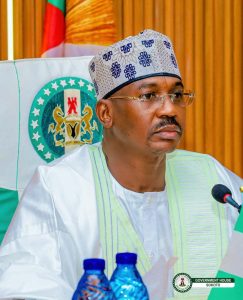
As Christians prepare for the 2025 Christmas celebrations, the Governor of Sokoto State, Ahmed Aliyu, has called on the Christian community in the state to use the Christmas special service to pray for an end to the security challenges hindering Nigeria’s march to greatness.
The Governor made the call in his Christmas message to Christians in the state. He described insecurity as a serious national challenge that must be addressed for Nigeria to take its rightful place among the comity of nations.
Governor Aliyu noted that Sokoto State, despite its long-standing reputation for peace, is also experiencing security challenges, particularly due to banditry activities in the eastern part of the state.
He stated that his administration has, since inception, taken proactive steps to support security agencies in curbing banditry and other criminal activities across the state.
“So far, the government has distributed over 170 patrol vehicles and numerous motorcycles to conventional security agencies in the state,” he said. “We have also established the Sokoto State Community Guard Corps, provided it with 40 Hilux vans and 700 motorcycles, and ensured the full operationalization of the Nigerian Air Force Base in Sokoto.”
The Governor further disclosed that his administration has constructed a military base in Illela Local Government Area and reviewed upward the monthly allowances of security personnel deployed to volatile areas of the state.
He therefore urged Christians to use the Christmas special service to pray for an end to the numerous challenges hindering Nigeria’s development,noting that meaningful development can only thrive in an atmosphere of peace.
He commended the mutual understanding and harmonious relationship between the people of Sokoto and their host communities and called for its sustenance.
The Governor enjoined Christians in the state to continue to live peacefully with their host communities and to contribute to the overall development of the state.
“Sokoto has been known for its peaceful nature since time immemorial, and we must continue to maintain this good reputation,” he added.
He described Sokoto as a home for all, irrespective of tribal or religious backgrounds, citing the provision of free education to all students, including those from resident communities.
According to him, the present administration has executed several developmental projects in Christian-dominated areas such as Sahara and J-Allen, aimed at improving the socio-economic well-being of residents.
Governor Aliyu called on Christians to continue supporting the present administration in its efforts to transform the state.
Alh. Sambo B. Danchadi Sokoto State Commissioner for Information,
From MG Gazali
The Sokoto State Government has taken a significant step towards improving the state’s business environment with the approval of the Business Enabling Reforms Action Plan (BERAP).
The approval was made at the 17th meeting of the State Executive Council, held at the Council Chamber, Government House, Sokoto.
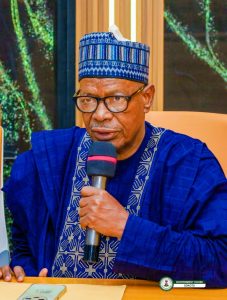
According to the Commissioner for Lands and Housing, Barrister Nasir Aliyu Dantsoho, who briefed journalists on the outcome of the council meeting, the plan is designed to improve the state’s business climate, making it more attractive to investors and entrepreneurs.
He further said the plan includes key reforms such as digitizing land titling, reducing Certificate of Occupancy processing time, and streamlining business registration.
Additionally, the plan aims to enable Business Premises Registration and BPP/PPP clearances within the shortest possible time. It also seeks to enhance dispute resolution and improving public awareness.
With the implementation of the BERAP plan, the state is likely to experience significant improvements in its business climate, making it an attractive destination for investors and entrepreneurs.
The plan is expected to boost economic growth, create new job opportunities, and improve the overall business environment in the state. By streamlining processes and reducing bureaucracy, the state aims to attract more investments and promote economic development.
The approval of the BERAP plan demonstrates the Sokoto State government’s commitment to creating a favorable business environment and promoting economic development in the state.
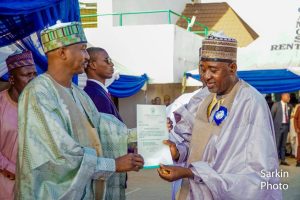
Sokoto State Governor, Ahmad Aliyu, has sworn in the Vice Chairman of Kebbe Local Government Area, Hon. Musa Garba Kuchi, as the new Chairman of the council following the death of the elected Chairman, Abdullahi Yarima, who passed away a few months ago.
The Governor charged the newly sworn-in Chairman to be accessible, honest, sincere, and God-fearing, and to always reside within the local government area in order to effectively serve the people.
Governor Aliyu noted that Kebbe Local Government Area is among the areas facing security challenges and therefore tasked the new Chairman to work closely with security agencies by ensuring regular security meetings to enhance safety in the area.
Also sworn in were the State Head of Civil Service, Abdulkadir Ahmed Mohamed, five Special Advisers, and twelve Permanent Secretaries.
The Governor urged the new Head of Service to redouble efforts toward restoring the lost glory of the state civil service by promoting discipline, commitment, dedication, and punctuality among civil servants.
He reminded him that the civil service requires rejuvenation and strict discipline, and charged him to improve productivity through enhanced work ethics and punctuality.
According to the Governor, the present administration has been prompt in the payment of salaries, gratuities, and pensions, and has also restored the payment of imprest to Ministries, Departments, and Agencies (MDAs) as part of efforts to boost the morale of civil servants.
He reassured civil servants of the administration’s commitment to their welfare by providing a conducive working environment that would ensure an efficient and productive workforce.
Governor Aliyu called for a harmonious working relationship between Special Advisers and Permanent Secretaries, explaining that while Special Advisers serve as the political heads of their respective assignments, Permanent Secretaries are the administrative heads of their MDAs.
“It is important to note that this position makes Permanent Secretaries indispensable to the success of any administration,” he said.
He added that all appointments were based strictly on merit and urged the appointees to conduct themselves with integrity and professionalism in pursuit of the administration’s vision of a prosperous and renewed Sokoto State.
“As heads of your MDAs and accounting officers in your respective places of assignment, a lot is expected from you. You must ensure transparency, accountability, and good governance at all levels of your operations. Proper record-keeping must be maintained to leave behind a credible system,” the Governor warned.
Governor Aliyu further charged the appointees to be dedicated, committed, and hardworking, stressing that prudence in the management of public resources must not be compromised.
“This administration has zero tolerance for corruption. You must operate with transparency and accountability, and above all, allow the fear of Allah to guide your actions,” he stated.
The Governor recalled that upon assumption of office, the state was owing pensioners gratuities running into billions of naira, but noted that the situation has now improved significantly.
“Alhamdulillah, those challenges are now becoming history. Salaries are now paid between the 19th and 20th of every month, cash allocations have been restored, and the payment of accumulated gratuity arrears is progressing steadily,” he added.
Governor Aliyu also called on civil servants in the state to remain dedicated and committed to their duties to enable the administration achieve its vision of a new Sokoto State.
Those sworn in as Special Advisers are:
Hon. Umar Babuga Oro
Hon. Faruku Labbo
Zainab Umar Dasuki
Kamaludden Abubakar Lemi
Bashir Haliru Dogon Daji
The Permanent Secretaries sworn in include:
Isma’ila Ibrahim
Aliyu Ladan Isa
Aminu Bello
Abubakar Alhaji
Ni’ima Hassan
Almustafa Sayudi
Aminu Abubakar Rijiya
Lema Sambo Wali
Kabiru Garba
Abubakar Moh’d Bello
Kabiru Labaran
Sanusi Aliyu Binji
The Federal Government has revealed that Nigerian security agencies are working with major social media companies to identify and take down accounts used by terrorist and criminal groups to promote their activities and raise funds.
Speaking at an end-of-year briefing in Abuja on Tuesday, the Director-General of the National Counter Terrorism Centre, Maj.-Gen. Adamu Laka said platforms such as TikTok, Facebook, Instagram, Snapchat and X had been used by terrorists to publicise operations, display looted items and communicate with supporters.
He said security agencies have held series of meetings with social media companies to address posts and accounts that pose threats to national security.
“The issue of social media platforms used by terrorist groups—if you knew how many accounts we took down. We have had several meetings with these social media platforms like: TikTok, Instagram, Snapchat, Facebook and X.
“They are businesses looking to grow their subscribers, but we engage them, explain the effects of certain posts on national security, and we take them down.
“There was a time when bandits would go on TikTok showing their loot. We took those accounts down—you don’t see that again. At some point, they were even doing live streams and holding conversations, but we’ve been able to handle all that,” he said.
The military chief stated that terrorist tactics continue to evolve, including the use of aliases and unverified accounts, adding that security agencies are constantly adapting to counter such developments.
Laka also said ransom payments remain a major source of terror financing, with point-of-sale operators increasingly exploited to move funds.
He explained that in many cases, ransom payments are transferred to accounts belonging to POS operators, who then release the cash to kidnappers, making tracking more difficult.
“You see a transfer made by terrorists, and when you investigate the account, it belongs to a POS operator. The kidnappers give out the POS operator’s number, the money is transferred, and they go to collect it,” he said.
He further said that security agencies had intensified efforts to track ransom payments, arrest those involved and disrupt terror financing networks, but stressed that operational details could not be made public for security reasons.
According to him, several arrests and prosecutions had been carried out in connection with ransom payments and terrorism financing, adding that asset recoveries and seizures formed part of Nigeria’s compliance with international anti-money laundering and counter-terrorism financing standards.
Laka said the country’s recent progress in meeting the requirements of the Financial Action Task Force was partly due to coordinated investigations by a joint committee involving security agencies, financial intelligence units and the judiciary.
While acknowledging the challenges posed by evolving terror tactics and porous borders in the Sahel region, he assured Nigerians that security agencies would continue to strengthen both physical and digital counter-terrorism efforts.
He said, “Towards the end of 2023, the security situation in Nigeria was improving. But after the coups in some Sahel countries, the situation worsened because these terrorist groups have connections across the region.
“So Nigeria has to play a leadership role in West Africa and the Sahel to address these threats. As long as those countries continue to face these challenges, Nigeria will also face them. We are doing our best, and we will not relent. In 2026, we are going to up our game.”
Bandits are notorious for using social media to showcase the money they made from their kidnappings, sometimes streaming live with thousands of followers.
Social media has increasingly been used by criminal groups to spread propaganda, showcase illicit activities and communicate within their networks.
The Akwa Ibom State Police Command has reviewed the security situation in the state in the outgoing year and outlined its operational focus for 2026, assuring residents of sustained peace and safety.
Speaking during an end-of-year press conference with journalists, the Commissioner of Police CP Baba Mohammed Azare, fsi, Mnipr, stated that the security situation in Akwa Ibom State remained generally peaceful, calm, and stable throughout the year under review. This, he noted, was achieved through intelligence-led policing, proactive patrols, strategic deployments, community cooperation, and effective inter-agency collaboration.
The Commissioner disclosed that the Command recorded significant operational successes during the year, including the arrest of suspects involved in armed robbery, cultism, kidnapping, violent crimes, and other criminal activities. He added that firearms, ammunition, stolen vehicles, and other dangerous exhibits were recovered, while several criminal hideouts and identified black spots across the state were dismantled.
He further stated that the Command ensured adequate security coverage for political, social, religious, and economic activities across the state, while maintaining strict enforcement of laws and government directives aimed at preserving public order.
On public safety, the Commissioner reiterated the Command’s stance against jungle justice, unlawful gatherings, and activities capable of breaching public peace. He also confirmed compliance with the Executive Order of the Akwa Ibom State Government restricting masquerade activities to approved locations, with mandatory police permission and security coverage, a measure which significantly reduced violence and disorder.
Addressing the issue of misinformation, the Commissioner expressed concern over the increasing spread of fake news, particularly on social media. He revealed that arrests were made in connection with the fabrication and circulation of false information capable of causing panic and tension, warning that offenders would continue to face the full weight of the law.
The Commissioner emphasized that community policing remained a core strategy of the Command, noting sustained engagements with traditional rulers, youth and women groups, religious leaders, market associations, transport unions, school administrators, and other stakeholders across the state.
SUMMARY OF ACHIEVEMENTS
The Command recorded the following major achievements among others;
1. Recovery of 179 Assorted Arms (Displayed)
2. Recovery of 323 Different types of Ammunitions
3. Recovery of 100 pieces of Live Cartridges
4. Arrested 563 suspects for various crime and charged to courts
5. Recorded 14 stolen vehicles (released to their owners)
6. Rescued 74 Human Trafficking victims and reunited with their families
7. Rescued 10 kidnapped victims
8. Secured 33 convictions in the year 2025
This is just to mention but a few.
2026 SECURITY FOCUS
Looking ahead to 2026, the Commissioner outlined the Command’s key priorities to include:
1. Strengthening intelligence-led policing and crime prevention strategies
2. Sustained clampdown on violent crimes, cultism, armed robbery, and kidnapping
3. Deepening community policing and public trust
4. Combating cybercrime and the spread of fake news
5. Enhancing professionalism, discipline, and respect for human rights
6. Improved deployment strategies and use of modern policing tools
7. Strengthening collaboration with sister security agencies
He assured residents that adequate security measures have been put in place for the festive season and beyond, with intensified patrols, stop-and-search operations, and strategic deployments across all Local Government Areas.
The Commissioner expressed deep appreciation to the Inspector-General of Police for his purposeful leadership, policy direction, and unwavering support to the Akwa Ibom State Police Command, which he said greatly enhanced operational effectiveness.
He also thanked the Akwa Ibom State Government for its continuous support, sister security agencies for their cooperation, officers and men of the Command for their dedication and sacrifice, and the good people of Akwa Ibom State for their trust and partnership.
The Commissioner reassured residents of the Command’s unwavering commitment to the protection of lives and property in 2026 and urged the public to remain law-abiding, vigilant, and to promptly report suspicious activities to the nearest police station.
The Governor of Sokoto State, Dr. Ahmed Aliyu Sokoto FCNA, has demonstrated his commitment to empowering persons with disabilities by gifting a brand new motorcycle to Ibrahim Mustapha, a determined youngman from Kofar Marke in Sokoto North Local Government.
Despite being born without legs, Ibrahim has achieved remarkable success, completing his education up to a degree level and securing employment as a draftsman. This remarkable feat is a testament to his unwavering resilience and determination.
The presentation ceremony, held at the Government House, was attended by prominent government officials, and well-wishers. The Chief of Staff, Aminu Haliru Dikko, handed over the motorcycle to Ibrahim, bringing joy and hope to his life.
This gesture not only enhances Ibrahim’s mobility but also boosts his confidence and independence.
The governor’s initiative is part of his administration’s efforts to support persons with disabilities and promote inclusivity in the state.
By providing Ibrahim with this motorcycle, the governor is enabling him to continue his work as a draftsman and contribute to his community. This act of kindness has sparked a sense of gratitude and appreciation among the people of Sokoto State, who are hopeful that their leader will continue to prioritize the welfare of all citizens.
Ibrahim’s story serves as an inspiration to many, showcasing the power of determination and hard work in overcoming adversity. His achievement is a shining example of what can be accomplished with the right support and opportunities.
The people of Sokoto State and beyond are celebrating his remarkable journey and the governor’s gesture, which is a testament to the impact of effective leadership and community engagement.
Some of the most consequential moments in governance do not arrive with sirens or slogans. They come quietly, carried by decisions that restore trust rather than chase applause. One such moment unfolded in Kano in December 2025, when the state chose to remember what it had postponed for more than a decade, the unpaid obligations owed to those who once served it.
For many years, former Local Government councillors across Kano State lived with a peculiar form of civic exile. They had served at the tier of government closest to the people, where roads are not theories and healthcare is not an abstraction, yet their severance gratuities and statutory allowances remained unsettled. Furniture, accommodation, and leave entitlements slipped from policy into neglect, surviving only as entries in ageing files and fading hopes.
Administrations changed. Political banners were lowered and raised anew. But the debt endured.
In Nigeria’s political culture, such liabilities are often treated as relics of inconvenient history, especially by governments elected on opposition platforms. Discontinuity becomes doctrine and memory becomes a casualty. Alhaji Abba Kabir Yusuf chose a different path. Instead of weaponising the past, his administration accepted responsibility for it.
Between May and December 2025, the Kano State Government carried out a three phase settlement that disbursed a total of fifteen billion sixty seven naira to former Local Government Council members across the state. The first instalment, paid on 28 May 2025, amounted to one billion, eight hundred and five million three hundred thousand eight hundred and twenty three naira twenty kobo (N1,805,003,823.20) covered 903 beneficiaries who served between 2014 and 2017. The second tranche, released on 18 August 2025, totalled five billion six hundred and four million, two hundred and five thousand, nine hundred and ninety eight naira seventy kobo (N5,604,205,998.70) and benefited 1,198 former councillors who served between 2018 and 2020.
The final instalment, concluded in December, involved eight billion two hundred fifty eight million four hundred and twenty four thousand eight hundred and twenty three naira, twenty kobo (N8,258,424,823.20) paid to 1,371 beneficiaries who served between 2021 and 2024.
Altogether, three thousand four hundred and seventy two (3,472) former councill members across Kano’s 44 local governments benefited from the exercise.
When aggregated, the payments translate to an average payout of about four million five hundred per beneficiary, varying by tenure and entitlement.
Perhaps, for many, it marked the first real sense of closure after years of waiting and this was not charity. It was duty fulfilled.
Indeed, the payments were neither rushed nor symbolic. They were structured, verified, and openly executed, supported by documentation and institutional oversight. Even serving councillors whose tenure began in 2024 were included, receiving fifty percent of their furniture allowance in the interest of fairness.
Therefore, in a system long shaped by selective justice, the consistency was notable.
Behind the figures were lives shaped by uncertainty. Former councillors postponed medical care, delayed children’s education, or adjusted livelihoods around promises that never materialised. Grassroots public service offers little protection from economic vulnerability, and when the state defaults on its commitments, families bear the cost quietly, not institutions.
One such voice gave the story human clarity. Abdulsalam Ishaq Jigo, a former councillor from Kumbotso Local Government Area, described the settlement as both relief and redemption. He praised Governor Abba Kabir Yusuf for what he called an act of kindness and fairness, noting that the payments were made without regard to party affiliation or political history.
“For years, we were told to keep waiting,” Jigo said. “We served Kano sincerely, but our entitlements were ignored. This government did not ask which party we belonged to. It simply did what was right.”
Without bitterness, he recalled that repeated appeals under the previous administration of Abdullahi Umar Ganduje produced no result. What remained in his voice was relief that the burden had finally been lifted.
Politically, the decision carried uncommon weight. Opposition governments are often expected to rule in contrast rather than continuity. Yet here, continuity was raised into principle. By settling obligations incurred under previous administrations, the Abba Yusuf government showed that accountability does not depend on authorship, and that justice does not change with party labels.
The intervention went beyond compensation. It was paired with reforms aimed at preventing recurrence, including improved payroll systems, digital record keeping, realistic budgeting, and disciplined fiscal planning. These are the quiet changes that rarely dominate headlines, yet determine whether justice becomes routine or remains an exception.
Local Government remains the foundation of Nigeria’s development framework. It is where education is first encountered, healthcare is most urgently required, and public trust is most easily broken or rebuilt. By honouring former councillors, the state strengthened the morale of those currently serving and reassured those yet to serve that sacrifice will not be repaid with neglect.
History will argue over parties and power, over who stood where and when. But citizens remember governance differently. They remember the moment a debt was paid, a dignity restored, a long wait finally ended. In that memory, justice is not an abstract promise but a tangible act, measured not by speeches but by settlements. Kano’s lesson is quiet yet enduring, that authority gains meaning when it chooses conscience over convenience, and that leadership, at its best, is simply the courage to do what should have been done long ago. When the dust of campaigns settles, it is such moments that remain, not loud enough to cheer, but deep enough to last.
In the two years since Governor Ahmed Aliyu assumed office, his administration has pursued an ambitious 9 Point Smart Agenda aimed at addressing the deep rooted challenges the state has long faced while laying foundations for sustainable development and inclusive growth.
Grounded in practical interventions across education, health, water, agriculture, security, youth empowerment, local government autonomy, religious harmony, and economic revitalisation, this agenda has moved beyond slogans into measurable impacts that ordinary citizens now feel in their daily lives.
From the outset, Governor Aliyu made clear that his governance philosophy would be transformational and people centred, prioritising visible results over rhetoric. The state’s 2025 budget, aptly tagged the “Transformation and Infrastructural Sustainability Budget,” dedicated a significant share of resources to capital projects, signalling a commitment to real, structural change without resorting to external borrowing.
On education, one of the core pillars of the Smart Agenda, the administration has implemented programs with far reaching effects. The AGILE project, (Adolescent Girl’s Initiative for Learning and Empowerment) has delivered substantial grants to a large number of schools across the state, funding classroom renovations, boreholes, sanitation and other critical infrastructure, with a focus on enabling safe learning environments and improving educational outcomes for girls and boys alike.
Complementing this is the recent provision of modern furniture to public schools across the state, an intervention aimed at improving classroom comfort, learning conditions, and overall student performance.
In tandem with these efforts, Sokoto State has seen a notable increase in school enrolments as part of broader strategies to strengthen the sector, including enhanced educational infrastructure and teacher training. The First Lady of the State, has also reinforced education as a priority, emphasising safe and inclusive spaces for students and expanded support for school administrators.
In line with the adage that health is wealth, the Aliyu administration has repositioned healthcare as a central pillar of its SMART agenda, with deliberate focus on maternal and child health. Through expanded immunization, improved antenatal services, steady supply of essential drugs and the large scale recruitment and deployment of skilled health workers, particularly midwives. The state is recording a gradual but steady decline in maternal and child mortality.
General hospitals across the three senatorial zones are undergoing renovation and upgrades, while primary healthcare centres, especially in rural communities, have been strengthened to ensure equitable access to quality care. These people centered reforms are restoring confidence in public health facilities and laying the foundation for a healthier and more productive Sokoto State.
In agriculture, a sector critical to the State’s economy and food security, Governor Aliyu has pushed for modernization and investment that enhances productivity and commercial viability. Initiatives such as the establishment of modern storage facilities, including the recently launched onion cold-storage project, are designed to curb post-harvest losses and stabilise farmers’ incomes.
These efforts are complemented by the large scale distribution of subsidised fertilisers and improved seeds, reinforcing the administration’s focus on transforming traditional farming into a more profitable and resilient agribusiness.
Security remains a foundational part of the governor’s agenda, given Sokoto’s history of insecurity and banditry. Through strategic partnerships with federal security agencies and the establishment of state driven mechanisms such as the Sokoto State Community Guard Corps, the administration has strengthened the state’s capacity to safeguard lives and property. The provision of patrol vehicles and motorcycles, alongside improved allowances for frontline personnel, has enhanced operational effectiveness and boosted community confidence.
Economic empowerment and poverty alleviation have been central to the administration’s social interventions. Over 14,000 residents have benefited from the NG-CARES program, which supports micro and small entrepreneurs with grants that stimulate business growth and economic self-reliance.
The state has also implemented a Multidimensional Poverty Index Survey to inform policy targeting and drive data, led interventions against poverty.
Complementing these efforts is a deliberate focus on social welfare and inclusion, particularly for vulnerable groups.The administration has rolled out a comprehensive welfare package for persons with disabilities, including monthly stipends, the provision of hand cycles to enhance mobility, and expanded access to educational opportunities aimed at promoting independence and dignity.
In the religious sphere, the government has sustained monthly cash allocations and allowances to mosques, imams, and mu’azims, alongside the provision of foodstuffs and other forms of support to Islamic clerics. This commitment is further reflected in the expansion of Ramadan feeding centres across the state, where increased outlets and assorted meals have eased the burden on fasting families and reinforced the values of compassion and communal support. Mosques and Islamiya schools across the state have been remodeled to befitting standards, enhancing their role in moral and religious development.
Promoting religious harmony and inclusion forms another pillar of the Smart Agenda, reflecting Sokoto’s cultural ethos. The administration has elevated religious affairs in governance, institutionalising support for worship spaces and interfaith coexistence, which has contributed to peaceful relations across communities.
Infrastructure renewal has equally remained a visible hallmark of the administration. The reconstruction of the burnt Sokoto Central Market, valued at N8.5 billion, stands as a major economic recovery project, restoring livelihoods, boosting commercial activity, and reaffirming government support for traders affected by the devastating fire. In addition, the execution of road projects worth N4.1 billion across strategic locations in the state would improve connectivity, ease movement of goods and people, and enhance access to markets and social services.
Governor Aliyu’s administration has also sought to ensure the welfare of public servants and retirees, implementing structured payments of outstanding gratuities and ensuring the new national minimum wage is paid across all categories of state workers. These moves have boosted morale and underscored the government’s commitment to fairness and economic dignity for workers.
Beyond sector specific impacts, Governor Aliyu’s approach has emphasised infrastructure renewal and broad based development. Roads, water projects including sustained efforts to tackle chronic water scarcity and other critical public utilities feature prominently in the state’s ongoing projects, ensuring that citizens experience tangible improvements in their living conditions.
Public recognition of these efforts has come in the form of awards and commendations, including being named “Best Governor of the Year” by national media, a tribute to the administration’s visible projects and strategic direction.
Two years into his tenure, Governor Ahmed Aliyu has steered Sokoto State toward a path characterised by pragmatic governance, prioritised resource allocation, and inclusive development. By focusing on realistic goals, aligning state interventions with the needs of citizens, and delivering on key components of the Smart Agenda, his administration has begun to change the narrative of governance in the state, building a foundation for sustained progress that resonates with everyday Sokoto residents.