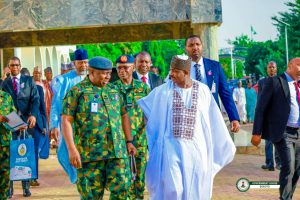
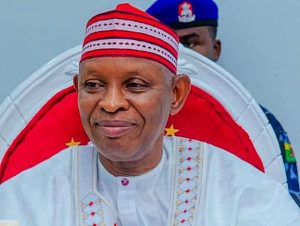
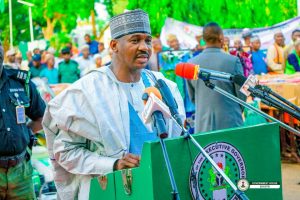
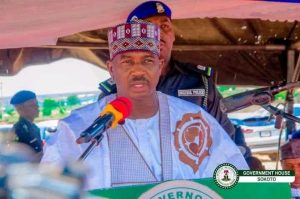
It’s the essence and substance of every democracy to people first in the scheme of things, the focus of the administration of Ahmed Aliyu remains unshakeable in propelling profound development of the state in all dimensions of human endeavour.
These 32 months have brought with them tremendous transformation to Sokoto state and its people who massively voted-in this administration into office. Transformation that transcends all spheres of physical and human improvements are visible and palpable across the state. The truth is, Ahmed Aliyu has lived up to his categorisation as an illustrious son of the state who means well for the overall development of the state and its people by daring the odds particularly in the teething days of this administration to properly place the state on the roadmap to transformation. It’s marvellous how this administration has maintained the tempo of juxtaposing itself comfortably between improvement in physical infrastructure and execution of activities that dwell directly on people’s empowerment. Unarguably, this administration has successfully singled itself out by executing resplendent metropolitan beautification of the state capital with round-the-clock maintenance of roads and roundabouts ,this compares well with the elegance of other state capitals in the country.
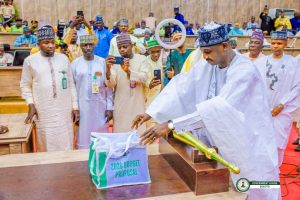
It’s all through a galore of intervention packages to support one category of people or the other, there was cash intervention for people across the 23 LGAs of the state who were victims of flooding, though the cash donation was a combined efforts of NEMA and SEMA, the programme was inaugurated by Governor Ahmed Aliyu himself as an eloquent illustration of his readiness to better the lot of his people.
The Sokoto central market got burnt years ago, unfortunately, the immediate past dispensation did not do much to rebuild the burnt portion of the market. However, as a testament to his unflinching willingness to right the wrongs of the past, Ahmed Aliyu graciously approved the sum of over 8bn Naira through the instrumentality of the State Executive Council for the reconstruction of the burnt market so that the business and economic activities that have suffered a setback will bounce back..
We will recall the recent Launch of the Elderly Support Scheme of the Renewed Hope initiative by the Sokoto First lady, Fatima Ahmed, where 50m Naira was expended as intervention to some aged people in their hundreds who were supported with cash and food items including rice, spaghetti and cooking oil. That particular activity is a clear demonstration of how genuinely concerned Ahmed Aliyu is as it relates to the wellbeing of his people.
So far, 3,750 young men and women have been trained in various skills from across the state as a gateway to self-reliance. The Ahmed Aliyu-led administration has always identified itself with strides to empower people as a strategy for socio-economic improvement. It’s encouraging to see how batches of young men and women are trained and graduated as either, fashion-designers, electricians, solar system technicians, metalwork technicians, etcetera. At each graduation ceremony, sets of trainees were discharged with financial support and tools to work with.
What is clearly evident is that, this administration has thus far gone along way in making things better in the state in terms of purposeful governance and improvement in physical infrastructure and human resources. It’s safe to hold that, ‘ kwalliya ta biya kudin sabulu ‘. Though 2027 is still not here, but its drumbeats could be discerned from afar that there’s no vacancy at the Lodge Road edifice.
Binji is on the Research Team of SOLID (Sokoto Liberal Democrats Media Foundation), Sokoto.
We’re Addressing Root Causes of Insecurity- Sokoto Security Advise
Col. Usman Ahmed (retd) S A Security Sokoto State
An interview by Abubakar Imam with Col. Usman Ahmed (Rtd.) Security Adviser to the Sokoto State Governor on the complex issues of Insecurity bedeviling the state and the country in general
Q: Do you believe the withdrawal of police aides from VIPs will have a meaningful impact on addressing insecurity across the country?
Col. Usman Ahmed:
The directive may be well-intentioned, but its overall impact on national insecurity remains limited. While withdrawing police aides from VIPs could marginally increase the number of officers available for conventional policing, it does not automatically translate into improved security outcomes.
Nigeria’s security challenges are largely driven by insurgency, banditry and terrorism—threats that are inherently combat-oriented. By constitutional design and professional training, the Nigeria Police Force is not structured as a combat force. Under Section 214 of the Constitution and the Police Act, the police are primarily responsible for crime prevention through routine patrols, community policing, intelligence gathering, investigation and prosecution, and the maintenance of law and order.
Without adequate equipment, modern technology and specialised training, redeploying police personnel from VIP protection to frontline security duties will have limited impact. What Nigeria requires is a holistic security architecture anchored on intelligence-driven operations, strong inter-agency collaboration and a clear delineation of roles. Counter-insurgency operations should be led by the Armed Forces, while the police focus on internal security, community engagement and crime prevention.
While the policy may promote equity and curb excessive VIP protection, it must be complemented by sustained recruitment, improved welfare, modern weaponry and technology-driven policing to meaningfully address insecurity nationwide.
Q: Does the appointment of the immediate past Chief of Defence Staff as Minister of Defence give Nigerians confidence of better performance in the security sector?
Col. Ahmed:Yes, without any doubt. The appointment of General Christopher Musa is a well-deserved national recognition of his distinguished service and unwavering commitment to Nigeria’s unity and stability. It comes at a critical time when the nation requires tested, strategic and disciplined leadership to reposition the defence sector.
Beyond his résumé, I speak from personal experience. I worked closely with General Musa in Maiduguri during my active service and know him to be calm under pressure, decisive, professional and deeply mission-focused. He understands both the operational realities on the ground and the strategic demands of high-level leadership.
As a former Chief of Defence Staff, he understands the system thoroughly and knows where reforms are urgently required. I expect tangible improvements in intelligence coordination, troop morale, operational efficiency and the accelerated adoption of modern defence technologies. Nigerians have high expectations, and based on his track record, I am confident he will deliver.
Q: The Northern Governors recently resolved that each state should contribute ₦1 billion as a regional security fund to tackle insecurity. As a Special Adviser on Security, how do you assess this decision?
Col. Ahmed:The decision by the Northern Governors to establish a ₦1 billion per state regional security fund is both timely and commendable. It reflects a growing understanding that insecurity in the North is interconnected and requires collective responsibility rather than isolated state responses.
From a strategic standpoint, the initiative has strong potential, but funding alone will not resolve insecurity. The effectiveness of this intervention will depend on transparent management, strategic deployment and strong coordination. Priority must be given to intelligence gathering, surveillance technology, logistics, mobility, rapid response capabilities and operational support for security agencies.
Equally important is regional coordination. A shared security challenge requires shared intelligence, harmonised operations and collaboration with federal security agencies to avoid duplication and ensure efficiency. Establishing a regional coordination and oversight mechanism will be crucial.
Transparency and accountability are non-negotiable. Clear utilisation guidelines, regular audits and measurable performance indicators will help build public trust. When combined with long-term efforts to address poverty, youth unemployment and social exclusion, this fund can become a powerful tool for restoring peace and stability across the North.
Q: In view of the expanding security challenges in parts of Sokoto State, what concrete steps is the state government taking to ensure lasting peace?
Col. Ahmed: The protection of lives and property remains the highest priority of His Excellency, Governor Ahmed Aliyu. While the security challenges—particularly banditry—are part of a broader North-West problem, the Sokoto State Government has adopted a proactive, coordinated and intelligence-driven response.
The government is working closely with federal security agencies, including the Nigerian Army, Police, Air Force, Civil Defence and intelligence services. Joint operations have been intensified in vulnerable areas such as Isa, Sabon Birni, Tangaza, Gudu, Silame and parts of the western zone, including Yabo, Shagari, Kebbe, Dange Shuni and Tureta.
A recent operation in Sabon Birni Local Government Area highlights the effectiveness of this collaboration. Acting on timely intelligence, security forces successfully repelled an attempted attack on traders travelling to a weekly market, neutralising several attackers and preventing loss of innocent lives.
The government has also strengthened community-based intelligence through sustained engagement with traditional rulers, community leaders and vigilante groups. In addition, it continues to provide logistics, mobility, communication equipment and welfare support to security personnel.
Beyond enforcement, the administration is addressing the root causes of insecurity through youth engagement, social interventions and economic empowerment, particularly in rural communities. Anyone found aiding or financing criminal networks will face the full weight of the law.
Q: As the new year approaches, what assurances can residents expect regarding security in 2026?
Col. Ahmed:While no responsible government can claim insecurity will disappear overnight, residents of Sokoto State can expect measurable improvements in 2026.
Collaboration with federal agencies, traditional institutions and community leaders has been strengthened to enhance intelligence gathering and rapid response. The governor has consistently prioritised logistics, welfare and operational support for security personnel, recognising that a motivated force is critical to effective security delivery.
The administration is also tackling the socio-economic drivers of insecurity through youth empowerment, job creation and social intervention programmes. At the same time, coordination among vigilante groups, community guards and formal security agencies is being strengthened within the framework of the law.
With sustained citizen cooperation and unwavering government commitment, 2026 will be a year of improved security, stability and renewed confidence across Sokoto State.
Q: Having served under General Christopher Musa during your time in the military, what strategic counsel would you offer him as he assumes office as Nigeria’s Minister of Defence?
Col. Ahmed:General Musa brings to this office an exceptional depth of operational and strategic experience, having served with distinction as Chief of Defence Staff. My counsel, therefore, is not from a position of instruction but from shared service and a common commitment to Nigeria’s security.
At this stage, the priority should be strengthening collaboration across the entire security spectrum—federal, state and community levels. Modern security threats are complex and asymmetric, and addressing them requires seamless coordination among the Armed Forces, intelligence agencies, the police and sub-national governments.
I would also emphasise the continued shift toward intelligence-led operations. Investment in modern surveillance systems, data fusion, cyber capabilities and real-time intelligence sharing will significantly enhance operational effectiveness and reduce reaction time.
Equally critical is the welfare, training and motivation of military personnel. A well-trained, well-equipped and properly motivated force remains the backbone of any successful defence strategy. Professionalism, accountability and strict adherence to rules of engagement and human rights standards are essential to sustaining public trust and citizen cooperation.
With his experience, discipline and calm leadership style, I am confident that General Musa will consolidate ongoing reforms, strengthen Nigeria’s defence architecture and provide the strategic direction required to achieve lasting peace and stability.
Sokoto state Governor Dr Ahmed Aliyu presenting 2026 Budget proposal to the State House of Assembly
By Sani Umar/ Dr M. Kabir
As globally acknowledged, a budget begins as a statement of intent. It is a mirror through which a government reveals what it values most, who it listens to, and how it understands its responsibility to the governed. In societies where governance is people-centred, the budget is awaited not only by lawmakers but also by traders, farmers, workers, retirees, women, and young people whose hopes for a better tomorrow are often silently tied to the choices made within the pages of the budget. In this sense, a budget transcends arithmetic and becomes a social contract between the state and its citizens.
The presentation of a budget to the legislature is a long-standing ritual performed by chief executives at both national and subnational levels. The budget itself is usually assembled by experts in fiscal policy and public finance. However, crafting a budget and implementing it in a manner that genuinely serves the needs and aspirations of the population remains a daunting task.
Leaders whose priorities are anchored on the welfare of their constituents often give careful thought to how fiscal policies will affect everyday lives. In doing so, they deliberately involve citizens, allowing public inputs to shape budgetary decisions. Such an approach promotes inclusivity, accountability, and a sense of shared ownership of governance outcomes.
Experts consistently argue that any budget prepared without contributions from a broad segment of the population risks becoming little more than an academic exercise. When people’s voices are excluded, the fundamental objective of prioritising citizens’ needs, particularly those affecting daily living, can easily be lost within technical policy frameworks.
It is against this backdrop that the 2026 budget emerges as one rooted in the voices of the people, drawn from wide-ranging engagements, community consultations, and town hall meetings deliberately organised to deepen public participation. This inclusive process reflects a conscious effort by the administration to ensure that the budget was not crafted in isolation, but shaped by the lived realities, concerns, and aspirations of ordinary citizens. By opening the budgeting process to public input, the government reaffirmed the principle that those who bear the daily impact of policies must have a say in determining priorities that affect their lives.
For any budget to be truly meaningful, it must address the issues that weigh most heavily on the people it is designed to serve. Good governance thrives when public resources are deployed in ways that respond directly to citizens’ needs, enhance their welfare, and secure the future of their families. A budget that ignores these realities, fails to confront pressing social and economic challenges, or does not improve the purchasing power of the populace ultimately loses both relevance and purpose.
These fundamental considerations informed Governor Ahmed Aliyu’s decision to consult widely and carry the people along in shaping the 2026 budget. In doing so, he reinforced trust between the government and the governed, recognising that confidence and ownership are essential ingredients of effective governance. When citizens see their inputs reflected in public policy, governance becomes not only easier, but also more credible, transparent, and sustainable.
It is within this broader understanding of public finance that the 2026 budget proposal presented by Governor Ahmed Aliyu to the Sokoto State House of Assembly must be examined. Tagged the “Budget of Socio-Economic Expansion,” the proposal represents more than an administrative requirement, it reflects a deliberate governance choice, one that seeks to consolidate earlier gains while confronting persistent challenges. The governor’s address situates the budget within a continuum of gratitude, responsibility, and partnership, acknowledging both divine providence and institutional collaboration as pillars of governance.
A key indicator of good governance evident in the 2026 budget is the emphasis on performance and continuity. The administration’s reference to achieving over 60 per cent implementation of the 2025 budget is not incidental; it signals seriousness about credibility and execution. For citizens, budget implementation matters as much as budget size. Roads promised but not built, hospitals announced but not equipped, and allowances approved but unpaid erode public trust. By foregrounding implementation records, the government strengthens confidence that the 2026 proposals are not aspirational rhetoric but actionable commitments.
Equally important is the participatory foundation upon which the budget rests. The citizens’ town hall meetings held across the three senatorial zones and at the state level represent a notable departure from closed door fiscal planning. By drawing inputs from communities across all local governments and wards, the administration deepens democratic practice and reinforces the principle that citizens are not passive recipients of governance but active stakeholders. This inclusive approach enhances accountability, as people are more likely to monitor and defend a budget they helped shape.
From a structural standpoint, the 2026 budget demonstrates a development-oriented fiscal posture. With a total outlay of over ₦758 billion and approximately 72 per cent allocated to capital expenditure, the budget prioritises long-term investments over recurrent consumption. This choice carries profound implications for ordinary citizens. Capital spending translates into physical and social infrastructure that improves productivity, reduces the cost of living, and expands access to essential services. It is through such investments that governance leaves a lasting imprint on society.
Security occupies a central place in the budget, reflecting its role as the foundation upon which all other development efforts depend. Persistent insecurity in recent years has disrupted livelihoods, displaced communities, and slowed economic activity in parts of Sokoto State. Continued investment in security equipment, mobility, personnel welfare, and institutional capacity underscores the recognition that without safety, development initiatives cannot thrive. For citizens, improved security restores confidence, enables farming and trading, and reopens spaces for social and economic interaction. The steady progress being recorded in this area is gradually rebuilding public confidence.
The social sectors further reveal how the budget aligns governance priorities with human welfare. Health sector allocations exceeding international benchmarks signal a strong commitment to strengthening healthcare delivery. Completing and equipping hospitals, recruiting and training medical personnel, and improving emergency response systems directly influence life expectancy and quality of life. For families, particularly in rural areas, access to functional health facilities reduces preventable deaths and alleviates the burden of seeking care far from home.
Education’s prominence as the highest-funded sector reinforces the administration’s understanding of human capital as the bedrock of sustainable development. Investments in basic, technical, and tertiary education shape future productivity, innovation, and social cohesion. For parents and students, these allocations translate into opportunities for learning continuity, skills acquisition, and upward mobility, these are key ingredients for breaking cycles of poverty.
Investments in agriculture, water resources, and infrastructure further illustrate the budget’s people-focused orientation. Support for farmers through inputs and grain interventions enhances food security and rural incomes. The rehabilitation of waterworks and expansion of rural water supply projects address public health concerns and reduce domestic hardship. Road construction and transportation investments lower transaction costs, connect markets, and stimulate commerce. Though these interventions may appear technical on paper, in practice they redefine daily living conditions for thousands of households.
The budget’s attention to workers’ welfare and social protection also speaks to ethical governance. Clearing gratuity backlogs and ensuring regular funding for retirees correct long-standing injustices and restore dignity to those who served the state. For the workforce, such measures reinforce trust in public institutions and strengthen morale, which ultimately improves service delivery.
Perhaps most instructive is the balanced sectoral allocation underpinning the “Budget of Socio-Economic Expansion.” With economic and social sectors receiving the largest shares, the budget reflects an integrated development vision, one that recognises that growth without social investment is fragile, and social programmes without economic expansion are unsustainable. This balance is essential for building resilience and shared prosperity.
To sum up, the 2026 budget presented by Governor Ahmed Aliyu stands as a comprehensive governance instrument rather than a mere fiscal statement. Its emphasis on citizen participation, capital investment, security, and social development aligns with the principles of transparency, accountability, and responsiveness. If implemented with the same resolve with which it was crafted, the budget holds the capacity to translate policy into progress and statistics into improved living standards.
A budget, therefore, is far more than a collection of numbers. It is a roadmap that shapes how people live, work, and hope, from the safety of their communities to the quality of schools, hospitals, roads, and water systems they rely upon. When citizens are heard and their priorities reflected, budgeting becomes the heartbeat of good governance.
In this regard, Sokoto State’s 2026 Budget of Socio-Economic Expansion represents both an opportunity and a responsibility. It is an opportunity to deepen trust and development, and a responsibility to ensure that the promises embedded in its pages are faithfully delivered to the people.
Supporters of former Sokoto State Governor Attahiru Dalhatu Bafarawa have defected from the Peoples Democratic Party (PDP) to the All Progressives Congress (APC) in Sokoto State.
The decision was made after a high-level consultative meeting involving elders and leaders of the Bafarawa Akida Movement.
Chairman of the movement, Professor Hamza Muhammad Maishanu, said the defection was the outcome of wide-ranging consultations and represented the collective will of members across the state.
He explained that the group had retained their political structure despite leaving the PDP and had adopted the name Bafarawa Akida to symbolize unity and loyalty to Bafarawa’s ideals.
The group cited Governor Ahmed Aliyu’s performance and cordial relationship with Bafarawa as reasons for their decision.
Maishanu confirmed that further consultations would be held to formalize the decision and complete the necessary political processes.
Meanwhile, former Governor Bafarawa clarified that he had quit active politics and denied claims of personally joining the APC.
He stated that he had given his supporters his blessing to join the APC and would continue to support Governor Ahmed Aliyu.
Sokoto state Governor, Dr. Ahmed Aliyu and Air Vice Marshal Edward Gabkwet
From MG Gazali
The Nigerian Air Force (NAF) has demonstrated compassion and support to the victims of the unfortunate airstrike incident that occurred in Gidan Bisa and Rumtuwa villages of Silame Local Government Area of Sokoto State. On December 25, 2024, the incident resulted in the loss of 12 lives and left one person injured, causing immense grief and distress to the affected families.
In a gesture of goodwill and solidarity, the Chief of Air Staff, Air Marshal Sunday Kelvin Aneke, represented by the Chief of Civil-Military Relations, Air Vice Marshal Edward Gabkwet, led a delegation to the Government House in Sokoto to present a donation to the victims’ families.
The donation was made as part of the NAF’s commitment to providing support to those affected by the tragic event.
According to Air Vice Marshal Gabkwet, a thorough investigation was promptly conducted after the erroneous incident occurred, and the findings confirmed that the incident was indeed an unfortunate airstrike. Noting that the NAF has accepted responsibility for the incident and is taking steps to prevent similar occurrences in the future.
He expressed deepest condolences to the families who had lost loved ones in the incident.
“We are deeply saddened by the loss of lives and injuries resulting from the airstrike,” he said. “We empathize with the affected families and communities, and we are committed to providing support to those affected.”
He assured the families that the NAF is committed to the safety and well-being of Nigerians and would continue to work towards preventing such incidents in the future.
The Air vice Marshal further emphasized the NAF’s commitment to civil-military relations and community engagement. “We value the trust and support of the Nigerian people, and we are committed to upholding our responsibilities as a responsible and responsive institution,” he said.
Gabkwet appreciated the understanding and
cooperation of the Sokoto State Government and the affected communities, assuring that the NAF would continue to work together to promote peace and stability in the state.
The donation was received by the Chairman of Silame Local Government, Alhaji Abubakar Gitta Rana, on behalf of the affected families and victims.
Responding, the Governor of Sokoto State expressed gratitude to the NAF for their prompt response and generous donation. “This gesture demonstrates the NAF’s commitment to the safety and well-being of Nigerians, particularly in times of need,” he said. “I want to assure the affected families that our government will ensure that this support reaches them and that they receive the necessary assistance to rebuild their lives.”
The Governor commended the NAF’s efforts to promote peace and stability in the region, appreciating their commitment to promoting peace and stability in the state.
In a further demonstration of support, the Governor announced that the State Government would donate an additional ₦31 million for the victims and survivors. This brings the total donation from the State Government to ₦51 million, following an earlier donation of ₦20 million and 100 bags of food items to the victims.
In a vote of thanks, Chairman Silame Local Government, Alhaji Abubakar Gitta Rana, expressed heartfelt gratitude to the NAF and the Sokoto State Government for their support. “We are grateful for the NAF’s prompt response and generosity in the face of this tragedy,” he said.
“We also appreciate the State Government’s additional donation, which will go a long way in alleviating the suffering of the affected families. We are grateful for the kindness and compassion.”
In a final gesture of respect and solidarity, special prayers were offered for the departed souls, seeking eternal rest and peace for the victims of the airstrike.
Sokoto state Governor Dr Ahmed Aliyu presenting 2026 Budget proposal to the State House of Assembly
By Sani Umar
The 2026 Appropriation Bill of Sokoto State, presented by His Excellency, Governor Ahmed Aliyu Sokoto, amounts to ₦758.7 billion and reflects a strong commitment to development-driven governance. The budget is deliberately structured to prioritise capital investment, with ₦551.49 billion (72%) earmarked for capital expenditure, while ₦207.21 billion (28%) is allocated to recurrent spending.
This fiscal posture underscores the administration’s resolve to expand infrastructure, strengthen social services, and stimulate economic growth.
The design of the budget was informed by extensive consultations with citizens across the state through town-hall meetings and stakeholder engagements. These interactions enabled the government to identify pressing community needs and align spending priorities with the real challenges facing households, businesses, and public institutions. By incorporating the voices of the people, the 2026 budget reinforces participatory governance and strengthens public trust in the budgeting process.
In terms of sectoral priorities, Health received the highest allocation with ₦122.7 billion, signalling government’s focus on improving healthcare delivery through the completion and upgrade of hospitals, provision of modern medical equipment, and enhancement of emergency response systems. This investment is expected to reduce out-of-pocket medical expenses for citizens while improving access to quality healthcare, particularly for rural and underserved communities.
Education follows closely with an allocation of ₦115.9 billion, targeted at improving access, infrastructure, teacher support, and sustaining learning across all levels. The emphasis on education reflects the administration’s recognition of human capital development as the foundation for long-term economic growth, social stability, and reduced poverty across the state.
The Works and Transportation sector received ₦109.1 billion, aimed at road construction, rehabilitation, and transport infrastructure to improve connectivity within and between local government areas. Improved road networks are expected to ease the movement of people and goods, lower transportation costs, and stimulate commercial activities, especially for farmers and small-scale traders.
Recognising the importance of peace and stability as a prerequisite for development, ₦45.2 billion was allocated to Security. This provision covers logistics, patrol vehicles, motorcycles, and operational support to security agencies, reinforcing the government’s determination to protect lives and property while sustaining public confidence and economic activity.
Access to clean and safe water remains a critical social priority, with ₦41.1 billion allocated to Water Resources for urban and rural water supply projects. These interventions are expected to improve public health outcomes, reduce water-borne diseases, and ease the daily burden on households, particularly women and children.
In furtherance of social inclusion and economic resilience, Humanitarian Services, Poverty Reduction, and Youth Empowerment received ₦33.9 billion, aimed at supporting vulnerable groups, expanding skills acquisition, and promoting income generating opportunities.
Agriculture, the backbone of Sokoto State’s economy, was allocated ₦18.7 billion to boost food production, enhance farmer support, and strengthen value chains, while ₦17.4 billion was provided for Religious Affairs, recognising its role in social cohesion and moral development.
Overall, the 2026 budget demonstrates a balanced and people-centred approach, anchored on fiscal discipline and development priorities. With its strong capital orientation and focus on critical sectors, the budget is positioned to deepen good governance, accelerate socio-economic expansion, and deliver tangible improvements in the lives of ordinary citizens across Sokoto State.
On the night Abuja turned its gaze toward service beyond party loyalty, Kano found itself called by name. In the bright hall of the Presidential Villa, far from the dust and bustle of Kurmi market and the farmlands of Rano, Governor Abba Kabir Yusuf stood before the nation and received an honour that carried more than protocol. It was a rare national salute to performance, offered across political divide, and for Kano it felt like a quiet public vindication of daily struggles that had finally been seen.
When the 2025 Nigeria Excellence Award in Public Service was announced in his name, it was not difficult for ordinary people across the state to connect the dots. The trader in Sabon Gari who now moves with better road access, the teacher in Dawakin Tofa who finally has pupils seated on desks, the nurse in Kumbotso who now works with functional equipment, and the farmer in Garun Malam who received timely inputs all found pieces of their own stories inside that moment of recognition.
The honour was presented on behalf of President Bola Ahmed Tinubu by the Secretary to the Government of the Federation, Senator George Akume. In a political climate often shaped by suspicion and rivalry, the recognition of an opposition governor stood as a reminder that service still commands attention beyond party lines. For Kano people, it confirmed what many already believed that visible work still carries weight in national judgment.
Across the state, the signs of that work are not hidden. In education, long neglected school structures have been brought back to life. Classrooms were rehabilitated, roofs restored, furniture supplied, and learning spaces made fit again for young minds. Thousands of teachers were recruited, easing pressure on overcrowded classrooms and restoring balance to a system that had struggled for years. For parents who once worried about the future of their children in underfunded schools, confidence has slowly returned.
Healthcare followed the same practical path of revival. Primary healthcare centres across the local governments received attention through upgrades, supplies, and personnel deployment. In communities where sickness once meant long travel or helpless waiting, people now walk into health facilities with greater hope of being attended to. For mothers, children, and the elderly, the presence of care is no longer an exception but an expectation.
In agriculture, the administration returned its focus to the roots of Kano economy. Support reached farmers through fertilisers, seeds, and extension services delivered with better timing. Productivity improved not by miracle but by method. From the fields of Bichi to the plains of Garko, farming has regained its sense of dignity and possibility. The land once again speaks of sustenance rather than survival.
Within the Kano metropolis, urban renewal began to reshape daily experience. Roads were opened and repaired. Drainage systems were cleared. Flood prone areas received attention. Public infrastructure that once symbolised decay now reflects restoration. The city that has long served as a major commercial heartbeat of the North is slowly reclaiming its form with order and movement.
It was this spread of impact across education, health, agriculture, infrastructure, and social welfare that earned Governor Abba Kabir Yusuf the Nigeria Excellence Award in Public Service. He received it alongside governors from Zamfara, Bauchi, Adamawa, Enugu, and Akwa Ibom States at a ceremony organised by Best Media Relations in partnership with the Office of the Secretary to the Government of the Federation. The event was presided over by the Chairman of the Board of Trustees of the award, Justice Mary Odili retired. Other recipients included leaders of key national institutions such as NDLEA, EFCC, NFIU, Customs, Immigration, NEMA, and senior federal ministers.
Yet for Kano people, the meaning of the award went deeper than the list of dignitaries present. An opposition governor being publicly honoured by a federal government from another political family carried a lesson that governance can rise above rivalry. It confirmed that results still create bridges where politics often builds walls.
True to character, Governor Yusuf did not keep the honour to himself. He returned it to the people of Kano. He dedicated it to their patience, resilience, and faith in leadership. He renewed his promise to deepen people centred governance and pursue development that does not decorate the surface but touches daily living.
There is a quiet philosophy behind such moments. Power is loud but brief. Service is quiet but lasting. Offices change hands, applause fades, and ceremonies pass into memory, but the effect of a repaired school, a functioning clinic, a productive farm, and a safe road remains long after the crowd has gone. These are the footprints that leadership leaves behind.
Politically, the recognition challenges the old belief that opposition must always mean exclusion. It sends a message to young Kano citizens watching from lecture halls, market stalls, workshops, and farmlands that leadership is not measured by loud promises but by consistent delivery. It also tells public office holders that credibility cannot be borrowed, it is earned slowly through visible effort.
With this honour, Kano stands taller in national conversation not as a state defined only by contests of power but as one increasingly described through performance. For Governor Abba Kabir Yusuf, the award is both affirmation and responsibility. For the people, it is encouragement and reminder that their collective future is shaped not by chance but by deliberate leadership.
When history eventually records this moment, it may not focus on the elegance of the hall or the ceremony of the night. It will remember that in a season of division, service crossed political boundaries, and Kano through one of its own reminded the nation that the work still speaks.
The Sokoto State Governor, Dr. Ahmed Aliyu, has presented the 2026 Appropriation Bill to the State House of Assembly for legislative consideration and approval. The budget, themed “Budget of Socio-Economic Expansion,” aims to drive socio-economic growth and development in the state.
The budget stands at ₦758,700,526,537.89, with the economic sector receiving the highest allocation of 41% and the social sector receiving 37%. The security sector has been allocated ₦45,261,136,694.76, a critical investment aimed at enhancing peace and security across the state.
The health sector has been allocated 16% of the total budget, amounting to ₦122,727,992,559. Key projects include the completion of Sokoto State University Teaching Hospital Kasarawa, Murtala Muhammad Hospital, and premier hospitals in Binji, Tambuwal, and Sokoto/Birni. The budget also includes the procurement of 21 ambulances.
The Education sector has been allocated ₦115,948,091,431.85 to improve the quality of education and provide necessary infrastructure for schools and tertiary institutions.
The Agriculture sector has been allocated ₦18,742,497,182.59 to boost food production and food security by supporting farmers with inputs and resources, including the procurement of assorted fertilizers, tractors, and other related farm inputs.
The Water Resources sector has been allocated ₦41,139,037,879.71. Key projects in this sector include the installation of solar-powered energy to the state water board and the rehabilitation of old water works to improve access to clean water for citizens and enhance irrigation systems for farmers.
The Religious Affairs sector has been allocated ₦17,479,061,716.35. Key projects in this sector include the renovation and remodeling of Sultan Bello Juma’at Mosque and Sultan Abubakar III Juma’at Mosque, as well as the construction of Islamiyya schools to promote Islamic education and values.
The Works and Transportation sector has been allocated ₦109,128,752,746.30 to improve the state’s infrastructure, including roads and transportation systems. Additionally, the budget includes the provision of luxurious buses to enhance transportation services in the state.
The Security sector has been allocated ₦45,261,136,694.76 to enhance peace and security across the state. Key allocations in this sector include the procurement of equipment, machineries, security vehicles, motorcycles, and other gadgets to support security agencies in maintaining law and order.
Governor Aliyu emphasized that the budget was well-crafted, with 72% allocated to capital expenditure and 28% to recurrent expenditure, in line with IMF and World Bank recommendations. He noted that all projects executed in the previous year were financed solely from the federation account and the state’s internally generated revenue, without borrowing or incurring debts.
The Governor stated that the budget is a direct reflection of the views and aspirations of the people of Sokoto State, gathered through extensive consultations and engagements with various stakeholders. He expressed his commitment to ensuring that the budget serves the interests of all citizens.
Governor Aliyu appreciated the fatherly role of the State APC Leader, Senator Aliyu Magatakarda Wamakko, for his guidance and support. He acknowledged the Senator’s contributions to the state’s development and thanked him for his unwavering commitment to the progress of Sokoto State.
The Governor expressed his profound gratitude to the leadership and members of the State House of Assembly for their cooperation and support in the budget-making process,and hoped that the lawmakers will work hard to ensure the budget is passed in a timely manner and pledged to work closely with them to ensure its effective implementation.
Governor Aliyu also acknowledged the leadership commitment of President Bola Ahmed Tinubu and pledged the state’s loyalty and support to the Federal Government. “We are committed to working with the Federal Government to ensure the success of its programs and policies. We appreciate the President’s unwavering commitment to the development of our state and the country at large,” he said.
The Governor reaffirmed his administration’s commitment to working with all stakeholders to ensure the effective implementation of the budget and the realization of the state’s development goals.
The Sokoto State Governor, Dr. Ahmed Aliyu, has flagged off the disbursement of ₦60 million to 600 youths trained in various skills under SOSMEDAN and the Department of Community Development.
The training programs included 350 youths trained in tailoring, rice processing, and hybrid farming by the Department of Community Development, and 250 unemployed graduates trained in solar installation and maintenance by SOSMEDAN. Each beneficiary received ₦100,000 and working tools to support their entrepreneurial pursuits.
According to the governor, the training programs aimed to empower the youths to become self-reliant, productive, and contribute to the state’s economic development.
He said his administration had so far trained over 3,750 young men and women in various skills. The governor urged the beneficiaries to utilize the grants and tools wisely, assuring them that the state government would continue to support unemployed graduates with skills acquisition programs and other initiatives to alleviate poverty and related social issues.
This initiative, he said, further strengthens the government’s commitment, leading to the creation of the Ministry for Skills Acquisition and Entrepreneurship, aimed at equipping more youths with adequate skills to drive economic growth and development.
The Special Adviser to the Governor on Community Development, Alhaji Garba Maitumbi Kebbi, commended the governor for his unwavering support to the youth empowerment program.
He noted that the program has made a significant impact in the lives of many young people in the state and expressed optimism that the beneficiaries would utilize the skills acquired to become self-reliant and contribute to the state’s economic development.
Maitumbi further stated that the state government is committed to providing a conducive environment for businesses to thrive and urged the beneficiaries to be good ambassadors of the program by repaying the trust and support given to them.
He also urged them to take advantage of the skills acquired to establish their own businesses and create jobs for others.
The Secretary of SOSMEDAN, Hajiya Binta Usman, expressed gratitude to the governor for his vision and leadership, which has led to the success of the program.
She commended the beneficiaries for their dedication and hard work, urging them to continue utilizing the skills acquired to improve their lives and contribute to the state’s economic development.
The Representative of the Sultan of Sokoto, the District Head of Wurno, Alhaji Kabiru Chigari Alhassan, commended the governor for his initiative, which he said was in line with the teachings of Islam and the values of the Sokoto Caliphate.
He prayed for the governor’s success and the prosperity of the state, urging the beneficiaries to use the skills acquired to benefit themselves, their families, and the larger community.
Former Chief Justice of Nigeria (CJN), Justice Ibrahim Tanko Muhammad (retd.), has died at the age of 71.
This was announced by Mukhtar Gidado, Special Adviser, Media and Publicity to Governor Bala Muhammad in a statement on Tuesday.
“It is with profound sadness and deep sense of loss that His Excellency, Sen. Bala Abdulkadir Mohammed CON , Fnipr ( Kauran Daular Usmaniyya ) the Executive Governor of Bauchi State, on behalf of his family, the Government and the good people of Bauchi State, joins all Nigerians in mourning the sudden passing of Honourable Justice Ibrahim Tanko Muhammad, GCON, a distinguished son of our great State, who died today in Saudi Arabian hospital after a prolonged illness,” the statement read.
Governor Bala Mohammed described late justice Ibrahim Tanko as a venerable jurist whose life and career exemplified dedication to duty, integrity in service and steadfast commitment to the rule of law.
The governor added that the deceased rose through the legal profession with diligence and distinction, serving with honour as Judge of the High Court, the Court of Appeal and ultimately as a Justice of the Supreme Court of Nigeria and later served as the Chief Justice of Nigeria from 2019 to 2022, bringing to the highest office in the nation’s judiciary his wealth of experience, and commitment to justice.
“During his illustrious career, Justice Tanko Muhammad was widely respected for his legal acumen, his discipline, and his contributions to the development of Nigeria’s judicial system. His elevation to the national honour of Grand Commander of the Order of the Niger (GCON) was a testimony to his impactful service to the nation.”
Mohammed extended heartfelt condolences to the entire family of the late jurist, friends, colleagues in the legal profession, and the citizens of Bauchi State and Nigeria at large.
“Justice Tanko Muhammad exemplified the qualities of a patriotic Nigerian whose life was committed to the service of justice and the advancement of our great nation. His passing is a significant loss not only to Bauchi State but to the Nigerian judiciary and the rule of law,” the governor remarked.
He further prayed that Almighty Allah grant the departed soul Al- Jannatul Firdaus, and comfort his family, loved ones and all who mourn him at this difficult time.