Home Blog Page 32

Beyond Airstrikes: Understanding Power, Social Order, and Identity in Northern Nigeria Through a Sociological Lens

By Usman Mohammed Binji

The reported U.S. airstrikes in Sokoto State on December 25, 2025, and the way they were publicly framed, can be better understood when we look at them through established sociological theories rather than only through security or diplomatic arguments. Sociology helps us see how power, social order, and meaning operate in real communities, especially in a complex society like Nigeria.

From the perspective of conflict theory, the situation reflects unequal power relations at the global level. Conflict theorists argue that society is shaped by struggles over power and resources, and this does not stop at national borders. The United States, as a dominant global power, has the military and political capacity to act far beyond its territory, while countries like Nigeria—despite their sovereignty—often operate from a weaker position. Northern Nigeria, already affected by poverty, unemployment, land pressure, and weak state presence, becomes a space where global and local conflicts overlap. Armed groups exploit these conditions, while foreign powers justify intervention in the name of security. From this view, the airstrikes are not just about defeating terrorists; they also reflect how powerful nations protect their strategic interests and influence, sometimes reinforcing dependency and marginalisation. Ordinary communities, rather than elites or decision-makers, often bear the social costs in the form of fear, displacement, or economic disruption.

Functionalist theory offers a different lens. Functionalism sees society as a system made up of interdependent parts that must work together to maintain stability. Terrorism and insurgency are viewed as disruptions that weaken institutions such as government, education, agriculture, and trade. From this angle, the airstrikes can be interpreted as an attempt to restore balance by weakening groups that threaten social order. Supporters of this approach would argue that reducing militant activity allows markets to reopen, farming to continue, and displaced people to return home. At the international level, such actions are also seen as reinforcing cooperation between states and maintaining global norms against extremism. However, functionalist thinkers also warn about dysfunctions. If military actions harm civilians or undermine trust in government, they can create new forms of instability. In Nigeria, where social cohesion is already fragile, any action that increases fear or resentment can weaken the very order it is meant to protect.

The situation also becomes clearer when examined through symbolic interactionism, which focuses on how people interpret events and attach meaning to them in everyday life. In Nigeria, words, timing, and symbols matter deeply. Describing the airstrikes as a “Christmas present” may resonate positively with some audiences abroad, but locally it can be interpreted in multiple ways. For some Christian communities facing insecurity, it may symbolise support and hope. For others, especially Muslims or communities wary of foreign involvement, it may appear insensitive or provocative, reinforcing the idea that the conflict is religious rather than social and economic. These interpretations are shaped and reshaped through conversations, social media, sermons, radio programmes, and rumours. Over time, such meanings influence behaviour, trust, and identity, sometimes deepening divisions between “us” and “them.”

Taken together, these sociological theories show that the airstrikes are not just military actions; they are social events with consequences that reach into everyday Nigerian life. Conflict theory highlights power imbalances and inequality, functionalism draws attention to the search for stability and its unintended effects, and symbolic interactionism reveals how meanings and identities are formed around the event. For a country as diverse as Nigeria, lasting peace cannot rely solely on force, whether local or foreign. Addressing insecurity requires reducing inequality, strengthening institutions, and carefully managing symbols and narratives so that they promote unity rather than deepen existing divides. Sociology reminds us that security is ultimately about people and the social conditions in which they live.Usman

Usman Mohammed Binji is the chairman NUJ Sokoto State council
Successful Precision Strikes On Foreign ISIS Elements Approved By President Bola Ahmed Tinubu   

The Federal Government of Nigeria, in close coordination with the Government of the United States of America, has successfully conducted precision strike operations against two major Islamic State (ISIS) terrorist enclaves located within the Bauni forest axis of Tangaza Local Government Area, Sokoto State.

Intelligence confirmed that these locations were being used as assembly and staging grounds by foreign ISIS elements infiltrating Nigeria from the Sahel region, in collaboration with local affiliates, to plan and execute large-scale terrorist attacks within Nigerian territory.

The precision strike operations were executed between 00:12 hours and 01:30 hours on Friday, 26 December, 2025, following explicit approval by the President of the Federal Republic of Nigeria, His Excellency President Bola Ahmed Tinubu, GCFR.

The operation was carried out under established command and control structures, with the full involvement of the Armed Forces of Nigeria and under the supervision of the Honourable Ministers of Defence and Foreign Affairs, as well as the Chief of Defence Staff.

The strikes were launched from maritime platforms domiciled in the Gulf of Guinea, after extensive intelligence gathering, operational planning, and reconnaissance.

A total of 16 GPS-guided precision munitions were deployed using MQ-9 Reaper unmanned aerial platforms, successfully neutralising the targeted ISIS elements attempting to penetrate Nigeria from the Sahel corridor.

During the course of the operation, debris from expended munitions fell in Jabo, Tambuwal Local Government Area of Sokoto State, and in Offa, Kwara State, near the premises of a hotel. No civilian casualties were recorded in either location, and relevant authorities promptly secured the affected areas.

The Federal Government of Nigeria reiterates its unwavering resolve to confront, degrade, and eliminate terrorist threats, particularly those posed by transnational extremist networks seeking to undermine Nigeria’s sovereignty and security.

Nigeria remains fully aligned with its strategic partners and Friends of Nigeria in executing coordinated actions aimed at ensuring lasting peace, border security, and regional stability.

The Federal Government assures all Nigerians that it remains firmly in control of the national security architecture and is fully committed to the protection of lives and property.

Citizens are urged to remain calm and vigilant as decisive actions continue against all terrorist groups threatening the nation.

U.S. AIRSTRIKE IN NIGERIA: SECURITY COOPERATION OR A TEST OF NATIONAL SOVEREIGNTY?

By Malami Bello

The recent airstrike carried out by the United States military against suspected terrorist targets in parts of northern Nigeria has ignited a national debate that extends far beyond the immediate objective of counter-terrorism. While officials have described the operation as a joint effort to weaken extremist groups linked to the Islamic State, many Nigerians are increasingly uneasy about the broader implications of foreign military action on the country’s soil, particularly fears of gradual external control under the guise of security assistance.

The airstrike, reportedly executed with the knowledge and consent of Nigerian authorities, targeted locations believed to host fighters affiliated with the Islamic State and other violent criminal networks. Both governments have maintained that the operation was intelligence driven and precision based, stressing that it was designed to degrade terrorist capacity and avoid harm to civilians.
From the official perspective, the strike reflects the growing complexity of Nigeria’s security challenges, as insurgency, banditry, cross-border terrorism and organised crime continue to stretch local security forces and compel deeper collaboration with international partners.

Despite these assurances, the optics of foreign military aircraft striking targets within Nigeria have unsettled many citizens. For critics, the development raises difficult questions about the country’s control over its security space and the fine line between cooperation and dependence.

Nigeria’s historical experience has made it particularly sensitive to external intervention, and visible foreign military action, even when approved, often triggers public anxiety about sovereignty. Civil society groups, opposition figures and commentators have warned that repeated foreign strikes could gradually normalise external military involvement and weaken national autonomy.

These concerns are further shaped by global precedents in which counter-terrorism engagements evolved beyond their original scope. While Nigeria’s situation is distinct, the fear of “mission creep” resonates strongly in public discourse, especially in an era of widespread misinformation and declining trust in institutions.

As a result, many Nigerians interpret the airstrike not only as a military action, but also as a test of the government’s ability to safeguard national independence while confronting security threats.
Supporters of the operation argue that international military cooperation offers practical benefits. Advanced surveillance technology, precision strike capabilities and real-time intelligence can disrupt highly mobile and well-armed criminal networks operating across difficult terrain.

From this viewpoint, effective sovereignty is measured not merely by control of airspace, but by the state’s capacity to protect lives and restore order. Nonetheless, security experts caution that airpower alone cannot resolve Nigeria’s deeply rooted security challenges. Banditry
and extremism are sustained by poverty, arms proliferation, weak governance, local grievances and porous borders, problems that require long term political and socio-economic solutions alongside military action.

There are also growing concerns that excessive reliance on foreign military assistance could undermine the development of Nigeria’s own security institutions. If not carefully managed, such dependence may weaken domestic capacity and shift responsibility outward rather than strengthening national systems.
This tension lies at the heart of the current debate: how to accept necessary support without compromising long-term self-reliance.

Public fears that the United States intends to occupy Nigeria have gained traction in some quarters, but there is no credible evidence to support claims of an impending occupation. No plans for permanent troop deployment or foreign military bases have been announced in connection with the strike, and official statements emphasise limited counter-terrorism cooperation rather than direct control.

However, in matters of national security, perception can be as influential as reality. Ambiguity and limited public communication create space for suspicion and speculation, especially when citizens lack clear information about the legal framework, scope and limits of such operations.

At the centre of the controversy is the issue of transparency. Many Nigerians are not opposed to international cooperation in principle, but they expect clear explanations regarding who authorised the strike, how targets were identified, and what safeguards exist to prevent escalation or abuse. Strong parliamentary oversight, public accountability and adherence to both domestic and international law are widely seen as essential safeguards against the erosion of sovereignty.

Ultimately, the U.S. airstrike marks a significant moment in Nigeria’s evolving security approach. It underscores the severity of the threats confronting the country, while also exposing deep public unease about the direction of national security policy. Whether this episode becomes a constructive turning point or a source of lasting mistrust will depend largely on how openly and responsibly the government manages its security partnerships.

For a nation of Nigeria’s strategic importance, the challenge is not only to defeat terrorists and criminals, but to do so in a manner that preserves sovereignty, builds public confidence and strengthens long-term national stability.

NIGERIA–US JOINT AIRSTRIKE HITS TERRORIST TARGETS IN TANGAZA; SOKOTO STATE GOVERNMENT WELCOMES DEVELOPMENT

The Sokoto State Government has confirmed that a joint airstrike was carried out yesterday by the Nigerian military in collaboration with the United States Government on terrorist targets in Tangaza Local Government Area, without recording any civilian casualties.

The Director-General, Media and Publicity, Government House, Sokoto, Abubakar Bawa, confirmed this in a statement made available to journalists in Sokoto.

According to the statement, the impact of the operation could not be immediately determined, as assessment by the joint military operations team is still ongoing.

The statement further explained that the circumstances surrounding objects discovered at a location near Jabo Town in Tambuwal Local Government Area could not also be immediately clarified, as the outcome of analysis by the Nigeria–US military authorities is still being awaited.

It, however, stressed that no civilian casualties were recorded in Jabo as well.
“Sokoto State welcomes any collaboration between Nigeria and all relevant global stakeholders aimed at curbing the menace of terrorism and cross-border crimes in the state.
“The ongoing operations are geared towards securing the state and ensuring the protection of the lives and property of the citizenry,” the statement said.

It noted that over the past two years, the Sokoto State Government has consistently supported security agencies in the fight against banditry and terrorism by providing necessary equipment to enhance safety across the state.

The state government therefore called on residents of the affected areas to continue to cooperate with both the Federal and State Governments by providing useful information to security agencies in order to sustain ongoing efforts to restore lasting peace and security.

The statement further urged residents to continue praying to Almighty Allah to assist the security agencies in defeating criminal elements in the state and the country at large.

Trump/Tinubu Ignores Borno, Zamfara, Katsina, Niger —The Sokoto Strike and the Politics of Symbolic Warfare

By Mohammed Bello Doka

When airstrikes were announced in Sokoto State today, the first question Nigerians asked was not who authorized it but why there. The timing matters because this is not a historical debate; it is a live security decision unfolding in real time, demanding clarity now—not after narratives have hardened. That question has still not been answered—because answering it would expose an uncomfortable truth: this operation was driven more by politics and symbolism than by the urgent need to protect Nigerian lives.

For years, Nigeria’s deadliest killing fields have been well documented. Borno State , Zamfara State, Katsina State, Niger State, and parts of Kebbi State have hosted the most entrenched bandit and terror infrastructures in the country. Entire forests are named in security briefs. Entire corridors are known to villagers. Entire commanders are mentioned casually in daily conversations, radio programs, and court filings. These are not hidden enclaves; they are open secrets. Yet when foreign firepower finally arrives, it bypasses these epicentres and lands in Sokoto—chosen less for operational necessity than for what it represents.

Sokoto is symbolic. It is historically associated with the Sokoto Caliphate, a name that resonates far beyond Nigeria’s borders. A strike there sends a message. It photographs well. It fits neatly into global narratives about “Islamist terror.” But symbolism does not dismantle terror economies, nor does it end mass kidnappings in Zamfara, Katsina, or Niger where Nigerians are killed weekly. Symbolism does not rescue communities living under daily siege, nor does it interrupt the revenue chains of banditry that have thrived for years in plainly identifiable locations.

This is where the politics begin.

For Donald Trump, the calculus is clear. He is not fighting for Nigerian villagers. He is fighting for political capital at home—burnishing his credentials before a conservative Christian base and pro-Israel Jewish constituencies that respond strongly to emotional, muscular, headline-friendly actions against anything framed as “Islamic terror.” Sokoto’s symbolism offers ideological resonance that travels well in Western political discourse. Zamfara’s forests do not. Niger State’s terror camps do not. Katsina’s bandit corridors do not. The choice of target reveals the audience, not the battlefield.

For Bola Tinubu, the incentives are just as troubling. This administration has increasingly looked outward for validation rather than inward for legitimacy. Western applause now substitutes for domestic accountability. A symbolic strike endorsed by foreign partners is easier than confronting the entrenched failures of Nigeria’s own security architecture in Zamfara, Katsina, and Niger. It creates the appearance of action without the pain of reform. It also raises the disturbing question of agency: did Nigeria shape this operation, or was it merely informed? Either answer is damning. If Nigeria had no meaningful input, that is a sovereignty failure. If Nigeria agreed to symbolic targets over operational ones, that is a governance failure. Both scenarios are deeply alarming.

And yet, Nigerians are owed answers—today, not later.

Who exactly was targeted in Sokoto?
Which camp was hit?
Which commander was neutralized?
Which network was dismantled?

No names have been officially provided. No camps clearly identified. No leaders confirmed eliminated. This absence of specificity is especially troubling given the level of intelligence claimed to underpin the operation. If high-grade intelligence exists, clarity should follow action. Instead, the public is asked to accept broad labels without evidence.

This silence is indefensible. Nigeria’s terror and bandit leadership is not a mystery. Names such as Bello Turji, Ado Aleru, Dogo Gide, and other commanders operating across Zamfara, Katsina, Niger, and Kebbi have been reported repeatedly over the years. Their areas of influence are not hidden. Their routes are known to farmers and villagers long before they are acknowledged by Abuja. Their camps are domiciled in specific forests that Nigerians can name without consulting satellite imagery. If foreign forces claim not to know them, Nigerian authorities certainly do—and that raises a more damning question: why were these figures not the priority targets?

The intelligence paradox deepens the unease. With the world’s most sophisticated surveillance capabilities brought into play, the continued refusal to define the exact group targeted, the precise camp struck, or the specific leaders intended to be eliminated strains credibility. If the claim is uncertainty, then competence must be questioned. If the claim is secrecy, then accountability has been sacrificed. Neither explanation reassures a population that has endured years of violence.

Equally disturbing is the lack of clarity about coordination. What was the level of operational planning between Nigeria and the United States? Did Nigeria propose targets, or was it merely informed as usual? If Nigeria merely received notice, then sovereignty is reduced to a courtesy call. If Nigeria participated in choosing symbolism over substance, then it knowingly sidelined the very regions where Nigerians die the most. Both paths are unacceptable, and both demand answers.

Just weeks earlier, Nigeria demonstrated its capacity for decisive regional action when it intervened militarily to protect the government of Benin during a security crisis. Aircraft were deployed. Force was projected. Political will was found. Yet today, Nigeria is presented as needing to be “saved” from loosely organised, poorly educated bandits who have terrorised rural communities for years. Why does urgency appear when foreign interests are at stake, but evaporate when Nigerian citizens are the victims? Why can force be projected beyond borders to secure a neighbour’s stability, while Nigeria’s own killing fields remain largely untouched?

This contradiction cannot be explained away with talk of intelligence gaps or operational complexity. It points instead to misplaced priorities and political convenience. It suggests that external validation now carries more weight than internal safety, and that optics have overtaken outcomes in the calculus of security.

If the true objective were to save lives, the bombs would fall where Nigerians are dying the most. If the true objective were to dismantle terror networks, named leaders and known camps would be the focus. If the true objective were security, transparency would follow action—especially on the very day the strike occurs.

Instead, Nigerians are left with spectacle without clarity, force without accountability, and symbolism without justice.

So the difficult questions remain—unanswered and urgent:

Was this strike about ending terrorism, or about winning elections abroad?
Was it about protecting Nigerians, or about pleasing foreign allies and external saviours?
Was it a joint decision reflecting Nigerian priorities, or an externally driven script Nigeria merely endorsed?
And most importantly: when will Nigerian lives matter enough to define Nigeria’s security priorities?

Bombing symbols while ignoring killing fields is not counterterrorism.
It is political theatre—performed at great cost to truth, sovereignty, and the people who continue to die unseen.
Abuja Network News

Mohammed Bello Doka
For inquiries: bellodoka82@gmail.com

Why Nigeria Let America Fight Its War

By  Lamara Garba Azare

A nation is not merely a stretch of land marked by borders on a map. It is a will. It is authority. It is the solemn promise that those who govern will protect those who are governed. The day a country hands that promise to another power even in the name of security it begins a quiet retreat from its own essence a retreat Nigeria now appears to be making.

This uncomfortable reality was laid bare following the American military airstrike on an alleged ISIL terrorist camp in Sokoto-North West, Nigeria on Sunday 25th December 2025. By the open admission of the Minister of Foreign Affairs Yusuf Tuggar Nigeria provided the intelligence approved the operation and watched as the United States carried out the strike on Nigerian soil. Worse still Nigerians learned of this act of war not first from their own President but from the President of another country. History is unforgiving to nations that clap for others while standing aside in matters of their own survival.

Let us not hide behind diplomatic language. Cooperation is not the same as surrender. Partnership does not mean handing over the sword while you hold the scabbard. If Nigeria had the intelligence that led to the bombing of the alleged ISIL camp in Sokoto then Nigeria should have led the operation. Intelligence without execution power is like vision without legs it sees the danger but cannot move toward it.

The primary duty of any government is security. That duty cannot be subcontracted. When a state begins to rely on foreign jets to enforce peace within its borders it sends a dangerous signal to its citizens and to the world that it no longer fully trusts its own strength. And when such sensitive military operations are announced first by Washington rather than Abuja the symbolism is loud humiliating and politically costly.

A philosopher once warned that power given is rarely returned whole. Today it is an American airstrike in Sokoto. Tomorrow it may be decisions taken without even the courtesy of consultation. Sovereignty does not collapse in one dramatic moment. It erodes quietly justified by convenience and defended with excuses.

America too must be spoken to plainly. If this intervention is truly driven by goodwill then goodwill must go beyond missiles and statements. A sincere ally builds capacity not dependency. Where is the complete transfer of advanced surveillance technology. Where are the drones the precision systems and the satellite access that would allow Nigeria to conduct such operations on its own territory without foreign aircraft and foreign command structures. Friendship that keeps one party permanently reliant is not generosity. It is control in soft clothing.

There is also a troubling strategic question Nigerians must not ignore. ISIL and its affiliates have long found oxygen around the Lake Chad axis rather than Sokoto. That region has remained the heart of cross border terrorism recruitment and logistics for years. So why this sudden focus elsewhere. Who selected the Sokoto target and based on whose broader security calculations. In matters of national security silence breeds suspicion and suspicion thrives where transparency is absent.

Leadership is not measured by how many powerful friends a country has but by how firmly it stands on its own feet. A government that truly believes in its people would invest relentlessly in its armed forces equip them with modern tools and trust them to defend the nation with honour and competence. Instead Nigerians are being asked to celebrate a foreign airstrike as proof of seriousness.

But a country that borrows its shield today may wake up tomorrow unable to raise its own. A nation that allows others to fight its battles will soon be told where when and how it may exist.

Nigeria must reflect urgently and honestly. Terrorism must be defeated yes but by Nigerian hands under Nigerian command and for Nigerian dignity. Anything else is a costly miscalculation dressed up as cooperation.

As history teaches us freedom is not lost only through invasion. It is often surrendered through comfort. If Nigeria does not reclaim its security mandate now it may one day discover that what was traded away in the name of safety was the very soul of the state.

 𝗚𝗮𝗿𝗯𝗮 𝗔𝘇𝗮𝗿𝗲 𝗮 𝘃𝗲𝘁𝗲𝗿𝗮𝗻 𝗷𝗼𝘂𝗿𝗻𝗮𝗹𝗶𝘀𝘁 𝘄𝗿𝗶𝘁𝗲𝘀 𝗳𝗿𝗼𝗺 𝗞𝗮𝗻𝗼

US AIRSTRIKE TARGETS TERRORISTS IN SOKOTO AS RESIDENTS EXPRESS CONCERNS OVER COLLATERAL DAMAGE

By Malami Bello

An airstrike carried out by the United States military on suspected terrorist elements has been reported in Jabo town, Tambuwal Local Government Area of Sokoto State, triggering panic and anxiety among residents of the affected community.

The strike, which occurred yesterday night, was part of ongoing international efforts to support Nigeria’s counter-terrorism operations, particularly in the North-West where armed groups have continued to pose serious security challenges.

In separate reactions, both the United States and Nigerian governments confirmed the operation, describing it as a precision strike aimed at degrading the operational capacity of terrorist groups operating in the area.

The US government reiterated its commitment to working with Nigerian security agencies in combating terrorism, while emphasizing that such operations are guided by intelligence sharing and strict engagement rules to avoid civilian harm.

On its part, the Nigerian government acknowledged the collaboration, noting that the operation was conducted within the framework of existing security cooperation agreements.

Authorities stressed that safeguarding civilian lives remains a top priority and assured that all necessary measures are taken to prevent unintended consequences.

However, residents of Jabo town offered a different account of the incident. Villagers who witnessed the strike said it did not hit a known terrorist camp but rather an open field close to the community.

The sudden explosion reportedly caused widespread panic, forcing many residents to flee their homes in fear of possible follow-up strikes, but later went in their numbers to the scene of explosion to assess the situation.

Community members confirmed that no casualties were recorded and no property damage was reported.

Nevertheless, the psychological impact of the incident has heightened anxiety among the local population, many of whom expressed concern about the safety of civilians if such operations persist.

Residents warned that while they support efforts to rid the region of terrorists, continued military actions without clear distinction between targets and civilian areas could lead to collateral damage that may overshadow the good intentions of the exercise.

They called on authorities to ensure improved intelligence accuracy and greater community engagement to prevent avoidable fear and mistrust.

As investigations continue, security authorities have assured the public that assessments are ongoing to review the outcome of the strike and to reinforce safeguards aimed at protecting innocent lives while sustaining the fight against terrorism.

While being on top of the matter the Sokoto State Government has made an arrangement to assess the situation.

The Sokoto State Government has initiated steps to evaluate the circumstances surrounding the incident.

IBB Backs Military Action Against Bandits


IBB

Former Military Head of State, Ibrahim Badamasi Babangida (IBB), has called for a decisive military response against armed groups terrorising communities nationwide.

Babangida advised the Federal Government to disregard any appeals for surrender from bandits operating in different parts of the country, insisting that the criminals must first be completely dealt with.


Babangida made his position known in a post on his verified X handle, formerly Twitter, where he called for a decisive military response against armed groups terrorising communities nationwide.

According to the former military leader, security agencies should prioritise the full neutralization of bandits before considering dialogue or negotiations of any kind.

He maintained that accepting surrender prematurely could undermine efforts to end insecurity.

“While the bandits are pleading for surrender, we must not accept their plea until every one of them is neutralised and eliminated,” Babangida wrote.

He added that once this is achieved, individuals he described as negotiators and sympathisers, including Sheikh Ahmad Gumi and others, should be invited for thorough questioning by the authorities.


Sokoto Introduces New Initiatives To Curb Banditry

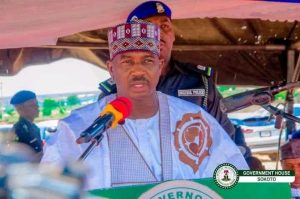
Governor Ahmed Aliyu of Sokoto state

Sokoto State Governor, Ahmad Aliyu Sokoto, has announced that his administration is introducing new initiatives aimed at curbing the menace of banditry in the state.

The Governor made this known while declaring open the 17th Regular State Executive Council (SEC) Meeting held in Sokoto.

He explained that the new measures are in addition to the ongoing efforts being undertaken by the state government in collaboration with security agencies, which, according to him, have already started yielding positive results.

Governor Aliyu expressed optimism that the new strategy would significantly enhance intelligence gathering, describing it as a critical factor in checkmating the activities of bandits across the state.

He noted that since assuming office, his administration has consistently supported security agencies in combating banditry across the 13 local government areas affected by the menace.

According to the Governor, the state government has provided logistics and other necessary support to strengthen the operational capacity of security agencies in their fight against banditry.

Governor Aliyu also emphasized the need for residents of the state to continue supporting the government and security agencies in order to make Sokoto State safer.

“As a government, we are ready to do all it takes to ensure that banditry becomes history in Sokoto State. However, for us to achieve this goal, we need the support of all and sundry,” he appealed.

The Governor commended members of the State Executive Council for their unwavering support and contributions, which he said have led to the numerous successes recorded by his administration, and urged them to sustain the momentum.

He also thanked the people of Sokoto State for their continued support and prayers, assuring them of more dividends of democracy across the state.

Governor Aliyu further congratulated the newly appointed Head of the Civil Service, Abdulkadir Ahmed Mohamed, and the Senior Special Assistant on Cabinet Matters, Bande Rika, urging them to make meaningful contributions towards the realization of his administration’s 9-Point Smart Innovative Agenda.

The 17th Regular State Executive Council Meeting was the last meeting for the year 2025.

Zulum Calls for Vigilance in Worship, Public Places

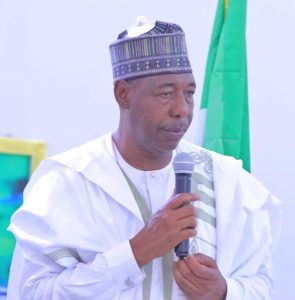
Governor Zulum of
Borno State

Borno State Governor, Professor Babagana Umara Zulum, has called for vigilance in worship, public Places while
condemning, in strong terms, a suicide attack at Gomboru market mosque in Maiduguri metropolis on Wednesday evening.

A suspected suicide bomber sneaked into the mosque while worshippers were performing the Maghrib prayer, killing five people and injuring 35 others.

Governor Zulum, conveying his profound condolences from the frontline in northern Borno through his Special Adviser on Media, Dauda Iliya, called for increased vigilance and heightened security measures, particularly in places of worship during the festive period.

“I am deeply saddened by the Gamboru mosque suicide attack which occurred on Wednesday evening when worshippers were performing Maghrib prayer, killing 5 people and injuring 35 others.

The act is utterly condemnable, barbaric and inhumane,” Zulum said.

He added, “Attacking a place of worship is a desecration of the sanctity of the mosque at a time when Muslim faithful are performing acts of worship.

”“I wish to express my condolences to the families of all those that lost their lives in the attack and pray for the repose of their souls, and for the speedy recovery of those injured,” he stated.

The Governor assured that adequate measures have been taken to forestall any security breach during the festive period and beyond.

RECOMMENDED NEWS

POPULAR