Home Blog Page 31

Northern Governors Condemn Niger Market Attack, Mourn Yobe Boat Mishap

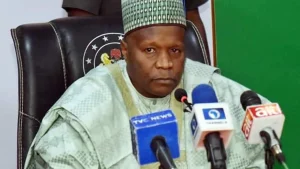
Gombe State Governor, Muhammdu Inuwa Yahaya,
Chairman Northern Governors Forum

The Northern States Governors Forum (NSGF) has deplored in the strongest terms the dastardly terrorist attack at Kasuwan Daji Market in Demo community, Borgu Local Government Area of Niger State, describing it as a cruel assault on innocent citizens and a grave threat to peace and livelihoods.

Reports indicated that 30 traders, including women and other civilians, were brutally killed, many others abducted, and the market set ablaze during the attack by suspected terrorists.

In a statement on behalf of his colleagues, the Chairman of the Forum and Governor of Gombe State, Muhammadu Inuwa Yahaya, CON, expressed profound shock and outrage over the incident, noting that it has inflicted untold grief on families, disrupted economic activities and unsettled otherwise peaceful communities.

Governor Inuwa Yahaya emphasised that such senseless acts of terror targeting market women, traders and citizens going about their lawful activities are morally reprehensible and strike at the very heart of communal harmony and regional economic life.

The NSGF Chairman condemned the perpetrators in unequivocal terms, calling on security agencies to intensify efforts to track down and apprehend those responsible and ensure they face justice.

He extended the Forum’s deepest condolences to the families of the victims, the Government and people of Niger State, and all affected communities, while praying for the repose of the souls of the deceased, strength for the bereaved, and the swift rescue of those abducted.

He assured of the Forum’s continued collaboration with federal and security agencies to strengthen security architecture and safeguard lives and livelihoods across the North.

In related development, the Forum also mourned the tragic boat mishap in Yobe State, in which at least 25 passengers lost their lives while 14 others remain missing, after a passenger boat capsized along the Yobe River in Garbi town, Nguru Local Government Area, while returning from local commercial activities.

Governor Inuwa Yahaya, speaking for the Forum, conveyed his heartfelt condolences to the families and loved ones of the victims, describing the incident as a painful reminder of the urgent need to prioritise safety in all forms of transportation.

The Forum urged relevant authorities to intensify search and rescue operations, ensure that survivors receive immediate medical attention, and review and enforce safety protocols to prevent a recurrence of such tragedies.

The NSGF Chairman appealed to citizens across the North to remain united, calm and compassionate, supporting one another during difficult moments, while reaffirming the Forum’s commitment to working with all relevant agencies to tackle insecurity, strengthen emergency response systems and support communities affected by tragic incidents.

TINUBUNOMICS AND THE ARITHMETIC OF ILLUSION

By  Tanimu Yakubu

A striking feature of Nigeria’s current economic debate is the enthusiasm with which huge numbers are circulated—and the casualness with which they are assembled. Tax collections are added to oil receipts; oil receipts are added again under customs or “subsidy savings”; borrowing is treated as income; and the resulting total is presented as proof of incompetence or theft.

This is not an economic analysis. It is an arithmetic illusion.

At the core of most viral critiques of Tinubunomics lies a fundamental failure to distinguish between revenue, cash, and financing, and between federation-wide collections and federal budgetary resources. These are not technicalities. They are the foundation of public finance.

Revenue is not the same as cash available to the Federal Government. Borrowing is not income; it is financing and creates future obligations. Federation receipts are not equivalent to what the Federal Government can spend.

Once these distinctions are ignored, any number—no matter how dramatic—can be manufactured.

The familiar pattern runs as follows. Aggregate tax collections are cited, often correctly, in gross terms. Oil revenues are then added without clarifying whether they are gross or net, federation-wide or federally retained, or whether costs, deductions, and under-recoveries have been netted off. Customs receipts are layered on, sometimes without stating whether they are already embedded in non-oil revenue totals. Borrowing is then added as though it were free money. Finally, “subsidy savings” are thrown into the mix, as if stopping a fiscal leak produces a vault of idle cash.

The result is a large headline number—₦150 trillion, ₦170 trillion, ₦180 trillion—followed by the question: where did the money go?

The answer is straightforward: much of it never existed in the form being implied.

Subsidy reform, for instance, does not conjure discretionary cash. It closes a hole. Under the old regime, underpricing manifested through arrears, opaque netting, and quasi-fiscal obligations. Reform first eliminates these hidden drains. The fiscal benefit appears gradually—through reduced deficit pressure, better budgeting discipline, and explicit, targeted support—not through a sudden pile of spendable “savings.”

Debt figures are similarly abused. A significant portion of Nigeria’s recent increase in debt stock in naira terms reflects exchange-rate revaluation of existing external obligations, not fresh borrowing. When the exchange rate adjusts, the naira value of dollar-denominated debt rises automatically. Treating this accounting effect as new borrowing is a category error, not a discovery.

Most persistently, federation-wide collections are presented as if they belong solely to the Federal Government. They do not. Revenues in a federation are shared, earmarked, netted, and statutorily allocated. Federal budget reality is determined by FGN retained revenue plus deficit financing, not by gross federation inflows aggregated for political effect.

Tinubunomics was never a promise of instant abundance. It is a macro-fiscal reset undertaken within hard constraints: inherited debt service, FX realism, security spending, legacy arrears, and competing constitutional obligations. Its logic is structural—restoring price signals, strengthening revenue administration, rebuilding credibility, and re-pricing the public balance sheet while protecting the most vulnerable.

Those who insist on treating national finance as a household ledger will always find scandal where none exists. But accountability does not begin with social media addiction. It starts with audit logic.

The proper way to interrogate government performance is simple: examine federal retained revenue; separate it clearly from financing; track expenditure across debt service, personnel, capital, and transfers; and then assess outputs—roads built, power delivered, rail extended, schools and clinics rehabilitated.

Anything else is not subject to scrutiny. It is a theatre.

And no amount of theatrical arithmetic can substitute for fiscal discipline.


Tanimu Yakubu is the Director-General of the Budget Office of the Federation

REBUILDING THE CITY: HOW URBAN RENEWAL IS RESHAPING SOKOTO

By Sani Umar

The growing influx of people into urban centres has placed enormous pressure on existing infrastructure and public utilities, many of which are aging or already overstretched. This reality has made urban renewal not merely desirable but inevitable, requiring both the rehabilitation of existing facilities and their expansion to meet rising demand. Across Nigeria, migration to towns and cities is largely driven by the search for economic opportunities, access to essential services, industrialisation and improved infrastructure, all of which intensify the strain on urban systems.

In response, a new governance approach has emerged, compelling state governments to refocus attention on urban renewal as a strategic response to the demands of modern cities. States now invest heavily in infrastructure and public services, driven by the understanding that urbanisation fuels economic growth by improving efficiency, stimulating innovation and strengthening productivity. This shift has turned urban renewal into a key measure of governance effectiveness.

Within this national context, urban renewal has remained a central pillar of governance in Sokoto State, particularly under the administration of Governor Ahmed Aliyu. Faced with population growth and mounting pressure on aging infrastructure, the government has pursued a deliberate programme of modernisation aimed at improving living conditions, enhancing public safety and promoting sustainable development across urban areas. These efforts align with the administration’s 9-Point Smart Agenda, which places strong emphasis on infrastructure, economic growth and improved service delivery.

This commitment is clearly reflected in the Sokoto State 2026 Appropriation Bill, which marks a decisive continuation of the urban renewal drive by placing infrastructure at the centre of the state’s development strategy. With a proposed total outlay of about ₦758.7 billion, the 2026 budget represents a significant expansion over the 2025 fiscal plan and signals a deliberate shift toward capital intensive projects designed to reshape the urban and semi-urban landscape. Roads, drainage systems, water supply and supporting energy infrastructure feature prominently, underscoring the administration’s understanding that sustainable urban growth depends largely on functional public utilities.

A defining feature of the 2026 budget is the dominance of capital expenditure, which accounts for over 70 per cent of total spending. This has translated into substantial allocations for the construction and rehabilitation of roads within Sokoto metropolis and across key local government areas. Major corridors such as the Sokoto-Gusau, Sokoto-Gwadabawa and Sokoto-Illela roads, alongside several township roads, have received attention, easing movement, reducing congestion and opening up commercial and residential districts.

Closely linked to road construction are drainage interventions, which form a critical component of the urban renewal agenda. The renovation and expansion of drainage systems across parts of the metropolis are aimed at addressing recurring flooding, improving sanitation and protecting road investments from premature deterioration during the rainy season.

Water supply occupies a strategic position in the 2026 infrastructure plan. Increased funding has been directed toward the rehabilitation and expansion of water works, extension of distribution networks and the adoption of alternative power sources to ensure steady production and delivery of potable water. These provisions build on initiatives undertaken in the 2025 fiscal year, which focused on reviving major water schemes to stabilise supply within Sokoto city and its environs. The 2026 budget seeks to consolidate these gains and broaden access.

Although electricity does not always appear as a standalone item in budget summaries, its role in the urban renewal agenda is implicit. Investments in solar-powered water facilities, improved street lighting and public infrastructure form part of broader efforts to mitigate the effects of unreliable grid power and support essential urban services.

In comparison, the 2025 budget, valued at approximately ₦526.9 billion, laid much of the groundwork for the current push. It focused on stabilising infrastructure, initiating road rehabilitation and reviving essential services after years of strain. The 2026 budget builds on those foundations with a larger resource envelope and a clearer focus on expansion, signalling continuity rather than a policy break.

Beyond physical infrastructure, urban renewal initiatives under the Ahmed Aliyu administration have generated positive economic and social outcomes. Construction and rehabilitation projects have created employment opportunities for artisans, labourers and small business owners, while projects such as the reconstruction of the Sokoto Central Market have restored critical commercial infrastructure and strengthened economic activity.

Urban renewal efforts have also improved community well-being and safety through better street layouts, organised public spaces and enhanced lighting. Community participation, involving traditional leaders and residents, has helped ensure that projects address real needs and enjoy public support. Environmental improvements, including the clearing of blocked drainage channels and better waste management practices, have further reduced health risks in densely populated areas.

Looking ahead, the sustainability of these gains will depend largely on proper maintenance, continuous planning and effective oversight. As urban centres continue to expand, long-term strategies will be required to preserve existing infrastructure while accommodating future growth. With sustained commitment and adherence to the principles of the 9-Point Smart Agenda, the progress recorded so far can be consolidated and expanded, positioning Sokoto State for a more liveable and resilient urban future.

Troops Arrest Alleged Mastermind Of Maiduguri Mosque Bombing

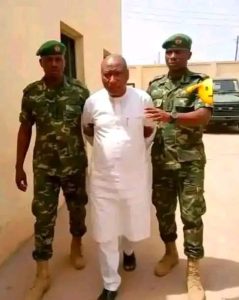
Troops of Joint Task Force North East ‘Operation HADIN KAI’ (OPHK) have arrested a suspect who is alleged to have masterminded the bomb explosion that killed five persons and injured 34 others after a suicide bomber detonated an improvised explosive device (IED) inside a mosque in Maiduguri, Borno state.

The arrest was disclosed in a statement issued by the operation’s spokesman, Lieutenant ColonelSani Uba, who described the suspect, identified as Sheriff Umar, as a key coordinator of suicide bombing activities linked to recent attacks and attempted attacks in the North East.

According to the statement, the arrest followed intelligence-led cordon-and-search operations conducted in the Kalmari area of Maiduguri on December 31, 2025.

During the operation, 14 suspects allegedly connected to suicide bombing activities were taken into custody.

“Subsequent detailed identification and investigative processes established the structure, roles and operational linkages of the terror cell,” Uba said.

He added that during investigations, a suspected suicide bomber currently in custody, Ibrahim Muhammad, identified Sheriff Umar, also known as “Yusuf,” as the alleged ringleader and coordinator of the network.

“According to consistent and corroborated statements, Shariff Umar was responsible for recruiting, preparing, directing and dispatching suicide bombers to assigned targets, as well as coordinating logistics and the delivery of improvised explosive device (IED) components,” the spokesman said.

Uba further stated that investigations revealed the suspect allegedly coordinated the suicide bombing at the Gamboru Market Mosque on December 24, 2025, during which an accomplice, identified as Adamu, detonated a suicide vest and died in the explosion.

He added that the suspect was also linked to a foiled suicide bombing attempt in Damaturu, where he allegedly handed over IED components to an intended bomber.

The army spokesman said further links within the network were uncovered, including the alleged involvement of the suspect’s wife, Yagana Modu, while his stepdaughter, Amina, reportedly confirmed seeing a suspected bomber within their residence.

“These findings significantly strengthened the investigative trail and exposed the domestic and community-based concealment methods employed by terrorist facilitators,” Uba said.

He noted that all suspects remain in custody and are undergoing intensive investigations aimed at dismantling the network, identifying additional collaborators and recovering any remaining explosives or logistical assets.

The military also underscored the importance of cooperation between security agencies and local communities.

“Terrorist networks often survive by hiding within communities, exploiting silence, fear or misplaced loyalty. Timely information from law-abiding citizens remains one of the most effective tools in preventing attacks and saving innocent lives,” the statement said.

Members of the public were urged to remain vigilant and promptly report suspicious persons, movements or activities to security agencies, as cooperation and trust are essential to restoring lasting peace in the region.


Radda Congratulates Sokoto Governor on 56th Birthday, Hails Security Efforts


Gov. Dikko Radda,
Katsina State

From  MG Gazali

The Chairman of the North West Governors’ Forum, Malam Dikko Radda, who is also the Governor of Katsina State, has congratulated the Governor of Sokoto State, Ahmed Aliyu, on his 56th birthday.

In a statement, Governor Radda praised Governor Aliyu’s leadership style, describing it as impressive. He marvelled at how Aliyu has been able to improve the lives of Sokoto citizens without resorting to borrowing money.

Radda highlighted some of Aliyu’s achievements, including the provision of clean water, improvement of education, and boosting of the state’s economy. He also commended Aliyu’s efforts in promoting science and technology in the state. Notably, Radda hailed the Sokoto State Governor for his efforts in tackling insecurity and other security-related challenges in the state, describing it as a remarkable feat.

The North West Governors’ Forum Chairman prayed for Aliyu’s continued good health and success, and wished him well in his future endeavours. He also prayed for peace and security in Sokoto State.

The statement was signed by the Governor’s spokesperson, Ibrahim Kaula Mohammed.

Warm Birthday Wishes to Governor Ahmed Aliyu on His 56th Birthday

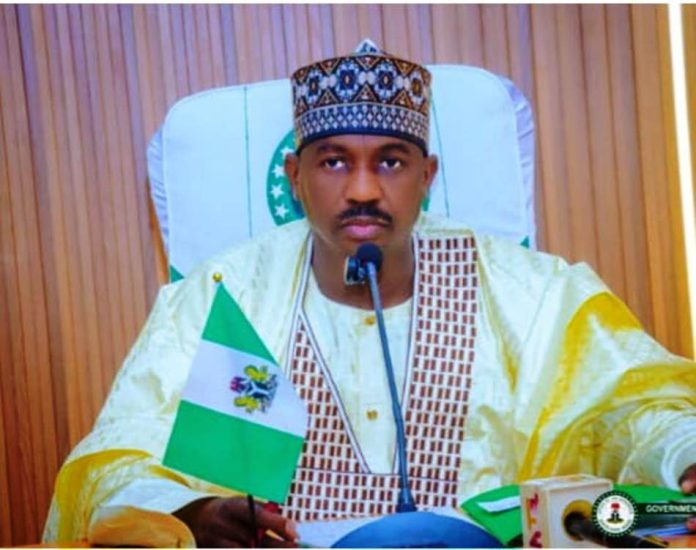
Governor Ahmed Aliyu of Sokoto State

As the clock strikes midnight on this New Year’s Day, January 1st, 2026, the Sokoto Liberal Democrats Media Foundation joins countless Nigerians in Sokoto State and beyond to wish His Excellency, the Governor of Sokoto State, Dr. Ahmed Aliyu, a happy 56th birthday. May this new year of your life be filled with joy, good health, and divine blessings.

As you celebrate the beginning of a new year and a new chapter in your life, we pray that God grants you wisdom, strength, and good health to continue providing visionary leadership to the good people of Sokoto State.

We commend your tireless efforts in driving development and progress in our great state and look forward to many more years of your service. Happy birthday, Your Excellency.

Governor Aliyu Pledges To Consolidate On 2025 Achievements In New Year


Governor Ahmed Aliyu of Sokoto State

From MG Gazali

Sokoto State Governor, Ahmed Aliyu, has assured that his administration will consolidate on the achievements recorded in the outgoing year, 2025, as the state ushers in 2026.

The Governor made this known in a message to the people of the state to mark the beginning of the new year and made available to journalists in Sokoto.

According to Governor Aliyu, his administration will, in 2026, continue to prioritise critical sectors of development that will fast-track the socio-economic growth of the state in line with its nine-point Smart Innovative Agenda.

He stated that the government would strengthen its support to security agencies in their efforts to combat banditry, particularly in the thirteen local government areas affected by the menace.
“We have already drawn up a blueprint on how to further assist the security agencies in the areas of logistics, intelligence gathering, and intelligence sharing,” he added.

The Governor appealed to security agencies to redouble their efforts in the coming year to ensure that banditry is brought to an end in the state.

“I also call on our people, especially those living in areas affected by insecurity, to support the security agencies with relevant information on any suspicious character or movement noticed within their communities,” Aliyu maintained.

He further urged local communities to expose anyone exhibiting strange behaviour or living above their means, noting that such vigilance would help curb the activities of informants in rural areas.

On the promotion of Islamic affairs, the Governor disclosed that new Islamiyya schools would be constructed, while existing ones in dilapidated condition would be rehabilitated.

In the education sector, Governor Aliyu assured that all ongoing renovations of primary, secondary, and tertiary institutions would be completed with more furnitures to be provided, adding that teachers’ welfare would continue to receive priority attention.

Speaking on road construction and housing, he said all ongoing housing projects in Wajake, Gidan Salanke, and Sokoto New City, as well as rural and township road projects, would be completed before the end of the second quarter of 2026.

Governor Aliyu also reaffirmed his administration’s commitment to sustaining economic empowerment programmes such as NG-CARES, Ahmadu-CARES, and other youth and women empowerment initiatives.

In the area of water supply, the Governor stated that all ongoing water scheme projects would be completed, while additional machinery would be provided at the state’s main water intake facilities.

He further disclosed that the state government would continue to provide farm inputs and implements to farmers, noting that contracts had already been awarded for the procurement of tractors to enhance agricultural mechanisation.

The Governor added that the health sector would continue to receive priority attention through the renovation of health facilities and the provision of modern medical equipment across health centres in the state.
“By the grace of Almighty Allah, we will ensure the successful actualisation of all these projects in 2026,” he said.

Governor Aliyu thanked the people of Sokoto State for their continued support and reaffirmed his administration’s commitment to delivering good governance and ensuring a better Sokoto State. He also wished Nigerians a prosperous New Year.

Sokoto Governor Presents Vehicles to Local Government Chairmen

In a significant development, the Governor of Sokoto State, Dr. Ahmad Aliyu Sokoto, has presented vehicles to the 23 Local Government Councils in the state. The ceremony, which was attended by key government officials, marked a major milestone in the state’s efforts to enhance governance and service delivery.

The vehicles were handed over to the chairmen of the local government councils by the Commissioner for Local Government and Chieftaincy Affairs, Hon. Ibrahim Dadi Adare, who represented the governor. The Permanent Secretary of the Ministry for Local Government and Chieftaincy Affairs and the Director of Finance were also in attendance.

This gesture is seen as a demonstration of the governor’s commitment to supporting the local governments in the state and enhancing their capacity to deliver essential services to the people. The vehicles will undoubtedly improve the mobility and efficiency of the local government councils, enabling them to better serve their constituents.

The governor’s initiative has been welcomed by the people of Sokoto State, who are hopeful that it will translate to improved governance and development in their communities. As the state continues to grapple with various challenges, the governor’s efforts to support the local governments are seen as a positive step towards promoting growth and prosperity.

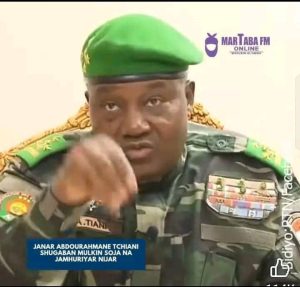
Niger Rep. Ban Issuance Of Visas To US Citizens

Niger Republic has announced a total ban on issuing visas to American citizens and their entry into the country.

It is in response to restrictive measures imposed by the US administration against several African countries, as part of a policy marked by refocusing American diplomacy and hardening its immigration policy.

The Nigerien government decided this week to permanently prohibit the granting of visas to all American nationals and their entry into the country, according to the Nigerien Press Agency (ANP).

This reciprocal measure comes after Washington added Niger to the list of countries whose citizens no longer benefit from preferential entry to the United States.

Niamey’s response is part of the diplomatic and security realignment undertaken by the American administration.

According to the Associated Press and White House sources, nearly 30 career American diplomats have been recalled from their posts worldwide to align diplomatic action with the “America First” doctrine, including 13 missions on the African continent, including Niger.

Furthermore, a U.S. presidential proclamation dated December 16, 2025, strengthened restrictions on access to U.S. territory, particularly targeting countries considered to pose a “high risk” to national security and migration management.

Niger is now on this list alongside Burkina Faso, Mali, and South Sudan.

For Nigerien authorities, this decision constitutes an assertion of national sovereignty and an unequivocal message.

“Niger is completely and permanently prohibiting the issuance of visas to all U.S. citizens and indefinitely banning entry to its territory for nationals of the United States,” a diplomatic source told the ANP.

According to Niamey, this measure reflects the country’s determination to respond proportionately to US restrictions while safeguarding its national interests, in line with the evolution of its foreign policy.

Africa remains the continent most affected by the mass recalls of diplomats and visa restrictions imposed by Washington.


Tinubu, America’s Air Strikes and Nigeria’s Imperiled Sovereignty

By Umar Ardo, Ph.D

The reported American airstrikes conducted within Nigerian territory in Sokoto State targeted at ISIS fighters raise serious constitutional, legal, strategic and political questions that go to the core of Nigeria’s sovereignty and democratic governance. These questions are not matters of sentiment or politics; they are fundamental matters of national survival! They require urgent clarification, as their implications extend beyond security operations to the grave foundation of the country’s existence as a sovereign republic and its constitutional order.

2. Before we look at the operational implications of these strikes, let us first examine its legitimacy. And to do that, the legal analysis must turn on the issue of sovereignty and consent. Under international law, the territorial integrity of sovereign states is a peremptory norm. Article 2(4) of the United Nations Charter prohibits the use of force against the territorial integrity or political independence of any sovereign state, save for three narrowly defined exceptions. First is authorization by the UN Security Council under Chapter VII. Second is self-defence under Article 51. And third is the derivative basis of intervention by consent, which is only lawful where such consent is validly given by the recognized government acting within its constitutional authority.

3. Accordingly, if the reported strikes had been carried out without Nigeria’s consent, they would have constituted a *prima facie* violation of Article 2(4) of the UN Charter, as well as the principle of non-intervention reflected in customary international law and Article 4 of the African Union Constitutive Act. In such circumstances, Nigeria would have been legally entitled – and indeed obliged – to protest, seek diplomatic and legal redress and internationalize the matter through the United Nations and the African Union.

4. But from the statement issued out by the Nigerian Defence Information Department, they were not a unilateral action of the United States, but were with the consent and in coordination with the Nigerian military authorities. Now then the inquiry shifts to the constitutional validity of that consent. Under the 1999 Constitution of the Federal Republic of Nigeria (as amended), executive power is vested in the President by Section 5, but that power is not absolute. It is circumscribed by the Constitution and subject to legislative oversight. The control and operational use of the armed forces is addressed in Sections 217 and 218. While Section 218(1) designates the President as Commander-in-Chief, Section 218(4) expressly empowers the National Assembly to make laws regulating the operational use of the armed forces. This provision has consistently been interpreted as anchoring civilian and legislative oversight over military deployments and security cooperation, particularly where such actions have far-reaching implications for national sovereignty and external relations.

5. Furthermore, Nigeria’s foreign policy objectives under Section 19 emphasize respect for international law, peaceful settlement of disputes and non-interference in the affairs of other states. Any executive action that invites foreign military force into Nigerian territory without legislative scrutiny undermines these constitutional provisions. Where such cooperation is even grounded in treaties or security agreements, Section 12 of the Constitution further requires domestication by the National Assembly before such treaties or agreements can have legal effect within Nigeria. Accordingly, any invitation or authorization granted unilaterally by the President for foreign military strikes on Nigerian soil in absence of National Assembly approval or clear statutory framework becomes a serious constitutional breach. Consent given ultra vires the Constitution cannot cure an otherwise unlawful use of force under international law.

6. Now the questions are: did President Bola Tinubu obtain the approval of the National Assembly as required by the Constitution? If yes, when? Did it follow the laid down legislative procedures? To the best of my knowledge, the answers to these questions are simply in the negative. Then how can that be? Where did we throw away constitutionalism and rule of law? Since the strikes were carried out with the consent, cooperation and coordination of the Nigerian government, a distinct but equally serious constitutional problem arises. Since the Nigerian Constitution does not vest unilateral authority in the President to invite foreign military forces into the country, with such actions subject to legislative oversight and approval by the National Assembly, the apparent act of President Tinubu in circumventing this requirement clearly constitutes an ominous breach of constitutional procedure and an abuse of executive power.

7. Pointedly, operational considerations of these strikes further compound the legitimacy issue. Effective counterterrorism cooperation presupposes clear intelligence sharing, defined rules of engagement and alignment with national security priorities. The targeting of Sokoto state with no prior established ISIS presence raises questions about whether Nigerian military authorities do exercise meaningful control over the operation or they are themselves mere onlookers. Or, even more serious, whether the Nigerian government simply ceded discretionary military right to a foreign power to be used in advancing objectives not demonstrably tied to Nigeria’s security needs. Either scenario reflects a failure of governance and compromise of sovereignty in relations to our national security policy.

8. From an empirical security standpoint, therefore, as earlier alluded to, the justification advanced for the strikes is deeply flawed. Both President Donald Trump’s Tweet and the Statement of Major General Uba, speaking for Nigeria’s Defense Department, claiming that the strikes were carried out at the instance of the invitation of the Nigerian government and the cooperation and coordination of the Nigerian military aimed at attacking ISIS bases cannot just be true. “The Armed Forces of Nigeria, in conjunction with the United States of America, has successfully conducted precision strike operations against identified foreign ISIS-linked elements operating in parts of North West Nigeria,” Uba was reported to have said. From a military and factual standpoints, this justification advanced for the strikes is questionable.

9. The reason being that ISIS-affiliated insurgent activity in Nigeria has been geographically mainly concentrated in the Northeast, notably Borno and parts of Yobe States. Sokoto State has been identified with banditry and the Lakurawas, both of them pure criminal gangs, but not ever identified as an operational base of ISIS. This discrepancy necessitates a clear explanation of the intelligence basis and strategic military rationale for the reported United States airstrikes action.

10. Also very importantly, there is a broader moral and precedential dimension that weakens Nigeria’s standing in challenging American air strikes actions, even if unilaterally deployed. The Tinubu administration itself has only recently engaged in unilateral cross-border military air strikes against the tiny Republic of Benin under the guise of preventing or responding to an alleged coup attempt. If Nigeria asserts for itself a unilateral right to use force beyond its borders without multilateral authorization or clear legal basis, it erodes the very principles of sovereignty and non-intervention upon which its own protest could have relied upon in the event of such belligerency against it. In international relations, precedent matters. A state that appears to endorse the logic of unilateral force cannot convincingly object when that same logic is turned against it. The danger is the normalization of the doctrine that *might is right*, where power, not law, becomes the ultimate arbiter. I am sure America is capitalizing on this in its current military policy towards Nigeria. Surely, through several such poor policy choices of the Tinubu administration Nigeria is drifting inexorably into ruination!

11. In conclusion, constitutional democracies derive legitimacy not merely from electoral mandate but from adherence to rule of law, constitutionalism, transparency and accountability. When executive action places national sovereignty in doubt and constitutional processes in question, the burden of justification lies squarely with the executive. Accordingly, President Bola Ahmed Tinubu owes the nation a full and detailed explanation of the legal basis, authorization process and strategic rationale for the reported United States air strikes in Sokoto – and he must immediately do that in a special national broadcast! In the absence of such justification, constitutional remedies must follow. Either he resigns in an acknowledgment of responsibility in the national interest or failing that, the National Assembly is obligated to initiate forthwith impeachment proceedings to safeguard the supremacy of the Constitution and the sovereignty of the Federal Republic. Nigeria cannot, and should not, continue to take any more of the president’s executive impunitiy as they are driving the country into a complete failed state.

RECOMMENDED NEWS

POPULAR