Home Blog Page 22

Gov Aliyu Hosts Commissioners, Advisers, SSAs to Iftar, Urges Compassion for Vulnerable


From Muhammad Gazali Garba

Sokoto State Governor, Dr. Ahmed Aliyu, has urged government officials to use the holy month of Ramadan as a time for reflection, renewed dedication to selfless service, and greater compassion toward vulnerable members of society.

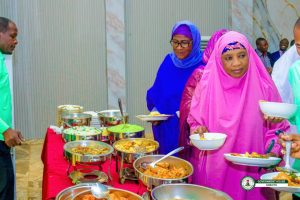
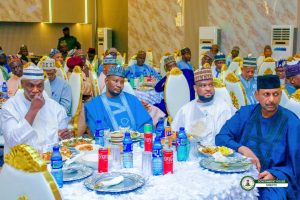
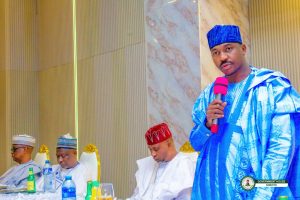
The governor made the call yesterday while hosting members of the State Executive Council, Special Advisers, and Senior Special Assistants to an Iftar gathering at the Presidential Lodge, Sokoto.

Governor Aliyu emphasized that Ramadan offers a unique opportunity for leaders to reassess their actions, purify their intentions, and strengthen their commitment to serving the people with sincerity, accountability, and the fear of Allah. He described governance as a sacred trust that must be exercised with fairness, justice, and compassion.

He specifically called on officials to show love, empathy, and concern for vulnerable groups, including widows, orphans, the elderly, and other disadvantaged members of society, stressing that their welfare should remain a top priority in government policies and programmes.

According to him,effective leadership is measured by the positive impact it has on the lives of citizens.

Governor Aliyu further highlighted the importance of unity, teamwork, and synergy within the administration, noting that sustainable development can only be achieved when officials work collectively toward a shared vision. He urged them to remain transparent, accountable, and diligent in the discharge of their duties.

The governor assured that his government would continue to prioritize infrastructure, education, healthcare, agriculture, and social welfare programmes aimed at improving living standards and expanding economic opportunities across the state.

He, however ,expressed gratitude to the officials for their steadfast support and cooperation, acknowledging that their dedication has been vital to the success of his administration.

Speaking on behalf of the officials, the Secretary to the State Government, Muhammad Bello Sifawa, appreciated the governor for the gesture, describing the Iftar as a demonstration of unity and cordial working relations within the administration.

He commended Governor Aliyu’s leadership and reaffirmed the officials’ resolve to continue supporting policies and programmes that improve the lives of citizens.

Sifawa pledged continued loyalty to the governor and prayed to Almighty Allah to grant him wisdom, strength, and good health to achieve his vision of building a new Sokoto State anchored on justice, compassion, and sustainable development.

The occasion was concluded with a special prayer for Sokoto State and the nation, seeking divine guidance and success in the collective effort to move the state to greater heights.

Sokoto State Hajj 2026 Media and Publicity Committee Charged to Work Diligently for Successful Hajj Exercise

The Director General, Media and Publicity to the Sokoto State Government, Alhaji Abubakar Bawa, has charged members of the Sokoto State Hajj 2026 Media and Publicity Committee to work diligently and collaboratively towards ensuring the success of the 2026 Hajj exercise.

Alhaji Abubakar Bawa made the call  during a joint meeting with Heads of Media Organisations and members of the Hajj Media and Publicity Committee.

He emphasized that the selection of the committee members was based strictly on merit, in line with the directive of His Excellency, Governor Ahmad Aliyu, FCNA.

He urged the members to uphold the confidence reposed in them and discharge their responsibilities with professionalism and dedication.
During the meeting, the Secretary of the Committee, who is also  the Head of Information and Communications at the Sokoto State Pilgrims Welfare Agency, Malam Faruku Umar, presented a detailed outline of the committee’s responsibilities.

He explained that the committee’s mandate includes pre-Hajj publicity and enlightenment campaigns for intending pilgrims, comprehensive news coverage and reportage during the Hajj exercise, establishment of a media centre in Minna, and ensuring timely dissemination of information to the people of Sokoto State regarding Hajj activities in the Holy Land.

The committee is chaired by former General Manager of The Path Newspaper, Malam Muhammad Umar, with Malam Faruku Umar serving as Secretary.

Other members of the committee include Malam Lawal Isah Maranawa, Malam Abdulrashid Wadata Buhari, and Malam Ibrahim Hussaini.

The meeting was attended by the Managing Director of Sokoto State Media Corporation, Alhaji Labaran Lumu Dundaye, and the General Manager of Alu TV Sokoto, Alhaji Bashar Abubakar.

The Sokoto State Government reaffirmed its commitment to ensuring a well-coordinated and successful Hajj exercise in 2026 through effective information management and strategic media engagement.

Sokoto Govt Empowers 6,618 Persons with Disabilities with Sallah Materials, Cash Assistance


The main committee tasked with overseeing the distribution of Sallah materials and cash assistance to persons with disabilities across the 23 locale government areas of the state has officially commenced the exercise at the Sokoto Youth Centre.


The distribution was flagged off on behalf of the Committee Chairman, Alhaji Ibrahim Dadi Adare, by the Committee Secretary, Barrister Gandhi Umar, who also serves as Special Adviser on Administration to the Governor of Sokoto State.


A total of 6,618 beneficiaries, drawn from the 23 local government areas of the state, are benefiting from the intervention.

The initiative is designed to provide Sallah materials and financial support to persons with disabilities, enabling them to celebrate the festive period with dignity and a sense of inclusion.

Under the arrangement, each male beneficiary received five yards of Shadda material along with ₦5,000 as a sewing allowance, while each female beneficiary received Atamfa fabric and a token of ₦5,000 to sew the material.

Speaking on behalf of the committee, Chairman Alhaji Ibrahim Dadi Adare stated that the exercise was carefully planned to ensure fairness, transparency, and effective coverage of beneficiaries across all the local government areas.

He explained that adequate measures were put in place to guarantee that the materials and cash assistance reach genuine beneficiaries, in line with the government’s directive.

In his remarks, the Special Adviser to the Governor on the Agency for Persons with Disability, Alhaji Umar Masari, commended the state government for prioritising the welfare of persons with disabilities.

He noted that the intervention reflects the administration’s commitment to inclusivity and social protection, particularly during festive periods when vulnerable groups require additional support.

Alhaji Umar Masari assured beneficiaries that the agency would continue to work closely with relevant stakeholders and the committee to ensure transparency and equitable distribution across the 23 local government areas.

He urged beneficiaries to make good use of the support provided and reaffirmed the government’s resolve to strengthen programmes aimed at improving the living conditions of persons with disabilities in the state.

Some of the beneficiaries, including Comrade Abubakar Mu’azu and Ummu Bello, expressed appreciation to the state government for the gesture.

They described the support as timely and impactful, noting that it would go a long way in enabling them and others to celebrate Sallah with joy and dignity.

The committee confirmed that the distribution will continue simultaneously across all the local government areas to ensure that every eligible beneficiary receives their materials and cash support without delay.

SMALL BUSINESSES, BIG IMPACT: THE ROLE OF MSMEs IN SOKOTO’S ECONOMY

By Sani Umar

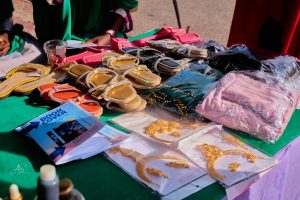
In every economy, growth is often measured by large infrastructure, heavy industry, and government expenditure. Yet beneath these visible markers lies a quieter force that sustains livelihoods and stabilises communities. In Sokoto State, this force is found in micro, small and medium enterprises (MSMEs), which form the backbone of daily economic activity, especially within the informal sector.

Historically, Sokoto’s economy has been shaped by trade, craftsmanship, agriculture, and cross-border commerce. Long before formal economic frameworks emerged, markets, workshops, dyeing pits, tanneries and household enterprises powered local prosperity. Today, that tradition persists through thousands of small businesses that collectively keep the state’s economy active and resilient.

The informal sector remains the largest employer in Sokoto. From roadside vendors and grain traders to tailors, artisans and transport operators, informal enterprises provide income for families who may otherwise be excluded from formal employment. Though often unregistered, these businesses are deeply embedded in community life and contribute significantly to consumption and local circulation of money.

Women traders occupy a central place in this economic ecosystem. Across urban and rural markets, women dominate the trade in foodstuffs, textiles, household items, and small-scale processing. Their enterprises not only support household welfare but also enhance food security and market stability. For many families, women led businesses are the primary source of income.

Youth artisans also represent a growing economic asset. Young people engaged in carpentry, welding, phone repairs, tailoring, furniture and shoemaking, and other trades are transforming skills into livelihoods. In a state with a youthful population, these enterprises serve as an alternative to unemployment, reducing social vulnerability while nurturing entrepreneurship from the grassroots.

Despite their importance, MSMEs in Sokoto face persistent constraints. Limited access to finance remains one of the most critical challenges. Many small business owners lack the collateral, documentation, or financial literacy required to secure loans from conventional banks, forcing them to rely on informal savings or high interest borrowing.

Access to credit is therefore a defining factor in determining whether small businesses merely survive or meaningfully grow. When traders and artisans can access affordable financing, they are better positioned to expand inventory, improve tools, and employ others. In this sense, credit is not just financial support, it is an enabler of economic mobility.

Recent policy efforts in Sokoto have increasingly recognised the strategic value of MSMEs. Government backed initiatives, cooperative financing schemes, and partnerships with development institutions are gradually widening access to credit for women and youth led enterprises. These interventions signal a shift toward inclusive economic planning that prioritises grassroots productivity.

Capacity building has also emerged as a complementary pillar. Training in basic accounting, business management, and market access helps informal operators transition toward sustainability. For many small businesses, knowledge is as critical as capital in achieving long term viability.

The ripple effects of thriving MSMEs extend beyond individual entrepreneurs. Strong small business activity boosts local supply chains, supports agricultural producers, and increases internally generated revenue. More importantly, it anchors economic growth within communities, reducing dependency on government employment alone.

In recent years, the combined interventions of the Federal Government, the Sokoto State Government, and the World Bank have significantly strengthened the MSME landscape across the state. Through coordinated funding programmes, social investment schemes, and development focused partnerships, substantial resources have been channelled toward micro and small scale entrepreneurs, particularly those operating within the informal sector. These interventions reflect a growing recognition that local businesses are critical drivers of economic stability and inclusive growth.

A key pillar of this support has been the Conditional Cash Transfer and related social protection initiatives, which provide direct financial support to vulnerable households. In many cases, beneficiaries are small traders, artisans, and service providers who reinvest the funds into their businesses. By easing liquidity constraints, these programmes have helped stabilise market activities, expand micro-enterprises, and sustain local demand, especially at the community level.

Since coming into office, the Sokoto State Government has expended approximately ₦1.56 billion on MSME and youth enterprise support programmes, comprising about ₦1.5 billion disbursed to over 8,500 MSME operators under the NG-CARES initiative and ₦60 million in grants to 600 trained youths, with an additional ₦2.5 billion approved and earmarked for further disbursement to small business owners.

When combined with state backed MSME financing schemes and World Bank supported economic development frameworks, these interventions have created a multiplier effect across Sokoto’s economy, according to the Executive Secretary of SOSMEDA in the State, Hajia Binta Uthman. She maintained that, beyond short-term relief, they are helping to build resilience among small business owners, improve productive capacity, and reinforce the role of MSMEs as engines of employment, income generation, and grassroots economic development in the state.

For Sokoto, strengthening MSMEs is not a peripheral economic strategy, it is central to development. Women traders and youth artisans represent untapped potential that, if adequately supported, can drive inclusive growth and social stability. Their success translates directly into broader economic resilience.

Ultimately, the story of Sokoto’s economy is not written only in large projects or official statistics. It is written daily in markets, workshops, and informal enterprises where small businesses are making a big impact. By deepening access to credit and sustaining support for MSMEs, Sokoto is quietly reinforcing the foundation of its economic future.

Gov Aliyu Inspects Feeding Centres, Praises Quality And Quantity Of Food Served

From Muhammad Gazali Garba


Sokoto State Governor,Dr Ahmed Aliyu, has lauded this year’s Ramadan feeding programme, highlighting that it has surpassed expectations in both food quality and quantity.

Dr. Aliyu made the remarks during an inspection tour of several feeding centres across the state, personally assessing the meals being served to beneficiaries.

“We are here to see things for ourselves, and Alhamdulillah, with what I have seen so far compared to last year, I am truly impressed,” he said.

The Governor visited centres including Clapperton Centre, Lodge Road Centre,Gidan Dallatu Centre,Masallacin Abuja Centre in Zoramawa, and the Specialist Hospital Centre.

The Ramadan feeding programme, which started 19 years ago during the administration of former Governor Senator Aliyu Magatakarda Wamakko, has been sustained over the years.

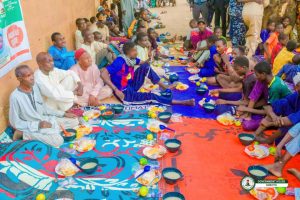
This year, the state government allocated ₦1 billion for the 170 approved feeding centres, each catering for 200 persons daily, serving a total of 34,000 plates every iftar.

He commended members of the committee for ensuring that nutritious meals are served consistently, in line with the initiative’s objectives.

The Governor also praised beneficiaries for their patience, describing it as a display of discipline and respect.

Dr. Aliyu urged continuous improvements to further enhance service delivery, food quality, and management standards.

The programme forms part of the administration’s efforts to cushion economic hardship and support vulnerable citizens in this month of Ramadan.

He was accompanied during the visits by the State Commissioner for Religious Affairs, Prof. Jabir Sani Maihulla, the Chairman of the Ramadan Feeding Programme, Alhaji Aliyu Attahiru, and his members,Speaker Sokoto State House of Assembly,Hon.Tukur Bala Bodinga, among other personalities.

Gov Aliyu Pledges Partnership with Newly Elected Local Government Party Executives to Drive Development

From Muhammad Gazali Garba

Sokoto State Governor, Dr. Ahmed Aliyu, has vowed to work closely with the newly elected party executives across the 23 local government areas of the state to drive development to the nook and crannies of Sokoto.

The governor described the inauguration of the executives as a pivotal step toward consolidating good governance, strengthening party structures, and ensuring that development reaches even the most remote communities.

Speaking in Bodinga during the inauguration, Governor Aliyu emphasized that strong collaboration between the government and party leadership is essential to delivering tangible development, fostering unity, and ensuring effective service delivery across Sokoto State.

He commended the party for its orderliness throughout the exercise, describing the conduct of the locals government congress as exemplary and a demonstration of internal discipline. According to him, such organized processes reflect the maturity of the party and provide a solid foundation for effective leadership at the local government level.


Governor Aliyu also expressed his gratitude to the national officers who were sent to the state to oversee the congress, noting that their presence ensured transparency, fairness, and credibility throughout the exercise.


He further urged the newly inaugurated executives to view their positions not merely as political assignments, but as platforms to promote unity, social cohesion, and grassroots development in their respective areas.

The governor stressed that the government would provide support where necessary to ensure that projects and policies reach every community, adding that collaboration between government and party leadership is essential for sustainable progress.


Speaking at the ceremony, the State APC Chairman, Alhaji Isah Sadiq Achida, congratulated the newly elected executives and called on all members to support them in their duties.

He commended the achievements and good leadership style of the state governor, Dr. Ahmed Aliyu, describing him as a visionary leader committed to the development and welfare of the people.

Hon. Achida also highlighted the importance of unity, discipline, and active engagement at the grassroots level to strengthen the party’s structure and advance its developmental agenda across the state.


Also addressing the gathering, the Minister of Labour and Employment and party leader in Bodinga Local Government, Alhaji Muhammad Maigari Dingyadi, praised the successful conduct of the local government congress and lauded the governor’s developmental initiatives.

He urged party members to support the newly inaugurated executives in implementing policies that would improve the welfare of residents, emphasizing the need for collective effort and community participation to achieve sustainable development.


Hon. Haladu, the national officer assigned to oversee the local government congress in Sokoto State, commended the smooth conduct of the elections.

He noted that the process reflected the party’s commitment to transparency and internal democracy and urged the newly elected executives to uphold these values in their leadership roles, ensuring accountability and effective service delivery to the people.

The ceremony, attended by party members, community leaders, and stakeholders, marked a significant step in strengthening the party’s structure across the state’s 23 local government areas.

It also underscored the governor’s commitment to fostering an inclusive and participatory approach to governance, ensuring that the voices of local communities are reflected in development planning.

JUDICIAL INQUIRY AND THE DUTY OF PUBLIC ACCOUNTABILITY 

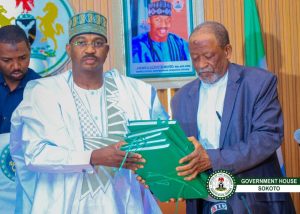
Justice Mu’azu Abdulkadir Pindiga presenting the report to Gov. Ahmed Aliyu

By Sani Umar

In Nigeria today, public trust in governance has steadily declined under the weight of perceived impunity, weak accountability mechanisms, and recurring allegations of mismanagement of public resources. For many citizens, the gap between government promises and lived realities has widened, fostering skepticism toward public institutions and diminishing confidence in leadership. In such an atmosphere, investigations into the conduct of public officials are no longer seen as routine administrative processes but as necessary instruments for restoring credibility and reaffirming the rule of law.

It should be noted, however, that this crisis of confidence has deep historical roots. From the early post-independence period to the present democratic era, Nigeria’s governance experience has been shaped by struggles to balance political authority with transparency and responsibility. While reforms have been introduced at different stages, the persistence of corruption and administrative excess has continued to undermine public service delivery and weaken the bond between government and the governed.

Within this national context, Sokoto State occupies a distinctive historical and political position. Created in 1976 during the state creation exercise of the military administration, Sokoto emerged from the legacy of the old North-Western State and inherited both the prestige of its historical past and the burden of modern governance challenges.

As the seat of the Sokoto Caliphate and a symbol of Islamic scholarship and authority, the state has long represented moral leadership and communal order in Northern Nigeria. Yet, like many subnational governments, it has had to grapple with the demands of development, resource management, and institutional reform in a rapidly changing society.

It is against this backdrop of declining public trust, rising expectations, and Sokoto’s unique historical responsibility that the presentation of the report of the Judicial Commission of Inquiry to Governor Ahmed Aliyu assumes deeper significance. Beyond the formalities of protocol, the occasion underscored a deeper commitment by the administration to transparency, accountability, and the responsible management of public resources.

In commending the members of the commission, the governor made it clear that the inquiry was neither conceived nor conducted as an instrument of political vendetta. Rather, it was established to uphold the public interest, restore confidence in governance, and address legitimate concerns about the management of state resources in the past. This clarification is important in a political environment where investigative panels are often viewed with suspicion or reduced to partisan tools.

The investigation itself carries far reaching importance. Judicial commissions of inquiry serve as institutional mechanisms for fact finding, enabling governments to separate allegations from evidence and emotion from reality. By submitting governance practices to judicial scrutiny, the state reinforces the principle that public office is a trust, not a privilege, and that stewardship of collective resources must always be open to review.

Equally significant are the implications of the governor’s assurance that the report will be studied and implemented strictly in line with the law. The pledge of “no witch-hunt and no vengeance” sends a strong signal that accountability can coexist with fairness. Where mismanagement is established, recovery of public assets becomes a moral and legal obligation, not an act of retribution. Where individuals are cleared, their rights and dignity must equally be protected.

The planned establishment of a committee to review and implement the commission’s recommendations further reflects an attempt to institutionalize the process. It suggests that the inquiry is not intended to end as a ceremonial exercise, but as a practical tool for reform, restitution, and improved systems of financial control.

Perhaps the most enduring lesson from this exercise lies in its warning to serving officials. The governor’s firm stance that misconduct and embezzlement will not be tolerated reinforces the sanctity of public trust. For those currently entrusted with authority, the inquiry serves as a reminder that governance is continuous accountability to the law, to institutions, and ultimately to the people.

In the final analysis, the judicial commission of inquiry represents more than a review of past actions. It is a statement about the standards the government seeks to entrench going forward, meaning prudence in resource management, respect for due process, and a clear separation between accountability and political rivalry. If implemented faithfully, its outcomes could strengthen public confidence and set a precedent for transparent governance in Sokoto State.


Sent from my iPhone

‘APC Ward Congresses In Sokoto Symbolize Unity’

The Chairman of the APC National Congress Committee for Sokoto State, Honourable Lawali Liman Kaura, has expressed satisfaction with the Ward Congresses conducted across the 244 wards of Sokoto State on Wednesday, 18th February 2026.

Speaking after an inspection tour of some wards in the state, Honourable Lawali Liman Kaura, in company of the Committee Secretary, Zubairu Muhammad Lawali, observed the level of discipline and orderliness displayed by party members during the exercise.

He stated that the conduct of party members during the Ward Congresses was a practical expression of the meaning of the party’s symbol, the broom which stands for unity.

He appealed to all party members to maintain the same spirit of orderliness and unity during the forthcoming Local Government Congresses scheduled for this Saturday.

He also praised the Sokoto State APC leadership for their excellent arrangements, which contributed to the success of the exercise.


Gov Aliyu Launches Ramadan Support for 35,351 IDPs, Physically Challenged

From Muhammad Gazali Garba

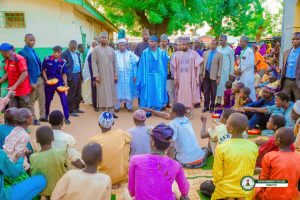
The Sokoto State Government has launched the distribution of food items, clothing materials, and cash assistance to 35,351 Internally Displaced Persons (IDPs) and physically challenged across the state as part of its Ramadan intervention programme.

The ceremony, held at the Government House,Sokoto, was designed to cushion the effects of economic hardship and enable beneficiaries to observe the holy month of Ramadan with dignity.

The address of Governor Ahmed Aliyu was delivered by his deputy, Idris Muhd Gobir. In the address, the Governor noted that persistent security challenges and environmental factors have forced many residents to flee their homes, thereby placing additional pressure on host communities.

“We recognise the struggles of our people, and we are committed to supporting them during this challenging period. This initiative demonstrates our administration’s commitment to social justice and compassion, especially during the sacred month of Ramadan,” Aliyu stated.

The Governor further explained that, beyond insecurity, the devastating floods recorded during the last rainy season destroyed farmlands and sources of livelihood, leaving many families homeless.
“The affected communities are still struggling to recover from their losses, and it is our responsibility to provide the necessary support and assistance,” the address added.

The administration is also collaborating with humanitarian organisations and community leaders to ensure that the needs of displaced persons are adequately met, while exploring sustainable recovery and rebuilding efforts.

Governor Aliyu highlighted several security measures implemented by his administration.

He revealed that the government has procured and handed over 200 patrol vehicles to security agencies and established the Sokoto State Security Guard Corps, equipping it with 40 vehicles and 700 motorcycles to enhance operational effectiveness.

According to him, these measures are aimed at strengthening the state’s security architecture and ensuring lasting peace and stability.

The Ramadan intervention programme, which includes food items, clothing materials, and cash assistance, forms part of the administration’s broader humanitarian efforts to improve the welfare of vulnerable citizens.

According to the Governor, each IDP will receive a 10kg bag of rice. Additionally, 13,364 male beneficiaries will receive brocade materials, while 20,000 female beneficiaries will receive Atamfa materials.

Furthermore, 8,000 physically challenged persons will benefit from Shadda materials and a cash support of ₦5,000 each.

The Governor reiterated his administration’s resolve to address the root causes of insecurity in the state.
“We are resolute in our determination to end all forms of insecurity in Sokoto State.

We are working closely with security agencies, community leaders, and other stakeholders to identify and tackle the drivers of insecurity. We will not rest until our people are safe and secure,” the address emphasised.

Speaking at the event, Senator Aliyu Magatakarda Wamakko, leader of the All Progressives Congress (APC) in the state, commended Governor Aliyu for sustaining programmes targeted at improving the welfare of the less privileged.

He described the distribution exercise as timely and impactful, noting that it reflects responsive leadership and genuine compassion.

Senator Wamakko urged beneficiaries to make judicious use of the support provided, stressing that the gesture was intended to ease their burdens and restore hope during difficult times.

He also called on well-meaning individuals and community groups to complement government efforts by supporting vulnerable citizens, particularly during Ramadan.


The Secretary to the State Government, Muhammad Bello Sifawa, emphasised transparency and equitable distribution of the items, assuring that adequate mechanisms had been put in place to ensure fairness and accountability throughout the exercise.

Similarly, the Special Adviser on IDPs to the Governor, Hajiya Maryam Dmas, commended the collaborative efforts of relevant agencies and stakeholders in successfully coordinating the programme.

She noted that the initiative underscores the administration’s sustained commitment to supporting vulnerable groups across the state.

Representing the Sultan of Sokoto, Sambo Wali Junaidu, who holds the traditional title of Wazirin Sokoto, praised the Governor for the humanitarian intervention.

He urged beneficiaries to continue praying for peace, unity, and stability in the state, and called on all stakeholders to support government initiatives aimed at uplifting the less privileged.

Sokoto Governor Eulogises Late Murtala Mohammed, Urges Future Generations To Emulate His Virtues

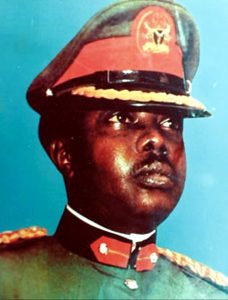
Gen. Murtala Ramat Mohammed

The Governor of Sokoto state, Dr. Ahmed Aliyu, has described the late former Head of State, General Murtala Mohammed, as a symbol of patriotism, courage, and selfless service whose legacies continue to inspire generations of Nigerians.

Dr. Aliyu made this known following his receipt of the General Murtala Ramat Muhammed Meritorious Security Award at the General Murtala Mohammed Golden Symposium held at the Bayero University convocation arena, Kano.

The event was organized by the Kano Patriotic Front in honour of the late leader, who was assassinated 50 years ago in a failed coup attempt.

The Governor, who was represented at the event by his Special Adviser on Security, Col. Ahmed Usman (rtd), expressed profound gratitude to the organizers for finding him worthy of the prestigious award.

He dedicated the recognition to the people of Sokoto state and the entire security architecture of the state who continue to work tirelessly to ensure peace and stability.

Speaking on the life and times of General Murtala Mohammed, Governor Aliyu described him as a bold and visionary leader who demonstrated uncommon discipline, decisiveness, and commitment to national unity during his short but impactful tenure.

According to the Governor, General Murtala’s leadership style was marked by accountability, integrity, and an unwavering determination to reposition Nigeria on the path of progress.

“Murtala Mohammed remains an enduring example of courage and patriotism. His administration showed that with sincerity of purpose, discipline, and love for country, transformational change is possible even within a short period. His sacrifice for the unity and stability of Nigeria must never be forgotten,” the Governor stated.

Governor Aliyu further called on leaders at all levels and the younger generation to emulate the late President’s virtues of selflessness, transparency, and dedication to national service.

He emphasized that Nigeria’s development depends largely on leaders who are ready to place national interest above personal gain.

He reaffirmed his administration’s commitment to strengthening security, promoting good governance, and fostering unity in Sokoto State, noting that the award serves as both an honour and a renewed call to duty.

The Governor concluded by praying for the peaceful repose of the soul of the late General Murtala Mohammed and urged Nigerians to continue to draw lessons from his exemplary life of service and sacrifice.

RECOMMENDED NEWS

POPULAR