Home Blog Page 23

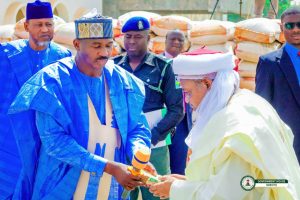
Ramadan 2026: Sokoto State Government Distributes Food, Clothing and Cash to 18,400 Orphans,Widows 

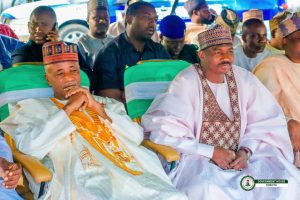
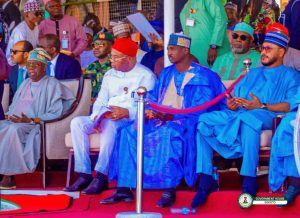
Sen. Wamakko and Gov. Ahned
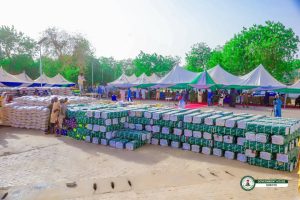
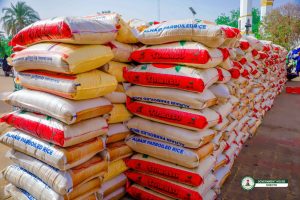
Assorted foodstuffs

From Muhammad Gazali Garba


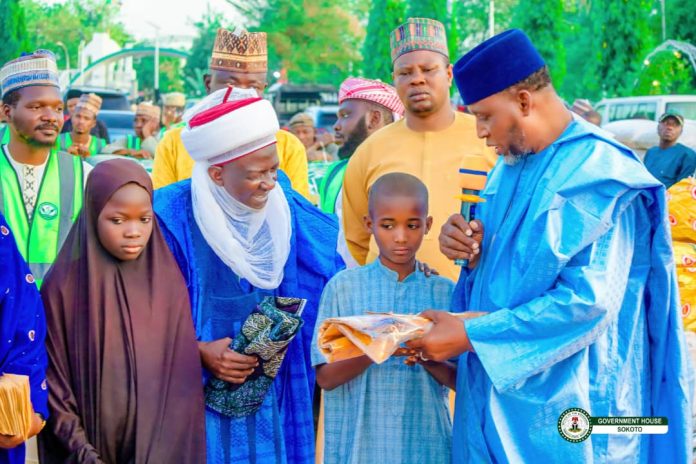
Sokoto State Government has commenced the distribution of food items, clothing materials and cash assistance to 18,400 beneficiaries drawn from 87 districts across the 23 Local Government Areas of the state.

The State Governor, Dr. Ahmed Aliyu, disclosed this at the flag-off ceremony held at the Government House in Sokoto.

Governor Aliyu stated that the gesture is targeted at orphans, widows and the needy across the 87 districts. He explained that the initiative is aimed at supporting them to observe this year’s Ramadan with relative ease and to pray for the peace, unity and continued progress of the state.

He revealed that 9,200 bags of assorted rice and 9,200 sets of clothing materials would be distributed, alongside ₦10,000 cash support for each beneficiary.
The initiative is being implemented under the Sokoto State Zakkat and Waqf Agency as part of the administration’s ongoing social welfare and humanitarian programmes designed to provide relief and improve the living conditions of vulnerable citizens.

Governor Aliyu commended the efforts of the Zakkat and Waqf Agency for its unwavering commitment to addressing the plight of the vulnerable, noting that the agency’s dedication has earned the state both national and international recognition. He assured that his administration would continue to support the agency to enable it to sustain its good work.

The governor also used the occasion to once again express gratitude to President Bola Ahmed Tinubu for what he described as commendable policies, particularly in the humanitarian sector, which he said are positively impacting citizens across the country.

In his remarks, the Chairman of the Sokoto State Zakkat and Waqf Agency, Lawal Maidoki, expressed appreciation to Governor Ahmed Aliyu for his consistent support and commitment to the agency’s programmes.

He noted that the Ramadan intervention demonstrates the administration’s deep concern for the welfare of the less privileged in society.
Malam MaiDoki further explained that the selection of beneficiaries was conducted across the 87 districts to ensure fairness, transparency and inclusiveness.

He assured that the agency remains committed to prudent resource management and effective distribution mechanisms to guarantee that assistance reaches those who genuinely deserve it.

Also speaking at the event, the representative of the Sultan of Sokoto and District Head of Bodinga, Muhammad Bello AbdulRauf, commended the state government for the initiative, describing it as a laudable effort that aligns with Islamic principles of charity and compassion.

He urged beneficiaries to make judicious use of the support and to continue praying for peace, unity and sustained development in Sokoto State.

Delivering the vote of thanks, the Sarkin Mafaran Shagari, Bala Shagari, expressed appreciation to the state government for the humanitarian gesture. He commended Governor Ahmed Aliyu for prioritising the welfare of vulnerable citizens and prayed for divine guidance and continued success for the administration.

Some beneficiaries also expressed their gratitude. An orphan, Hassan Zayyanu Gagi, thanked the governor for remembering vulnerable members of society, describing the assistance as timely and helpful as Ramadan approaches.

Similarly, a widow, Rabiatu Umar, appreciated the gesture, noting that the food items, clothing materials and cash support would go a long way in easing the hardship faced by her family.

2027 Begins in Kano: Abba Kabir Yusuf Formally Received into APC as Tinubu Consolidates Northern Political Stronghold

By: Lamara Garba

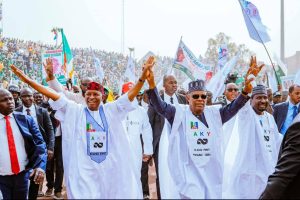
From the moment Vice President Senator Kashim Shettima touched down at the Malam Aminu Kano International Airport, the ancient city shifted into a different rhythm. The roads from the airport were not just filled; they were alive. Traders, Market women, civil servants and artisans all abandoned their stalls and places of livelihood for a glimpse. Young men climbed rooftops and signposts. Elderly men in flowing babbar riga stood shoulder to shoulder with restless students waving party flags. The chants rolled like thunder across the airport Road, Fagge quarters, Murtala Mohammed Way and curved through the arteries leading to the ancient heart of the city. It was not the choreography of hired enthusiasm. It was organic, loud, and unmistakable.

By the time the convoy approached the iconic Sani Abacha Stadium, the streets had become a river of humanity. The stadium itself seemed too small for the emotion that poured into it. In that moment, one truth stood firm: this was not a routine political reception. It was a public declaration of belonging. That Governor Abba Kabir Yusuf belongs to the people of Kano and so also the people belongs to him.

The official receiving of Governor Abba Kabir Yusuf by the national leadership of the All Progressives Congress was framed as a homecoming. But it felt like something deeper, something almost philosophical. Politics, at its highest form, is about alignment of interests, of vision, of destiny. On that day, Kano appeared to say that its destiny must sit at the table where national decisions are shaped.

Representing President Bola Ahmed Tinubu, Vice President Shettima stood before the sea of supporters and spoke with deliberate clarity. Kano, he said, is too strategic to stand at the margins of Nigeria’s future. In his tone was both political calculation and historical awareness. Kano has always been more than a state; it is a compass. When Kano moves, Nigeria feels it. When Kano speaks, the federation listens.

His words were not empty pleasantries. They were an affirmation that Governor Yusuf’s entrance into the APC was not a mere addition of a member but the strengthening of a pillar. He described the governor’s role within the party as crucial, linking Kano’s economic vibrancy and political consciousness to the broader national development agenda. It was as if the vice president was saying: a house this large must have all its strongest beams intact.

Then came the chairman of the Progressive Governors’ Forum, Hope Uzodinma, who spoke with a mix of warmth and strategy. He described Yusuf’s defection as a return home. In politics, the language of homecoming is powerful. It softens rivalry and buries past tensions beneath a narrative of reunion. Uzodinma went further, calling Kano the brain of Nigerian politics. It was a metaphor that resonated deeply with the crowd. A brain directs, calculates, interprets. By that logic, Kano’s alignment with the APC signals direction for the country.

The party’s national chairman, Nentawe Yilwatda, framed the moment as an infusion of fresh momentum. He spoke of progressive ideals and the shared responsibility to deliver development. His message was clear: this was not about numbers; it was about energy. The governor’s entry, he implied, would not dilute the party’s character but enrich it.

And then, standing like an elder statesman observing the unfolding of history, former national chairman Abdullahi Umar Ganduje declared the party in Kano stronger and more united than ever. In Kano’s political theatre, unity is currency. His words suggested that previous fractures had now been stitched into a single fabric.

But beyond the speeches of national figures was the quiet, powerful statement made by the crowd itself. No script can manufacture that level of enthusiasm. The thousands who lined the streets and filled the stadium were not there merely to witness a political transaction. They came to affirm their governor. Their presence was a reminder that leadership, in the end, is validated by followership.

Governor Yusuf, for his part, balanced gratitude with principle. He pledged that his new political alignment would not compromise his pursuit of fairness and justice. It was an important assurance. Defections often invite suspicion. But he positioned his decision as pragmatic rather than opportunistic. In his telling, joining the APC was not about abandoning ideals but about creating wider channels through which those ideals could be realized.

There was also symbolism in the federal support earlier announced for Kano’s recovery from recent challenges. The financial backing from the federal government and the governors’ forum was presented not simply as relief but as evidence of partnership. In politics, resources follow relationships. By stepping into the APC fold, Kano was not just changing party colours; it was strengthening its access to the levers of federal influence.

What unfolded at the stadium was therefore layered. On the surface, it was a mega rally filled with music, banners, and applause. Beneath that surface, it was a recalibration of political equations ahead of 2027. Kano is a state whose electoral weight can tilt national outcomes. Any party that secures Kano secures more than votes; it secures narrative dominance in the North.

Philosophically, the event underscored a timeless truth about power: it abhors isolation. In a federal system as complex as Nigeria’s, alignment between state and centre often determines the speed of development. The rally conveyed a shared understanding that Kano’s ambitions are best pursued in concert with the ruling party at the national level.

Idioms floated effortlessly through the speeches and the chants. A tree does not make a forest, but a mighty tree can anchor it. A river that finds the ocean does not lose itself; it becomes part of something vast. These were the unspoken metaphors of the day. Governor Yusuf’s political journey had curved, and now it had merged.

Yet the most striking element remained the people. They turned the reception into a festival of affirmation. They transformed a party event into a civic spectacle. They demonstrated that politics in Kano is not passive; it is participatory, emotional, almost theatrical.

In the end, the mega rally was more than a formal welcome. It was a declaration that the APC considers itself fortunate to have Governor Yusuf within its ranks, and that Kano believes its voice will echo louder from within the corridors of federal power. It was a moment where strategy met sentiment, where calculation met conviction.

And as the sun dipped over the ancient city and the crowds slowly dispersed, one could sense that something had shifted. Kano had spoken, not in whispers but in waves. Whether history will judge the decision kindly remains for the future. But on that Monday in February, the message was unmistakable: the political map of Kano had been redrawn, and the ink was still fresh.

Lamara Garba a veteran journalist writes from Kano

259 Qur’an Memorizers Celebrate Graduation as Sokoto Govt Hands Over Motorcycles and ₦178M Support


  • From Muhammad Gazali Garba

The Sokoto State Government has donated 259 motorcycles to the 259 students who successfully memorised the entire Holy Qur’an at Madarasatul Tahfeez Wal Dirasatul Qur’aniyyah, Hubbaren Shehu, Sokoto .

The announcement was made by the Sokoto State Governor, Dr. Ahmed Aliyu, while delivering his address at the school’s second graduation ceremony held at the Giginya Memorial Stadium, Sokoto.

Governor Aliyu said the gesture was aimed at supporting the graduates to become self-reliant and to ease their mobility as they continue to propagate the teachings of the Holy Qur’an across communities.

He described the memorisation of the Qur’an as a rare and commendable achievement, noting that the beneficiaries had distinguished themselves through dedication, discipline, and perseverance.

He further announced that each of the 53 teachers of the institution would receive ₦500,000 in recognition of their invaluable role in grooming the students and disclosed a donation of ₦10 million to the school to support its upkeep and continuous development.

In addition, he directed the immediate inclusion of the 53 teachers on the state government payroll effective from April this year, stating that each teacher would be placed on the appropriate salary scale according to their grade level.

He described the move as part of efforts to improve teachers’ welfare and ensure sustained quality education in the institution.

The Governor commended Senator Aliyu Magatakarda Wamakko for establishing the school and providing its permanent site, describing the initiative as visionary and impactful.

He also appealed to wealthy individuals and philanthropists in the state to emulate the Senator’s efforts by complementing the initiatives of the state government in advancing Qur’anic and general education.

He reiterated that investment in both Islamic and Western education remains a priority of his administration, urging the graduates to uphold the teachings of the Qur’an and serve as good ambassadors of Islam wherever they find themselves.

Speaking during the ceremony, Senator Aliyu Magatakarda Wamakko, the founder of the school, expressed delight at the achievements of the 259 graduates. He recounted that the institution started as a modest school with a small number of students and a single teacher, and has now grown into a centre of excellence for Qur’anic education.

Senator Wamakko further announced a total donation of ₦168 million for the school from associates, friends, and well-wishers, including the guest of honour, Senator Abdulaziz Yari Abubakar who donated ₦30 million.

He said the donations would be used to enhance infrastructure, expand learning facilities, and support both students and teachers, ensuring the school continues to thrive.

The school proprietor, Mal Bello Na Malam Boyi, expressed gratitude to the state government and Senator Wamakko for their unwavering support to the institution.

He recalled that the school started with just 10 students and one teacher at a temporary site at the residence of Malam Aliyu Gidan Kanawa before moving to its permanent site at Hubbaren Shehu, acquired and constructed by Senator Wamakko in 2010.

Mal Bello also highlighted the ongoing expansion project, noting that neighbouring houses were recently acquired to increase the school’s capacity and that construction has begun in 2025 to meet the growing demand for Qur’anic education.

He described the graduation of 259 memorizers as a historic milestone and a source of inspiration for both students and the wider community.

In his remarks, the State Commissioner for Religious Affairs, Prof. Jabir Sani Maihulla, commended the graduates for their dedication to memorising the Holy Qur’an, describing it as a remarkable achievement that reflects discipline, patience, and strong moral character.

He praised the state government for its unwavering support to Qur’anic education and urged parents, guardians, and community leaders to continue promoting both Islamic and Western education.

Prof. Maihulla noted that such initiatives strengthen the moral fabric of society and contribute to producing responsible and enlightened citizens.

Representing the Sultan of Sokoto, the Waziri, Professor Sambo Wali Junaidu, conveyed the Sultan’s goodwill and blessings to the graduating students and their families. He urged the memorizers to uphold the teachings of the Holy Qur’an in their daily lives and to serve as ambassadors of peace, unity, and moral uprightness in society.

He also commended the state government, the school management, and Senator Wamakko for their commitment to the promotion of Qur’anic education, noting that the preservation and propagation of the Qur’an remain noble and highly rewarding endeavours.

Sokoto Govt Distributes Financial, Food Assistance to Imams and Islamic Scholars Across 23 LGAs

From Muhammad Gazali Garba

Sokoto State Governor, Ahmed Aliyu, has flagged off the disbursement of financial and food assistance to imams and Islamic scholars across the 23 Local Government Areas of the state.

The ceremony, held at the Government House, Sokoto, is part of the administration’s ongoing efforts to strengthen religious institutions and support clerics across the state.

Speaking at the event, Governor Aliyu explained that the initiative is designed to enable beneficiaries to prepare for and observe the forthcoming Ramadan fast with ease.

He emphasized that the support would ease financial burdens during the holy month, allowing clerics to focus on prayers, preaching, and providing spiritual guidance to the Muslim faithful.

According to the Governor, all Jumu’at mosque imams across the 23 Local Government Areas totalling 2,100 will each receive ₦100,000 as part of the financial support package.

He added that the 98 jumuat mosque Imams in Sokoto metropolis,will receive both financial and food assistance. Each imam will receive ₦100,000 and five bags of rice; their deputies will receive ₦50,000 and three bags of rice each, while the mu’azzins will receive ₦50,000 and two bags of rice each.

Governor Aliyu further revealed that 200 senior Islamic scholars and an additional 200 Islamic scholars across the state will receive ₦200,000 and ₦100,000, respectively, in recognition of their contributions to the development of Islam and the promotion of moral and social values within their communities.

He noted that some beneficiaries had already received alerts of their support at the venue, ensuring immediate access to the financial assistance.

The Governor reaffirmed his administration’s commitment to promoting religious harmony and improving the welfare of Islamic scholars, describing them as vital partners in fostering peace, unity, and moral development in society.

The Commissioner for Religious Affairs, Professor Jabir Sani Maihulla, lauded the Governor’s initiative, noting that it would greatly support the Islamic community in Sokoto State. He highlighted the administration’s efforts in promoting religious harmony and developing Islam and assured the Governor of the community’s continued support in advancing peace and unity.

The representative of the Sultan of Sokoto, Wazirin Sokoto, Professor Sambo Wali Junaidu, praised Governor Aliyu for his generosity and commitment to the welfare of Islamic scholars.

He conveyed the Sultan’s satisfaction with the initiative and prayed for the Governor’s success, urging beneficiaries to use the assistance to support their families and communities while offering prayers for the Governor and the state.

Sheik Hussaini Mabera, speaking on behalf of all beneficiaries, expressed gratitude to Governor Aliyu for the support, noting that it would enhance the ability of imams and Islamic scholars to carry out their duties effectively.

He prayed for the Governor’s continued success and long life and encouraged the Islamic community to uphold prayers for peace and stability in the state and the nation.

The ceremony was attended by dignitaries, including Senator Aliyu Magatakarda Wamakko, APC leader in the state; Barrister Muktari Shagari, former Deputy Governor; Muhammad Maigari Dingyadi, Minister of Labour; Barrister Bello Muhammad Goronyo, Minister of State for Works; Hon Tukur Bala Bodinga, Speaker, Sokoto State House of Assembly; Alhaji Muhammad Bello Sifawa, SSG; Alhaji Aminu Haliru Dikko, Chief of Staff, Government House; commissioners; special advisers; Islamic scholars; religious leaders; traditional rulers; and other esteemed guests.

The disbursement of financial and food assistance is expected to provide significant relief to beneficiaries and strengthen their capacity to serve their communities.

GIVING POWER TO THE PEOPLE: SOKOTO STATE INTRODUCES NOVEL SUGGESTION AND COMPLAINT BOX INITIATIVE

By Sani Umar

Providing public services to individuals and communities remains one of the most demanding responsibilities of governance, particularly in developing societies where rapid population growth, limited resources, and rising public expectations continue to place enormous pressure on public institutions.

Across Nigeria, citizens frequently encounter challenges in accessing essential services, especially in critical sectors such as healthcare, education, sanitation, and civil registration. These challenges have contributed to widespread dissatisfaction, mistrust, and a widening gap between service providers and the communities they are meant to serve.

In many parts of the country, complaints about poor service delivery have become common. Patients express frustration over delays, inadequate attention, and unfriendly attitudes in health facilities. Parents struggle with barriers that keep children out of school, while communities continue to grapple with poor sanitation practices, low immunization uptake, malnutrition, and weak birth registration systems.

For many citizens, the absence of reliable channels to report concerns or make suggestions has deepened feelings of neglect and helplessness. Without structured feedback mechanisms, grievances remain unheard, problems persist, and opportunities for improvement are lost.

The lack of accessible platforms for community engagement has also weakened accountability within service delivery systems. Many individuals, particularly women, youths, persons with disabilities, and other marginalized groups, often feel intimidated or powerless to voice their concerns openly. Cultural barriers, fear of victimization, and bureaucratic bottlenecks discourage people from reporting misconduct or poor service experiences.

As a result, authorities may remain unaware of pressing issues at the grassroots level, while communities lose confidence in government interventions designed to improve their wellbeing.

It is against this broader national backdrop that Sokoto State introduced suggestion and complaint boxes as a deliberate strategy to strengthen transparency, accountability, and citizen participation in governance. The initiative recognizes that effective service delivery cannot be achieved without listening to the voices of the people and creating safe, inclusive avenues through which communities can communicate directly with service providers.

The initiative was facilitated by the Ministry of Information and Orientation in collaboration with the State Primary Health Care Development Agency, with technical and financial support from UNICEF. It was designed to institutionalize community feedback and ensure that citizens have a structured, confidential, and accessible channel to express their views, concerns, and recommendations regarding public services.

The programme focuses on five thematic priority areas supported by UNICEF: immunization, education with emphasis on addressing out of school children, nutrition, particularly in tackling stunting, Water, Sanitation and Hygiene (WASH), including the elimination of open defecation, and child protection through birth registration. These sectors were selected because of their direct impact on the survival, development, and protection of children and vulnerable populations.

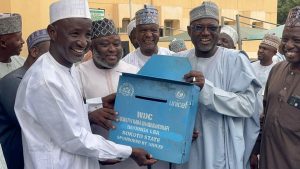
To guarantee wide coverage and community ownership, a total of 332 suggestion and complaint boxes were procured and distributed across the state. One box was allocated to each of the 244 wards, while an additional 86 boxes were provided to district heads. This extensive distribution ensures that citizens in both rural and urban communities can easily access the feedback system and participate in improving service delivery.

The boxes serve as a structured community feedback mechanism through which residents can comment on the quality, availability, accessibility, and conduct of services in health facilities, schools, WASH facilities, and civil registration centers. By creating a direct communication link between citizens and authorities, the initiative helps uncover challenges that might otherwise remain hidden within administrative structures.

Importantly, the boxes provide a voice for vulnerable and marginalized groups. Women, youths, and persons with disabilities can confidentially submit complaints or suggestions without fear of intimidation or reprisal. This inclusivity strengthens democratic participation and ensures that development interventions reflect the realities of all segments of society.

The initiative also functions as a practical tool for service improvement. Feedback collected enables policymakers and service providers to identify operational gaps, recurring complaints, and areas requiring urgent attention. Evidence generated through this process supports informed decision making and allows authorities to implement corrective measures that enhance efficiency and professionalism. Ward Development Committees and relevant agencies are able to monitor reported issues and follow up accordingly, reinforcing accountability at the grassroots level.

The impact of the suggestion and complaint boxes is reflected in improved responsiveness among service providers. Community concerns are now documented, reviewed, and addressed through an organized process, promoting transparency and institutional learning. The initiative has also strengthened trust between communities and government institutions by demonstrating a willingness to listen and act on public concerns.

Furthermore, the system has encouraged active community participation in governance. Citizens increasingly see themselves as partners in development rather than passive beneficiaries of government programmes. Information generated from the boxes provides valuable data on recurring challenges across wards and districts, enabling policymakers to identify trends and adjust programmes to achieve better outcomes.

The benefits of the initiative extend beyond immediate feedback. It promotes accountability by ensuring that service providers remain answerable to the people they serve. Improved communication contributes to better immunization coverage, increased school enrollment, improved nutrition practices, enhanced hygiene behaviours, and stronger birth registration systems. Communities also develop a sense of ownership over development initiatives, fostering sustainability and collective responsibility.

By reinforcing social accountability, the initiative complements broader social and behaviour change efforts supported by UNICEF. More importantly, it establishes a lasting culture of feedback and engagement that can endure beyond specific project cycles, ensuring that improvements in service delivery are sustained over time.

The introduction of suggestion and complaint boxes in Sokoto State therefore represents a proactive and people centred response to longstanding service delivery challenges observed across Nigeria. By institutionalizing community feedback and strengthening accountability at ward and district levels, the initiative supports government efforts to deliver inclusive, responsive, and equitable services while advancing improved outcomes for children, women, and vulnerable populations across the state.

Sokoto Govt Allocates ₦1bn for 2026 Ramadan Feeding Programme, Serving 34,000 Plates Daily

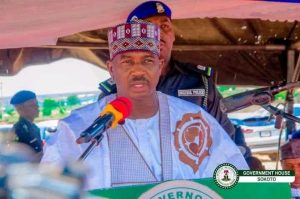
Governor Ahmed Aliyu of Sokoto state

From Muhammad Gazali Garba

Sokoto State Governor, Ahmed Aliyu, has officially flagged off the 2026 Ramadan Feeding Programme, reaffirming his administration’s commitment to supporting the less privileged during the holy month of Ramadan.

The flag-off ceremony, held at the History Bureau in Sokoto, marked the commencement of the annual humanitarian initiative, which provides free meals to vulnerable residents across the state.

Speaking at the event, Governor Aliyu described the programme as a vital social intervention aimed at easing the burden on fasting Muslims while promoting compassion, unity, and shared responsibility.

Governor Aliyu noted that last year, the programme operated through over 155 centres and 300 individual centres .

He said that, due to public request, the government has increased the number of centres to 170 for 2026,noting that each centre has the capacity to accommodate 200 persons at a time.

According to the Governor, a total of ₦1 billion has been earmarked for the programme this year, which will involve the distribution of 34,000 food plates every day throughout the Ramadan period across all centres. He also assured that the food to be served is well-packaged, high-quality meals that can be served anywhere.

He further announced that the government has engaged ad-hoc staff to support the smooth and efficient running of the centres.

Gov. Aliyu explained that since assuming office, his administration has implemented various initiatives to promote and strengthen Islam in the state.

These include the rehabilitation and upgrading of mosques and schools, as well as the provision of monthly upkeep allowances to Jumuat mosques.

The Governor appealed to members of the public, religious organisations, and well-meaning individuals to support the less privileged during this blessed month of Ramadan. He stressed that collective generosity and community participation are vital to ensuring that no one goes without food during the fasting period.

He further emphasized that the Ramadan feeding programme, which was initiated 19 years ago during the administration of Aliyu Magatakarda Wamakko when he served as Commissioner for Social Welfare, has continued to provide relief to thousands of residents, reflecting the state government’s sustained dedication to social welfare and poverty alleviation.

The Chairman of the Ramadan Committee, Alhaji Aliyu Attahiru, disclosed that adequate arrangements have been made to ensure the smooth running of the centres. He assured that committee members would work diligently to guarantee fairness and effective service delivery throughout the fasting period.

In his remarks, the Commissioner for Religious Affairs, Professor Jabir Sani Maihulla, urged members of the committee, particularly the G5 Committee, to carry out their duties with the fear of Allah. He emphasized the importance of sincerity, discipline, and justice in managing the centres, noting that the programme must operate optimally in a manner acceptable to all beneficiaries and stakeholders.

The representative of the Sultan of Sokoto, Mal Yahaya Na Malam Boyi, commended the Governor for his commitment to social welfare and poverty alleviation. He assured the Governor of the Sultan’s support and prayers for the success of the programme.

The occasion was graced by notable dignitaries, including Senator Aliyu Magatakarda Wamakko, former Deputy Governor Barrister Muktari Shagari, Speaker Sokoto State House of Assembly Hon Tukur Bala Bodinga, SSG Alhaji Muhammad Bello Sifawa, Chief of Staff Government House Sokoto Alhaji Aminu Haliru Dikko, Islamic scholars, Islamic groups, traditional rulers, and other esteemed guests.

The occasion reached its climax with the presentation of food and other items allocated to various centres, symbolizing the official launch of the programme.

Tinubu Praises Argungu Festival as Usman Wins Big With 59k Catch

From Muhammad Gazali Garba

President Bola Ahmed Tinubu has described the Argungu International Fishing and Cultural Festival as a powerful symbol of unity, resilience, and peaceful coexistence,noting that the globally renowned event reflects Nigeria’s rich cultural diversity and vast economic potential.

Speaking at the grand finale of the festival in Argungu, Kebbi State, the President stated that the annual celebration not only showcases the cultural heritage of the people but also highlights opportunities for harnessing natural resources for national development.

He commended the Kebbi State Government for the successful organisation of the event and for the effective security arrangements put in place, noting that tangible progress has been made in addressing insecurity both in the state and across the country.

According to him, the fight against insecurity would be won, assuring Nigerians that his administration remains fully committed to restoring lasting peace and stability nationwide.

President Tinubu also praised Governor Nasir Idris for what he described as remarkable development strides within a short period in office and expressed gratitude for naming the ultra-modern Kebbi State Secretariat after him.

He assured the state of continued federal support to sustain peace, stability, and tourism development.

In his address, Governor Nasir Idris said his administration had recorded significant achievements across critical sectors, claiming that more than 80 per cent of his campaign promises had been fulfilled within three years.

He highlighted the expansion of road networks, upgrades of hospitals and healthcare facilities, distribution of agricultural inputs to farmers, and prompt payment of workers’ salaries and entitlements as some of the key milestones achieved, noting that these interventions have boosted economic activities and improved the welfare of citizens.

Earlier, the Emir of Argungu, Muhammad Sama’ila-Mera, apologised for a protocol breach that occurred before the President’s arrival, when over 50,000 fishermen surged into the Matan Fada River in anticipation of the competition.

The monarch described the festival as a proud showcase of Kebbi’s cultural heritage and a major tourism asset with international recognition.

He, however, reminded the Federal Government of the stalled construction of a permanent fishing centre recognised by UNESCO, lamenting that work on the project had been abandoned since 2022, and appealed for urgent intervention to complete it.

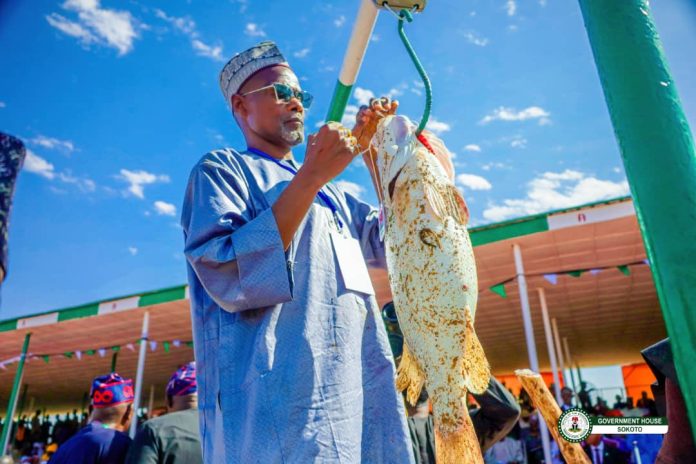
The grand finale reached its climax with the announcement of winners. Abubakar Usman from Maiyama Local Government Area of Kebbi State emerged as the overall champion with a 59kg catch.

For his outstanding performance, he received two brand new Toyota Vehicles donated by the Sokoto State Government, in addition to a N1 million cash prize.

Abdullahi Garba from Argungu Local Government Area secured second place with a 40kg catch, earning a Toyota saloon car donated by WACOTT Rice Mills Limited and a N1 million cash prize.

Third place was jointly claimed by Danlansu Dankani of Jega and another contestant, each presenting fish weighing 34kg. Both winners received N1 million and a motorcycle each in recognition of their impressive performance.

Murtala Ramat Mohammed: Power With A Conscience

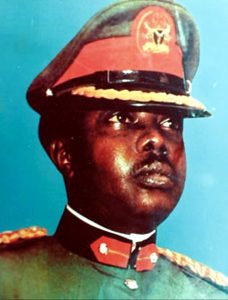
Gen. Murtala Ramat Mohammed

By Lamara Garba Azare

There are men who pass through power and there are men who redefine it. Murtala Ramat Mohammed belonged to that rare breed who carried authority lightly and carried conscience heavily. He was a comrade in uniform, a patriot in spirit, a true son of Africa whose love for this nation was not performed for applause but proven through action.

He rose to lead the most populous Black nation on earth, yet power never altered his posture or polluted his character. He remained simple in conduct, measured in speech and humble in lifestyle. He never allowed the office to swallow the man. While others would have embraced sirens and spectacle, he chose restraint. His convoy moved without blaring horns. He obeyed traffic lights like every other citizen. He respected traffic wardens as custodians of public order.

There is that unforgettable moment when a traffic officer, having recognized his car, stopped other motorists to allow him pass. The General was displeased. The warden was punished for denying other road users their right of way, and his driver was sternly warned for attempting to move against traffic. In that simple but powerful incident, he taught a nation that no one is above the law, not even the Head of State. Leadership for him was not exemption from rules but submission to them.

His humility went even deeper. Often, dressed in private attire, he would visit markets quietly, blending into the crowd to ask about the prices of food and daily commodities. He wanted to feel the pulse of ordinary Nigerians. He wanted to understand how families were coping. He believed policies should not be crafted from distant offices alone but from lived realities. That simple habit revealed a leader who listened before he acted and who measured governance by the condition of the common man.

When he assumed power in 1975, he did so without plunging the country into bloodshed. In a continent where coups often left painful scars, his intervention was swift and calculated, aimed at correcting a drift rather than destroying the state. It reflected firmness guided by restraint. He was a soldier, yes, but one who understood that strength without humanity is weakness in disguise.

In barely six months, he moved with urgency that startled the establishment. Files that once gathered dust began to move. Decisions were taken with clarity. He restructured the civil service in a bold attempt to restore efficiency and discipline. He initiated the process that led to the relocation of the capital to Abuja, a decision born of foresight and national balance. He confronted corruption without apology and made it clear that public office was a trust to be guarded, not an opportunity to be exploited.

His voice on the continental stage was equally resolute. When he declared that Africa has come of age, he was not uttering rhetoric. He was announcing a shift in posture. Nigeria under his watch stood firm in support of liberation movements and insisted on African dignity in global affairs. He believed that this continent deserved respect earned through courage and self confidence.

Then, just as the nation began to feel the rhythm of disciplined governance, tragedy struck on February 13, 1976. Bullets interrupted a vision. A country stood still in shock. Africa mourned one of its brightest sons. He had ruled for only a short season, yet the weight of his impact surpassed the length of his tenure.

Perhaps if he had remained longer, Nigeria would have charted a different course. Perhaps institutions would have grown around principle rather than convenience. Perhaps accountability would have become culture rather than campaign language. We can only imagine. But what cannot be imagined away is the moral clarity he represented.

Today, when citizens speak about abandoned ideals and weakened standards, his memory returns like a measuring rod. When convoys roar past traffic lights with entitlement, his quiet obedience becomes a silent rebuke. When policies lose touch with the marketplace realities of ordinary people, we remember the Head of State who walked into markets in simple clothes to ask the price of gari and rice.

He was not perfect, but he was purposeful. He did not govern to decorate history books. He governed to correct a nation. He detested corruption because he understood the damage it inflicts on the weakest citizens. He valued humility because he knew that power is fleeting but accountability before Almighty Allah is eternal.

Nigeria lost more than a leader. Africa lost a rare gem whose patriotism was sincere and whose heart beat for the dignity of his people. We pray that Allah grants Murtala Ramat Mohammed Aljannatul Firdaus and illuminates his resting place. We pray that his sacrifices count for him in the hereafter. And we pray that Nigeria rediscovers the discipline, courage and sincerity that defined his brief but remarkable stewardship.

Some leaders occupy office. Others transform it. Murtala Ramat Mohammed transformed it. His six months continue to echo across five decades because they were anchored in conviction and service.

Until Nigeria fully embraces integrity in leadership, until Africa truly stands in the maturity he proclaimed, his story will remain both our inspiration and our challenge. His life reminds us that greatness is not measured by duration in power but by depth of impact, not by noise but by noble action, not by privilege but by principle.

He came, he led, and though he left too soon, he still speaks through the standard he set.

Lamara Garba Azare, a veteran journalist writes from  

Saudi Arabia Unveils Unified Welcome Identity For 2026 Hajj Pilgrims

The Kingdom of Saudi Arabia has introduced a unified welcome identity for pilgrims participating in the 2026 Hajj. The initiative is part of a coordinated effort to standardize official communications and enhance the overall pilgrimage experience.

The scheme, developed by the Ministry of Media in collaboration with multiple government agencies, is to harmonize visual and media framework that will guide all official messaging throughout the Hajj cycle. From pilgrims’ arrival in the Kingdom to their departure.

According to officials, the unified identity is designed to streamline communication across ministries, airports, transport systems, health services and Hajjrelated institutions.

It sets clear standards for branding, information dissemination and public engagement, ensuring that pilgrims receive consistent messaging regardless of the touch point.

The framework covers visual elements, multilingual content guidelines and coordinated media outputs across digital platforms, broadcast channels and on ground installations.

Authorities say the move will strengthen institutional alignment, eliminate communication gaps and reinforce the Kingdom’s positioning as a global host of religious tourism.

The development forms part of broader preparations for the 2026 Hajj season, as Saudi authorities intensify operational, technological and service-driven reforms to improve efficiency and pilgrim satisfaction.


Gov Aliyu Commissions Reconstructed Buhari Dan Shehu Jumu’at Mosque In Tambuwal LG

By Muhammad Gazali Garba

Sokoto State Governor, Dr. Ahmed Aliyu, has commissioned the reconstructed Buhari Dan Shehu Jumuat Mosque in Tambuwal Local Government Area.

The mosque was reconstructed and remodelled by the state former Governor and current Senator representing Sokoto North Senatorial District, Senator Aliyu Magatakarda Wamakko.

The ceremony, which was held before thousand of Muslim faithfuls commenced with the recitation of selected verses from the Glorious Quran by two reciters.

The reconstruction of the mosque is part of several community development and philanthropic initiatives undertaken by Senator Wamakko to support religious, educational, and social projects across the state.

In his remarks, Senator Wamakko said he reconstructed the mosque to complement the efforts of the state government in promoting religious development and improving places of worship.

He emphasized the importance of providing befitting worship centres for the Muslim faithful and urged the community to make good use of the facility.

While commending the state government for its people-oriented projects across Sokoto State, Senator Wamakko conveyed Mr. President’s message to Governor Aliyu, stating that the President is proud of the remarkable achievements being recorded in the state.

He noted that these achievements align with the Federal Government’s commitment to progress and development, adding that Sokoto State continues to witness meaningful transformation under purposeful leadership.

Governor Aliyu, in his address, expressed profound appreciation to Senator Wamakko for the reconstruction of the mosque, noting that it is difficult to count the number of mosques the senator has constructed or renovated across the state.

He described the senator’s contributions as remarkable and deeply rooted in service to religion and humanity.

According to the governor, the mosque was originally established by Malam Buhari, the son of the renowned Sheikh Usman Dan Fodio, and later renovated during the reign of Sultan Tambari.

He noted that since then, it had received little attention. Although the mosque was awarded for renovation during the administration of Aminu Waziri Tambuwal, the project was unfortunately abandoned before completion.

Governor Aliyu further explained that during a thank-you visit to Tambuwal, he and Senator Wamakko observed the deteriorating condition of the abandoned mosque. Upon seeing its poor state, Senator Wamakko requested permission to undertake its full reconstruction to restore its historical and religious significance.

The governor reaffirmed his administration’s commitment to preserving historical and religious heritage sites across the state, while continuing to execute people-oriented projects in sectors such as infrastructure, education, healthcare, and religious development.

He urged residents to continue praying for peace, unity, and sustained progress in Sokoto State and Nigeria at large

Speaking earlier,Chairman Tambuwal Local Government, Alhaji Abba Shehu Tambuwal, expressed profound appreciation for the reconstruction of the mosque, describing it as a timely and impactful intervention that would benefit the Muslim faithful and the wider community.

He also commended the state government for its numerous development projects across Tambuwal LGA.

Also speaking, the Commissioner for Religious Affairs, Prof. Jabir Sani Maihulla, lauded Senator Wamakko for his consistent support for religious institutions and community development.

Earlier the Representative of the Sultan of Sokoto, the Wazirin Sokoto, Prof. Sambo Bello Wali Junaidu, commended the initiative and described it as a significant contribution to religious and social development in the area.

The ceremony was concluded with two rakaat jumuat prayer led by the mosque chief Imam

RECOMMENDED NEWS

POPULAR