Home Blog Page 20

Gov. Aliyu Appoints Commissioners,SAs To Supervise Polio Immunisation Drive

Gov. Ahmed Aliyu, Sokoto state

From Muhammad Gazali Garba

The Executive Governor of Sokoto State, Ahmed Aliyu Sokoto, has approved the full participation and involvement of members of the State Executive Council and Special Advisers in monitoring the upcoming polio immunization campaign across the state.

The campaign is scheduled to take place from Saturday, March 7 to Tuesday, March 10, 2026, covering all the 23 local government areas of Sokoto State. The initiative is part of the state government’s commitment to strengthening public health and ensuring that every eligible child is vaccinated against the poliovirus.

According to a statement signed by the Honourable Commissioner for Health, Dr. Faruk Umar Abubakar, members of the State Executive Council have been assigned to supervise and monitor activities in the various local government areas to ensure the smooth and successful conduct of the exercise.

The monitoring arrangement is expected to enhance coordination, accountability, and effective implementation of the immunization campaign across the state.

Below are the officials assigned to supervise the exercise in the respective local government areas:

Hon. Barr. Mohammed Nasiru Binji – Silame
Hon. Namadina Ibrahim – Bodinga
Hon. Bashar Umaru Kwabo – Gwadabawa
Hon. Balarabe Musa Kadadi – Illela
Hon. Isah Muhammad Tambagarka – Goronyo
Hon. Asabe Balarabe – Dange Shuni
Hon. Dr. Faruk Umar Abubakar – Wamakko
Hon. Haruna Abbas Bashir – Gada
Hon. Auwalu Wali – Isa
Hon. Bala Kokani – Kebbe
Hon. Hadiza Ahmad Shagari – Kware
Hon. Shehu Alhaji Chacho – Rabah
Hon. Umar Muhammad Masari – Sabon Birni
Hon. Engr. Muhammad Jabbi Shagari – Shagari
Hon. Prof. Attahiru Ahmad Sifawa – Binji
Hon. Ibrahim Dadi Adare – Sokoto South
Hon. Barr. Nasiru Aliyu Dan Tsoho – Sokoto North
Hon. Prof. Ahmed Ladan Ala – Tambuwal
Hon. Sahabi Gidan-Madi – Gudu
Hon. Muhammad Abba Mualledi – Tureta
Hon. Ahmed Rufa’i Abubakar – Tangaza
Hon. Dr. Bello Muhammad Marnona – Yabo
Hon. Sada Ibrahim Durbawa – Wurno

The Sokoto State Government urged parents and caregivers to ensure that their children are presented for vaccination during the campaign, stressing that immunization remains one of the most effective ways to protect children from preventable diseases such as polio.

Maximizing Spiritual Gains: A Guide to the Last 10 Days of Ramadan

By Muhammad Gazali Garba

The last ten days of the holy month of Ramadan hold a very special place in the hearts of Muslims around the world. These days are regarded as the most sacred period of the entire month because they contain the blessed night known as Laylat al-Qadr (the Night of Power). It is a period when Muslims are encouraged to intensify their worship, devotion, and closeness to Allah.

First and foremost, a fasting Muslim is expected to increase acts of worship during these final days. This includes performing more voluntary prayers, reciting the Qur’an, and engaging in constant remembrance of Allah (dhikr). The Prophet Muhammad was known to increase his devotion during the last ten days, spending much of his time in prayer and reflection.

Another important expectation of a Muslim during this period is the search for Laylat al-Qadr. According to Islamic teachings, this night is better than a thousand months of worship. Because its exact date is not known, Muslims are encouraged to seek it particularly during the odd nights of the last ten days, such as the 21st, 23rd, 25th, 27th, and 29th nights of Ramadan.

Muslims are also encouraged to observe I‘tikaf, a spiritual retreat in the mosque where a believer dedicates his or her time solely to worship and reflection. During I‘tikaf, a Muslim temporarily withdraws from worldly activities in order to focus on prayer, Qur’an recitation, and seeking forgiveness from Allah.

In addition, the last ten days are a time for sincere repentance. Muslims are expected to reflect on their actions, seek forgiveness for their sins, and make firm resolutions to improve their character and relationship with Allah. It is a period of spiritual cleansing and renewal.

Charity and generosity are also strongly encouraged. Muslims are reminded to assist the poor, the needy, and the less privileged in society. Acts of kindness, giving food to those who are fasting, and helping people in need are among the noble deeds that carry great rewards during this time.

Another key expectation is maintaining good character. Muslims are expected to avoid anger, gossip, dishonesty, and all forms of negative behavior. Instead, they should promote peace, patience, humility, and kindness in their dealings with others.

Families are also encouraged to increase their acts of worship together. Parents should guide their children to understand the significance of these blessed days and involve them in prayers, Qur’an recitation, and acts of charity so that they can develop strong Islamic values.

Furthermore, Muslims should make abundant supplications (du’a). These last ten days provide a great opportunity to ask Allah for mercy, guidance, protection, and success in this life and the hereafter.

In conclusion, the last ten days of Ramadan represent the peak of spiritual opportunity for Muslims. It is a time to deepen faith, strengthen devotion, and seek Allah’s forgiveness and blessings. By increasing worship, maintaining good character, giving charity, and sincerely seeking Laylat al-Qadr, a fasting Muslim can make the most of this sacred period and gain immense spiritual rewards.

Netanyahu Takes A Gamble On American Support For Israel With The War Against Iran

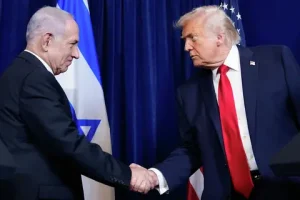
President Donald Trump shakes hands with Israel’s Prime Minister Benjamin Netanyahu during a news conference at Mar-a-Lago, Dec. 29, 2025, in Palm Beach

By Tia Goldenberg

Throughout his political career, Israeli Prime Minister Benjamin Netanyahu has steered his country along two pillars of foreign policy: an ironclad partnership with the United States and a relentless diplomatic and covert battle against the rulers of the Islamic Republic of Iran.

Now, with Israel and the U.S. in a joint war against Iran’s leadership, those two strategic paths risk clashing with each other. By enlisting the U.S. in what he views as Israel’s existential battle against Iran, Netanyahu is taking a gamble that could open up the relationship to the strain of a war with far-reaching consequences.

To be sure, persuading U.S. President Donald Trump to join the war was a coup for Netanyahu and highlights the strong ties between the two leaders. If they are successful, they could quickly realize their shared goal of toppling the Iranian government and spare the region a protracted conflict.

But if the war drags on, the two allies’ ties could again be tested.

“A large part of the American public will view it as the Israeli tail wagging the American dog and that it is dragging the United States to a war in the Middle East that isn’t theirs,” said Ofer Shelah, a research fellow at the Institute for National Security Studies, a Tel Aviv, Israel-based think tank. The drop in public support that might unleash “will be very harmful for Israel in the medium and long term,” he said.

But, he added, in a nod to the Israeli leader’s political ambitions: “Netanyahu is not interested in the medium and long term.”

For Netanyahu, successfully persuading Trump to strike Iran together is the apex of decades of proximity between the Israeli leader and Washington. Netanyahu, Israel’s longest-serving leader, speaks flawless English after having spent part of his youth in the U.S. and has always portrayed himself as Israel’s bridge to America.

Although he boasts about his tight relationships with multiple American presidents and members of Congress, Netanyahu over the past two years has seen support for Israel among the American public drop. According to Gallup polling, American sympathies in the Middle East have shifted dramatically toward the Palestinians.

That shift in sentiment has been driven in large part by Democrats. But some Republicans, and even Trump’s own backers, have been more outspoken against the diplomatic and financial support the U.S. has continued to grant Israel throughout the past two and a half years, when it has been embroiled in a war on multiple fronts sparked by Hamas’ Oct. 7, 2023, attacks. The devastating images from the war in Gaza deepened Israel’s international isolation.

With a new war against Iran — the second in less than a year — Netanyahu is tackling an enemy that he and many Israelis view as an existential threat, citing its support for anti-Israeli militias across the region, its ballistic missile arsenal, and its nuclear program. He has led the crusade against Iran on the world stage for much of his career.

Netanyahu said Sunday in a statement that the U.S. involvement “allows us to do what I have been hoping to do for 40 years — to deliver a crushing blow to the terror regime.” Netanyahu’s office did not immediately respond to an Associated Press request for comment.

The conflict could spiral
Days into the war, Israel and the U.S. military appear to be working hand in glove to strike targets — from the initial attack that killed top Iranian leaders, including Supreme Leader Ayatollah Ali Khamenei, to assaults that allowed the forces free rein in Iranian skies.

But the conflict has already set off aftershocks that could reverberate in the American heartland. At least six U.S. troops have been killed. Travel was disrupted across the region, leaving hundreds of thousands of travelers stranded. Oil prices surged, raising the prospect of costlier gasoline for U.S. drivers as well as increased prices for other goods at a time when people have been stung by a rising cost of living.

Questions remain about the direction and aim of the war. It’s unclear whether the air power will be enough to topple Iran’s leadership, who or what should replace that leadership, and what role Israel or the U.S. will have in either. Every day presents new potential land mines.

“Many people will blame Israel if things go badly wrong,” wrote Nadav Eyal, a commentator with the Israeli Yediot Ahronoth daily newspaper. “Israel cannot afford to lose the American public’s support under any circumstances. That is more important than striking any individual military facility.”

Still, Aaron David Miller, who served as an adviser on Middle East issues to Democratic and Republican administrations over two decades, said that Netanyahu has little to lose from the war.

With elections scheduled for the fall, Netanyahu can use the war in Iran to divert attention away from the failures of the Oct. 7 attacks, the worst in Israel’s history. Instead, Netanyahu can set himself up as a brave wartime leader who fulfilled a pledge he has made much of his life to confront Iran.

He can say he did so with support from the American president, who Miller said can pull the brakes on the war whenever he pleases.

“If Trump feels as if it’s going south, he’ll find a way to de-escalate,” he said, “and his good friend Benjamin Netanyahu will follow.”

From Congress to Comeback: Kano’s Political Reawakening

Governor Abba Kabir Yusuf , Kano State

By Lamara Garba Azare

The ancient city of Kano has always understood the language of politics, not merely as a contest for power, but as a careful art of balance, patience and reconciliation. On Wednesday, at the expansive Sani Abacha Indoor Sports Hall, that art was on full display as the All Progressives Congress in Kano State held a peaceful and well coordinated State Congress that produced a new leadership for the party.

The emergence of Alhaji Umar Haruna Doguwa as Chairman of the APC in Kano State was not just the announcement of a name. It was the affirmation of order. It was the quiet triumph of consensus over conflict. It was a demonstration that politics in Kano can still be conducted with dignity and discipline.

From the forty four Local Government Areas, 2,420 delegates gathered and, through a voice vote, affirmed Doguwa and other members of the state executive committee. The exercise, conducted by officials from the APC National Headquarters in Abuja and supervised by the Independent National Electoral Commission, unfolded without rancour. There were no scenes of chaos. No division tearing at the fabric of the party. Instead, what Kano witnessed was unity, deliberate, visible and reassuring.

To give the congress even greater credibility, it was conducted under the watchful eyes of the Kano State Resident Electoral Commissioner, Abdu Zango, alongside other distinguished personalities and security operatives who ensured order throughout the exercise. Their presence reinforced transparency and public confidence in the process. Not a single whisper of inducement tainted the atmosphere. No money exchanged hands. What prevailed instead was a shared vision and a collective commitment to the Kano First slogan, a reminder that beyond individual ambitions lies a higher responsibility to the state and its people.

At the heart of that calm atmosphere stood Abba Kabir Yusuf, a leader whose approach continues to show that strength in politics does not always roar. Sometimes, it listens. Sometimes, it reconciles. Sometimes, it simply allows democratic processes to unfold without interference.

Governor Yusuf’s presence at the congress was symbolic and instructive. In a political climate where tensions can easily rise, his calm disposition reflected maturity and restraint. His message was clear. Kano must move forward, and progress is built on cooperation, not confrontation. By congratulating the new executives and urging them to justify the confidence reposed in them, he positioned himself as a statesman invested in stability and long term growth.

The peaceful conduct of the congress signals something deeper. It speaks to the possibility of a new political culture in the state, one where stakeholders choose dialogue over discord. The unity displayed by party leaders, elders and grassroots delegates is a thing of pride. Kano, with its long history of political vibrancy, has once again shown that it can manage its internal affairs without descending into unnecessary crisis.

Special commendation must go to the Deputy President of the Senate, Barau I. Jibrin, whose presence lent national weight and reassurance to the gathering. Senator Barau has remained a key political figure whose influence extends beyond legislative chambers. His attendance was more than ceremonial. It signalled solidarity and strengthened the bridge between Kano and the national political space.

Equally deserving of recognition is the Chairman of the House Committee on Appropriation, Honourable Abba Abubakar Bichi. At a time when fiscal planning shapes the destiny of states and constituencies, his strategic role at the National Assembly carries enormous importance. His participation in the congress reflects commitment to party cohesion and grassroots engagement.

No reflection on the APC in Kano would be complete without acknowledging the enduring influence of former Governor and former National Chairman of the party, Abdullahi Umar Ganduje. His years at the helm of the state and later at the national level helped consolidate party structures and deepen its reach. The appreciation expressed by the immediate past Chairman, Prince Abdullahi Abbas, was a reminder that political leadership is a relay. Each steward builds upon foundations laid by others.

The election of Salisu Maje Ahmed Gwangwazo as Deputy Chairman, Prof. Yusuf Mohammed Bichi as Secretary, Fatima Dala as Woman Leader, and other key officials further reflects inclusiveness and collective responsibility. Leadership is sustained not by one voice, but by a chorus of committed individuals working toward a shared goal.

What stands out most from the congress is not simply the list of names elected. It is the atmosphere that produced them. In many places, party congresses are battlegrounds. In Kano, this one became a gathering of affirmation. That is no small achievement. It sends a powerful message that internal democracy, when guided by sincerity, can strengthen rather than fracture a political platform.

As Alhaji Umar Haruna Doguwa assumes leadership of the APC in the state and pledges to work with stakeholders toward victory in 2027, the tone has already been set. The road ahead will demand strategy, patience and grassroots mobilisation. But the foundation laid at the congress, unity, order and shared purpose, provides a strong starting point.

If this spirit is sustained, then the gathering at the Sani Abacha Indoor Sports Hall will be remembered as more than an internal party exercise. It will be remembered as a defining chapter, proof that when leaders choose peace over provocation and vision over vanity, a state rediscovers its strength. And in that rediscovery lies a greater promise, that Kano is steadily finding its rhythm again, firmly on the path to regaining its rightful glory in the scheme of national politics.

Lamara Garba Azare, a public analyst, writes from Kano

Abba Care: A Lifeline of Compassion in Kano State

By Lamara Garba Azare

In Kano State, compassion has found structure. It has found funding. It has found direction. Under the leadership of Abba Kabir Yusuf, healthcare is no longer a privilege negotiated by wealth but a right strengthened by policy. What is unfolding across the state is more than reform. It is a moral commitment woven into governance. It is Abba Care.

At the heart of this transformation is the introduction of free antenatal care and free delivery services for pregnant women in public health facilities. For countless families, this single decision has lifted a burden carried in silence for years. Pregnancy, once shadowed by fear of hospital bills, is gradually becoming a journey supported by public responsibility.

A visit to Murtala Muhammed Specialist Hospital in the heart of the city tells the story better than statistics ever could. The maternity sections are alive with movement. Pregnant women troop in daily for routine checks, scans, and medical consultations. The waiting areas are filled not with despair but with expectation. The large turnout reflects renewed trust in government facilities. It shows that when care is made accessible, citizens respond.

The visible reduction in maternal mortality in the state is not accidental. It is the natural outcome of access. When women attend antenatal clinics regularly, complications are detected early. When delivery takes place in properly equipped facilities under trained supervision, risks are reduced significantly. Lives are saved quietly, steadily, consistently.

But Abba Care goes beyond maternity services. Through the Abba Care initiative and the Basic Health Care Provision Fund interventions, free medical services are extended to pregnant women, children under five, sickle cell patients, the elderly aged 65 years and above, and persons living with disabilities. It embraces those who often stand at the fragile edges of society. It ensures that vulnerability does not translate into abandonment.

Beyond direct service delivery, the administration has deliberately strengthened and revitalised key health institutions. While the Kano Health Trust Fund and the Drug and Medical Consumables Supply Agency were already in existence before the present administration, they have received renewed direction and operational energy. When this government assumed office, drug availability in public health facilities through the Drug and Medical Consumables Supply Agency stood at below 30 percent. Today, availability has risen to over 95 percent, ensuring that patients who visit government hospitals are far more likely to receive the medicines prescribed to them. That shift has restored confidence in public facilities and reduced the burden of out of pocket spending.

Similarly, the Kano Health Trust Fund, once relatively unknown to many within the system, has now emerged as a strong pillar of support across the health sector. The Fund provides financial backing to primary, secondary and tertiary health facilities. It supports health related Ministries, Departments and Agencies and extends assistance to health training institutions. In doing so, it strengthens infrastructure, manpower development and service delivery across multiple layers of care.

Most significantly, the recent passage into law of the Kano State Centre for Disease Control has positioned the state as a pioneer in sub national health security, making Kano the first in Nigeria to establish such a structure with regulatory authority over communicable and non communicable diseases. Together, these institutions form a coordinated framework that reinforces the government’s commitment to quality, accessible and resilient healthcare delivery.

Speaking on the mandate of the Centre, the Director General of the Kano State Centre for Disease Control, Muhammad Adamu Abbas, described the establishment of the agency as a defining milestone in the state’s public health journey. He explained that the KNCDC is not only designed to respond to outbreaks but to strengthen surveillance systems, coordinate rapid response teams, regulate disease control programmes and deepen community engagement on prevention. According to him, the agency has already undertaken case management activities, public sensitization campaigns and field investigations in communities where suspected cases of infectious diseases were reported, reaffirming its readiness to act swiftly and professionally. Professor Abbas reiterated the agency’s commitment to building a healthier Kano through preparedness, transparency, scientific evidence and strong collaboration with partners and stakeholders.

Even more reassuring is the Kano State Emergency Medical Services and Ambulance System, known as KN SEMSAS. This system provides free emergency response and treatment to victims of automobile accidents, gunshot wounds, violent attacks and other critical situations. Pregnant women in distress, patients with hypertension, HIV patients and individuals battling terminal illnesses are attended to without hesitation over payment. In moments where seconds matter, government intervention becomes the difference between survival and tragedy.

The circle of compassion widens further. Inmates of correctional and rehabilitation homes, as well as elderly residents in Shahuci homes, are also beneficiaries of free medical services. These are citizens who might otherwise be forgotten in policy conversations. Yet under this administration, they are remembered. They are included. They are protected.

There is philosophy in this approach. A government reveals its character by how it treats the weakest among its people. When the elderly can access treatment without fear of cost, dignity is restored to aging. When children under five receive free care, the foundation of the future is strengthened. When persons living with disabilities are covered, inclusion becomes practical rather than rhetorical.

Indeed, it is worthy to note that Governor Abba Kabir Yusuf’s style of leadership reflects calm resolve. He does not shout about compassion. He institutionalizes it. Abba Care is not charity. It is structured empathy translated into sustainable intervention. It recognizes that public office is a trust and that power must bend toward protection of life.

In communities across Kano, families now speak with relief rather than anxiety. A father no longer calculates whether he can afford treatment for his sick child. A mother no longer postpones clinic visits due to registration fees. An elderly citizen aged 65 and above walks into a health facility knowing that age has not reduced his worth in the eyes of government.

Healthcare reform often appears technical on paper, filled with acronyms and budgets. Yet on the ground, it is deeply human. It is the smile of a discharged patient. It is the cry of a newborn delivered safely. It is the quiet gratitude of a grandmother whose blood pressure is managed without financial strain.

Perhaps Abba Care represents a broader belief that development must begin with people. Roads and buildings matter, but healthy citizens matter more. Therefore, by investing in maternal health, emergency services, chronic illness care and protection for the vulnerable, Kano State is shaping a future anchored in human wellbeing.

Since the introduction of this policy, the impact is visible. The confidence is growing. The trust between government and the governed is deepening.

More importantly, in safeguarding mothers, children, the elderly, the sick and the marginalized, Kano safeguards tomorrow. Proudly, Abba Care stands not merely as a policy but as a living reminder that leadership, when guided by humility and compassion, can touch lives in the most profound ways.

Lamara Garba Azare, a veteran journalist, writes from Kano.

RAMADAN, COMPASSION AND THE JUSTIFICATION FOR FEEDING CENTRES IN SOKOTO STATE


Sokoto State Governor Ahmed Aliyu inspecting one of the 170 feeding centers in the metropolis

By Sani Umar

Ramadan is one of the most sacred months in Islam, a period when Muslims abstain from food, drink and marital relations from dawn to sunset for thirty days in obedience to Allah. Beyond physical deprivation, it is a season of deep spiritual cleansing, repentance and renewed devotion to the Almighty. Fasting teaches perseverance, moderation and humility, reminding both the wealthy and the poor that all human beings stand equal before their Creator. It nurtures piety and compels the faithful to show compassion, generosity and love to the less privileged in society.

The essence of fasting is not merely to endure hunger but to internalise the pain of those who live daily with deprivation. When a wealthy person feels the pangs of hunger, even for a few hours, it becomes easier to empathise with the orphan, the widow, the internally displaced and the physically challenged who struggle to secure a single meal. Islam therefore strongly enjoins believers to feed their fasting brethren, support the needy and extend kindness generously, especially during Ramadan when the rewards of good deeds are multiplied.

In Nigeria, particularly in the predominantly Muslim northern and some Southern states, the observance of Ramadan is both spiritual and communal. Governments, organisations and individuals leverage the month to expand acts of charity. In Sokoto, this culture of organised compassion has found expression in structured Ramadan feeding centres that provide daily iftar meals to thousands of residents. These centres have become lifelines for the poor, travellers caught away from home at sunset, orphans, widows and workers whose earnings can barely sustain their families amid prevailing economic hardship.

The Ramadan feeding programme in Sokoto has a long history, dating back 19 years to the administration of Aliyu Magatakarda Wamakko, and it has been sustained and expanded over time. Under the leadership of Ahmed Aliyu, the initiative has been reorganised to improve efficiency, transparency and reach. In 2026, the state government approved ₦1 billion for 170 feeding centres, each catering for 200 persons daily, amounting to 34,000 plates of food served every evening at iftar. This scale of intervention is not symbolic, it is substantial, structured and measurable.

During inspection visits to centres such as Clapperton Centre, Lodge Road Centre, Gidan Dallatu Centre and the Specialist Hospital Centre, Governor Aliyu expressed satisfaction with the improved quality and quantity of food served. His personal assessment underscores accountability in the management of public funds. The emphasis on nutritious meals reflects an understanding that feeding the fasting is not about mere survival but about preserving dignity and health during a spiritually demanding month.

The justification for allocating public funds to these centres becomes clearer when viewed against the socio-economic realities facing many citizens. Persistent security challenges and environmental disasters, including devastating floods that destroyed farmlands and livelihoods, have displaced thousands and increased poverty levels.

In response, the Sokoto State Government extended its Ramadan intervention to 35,351 Internally Displaced Persons and physically challenged individuals. Each beneficiary received essential food items, clothing materials and, in some cases, cash support. Such assistance ensures that even the most vulnerable can observe Ramadan with dignity rather than despair.

Public spending on feeding centres is not wasteful expenditure; it is a strategic social investment. First, it cushions the effects of inflation and economic hardship by reducing the food burden on struggling families. Second, it promotes social harmony by narrowing the visible gap between the rich and the poor during a month that symbolises equality. Third, it strengthens communal bonds as people gather peacefully to break their fast together. In a society grappling with insecurity, any initiative that fosters unity and shared humanity contributes indirectly to stability.

Moreover, these centres generate temporary economic activities. Local farmers, food vendors, caterers and transporters benefit from the procurement and distribution processes. Thus, the funds circulate within the local economy, providing secondary financial relief beyond the direct beneficiaries of the meals.

Critics may question the scale of funding, yet the moral and constitutional responsibility of government includes safeguarding the welfare of its citizens. Ramadan feeding programmes align with this duty by targeting the most vulnerable at a time when their needs are heightened. Transparency, monitoring and continuous improvement remain essential, but the existence of the programme itself reflects responsive leadership rooted in cultural and religious values.

Islam teaches that whoever feeds a fasting person will receive a reward equal to that of the one who fasted, without diminishing the latter’s reward. When government institutions institutionalise this principle, they transform individual charity into collective compassion. At the same time, clerics and community leaders continue to encourage wealthy individuals and organisations to establish supplementary feeding centres, reinforcing the shared responsibility of society.

Ultimately, Ramadan is about spiritual elevation through sacrifice, empathy and generosity. Feeding centres embody these virtues in practical form. They ensure that hunger does not overshadow worship, that poverty does not silence devotion, and that hope is restored to those burdened by hardship. In sustaining and expanding these programmes, Sokoto State affirms that governance and compassion can walk hand in hand, especially in a month devoted to mercy, equality and the pursuit of eternal reward.

APC Sokoto Elects New State Executive Committee In Smooth Consensus process

Hon. Haruna S. Adiya Newly elected APC Chairman, Sokoto State

From Muhammad Gazali Garba

The All Progressives Congress (APC) in Sokoto State has successfully elected its new State Executive Committee members through a consensus arrangement at the party secretariat along Sultan Abubakar Road, Sokoto.

The congress was conducted peacefully and in strict compliance with the party’s constitution, with delegates and stakeholders from all 23 local government areas in attendance.

The exercise was chaired by Professor M. Aliyu Musa from the party’s National Secretariat, who confirmed that all the candidates were emerged through consensus and were formally affirmed by delegates through a voice vote.

He praised party leaders and members for demonstrating unity, discipline, and commitment to internal democracy.

The motion to adopt the consensus arrangement was moved by Hon. Abubakar Shamaki Yabo and seconded by Hon. Aminu Gidado, after which delegates unanimously endorsed it. Officials from the Independent National Electoral Commission (INEC) were present to witness and monitor the exercise, ensuring full compliance with electoral guidelines.

Speaking earlier, the outgoing State Chairman, Hon. Isah Sadiq Achida, expressed gratitude to Governor Ahmed Aliyu and the state party leader, Senator Aliyu Magatakarda Wamakko for the opportunity to serve.

He thanked party members for their support and cooperation during his eight-year tenure and urged them to extend the same support to the new executive committee.

Newly elected State Chairman, Alhaji Haruna S. Aditya, pledged to justify the confidence reposed in him and other committee members. He assured party members of an open-door policy, inclusiveness, and a firm commitment to strengthening unity and grassroots mobilization across the state.

The elected members include Alhaji Yahaya Buhari as Deputy Chairman, Barrister Bello Abdallah as Secretary, Abubakar S. Fada as Assistant Secretary, Hassan Dangote as Zonal Vice Chairman (North), Alhaji Maniru Shehu as Treasurer, Ibrahim Dan Yaro as Organising Secretary, Nasiru Italy as Financial Secretary, and Muhammad Umar as Publicity Secretary, among others.

The new executive committee is expected to lead the party’s affairs in Sokoto State, consolidate its political strength, and ensure effective grassroots mobilization in preparation for upcoming political engagements.

Sokoto APC Tasks New Party LG Chairmen On Unity, Grassroots Mobilisation

Hon. Isa Sadiq Achida, APC Chairman Sokoto state

By Bashar Abubakar

The All Progressives Congress (APC) in Sokoto State has inaugurated newly elected 23 Local Government party chairmen, charging them to remain steadfast to the ideals and principles of the party.

Addressing party faithful at the ceremony, the Sokoto State APC Chairman, Isah Sadik Achada, urged the newly inaugurated chairmen to promote unity, strengthen party structures at the grassroots, and work collectively towards the continued growth and successes of the APC at both the state and national levels.

He expressed satisfaction with the impressive turnout of supporters at the event, describing it as a clear demonstration of unity, loyalty, and solidarity within the party. He noted that the large gathering was a positive signal as the party prepares for forthcoming elections.

The State Chairman also commended the administration of Ahmad Aliyu for the ongoing developmental projects across the state.

According to him, the achievements recorded by the present administration are a reflection of purposeful leadership, strengthened by the fatherly guidance and advice of the APC leader in the state, Aliyu Magatakarda Wamakko.

The well-attended ceremony drew APC supporters from across the state, underscoring the party’s unity and growing momentum in Sokoto State.

Ramadan Iftar: Sokoto Govt Reaffirms Zero Tolerance for Corruption as Aliyu Hosts Top Officials


From Muhammad Gazali Garba

The Sokoto State Government has reiterated its unwavering stance on zero tolerance to corruption in the administration of public affairs. Governor Ahmed Aliyu made this known when he hosted Permanent Secretaries, Directors-General, Executive Secretaries, Executive Directors, and other top civil servants to a Ramadan Iftar at the Presidential Lodge, Sokoto.

Governor Aliyu emphasized that transparency, accountability, and strict adherence to due process remain the guiding principles of his administration.

He stressed that public office holders must see their positions as a trust bestowed upon them by the people and must therefore discharge their responsibilities with integrity and fear of God, especially during the holy month of Ramadan.

The Governor,cautioned that his government is committed to ensuring accountability and will take necessary actions against any form of financial misconduct or abuse of office, emphasizing the importance of responsible stewardship of public resources.

The Governor urged the top civil servants to redouble their efforts in ensuring efficient service delivery, policy implementation, and prudent management of state resources to fast-track development across the state.

Governor Aliyu expressed his gratitude to the top civil servants for their dedication and service, praying that Allah rewards their efforts and accepts their fasting and supplications during the holy month of Ramadan.

The State Head of Civil Service Alhaji Abdulkadir Ahmed commended the Governor for the Iftar gesture and assured him of the continued loyalty, cooperation, and commitment of the state’s workforce towards achieving the administration’s developmental goals.

He noted that the civil servants are committed to supporting the Governor’s vision for the state and will work tirelessly to ensure the delivery of quality services to the people of Sokoto.

Gov Aliyu to Opposition: Politics Is Not About Hatred, Lies or Deception

Gov. Ahmed Aliyu Sokoto State

By Muhammad Gazali Garba

The Governor of Sokoto State, Ahmed Aliyu, has advised members of the opposition to engage in politics rooted in decency, truth, and mutual respect, stressing that governance should not be reduced to hatred, lies, or deception.

Dr. Aliyu gave this advice during a Ramadan breakfast with state youths at the Presidential Lodge, Sokoto, where he reflected on the achievements of his administration and reiterated the need for unity and responsible political engagement.

He stated that his administration has transformed the state to a position that no critic can deny, noting that visible progress has been recorded across key sectors.

Speaking further, the Governor emphasized that no society can prosper without creating jobs and opportunities for its youth. He highlighted that his administration, right from inception, initiated various intervention programmes to train and empower young people across the state.

Thousands of youths have been trained in various skills, provided with start-up grants, and supported to establish their own businesses, making many self-reliant and economically active.

According to him, these programmes were conducted through the Ministries of Local Government and Chieftaincy Affairs, Humanitarian Affairs, and Women and Children Affairs to ensure broad reach and effective implementation.

In a bid to further support the welfare of young people, Governor Aliyu announced plans to provide assistance to both male and female youths willing to marry, underlining the administration’s commitment to fostering social stability and family development.

He challenged youths to maximize their youthful age by actively seeking knowledge, both Islamic and Western, encouraging them to combine religious understanding with modern education as a foundation for personal growth, leadership, and meaningful contributions to the development of Sokoto State.

Engineer,Mustapha kofarini, the State Commissioner for Youth and Sports, commended Governor Aliyu for his unwavering focus on youth development and empowerment. He noted that the administration’s initiatives have opened doors for youths to explore entrepreneurship, sports, and other productive ventures, contributing to social and economic stability.

The Commissioner urged youths to take full advantage of these opportunities, assuring that his ministry would continue to expand training, mentorship, and support programmes to help young people realize their full potential.

Hon. Kamaluden Abubakar, Special Adviser on Youth Matters to the Governor, praised the administration’s consistent prioritization of youth development. He emphasized that the government’s programmes have created avenues for skill acquisition, employment, and social engagement, making youths active partners in the state’s growth agenda.

He encouraged them to be ambitious, disciplined, and innovative, assuring that his office would continue to coordinate youth initiatives for maximum impact and sustained benefits.

Hajara Abdullahi Baba, speaking on behalf of the Women Youth Wing, expressed gratitude to Governor Aliyu for his commitment to youth empowerment and social welfare. She noted that the Governor’s inclusive policies have positively impacted women and youths across Sokoto State, and she pledged the group’s continued support for his administration.

The event was climaxed with a presentation of a special award to the Governor by the APC Women Wing in recognition of his commitment to youth empowerment, social welfare, and community development.

Opposition: Politics Is Not About Hatred, Lies or Deception

RECOMMENDED NEWS

POPULAR