Home Blog Page 18

Sokoto Govt To Renovates Traditional Rulers’ Residences, Review Salaries As Sultan Praises Leadership


From Muhammad Gazali Garba

Sokoto State Governor,Dr Ahmed Aliyu, has announced the state government plan to review the salaries of traditional rulers and renovate their official residences to strengthen the institution and enhance its effectiveness.

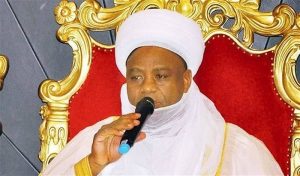
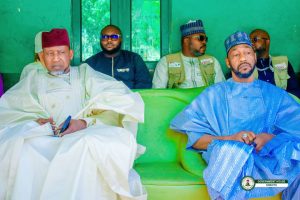
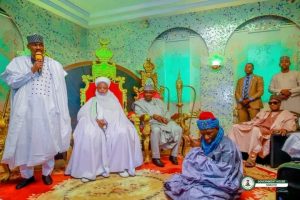
Governor Aliyu made this disclosure when he recieved His Eminence, Sultan Muhammad Sa’ad Abubakar, on the traditional Sallah visit at the Banquet Hall,Presidential Lodge, Government House, Sokoto.

He stated that this year, the state government intends to renovate residences of traditional rulers to ensure they are befitting of their status.

The Governor revealed that a committee has already been constituted to handle the salary review, and he has directed the Commissioner for Local Government to commence coordination to start the renovations promptly With the residence of the destrict Head of Wurno.

Speaking further, Governor Aliyu acknowledged the pivotal role of traditional rulers in maintaining peace, unity, and stability in their domains, noting that the planned salary review and official residence renovations are aimed at improving their welfare and capacity to serve their communities effectively.

He also urged the Muslim Ummah to sustain the virtues and lessons learned during Ramadan, particularly unity, peace, patience, and love for one another, emphasizing the importance of peaceful coexistence and collective responsibility.

The Sultan praised Governor Aliyu’s people-oriented leadership, particularly the administration’s efforts in sustaining welfare programmes and improving security across the state.

He commended the consistency of the Ramadan feeding programme, describing it as a vital intervention that cushions economic hardship among the less privileged, and lauded other social support initiatives that have positively impacted communities.

On security, the Sultan acknowledged the government’s efforts to tackle insecurity and restore peace, expressing gratitude to security agencies for ensuring a hitch-free Sallah celebration.

He reaffirmed the unwavering support of the Sultanate Council, pledging that the traditional institution will continue to offer advice to ensure government success and assuring full loyalty and commitment to the administration’s development agenda.

The Sultan also welcomed the review of salaries and the planned renovation of official residences, describing the move as a “timely recognition of the pivotal role of traditional institutions in governance and community development.”

The Sallah homage is a long-standing tradition that symbolizes mutual respect and collaboration between the government and the traditional institution in Sokoto State.
“FG, Sokoto Govt Working Together To End Insecurity”

Sokoto State Governor Ahmed Aliyu has said the Federal Government and the Sokoto State Government are working together to combat insecurity in the state.

He made this statement during a Sallah homage to the Sultan of Sokoto, Muhammad Sa’ad Abubakar, at his palace on Friday, March 20.

Governor Aliyu assured residents that his administration is providing logistical support to security agencies and the State Community Guard Corps to boost security.

He called for public support and cooperation with security agencies to tackle banditry.

“We need to pray for Allah’s protection for our security personnel deployed to volatile areas,” he said.

The Governor also promised to maintain an open-door policy to meet the people’s needs.

He urged Islamic scholars to pray for peace and coexistence in Sokoto State and Nigeria.

He thanked Muslim preachers for their Ramadan teachings and asked them to continue educating Muslims on Islam’s basics.

The Sultan commended Governor Aliyu for his people-oriented projects, saying, “Your Excellency, do not relent in what you are doing for our state. The Sultanate Council is behind you.”

The Sultan praised security agencies for protecting lives and property, urging them to keep up the good work.

He appealed to Nigerians to pray for their leaders and support the current administration.

Beyond the Verdict: How NNPP Loss Vindicates Governor Yusuf’s Political Foresight

Governor Abba Kabir Yusuf , Kano State

By: Sanusi Bature Dawakin Tofa

A defining political moment unfolded in Lagos as loyalists of NNPP founder, Boniface Aniebonam, converged at his Apapa office in celebration of a decisive court victory that has reshaped the party’s leadership structure. The ruling of the Federal Capital Territory High Court in Abuja, which directed INEC to recognise the Agbo Major led National Working Committee, effectively nullified the claims of the faction aligned with Rabiu Musa Kwankwaso and the Kwankwasiyya Movement, setting the stage for what many now regard as a turning point in the NNPP’s internal power dynamics.

The celebration was not merely symbolic but deeply political. Songs, dancing and thanksgiving echoed through the venue, signaling what many within the camp see as the final collapse of the rival structure. In their view, the ruling has drawn a clear line under the prolonged leadership tussle, affirming ownership and restoring the party to its original custodians.

While the Kwankwasiyya faction has dismissed the judgment and signaled its intention to appeal, the optics of the Lagos celebration suggest a deeper reality. It portrays a movement that is steadily losing institutional footing. What was once projected as a dominant bloc within the NNPP now appears increasingly isolated and weakened by legal setbacks and internal contradictions.

Within this unfolding scenario, the earlier decision of Abba Kabir Yusuf to exit the NNPP now stands out as not just strategic but profoundly prophetic. At a time when many still believed the crisis could be contained, the governor had already read the signs of a looming structural breakdown. His defection to the All Progressives Congress was a calculated move to shield Kano from the instability that has now fully consumed the party.

Since the entrance of Rabiu Musa Kwankwaso into the NNPP in late 2022, the party has been embroiled in persistent internal wranglings. What should have been a smooth political expansion quickly degenerated into disputes, counter claims and a cycle of litigations across multiple courts. These legal battles not only fractured the party’s leadership but created an environment too volatile for any serious governance to thrive.

For a sitting government, such instability is more than a political inconvenience. It is a direct threat to focus, peace of mind and administrative efficiency. Governor Yusuf clearly understood that a state like Kano could not afford to be governed from within a party constantly entangled in courtrooms. Governance requires clarity, stability and direction, conditions that had become increasingly absent within the NNPP.

The events of today have validated that judgment. The celebrations by Aniebonam’s loyalists underscore the extent to which the party structure has shifted away from the Kwankwaso bloc. In stark terms, the former political stronghold has been reduced to a shadow of its past influence within the party.

Indeed, a harsh but unavoidable metaphor now defines the situation. Rabiu Musa Kwankwaso appears politically like a wandering herdsman without shepherds, disconnected from a recognised structure and navigating an uncertain terrain without institutional backing. The court’s affirmation of a rival leadership has effectively placed him in a position where his relevance within the NNPP is severely diminished.

In practical terms, this leaves him perilously close to being politically homeless, a figure without a firmly recognised platform and with a future clouded by legal and structural dislocations. His refusal to align with Governor Yusuf in the strategic move to the APC now appears in hindsight as a significant political miscalculation, one that may carry lasting consequences for his political journey.

The contrast could not be clearer. While Kano under Abba Kabir Yusuf has secured stability within a broader national framework, the NNPP remains trapped in cycles of litigation and internal strife. The governor’s decision ensured that his administration would not be distracted by endless legal battles, thereby preserving the focus required to deliver democratic dividends to the teeming people of Kano.

In the final analysis, politics rewards those who can read the future before it arrives and act before circumstances impose their will. Power is never sustained by sentiment but by structure, clarity and timing. What is unfolding within the NNPP is a reminder that when a political house becomes divided against itself, its strongest voices can quickly fade into irrelevance. In contrast, leadership that prioritises stability over attachment secures not just survival but continuity. In this moment, the lesson is clear that history does not remember hesitation, it remembers decision.

Sanusi Bature Dawakin Tofa, is the Spokesperson to Gov. Abba Yusuf of Kano State

Sallah Homage: Gov Aliyu, Sultan Call for Unity, Justice, and Sustained Prayers


From Muhammad Gazali Garba

Sokoto State Governor,Dr Ahmad Aliyu, has praised Islamic scholars for their tireless dedication to Tafsir, Taraweeh, and Tahajjud prayers throughout the Ramadan period, noting that their efforts have significantly enriched the spiritual lives of the people.

The Governor gave the commendation when he paid a traditional Sallah homage to the Sultan of Sokoto, Sa’ad Abubakar III, at his palace.

Governor Aliyu called on the scholars to sustain their preaching in order to further enlighten the public on their religious obligations.

He described this year’s Eid al-Fitr celebration as unprecedented, attributing it to the exemplary leadership of traditional rulers and other stakeholders in the state.

He thanked the people of Sokoto State for their continued support and prayers for his administration and assured them of more dividends of democracy.

The Governor also urged sustained prayers towards ending banditry and other criminal activities in the state.

In his remarks, the Sultan appreciated the Governor for the Sallah homage and congratulated Muslims on the successful completion of the Ramadan fast.

He reaffirmed the support of the Sultanate Council and urged the people to continue supporting the administration for sustained development.

The Sultan also emphasised the importance of unity, peaceful coexistence, and adherence to Islamic teachings beyond the Ramadan period.

Sultan Saad urged Muslims to sustain the virtues of patience, discipline, and charity cultivated during the holy month, stressing that these values are essential for building a peaceful and prosperous society.

He further called on leaders at all levels to prioritise justice and fairness in governance, noting that lasting peace and development can only be achieved through collective responsibility and sincere leadership.

The event was attended by prominent personalities, including former Governor Aliyu Magatakarda Wamakko; the Deputy Governor, Idris Muhammad Gobir; the Speaker of the State House of Assembly, Tukur Bala Bodinga; as well as traditional rulers and politicians.

Sokoto Gov Donates Vehicle To NUj,Assures Stronger Collaboration

Sokoto State Governor, Ahmed Aliyu Sokoto, has donated an official vehicle to the Nigeria Union of Journalists (NUJ), Sokoto State Council, during a special Iftar held on Thursday, March 19, 2026, at the Government House, Sokoto.

The event brought together members of the NUJ, leadership of social media platforms in the state, and top government officials, providing a platform for constructive engagement between the government, conventional media, and digital stakeholders. Discussions centered on strengthening collaboration and addressing challenges facing media practitioners.

Speaking on behalf of journalists, the NUJ Sokoto State Council Chairman, Comrade Usman Mohammed Binji, commended Governor Aliyu for his strides in transforming the state, particularly in the areas of education, healthcare, security, youth and women empowerment, and rural development.

He made special reference to ongoing projects in Bodinga Local Government Area, including the construction of three major markets for grains, cattle, and other ruminant animals, describing them as key drivers of economic growth in the state.

The NUJ Chairman also praised the Governor for the prompt payment of salaries, urging other governors to emulate what he described as a clear demonstration of responsive and people-oriented governance.

He further appreciated the administration’s continued support for the media.
Binji presented key requests to the Governor, including the provision of an official vehicle, rehabilitation of the NUJ Press Centre, and inclusion of NUJ leadership in relevant government committees.

He also submitted a detailed report on the NUJ media tour of government projects conducted between November 9 and 10, 2025.
Also speaking, the Chairman of the Sokoto State Social Media Organization, Abdullahi Hashimu, commended the Governor for recognizing the role of digital media in promoting government programmes and enhancing public engagement.

In his response, Governor Aliyu acknowledged the vital roles of both traditional and social media in promoting transparency, accountability, and good governance.

He emphasized the need for professionalism and responsible communication in the discharge of media duties.

The Governor approved the donation of an official vehicle to the NUJ Sokoto State Council and noted that other requests—such as the rehabilitation of the Press Centre and inclusion of NUJ in government committees—would be addressed by the Office of the Secretary to the State Government (SSG).

He assured journalists of continued press freedom and pledged sustained collaboration with the media in promoting good governance across the state.
Governor Aliyu further pledged to intensify efforts in the areas of security and social welfare, building on the achievements recorded so far.

The highlight of the event was the presentation of an Award of Appreciation to the Governor by the NUJ in recognition of his support and commitment to media development in Sokoto State.

The event also featured prayers for peace, unity, and sustained development of the state and the country at large.

Sultan Laments Resurgence of Bomb Attacks In Borno State

Sultan Muhammad Sa’ad Abubakar

The Sultan of Sokoto and leader of the Muslim Ummah of Nigeria, His Eminence Alhaji Muhammad Sa’ad Abubakar, CFR, mni, has expressed deep concern and dismay over the resurgence of bomb attacks in Borno State, questioning whether the nation is relapsing into the troubling period many believed had passed.

The Sultan raised this concern on Wednesday night while giving instructions to his media team at the Sultan’s Palace, shortly after announcing the sighting status of the new moon marking the end of Ramadan and the declaration of Friday, March 20, 2026, as Eid-el-Fitr.

In his capacity as President-General of the Nigeria Supreme Council for Islamic Affairs (NSCIA) and Jama’atu Nasril Islam (JNI), the Sultan strongly condemned the renewed wave of attacks, calling on the military and other security and intelligence agencies to intensify efforts in decisively addressing terrorism and insurgency in the country.

He emphasized that the redeployment of military and security leadership must go beyond routine exercises, urging authorities to take proactive measures by confronting terrorists at their strongholds rather than reacting after attacks occur.

According to the Chairman National Traditional Rulers Council of Nigeria (NTRCN), “Relocation of Army and other security chiefs should not be ceremonial.

“Take the war to the terrorists where they are. Don’t wait for them to strike before defending or finding remedies. This you must do so that, as a nation of great people, we can have peace in our country.”

The President-General of the Nigeria Supreme Council for Islamic Affairs (NSCIA) and Jama’atu Nasir Islam (JNI) said, “We condemn this new wave of bomb attacks in the strongest term of condemnation and charge that the military and other security and intelligence agencies should up their effort by nipping this terrorism and insurgency problems in the bud.”

Reaffirming his consistent stance, the Sultan denounced the violence as un-Islamic, stating unequivocally that such acts have no basis in Islam and must not be associated with the religion.
He further called on the government to demonstrate strong political will in ensuring the protection of lives and property for all citizens, irrespective of region or background, and to decisively eliminate criminal elements across the country.

“We have always condemned this thing. It is unIslamic and we insist it is not recognised by Islam and should not be attributed to Islam. The government should summon the political will power that is required to provide effective security and safety for all people regardless of their religions and tribes consideration, to stamp out these criminal elements, not only from North but also the entire South of the country, to enable the good work being done on peaceful coexistence, unity and development show,” he said.

The Sultan reiterated that while communities may not know the perpetrators, they remain committed to promoting peace, unity, and moral guidance, while urging the government to fulfill its primary responsibility of safeguarding the nation.

He stressed that such decisive action is necessary to restore peace and stability across the nation.

He concluded by extending heartfelt condolences to the Government and people of Borno State, the Kanem-Borno Emirate, and families of victims affected by the attacks. He prayed for the repose of the departed souls in Al-Jannah and wished the injured a speedy recovery.


WAMAKKO ANNUAL IFTAR: CELEBRATING A POLITICAL JUGGERNAUT AND HIS ENDURING IMPACT

By Sani Umar

In the political and social landscape of Sokoto State, few figures command as much respect, loyalty, and admiration as Senator Aliyu Magatakarda Wamakko. Renowned not only as a seasoned political juggernaut but also as a compassionate philanthropist and mentor, Wamakko has built a legacy rooted in kindness to the ordinary people. His enduring commitment to uplifting the less privileged, nurturing young leaders, and extending a helping hand to those in need has endeared him to many across all walks of life.

For decades, Wamakko’s generosity has gone beyond political rhetoric. From supporting vulnerable families to empowering youths and guiding emerging leaders, he has consistently demonstrated that leadership is best defined by service and impact. This rare blend of compassion and influence has positioned him as a father figure and rallying point in Sokoto’s political sphere.

It is within this context that the annual Iftar gathering at Gidan Kara in Wamakko town holds deep significance.

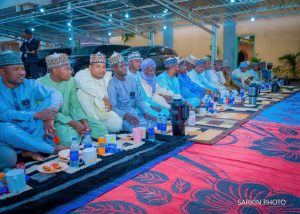
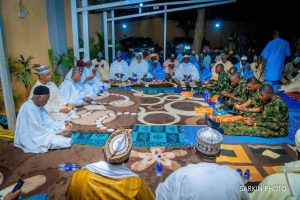
For many years, Gidan Kara has served as a vibrant hub where Sokoto’s finest minds and most influential figures converge. The serene town transforms into a meeting point for leaders, administrators, bureaucrats, and politicians, both young and old, drawn together by a shared sense of purpose and respect for a man whose influence transcends generations.

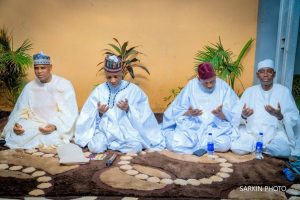
Traditionally held on the last day of Ramadan, the annual Iftar is more than just a social event. It is a symbol of unity, mentorship, and gratitude. Senator Wamakko has made it a ritual to host his mentees, supporters, aides, and associates, offering them not only a sumptuous meal to break their fast but also an opportunity to seek Allah’s blessings and forgiveness in a spiritually uplifting atmosphere.

Beyond the breaking of fast, the gathering has evolved into a unique platform for connection and opportunity. It fosters meaningful interactions, strengthens bonds of brotherhood, and opens doors to political and business prospects.

Over the years, countless individuals and groups have benefited from relationships and collaborations formed within this setting.

More profoundly, the annual Iftar reflects a leadership philosophy anchored on accessibility and inclusiveness. At Gidan  Kara, hierarchy gives way to humility, as young aspirants sit alongside established leaders, sharing ideas, learning, and drawing inspiration.

It is in these moments that futures are shaped, ambitions are refined, and a new generation of leaders is quietly groomed under the watchful guidance of a seasoned mentor.

Equally significant is the spiritual depth that defines the gathering.

Coming at the close of Ramadan, a period devoted to sacrifice, reflection, and devotion, the Iftar serves as a powerful reminder of gratitude to Allah and responsibility to humanity. It reinforces the values of compassion, unity, and selflessness, principles that Aliyu Magatakarda Wamakko has consistently embodied throughout his public life.

Indeed, the Wamakko Annual Iftar is not merely an event, it is a reflection of a legacy built on generosity, leadership, and an unwavering commitment to the people.

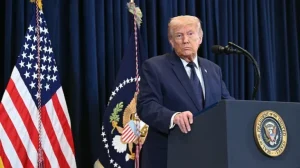
Strait of Hormuz: European Leaders Shun Trump’s Request for Help

US President Trump

European leaders have rejected demands by United States President Donald Trump ⁠to get involved in lifting the blockade imposed on the Strait of Hormuz by Iran.

Iran has effectively blocked the Strait of Hormuz to shipping associated with the U.S., Israel, and their allies, trapping hundreds of tankers.

The action, which was taken amid the regional conflict, has threatened 20% of global oil shipments, caused massive insurance spikes, and elevated global energy crisis risks

Joining a European Union gathering in Brussels on Monday to discuss skyrocketing oil prices during the US-Israeli war on Iran, German Foreign Minister Johann Wadephul said Berlin had no intention of joining military operations during the conflict.

“We need more clarity here,” Wadephul told reporters ahead of the meeting. “We expect from the US and Israel to inform us, to include us into what they’re doing there and to tell us if these goals are achieved.”

“Once we have a clear picture of that, we believe we need to move into the next phase, namely, defining a security architecture for this entire region, together with the neighbouring states,” he said.

Meanwhile, speaking from Berlin, German Defence Minister Boris Pistorius said that while there would be “no military participation” from his country, it was prepared to support diplomatic efforts “to ensure safe passage through the Strait of Hormuz”.

“This is not our war. We have ⁠not started it,” said Pistorius. “What does … Trump expect a handful or two handfuls of European frigates to do in the Strait of Hormuz that the powerful ⁠US Navy cannot do?”

Also speaking from Berlin, German Chancellor Friedrich Merz’s spokesman said the conflict has “nothing to do with NATO”. Stefan Kornelius told reporters NATO was “an alliance for the defence of territory”, adding that “the mandate to deploy NATO is lacking”.

Germany’s position was echoed by fellow NATO member the United Kingdom.

Speaking from London about joining any mission in the Strait of Hormuz, Prime Minister Keir Starmer said: “Let me be clear: that won’t be, and it’s never been envisioned to be, a NATO mission.”

Starmer stressed the UK would “not be drawn into the wider war”.

However, he said the UK was discussing with the US and allies in Europe and the Gulf the possibility of using its mine-hunting drones already in the region.

Dutch Prime Minister Rob Jetten told the country’s ANP news agency that it would be “very difficult to launch a successful mission there in the short term”.

Lithuania and Estonia said NATO countries should consider a US request for help, but cautioned over the need for greater clarity around various aspects of any potential mission.

Estonian Foreign Minister Margus Tsahkna also said that US allies in Europe want to understand Trump’s “strategic goals”. “What will be the plan?” he asked.

⁠Greek government spokesman ⁠Pavlos ⁠Marinakis said ⁠that Greece ⁠would not ⁠engage in ⁠any military operations ‌in the Strait of Hormuz.

Italian Foreign ⁠Minister Antonio ⁠Tajani said Italy was not involved in any naval missions that could be ‌extended to the area.

Danish Foreign Minister Lars Lokke Rasmussen said, however, that Europe should keep an open mind ⁠on helping to ensure freedom of navigation in the strait even if the continent did not support the ⁠US-Israeli decision to go to war with Iran.

“We must face the world as it is, not as we want it to be,” Rasmussen said, adding that the EU must decide on a plan “with a view towards de-escalation”.

Polish Foreign Minister Radek Sikorski invited the Trump administration to go through the proper channels.

“If there is a request via NATO, we will, of course, out of respect and sympathy for our American allies, consider it very carefully,” he said.

Meanwhile, the International Energy Agency, IEA, said it was prepared to release more oil reserves, if needed, amid what it said was the “largest supply disruption in the history of the global oil market”.

IEA had last week released a record 400 million barrels of oil to cushion the effect of the strait’s blockade.

IEA’s Executive Director, Fatih Birol, said the volume of oil supply offline was already higher than during any previous disruption, including the oil crisis of 1973.

“Oil prices today are significantly lower than they were one week ago,” he said, but added that the reserves were not a lasting solution while passage through the strait remains uncertain.

The IEA still has more than 1.4 billion barrels of oil remaining, “which means we can do more later as, and if needed,” Birol said.


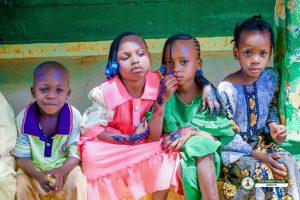
Sokoto Govt Distributes Clothes, Shoes To Orphans At State Orphanage Ahead of Eid-el-Fitr

From Muhammad Gazali Garba

The Sokoto State Government has provided new clothes, shoes, and other essential items to children at the Sokoto State Orphanage to enable them prepare for and enjoy the forthcoming Eid al-Fitr celebration.

The items were provided through the Sokoto State Ministry of Humanitarian Affairs as part of efforts to support vulnerable children and ensure that orphans in the state are not left out during the festive period.

Each orphan received three sets of new clothes, a pair of shoes, and other essential items to help them celebrate the Eid-el-Fitr with dignity and happiness.

Speaking during the presentation, Governor Ahmed Aliyu, represented by Secretary to the State Government (SSG), Muhammad Bello Sifawa, said the gesture was aimed at making the children feel loved and cared for as Muslims prepare to mark the end of the holy month of Ramadan.

The SSG added that the humanitarian initiatives being carried out by Governor Ahmed Aliyu’s administration reflect the values and leadership training he received from Aliyu Magatakarda Wamakko.

He explained that the governor’s commitment to supporting the less privileged, including orphans and other vulnerable groups, stems from the mentorship, guidance, and political upbringing he obtained under Senator Wamakko.

Sifawa contributed a personal donation of ₦1 million to support the welfare of the children, describing it as a way to personally bring joy to the orphans during the festive period.

According to him, the initiative reflects the compassion and commitment of the state government to the welfare of the less privileged.

Commissioner for Humanitarian Affairs, Asabe Balarabe, said the distribution formed part of the ministry’s efforts to ensure that children at the orphanage celebrate the Eid-el-Fitr in a joyful and dignified manner.

She expressed gratitude for the continuous support the state government has provided to the ministry.

Some of the orphans expressed their appreciation to the state government, saying they were happy and grateful for the care, love, and support they continue to receive.

The management of the orphanage commended the state government and the Ministry of Humanitarian Affairs for the timely intervention.

RAMADAN IN SOKOTO: FAITH, CHARITY AND GOVERNANCE IN SERVICE OF THE PEOPLE

By Sani Umar

As Muslims across the world enter the final ten days of Ramadan, their attention turns to one of the most sacred and spiritually significant nights in Islam, Laylat al-Qadr, often referred to as the Night of Power or the Night of Decree. This blessed night, believed to occur during the last ten nights of Ramadan, particularly on the odd-numbered nights, holds profound importance for believers who seek divine mercy, forgiveness, and spiritual elevation.

For Muslims, Laylat al-Qadr is eagerly anticipated because of the immense blessings it carries. Worship performed during this night is believed to be better than a thousand months. Devout Muslims spend the night in prayer, reflection, and supplication, seeking the boundless mercy and grace of Allah. It is a moment of deep spiritual awakening, offering believers the opportunity for forgiveness, renewal of faith, and the hope of attaining eternal reward in Al-Jannah.

Following this period of devotion, spiritual purification, and self-discipline, Muslims around the world prepare to celebrate Eid al-Fitr, the festival marking the end of the holy month. While the celebration signifies joy and gratitude after a month of fasting and worship, it also reminds believers that the spiritual lessons of Ramadan should extend beyond the month itself.

The values that define Ramadan, love, compassion, generosity, kindness, and empathy, are meant to guide Muslims throughout their lifetime. These virtues reflect the teachings and example of Prophet Muhammad (SAW), who emphasized mercy, humility, and care for humanity. As the faithful celebrate Eid, they are encouraged to carry forward the discipline and spiritual awareness cultivated during Ramadan into every aspect of life.

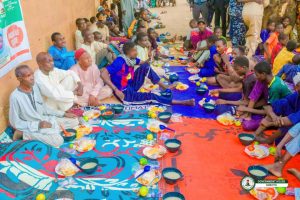
In Sokoto State, the spiritual significance of Ramadan is complemented by practical efforts aimed at easing the burden of fasting for many residents. The administration of Ahmed Aliyu Sokoto took deliberate steps to ensure that the holy month is observed in an atmosphere of peace, dignity, and communal solidarity. One immediate response was to make available a handsome amount of resources for feeding centers, while also distributing cash and food items to various groups.

Feeding centers across communities have provided meals for those observing the fast, particularly the vulnerable and needy. Assistance has also been extended to Imams, Mu’azzins, and Islamic scholars, whose guidance during Ramadan remains central to the spiritual life of society.

Such interventions reflect the spirit of compassion and generosity that defines Ramadan, and they also demonstrate how governance, guided by empathy and social responsibility, can reinforce the values promoted during the holy month. By supporting religious leaders and providing relief to those facing hardship, these initiatives strengthen community bonds and enhance the collective spirit of worship and charity.

Equally commendable is the role of well-to-do individuals and philanthropic members of society who have risen to the occasion during this sacred period. Across communities, many have contributed by sponsoring iftar meals, offering alms, and supporting families struggling to meet daily needs. These acts of generosity echo the teachings and example of Prophet Muhammad (SAW), who emphasized charity, compassion, and care for the less privileged as essential elements of faith.

As Muslims prepare to celebrate Eid al-Fitr, marking the end of a month of devotion, the lessons of Ramadan remain clear. The spirit of giving, empathy, and shared responsibility should not end with the sighting of the new moon. When governments, community leaders, and individuals continue to work together in this manner, the impact can extend far beyond the holy month.

Sustained acts of charity and social support can help reduce poverty, bridge social inequalities, and foster a more compassionate society. By institutionalizing the values of Ramadan, which emphasize generosity, justice, and care for the vulnerable, communities can move closer to building a sustainable and egalitarian society where no one is left behind. In this way, the spiritual lessons of Ramadan become not only a guide for personal piety, but also a blueprint for social progress.

RECOMMENDED NEWS

POPULAR