

Sokoto State Government Unveils Fresh Wave of Projects at First EXCO Meeting in 2026
From Muhammad Gazali Garba
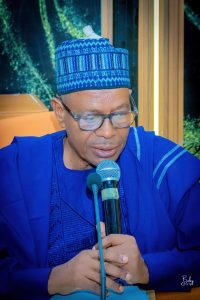
Sokoto State Executive Council, at its first meeting in 2026, approved the completion of Wamakko General Hospital at a cost of ₦221,911,910.25.
The construction of the hospital commenced in 2013 but was later revoked by the immediate past administration. However, the present government has renegotiated the contract and re-awarded it to ensure the successful completion of the project.
This was disclosed by the State Commissioner for Information and Orientation, Hon. Sambo Bello Danchadi, while briefing journalists on the outcome of the meeting held at the Council Chamber, Government House, Sokoto.
He added that, with this development, a total of 22 general hospitals are currently being rehabilitated to ensure full functionality across the state.
The commissioner further revealed that the Council also approved the general repairs and refurbishment of six Mitsubishi trucks belonging to the Sokoto State Transport Authority at a cost of ₦78,340,000.
Also contributing to the briefing, the State Commissioner for Higher Education, Professor Isa Maishanu, said the state government approved the establishment of an out-of-school children centre in the Gandu area of the metropolis at a cost of ₦532.6 million, with a six-month completion period.
He further disclosed that the renovation of Turaki Basic Secondary School was also approved at a cost of ₦424,350,885.95.
Professor Maishanu also revealed that the Council approved the renovation of the Vice Chancellor’s residence, as well as five blocks of lecturers’ quarters at Sokoto State University, at a cost of ₦336,575,659.33.
He added that the government also approved the upgrading of a college clinic to the status of a Primary Health Care Centre (PHC) at the College of Basic and Remedial Studies, Sokoto, at a cost of ₦179,352,293.30.
In his contribution, the Commissioner for Religious Affairs, Professor Jabir Sani Maihulla, announced the Council’s approval for the renovation of the Central Jumu’at Mosque in Shuni, Dange Shuni Local Government Area, at a cost of ₦144,552,869, as well as the completion of a daily prayer mosque at the Western Bypass headquarters of the Nigeria Security and Civil Defence Corps (NSCDC), at a cost of ₦69 million.
Also, the Commissioner for Innovation and Digital Economy, Bashir Umarun Kwabo, said the State Executive Council approved a contract for the construction of a security outpost at Mabera Kantin Sani at a cost of over ₦126 million, as well as the fencing of the Farmers Mechanical Workshop in Gwadabawa Local Government Area at a cost of ₦141,972,739.86.
Sokoto Govt Vows To End Insecurity, Ensure Safe Return of Displaced Persons
From Muhammad Gazali Garba
The Sokoto State Government has reiterated its commitment to tackling insecurity, assuring that it will not relent in its efforts until all displaced persons return safely to their respective homes.
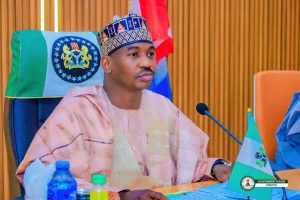
Governor Ahmed Aliyu made this known during the opening of the first Executive Council meeting of 2026, held at the Council Chamber, Government House, Sokoto.
He emphasized that security remains a top priority of his administration, noting that significant progress has already been recorded in restoring peace across parts of the state.
According to the Governor, his administration has continued to adopt proactive measures, including strengthening collaboration with security agencies and community stakeholders, to address security challenges and protect lives and property.
Governor Aliyu further stated that despite the successes achieved so far, the government will not rest on its oars. He stressed that ongoing efforts will be intensified to consolidate the gains recorded and ensure lasting peace and stability in all affected areas.
He reaffirmed his administration’s determination to create a safe environment that will enable displaced persons to return to their communities and resume their normal livelihoods without fear.
The Governor also called on residents of the state to continue supporting the government by providing useful information to security agencies, assuring that collective efforts remain key to overcoming insecurity and sustaining development across Sokoto State.
Governor Aliyu commended members of the State Executive Council for their dedication and cooperation in the implementation of the government’s Nine-Point Agenda, urging them to remain focused and committed to delivering the administration’s developmental priorities for the benefit of the people of the state.
Sokoto Governor Mourns Alhaji Shehu Madawaki, Extends Condolences to Family
From MG Gazali
The Governor of Sokoto State, Ahmad Aliyu Sokoto, has expressed deep sorrow over the passing of Alhaji Shehu Madawaki (Lasco) of Unguwar Diresa, along Emir Yahaya Road in Sokoto metropolis, describing the loss as painful and deeply felt.
Alhaji Shehu Madawaki, aged 59, died after a brief illness. He is survived by his wife and one child.
In a condolence message, Governor Aliyu prayed to Almighty Allah to forgive the shortcomings of the deceased, grant him eternal mercy, and admit him into Aljannatul Firdaus.
He urged the bereaved family and loved ones to accept the loss as the will of Allah and remain steadfast, while continuing to offer prayers for the repose of his soul.
Special prayers for Allah’s mercy and forgiveness upon the deceased were also offered by the Senior Special Assistant on Domestic Affairs to the Governor, Malam Faruk Labbo.
The Governor was accompanied on the condolence visit by commissioners, advisers, and other senior aides.
GOV ALIYU FLAGS-OFF 2026 POLIO CAMPAIGN, DEPLOYS COMMISSIONERS TO MONITOR EXERCISE STATEWIDE
From Muhammad Gazali Garba
Sokoto State Governor, Dr Ahmed Aliyu, has officially launched the 2026 Outbreak Response Immunisation Campaign against poliovirus at the Gidan Igwai Primary Health Care Centre in Sokoto North Local Government Area, reaffirming his administration’s commitment to protecting children and eradicating preventable diseases across the state.
Speaking at the flag-off ceremony, the Governor directed that commissioners be deployed across all 23 local government areas to supervise and monitor the exercise, ensuring effective implementation at the grassroots level.
Governor Aliyu said the state government has made adequate provisions to ensure that no child is left unprotected against poliovirus and other vaccine-preventable diseases, stressing that the campaign reflects his administration’s determination to sustain the gains recorded in polio eradication efforts.
He also stated that he personally intends to visit some communities and local government areas to monitor the implementation of the exercise and ensure that the vaccination campaign is properly carried out, demonstrating his commitment to effective grassroots governance.
The Governor commended the administration of President Bola Ahmed Tinubu for its sustained efforts in strengthening Nigeria’s health sector. He noted that ongoing federal interventions in primary healthcare, disease prevention, and immunisation support have significantly improved public health outcomes across the country, including Sokoto State.
He disclosed that 2,830 ad-hoc staff have been recruited for house-to-house vaccination across the 244 wards of the state, while 488 personnel were deployed to hard-to-reach and insecurity-affected communities. An additional 3,151 personnel were also strategically assigned to ensure wider coverage and effective implementation of the exercise.
Governor Aliyu urged parents and guardians to cooperate fully with vaccination teams to ensure that all children under the age of five receive the vaccine, stressing that the oral polio vaccine is safe, effective, and essential for child survival.
He also warned individuals or groups planning to sabotage the exercise to desist, noting that anyone found culpable would be decisively dealt with in accordance with the law. He further directed local government chairmen, traditional rulers, and Islamic scholars (Ulamas) to intensify sensitisation campaigns on the dangers of refusing immunisation.
Earlier, the State Commissioner for Health, Dr Faruk Umar Abubakar, described the campaign as a critical public health intervention aimed at protecting children from poliomyelitis and other vaccine-preventable diseases.
He explained that despite significant progress in polio eradication, sustained vigilance and coordinated efforts remain essential to ensure that no child is left unvaccinated. According to him, this year’s campaign has been carefully coordinated to guarantee effective coverage across all communities, including hard-to-reach and underserved areas.
Dr Abubakar added that improved logistics, strategic planning, and the deployment of trained health personnel have been prioritised to ensure the success of the exercise. He called on parents and caregivers to present their children for vaccination, emphasizing that the vaccine is safe, free, and highly effective.
He also urged community leaders, religious scholars, and other stakeholders to support the campaign through advocacy and sensitisation to ensure full participation.
In his goodwill message, the Chairman of Sokoto North Local Government Area, Hon. Jamilu Umar Gosta, commended the state government for its proactive efforts in safeguarding children’s health. He described the campaign as timely and vital for securing a healthy future for the younger generation.
Hon. Gosta pledged the full support of the local government in mobilising communities and raising awareness to ensure successful implementation at the grassroots level. He said the council has engaged ward heads, district heads, and community volunteers to work closely with vaccination teams to ensure that every household in Sokoto North is reached.
Representatives of development partners, including the World Health Organization (WHO), the United Nations Children’s Fund (UNICEF), and the National Primary Health Care Development Agency (NPHCDA),among others expressed continued support for the Sokoto State Government. They commended the state’s coordinated outbreak response strategy, emphasizing the importance of collaboration, community engagement, and data-driven approaches in achieving the total eradication of poliovirus.
They also assured continued technical, logistical, and capacity-building support to strengthen immunisation efforts across the state.
In his remarks, the representative of the Sultan of Sokoto, Alhaji Kabiru Chigari, Sarkin Sudan of Wurno, urged parents and caregivers to fully embrace the immunisation exercise in the interest of their children and society at large.
He highlighted the crucial role of traditional institutions in supporting public health initiatives and community mobilisation, assuring the continued support of the Sultanate Council in sensitising the public and encouraging compliance with vaccination campaigns.
GOV. ALIYU REAFFIRMS COMMITMENT TO JUSTICE SECTOR REFORMS AS FG URGES NBA ON GRASSROOTS JUSTICE
From Muhammad Gazali Garba
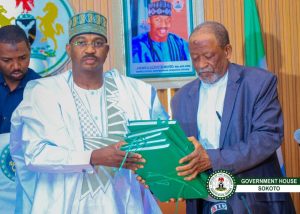
Governor Ahmed Aliyu of Sokoto State has reaffirmed his administration’s commitment to strengthening the justice system, promoting the rule of law, and improving judicial infrastructure in the state.
Speaking while declaring open the 2026 Caliphate Bar Law Week of the Nigerian Bar Association (NBA), Sokoto Branch, themed “Secured Nation, Secured Future,” Aliyu said his government has remained focused on enhancing the independence and efficiency of the judiciary since assuming office.
He disclosed that his administration approved the promotion of 14 judges and Khadis for the State High Court and Shari’ah Court of Appeal — and provided them with official vehicles to enhance their efficiency.
The Governor also announced that the state government awarded a ₦4 billion contract for the construction of a new High Court complex to improve infrastructure and expand access to justice. Another contract, he said, was awarded for the rehabilitation of the Shari’ah Court of Appeal.
The governor added that contracts have also been approved for the construction of three office complexes for the State Ministry of Justice, describing the projects as critical steps toward strengthening justice sector institutions and enhancing service delivery.
He noted that his administration has consistently supported the NBA Sokoto Branch, including sponsoring its participation in National Executive Committee (NEC) meetings. He also disclosed that the government donated a brand-new 18-seater Toyota bus to the association to facilitate its activities.
Aliyu commended the NBA Sokoto Branch for its contributions to the promotion of the rule of law and legal professionalism, noting that the relationship between the Bar, the Bench, and the government remains cordial and productive.
He also commended President Bola Ahmed Tinubu for what he described as exceptional leadership, stating that the President is steering Nigeria in the right direction with diligence and patriotism.
In his remarks, the Attorney-General of the Federation and Minister of Justice, Lateef Olatunji Fagbemi, SAN, urged the NBA to take a leading role in strengthening grassroots justice and national security.
He emphasized that sustainable security begins at the community level, noting that many threats, including terrorism and communal violence, often originate from unresolved local disputes.
Fagbemi called on legal practitioners to bridge the gap between the law and the people by promoting access to justice, alternative dispute resolution, and pro bono services, particularly for vulnerable groups. He highlighted federal efforts under President Tinubu to strengthen local government autonomy as a key step toward addressing the root causes of insecurity.
On terrorism cases, the Attorney-General revealed that the Ministry of Justice recently secured hundreds of convictions, reaffirming the government’s commitment to upholding the rule of law.
He also advocated for the establishment of state police to enhance community-level security response, while urging stronger collaboration between legal practitioners, traditional institutions, and other stakeholders.
Fagbemi commended Governor Aliyu for his sustained investment in the justice sector, describing the administration’s efforts as a clear demonstration of commitment to constitutional governance and the rule of law.
He praised the well-coordinated relationship among the three arms of government, stressing that such synergy is essential for effective governance and justice delivery.
Also speaking, the Minister of State for Works, Barrister Bello Muhammad Goronyo, lauded the Governor for his commitment to infrastructural and institutional development in Sokoto State.
He noted that the administration’s efforts have significantly improved governance and public service delivery, particularly in the justice sector.
Goronyo further commended the NBA Sokoto Branch for its role in advancing legal development and fostering professional excellence, stressing the importance of continued collaboration between the government and the legal community.
In her address, the Chairman of the NBA Sokoto Branch, Barrister Rasheeda Muhammad, described Aliyu as a dedicated and hardworking leader, commending his support for the association and the strong relationship between the government and the Bar.
Barrister Rashida noted that over 300 members registered for the event, marking a record for the state.
She further commended the Attorney-General for attending the occasion, saying it signifies commitment to the rule of law and the administration of justice.
She described the Annual Law Week as an important platform for legal practitioners to deliberate on contemporary national issues and strengthen the justice system.
A major highlight of the occasion was the launch of the _Caliphate Law Journal_, for which the Sokoto State Government donated ₦30 million.
The NBA also honoured him with an “Exceptional Leadership Award” in recognition of his contributions to governance and the promotion of the rule of law.
MOSQUES, MORALITY, AND THE MAKING OF A RESPONSIBLE SOCIETY
By Sani Umar
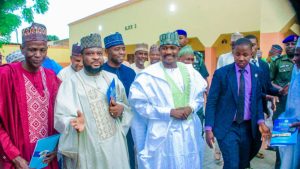
The recent commissioning of the 33rd Jumu’at mosque by Ahmed Aliyu marks more than just the completion of a physical structure, it represents a deliberate step toward reshaping the moral and social fabric of Sokoto State. At a time when communities are grappling with insecurity, displacement, and social dislocation, such initiatives signal a leadership approach that recognizes the importance of values in governance.
Religion has long played a central role in guiding personal conduct and community cohesion in many societies, particularly in Sokoto, which was founded on Islamic knowledge and jurisprudence.
Therefore, by investing in places of worship, the government is reinforcing institutions that nurture discipline, accountability, and compassion. Mosques, beyond their spiritual function, serve as centers for education, dialogue, and community building, elements that are critical in fostering unity and shared purpose.
The inclusion of mosque construction within the governor’s 9-point smart agenda reflects an understanding that development is not solely about infrastructure and economics. Moral rebirth is a necessary complement to physical development. A society plagued by corruption, violence, and mistrust cannot sustainably grow, no matter how much is invested in roads or industries.
Sokoto State, like many parts of the country, faces challenges such as banditry and the displacement of innocent citizens. These issues are not only security concerns but also symptoms of deeper social and moral breakdowns. By strengthening religious institutions, the government is indirectly addressing the root causes of these problems, thereby instilling values that discourage crime and promote peaceful coexistence.
Moreover, mosques often act as platforms for community sensitization. Clerics and scholars can use these spaces to preach messages of tolerance, hard work, and patriotism. When individuals internalize these teachings, they are more likely to contribute positively to society, respect the rule of law, and support collective progress.
A morally grounded society is also more likely to be economically viable. Trust and integrity are essential for business transactions, investment, and entrepreneurship. When citizens uphold ethical standards, it creates an environment where economic activities can thrive without fear of exploitation or instability.
In addition, the sense of belonging fostered through communal worship strengthens social bonds. People who feel connected to their communities are more inclined to protect public assets, support local initiatives, and participate in governance processes. This civic engagement is vital for sustainable development.
Critics may argue that government involvement in religious infrastructure should be limited. However, in contexts where religion is deeply intertwined with daily life, such investments can yield significant social returns. The key lies in ensuring inclusivity and balancing such efforts with other developmental priorities.
The long-term impact of these mosques will depend on how they are utilized. If they become hubs for education, youth engagement, and conflict resolution, their value will extend far beyond spiritual gatherings. They can serve as catalysts for a broader cultural transformation that prioritizes integrity and collective responsibility.
Ultimately, the initiative led by Governor Ahmed Aliyu underscores a fundamental truth, that development is as much about people as it is about projects. By nurturing a society that is morally conscious, religiously guided, and civically responsible, Sokoto State positions itself to achieve not only peace and stability but also economic growth and sustainable progress.
CP A.M. BELLO PAYS OPERATIONAL VISIT TO MADA DISTRICT, HOLDS STRATEGIC MEETING WITH STAKEHOLDERS
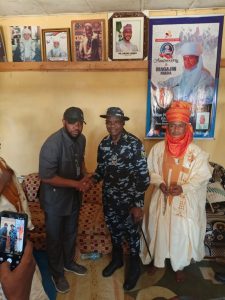
The Commissioner of Police, Zamfara State Command, CP Ahmad Muhammad Bello, psc+, mnips, has paid a one-day operational visit to Mada District in Gusau Local Government Area of the state, where he held a high-level strategic meeting with key stakeholders on the security challenges affecting the area.
A statement signed by the command public relations officer DSP Yazid Abubakar said the visit was aimed at identifying lasting solutions to the security challenges confronting Mada and its environs.
During the visit, the Commissioner of Police was warmly received by the people of Mada under the leadership of the District Head, Alhaji Magaji Bashir Magaji (Uban Kasan Mada).
It said the District Head, alongside members of his palace, commended the Commissioner of Police for his proactive leadership and the ongoing efforts of the Police in collaboration with hunters, Community Protection Guards (CPG), and vigilante groups toward ensuring peace and security in the area.
Similarly, the Chairman of Gusau Local Government Area, Alhaji Abubakar Imam, appreciated the efforts of the Command in combating crime and criminality. He assured the Commissioner of Police of the Local Government’s full support in the collective fight against insecurity.
In his response, the Commissioner of Police expressed his deep appreciation for the warm reception accorded to him by the Chairman, the District Head, and members of the community. He also commended the level of coordination and cooperation among the Police, hunters, and Community Protection Guards.
The CP emphasized the Command’s commitment to strengthening collaboration with communities in order to restore and sustain peace across the state.
The Zamfara State Police Command reiterates its resolve to work closely with all stakeholders in addressing security concerns and ensuring the safety of lives and property across the state.
ADC: The Opposition That Cannot Save Itself
By Ali Abare
Every election cycle in Nigeria brings its own theatre. As 2027 draws closer, the curtain has risen again, and the opposition is once more on stage, loud, agitated, and performing with great energy.
The African Democratic Congress, better known now as the ADC, has become the new vehicle for politicians who have spent years at the top of governance in Nigeria and are now positioning themselves as saviours of the same system they ran.
The story is familiar. The faces are even more familiar. And therein lies the problem.
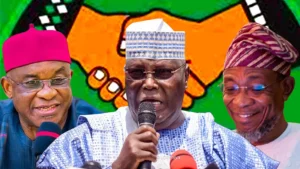
The ADC was formally adopted as the platform for the opposition coalition when former Vice President Atiku Abubakar, former Labour Party presidential candidate Peter Obi, former Senate President David Mark and other coalition leaders announced they would use the party to challenge President Bola Tinubu in 2027.
The rollout was dramatic, the crowd was large, and the cameras were many. But politics is not decided on unveiling days. It is decided in the quiet work of building genuine structures, earning trust, and answering hard questions. The ADC, barely months into its new life as a coalition platform, is already struggling to do any of those three things.
The party currently has no leadership recognised by INEC, a major blow for a party that has recently attracted heightened public attention as a possible coalition platform for opposition figures ahead of the 2027 elections.
The crisis did not come from outside. It came from within. A factional national chairman, Nafiu Gombe, took David Mark and others to court over the control of the party structure, and following a Court of Appeal ruling, INEC suspended recognition of both factions.
The opposition then turned its anger on INEC, accusing the electoral body of partisan conduct. But this requires scrutiny. INEC did not start this fight. Two factions of the same party went to court against each other, and the court issued an order. INEC obeyed the order. It is hard to see how obeying a court order makes an electoral body partisan.
Opposition politicians who are now up in arms against INEC had the opportunity to undertake electoral reforms when they served as leaders of the National Assembly and as members of government.
That observation deserves to sit with every Nigerian who is watching the current drama. David Mark was Senate President for eight consecutive years, from 2007 to 2015. During that period, he presided over a chamber that had every opportunity to strengthen Nigeria’s electoral laws and insulate the process from executive interference.
Atiku Abubakar served as Vice President for eight years under the PDP government. Peter Obi governed Anambra State for two terms. Rotimi Amaechi was governor of Rivers State, then served as Minister of Transportation under President Muhammadu Buhari. Rauf Aregbesola governed Osun State for eight years and was also a minister. Nasir el-Rufai governed Kaduna State for eight years. Aminu Tambuwal was Speaker of the House of Representatives and later governor of Sokoto State.
When you add up the years these men spent in power, you are looking at decades of collective governance stretching from Abuja down to the states. The Nigeria they are now asking the people to rescue from the APC is largely a Nigeria they built, managed, and in many cases profited from.
The fuel subsidy regime that swallowed trillions was not created by Tinubu. The forex policies that strangled the naira for years did not begin in 2023. The roads, the power sector, the bloated and inefficient federal bureaucracy — these are the products of administrations in which many of the ADC’s current leadership played principal roles.
It is against this backdrop that their current campaign must be assessed. They have taken to the streets, marched to INEC headquarters, and delivered fiery speeches about democracy and one-party rule. Peter Obi declared at the protest that Nigerians must say no to a one-party system, describing the demonstration as a defence of democracy itself.
These are noble words. But words from these particular mouths require more than emotion to be convincing. They require a reckoning with the past that none of them have offered.
The APC now commands the loyalty of the overwhelming majority of governors in this country. This did not happen by force. Governors are elected officials with their own political calculations and their own futures to protect.
They have been watching what the Tinubu administration’s fiscal reforms have done for the finances of their states, with the removal of the fuel subsidy and the unification of the exchange rate freeing up resources that governors of all stripes had long demanded.
When a governor moves from the PDP to the APC, it is not because he received a phone call in the night. It is because he has looked at the numbers and made a decision. The opposition’s failure to reckon with this reality is itself a sign of how far removed their leadership is from the actual concerns of governance.
Even if the ADC eventually scales through the high walls of its self-inflicted woes, the ambitions of its members remain a potential danger for uniting the opposition. Atiku, Peter Obi, Rotimi Amaechi and Rabiu Kwankwaso are already said to be in competition over who will carry the presidential ticket, and the fallout of that contest may open yet another window for disgruntled members to return to the ruling party.
This is the nature of a coalition held together not by ideology or shared vision but by the single desire to remove an incumbent. Once the question of who benefits from removal comes to the table, every crack in the arrangement becomes a canyon.
Sources close to the developments reveal that key opposition figures including Atiku, Obi and Kwankwaso are already said to be weighing the possibility of abandoning the ADC for alternative platforms, given that political insiders warn the crisis could cripple the party’s ability to participate in the 2027 elections.
A coalition that is already shopping for a replacement platform before it has even produced a candidate is not a coalition in any serious sense. It is a gathering of powerful individuals waiting to see which arrangement best serves each of them personally.
Nigeria has seen this story before. In 2019 and again in 2023, the opposition went into elections divided, then united just enough to lose, then fell apart immediately after.
The ADC in its current form is not a departure from that pattern. It is a continuation of it with new branding. The men at its head are not new voices with fresh ideas about how to move Nigeria forward.
They are established figures whose records are in the public domain, and whose return to the corridors of power would, for most Nigerians, represent a step backwards rather than a step forward.
President Tinubu’s administration has taken painful but necessary decisions that previous governments postponed at great cost to the country.
The opposition has every right to contest 2027. Democracy requires that the ruling party face genuine competition. But the ADC as presently constituted, fighting over its own leadership in court while blaming the court’s consequences on the government, is not that genuine competition.
It is noise dressed up as purpose, and most Nigerians, when the time comes, will know the difference.
Abare is a Muck Rack journalist. He writes from Lafia, Nasarawa State.
Hajj 2026: Sokoto PWA Concludes Strategic Pilgrims Education, Enlightenment Programme

The Sokoto State Pilgrims Welfare Agency has successfully concluded its strategic Pilgrims Education and Enlightenment programme for2026 intending pilgrims .
The programme, held at the Sultan Maccido Institute for Qur’an and General Studies, brought together pilgrims drawn from Sokoto North, Sokoto South, the pilgrims who paid through Pilgrims Welfare Agency headquaters (PWA), and the State Government Officilas (SGO).
This was contained in a press release by the Agency’s heard of Information and Communication unit, Faruku Umar
It explained that during the grand finale, Islamic scholars and Hajj officials delivered detailed and practical presentations on the essential aspects of Hajj rituals. The sessions also covered newly introduced policies and guidelines to ensure pilgrims are well prepared for a smooth and spiritually fulfilling Hajj exercise.
The Agency remains committed to providing comprehensive education and support to all intending pilgrims from Sokoto State to ensure compliance with all Hajj requirements and to enhance their overall experience during the pilgrimage.
RECOMMENDED NEWS