The All Progressives Congress (APC) in Sokoto State has recorded a political gain following the defection of
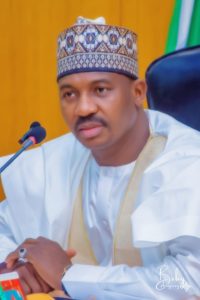
Engineer Haruna Abubakar Zaki Tambuwal from the Peoples Democratic Party (PDP).
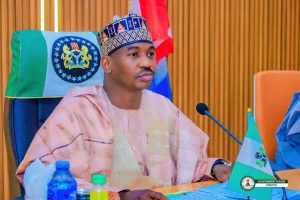
Engineer Tambuwal, a cousin to former Sokoto State Governor Aminu Waziri Tambuwal, was received at the Government House, Sokoto, by the Chairman of the APC Decampees Reception Committee, Alhaji Isah Sadiq Achida.
Achida, who is also the APC North-West Zonal Secretary, described the defection as a wise decision and assured the new decampee of equal opportunities within the party. He added that the APC, under the leadership of Senator Aliyu Magatakarda Wamakko and Governor Ahmad Aliyu, remains committed to accommodating new members and advancing development in the state.
In his remarks, the State APC Chairman, Alhaji Haruna S.G. Adiya, welcomed Engineer Tambuwal and pledged fairness and inclusiveness for all party members.
Also speaking, the Chief of Staff at the Government House, Alhaji Aminu Haliru Dikko, described the defection as a major gain for the APC and urged other politicians to join the ruling party.
Explaining his decision, Engineer Tambuwal said he was motivated by the developmental strides recorded under the administration of Governor Ahmad Aliyu.
He commended Senator Wamakko’s leadership, describing him as a father in Sokoto politics, and pledged his loyalty and support to the APC.
The event was attended by key government officials and politicians, including the Secretary to the State Government, Muhammad Bello Sifawa; APC Woman Leader, Hajiya Rabi Garba Tudun Wada; Special Adviser on SDGs, Abubakar Muhammad Babba and representatives of the Rural Water Supply Agency, among others.
The commitment of the Sokoto State Government to revitalizing the education sector under the leadership of Governor Ahmed Aliyu continues to gain traction and recognition, not only within the state but across Nigeria. This renewed focus has attracted widespread commendation from reputable organizations, stakeholders, and development partners who acknowledge the administration’s deliberate and sustained efforts to reposition education.
At the heart of this growing recognition is the high benchmark set by the government, placing education at the center of its development agenda as a critical driver of socio-economic growth and long-term stability.
This recognition has been further reinforced by the Commissioner for Higher Education, Professor Isa Muhammad Maishanu, who commended the Governor for his administration’s expanding investment in the sector, an approach that is steadily attracting national attention and setting a standard for purposeful leadership.
According to the Commissioner, at a time when Nigeria’s education system is grappling with challenges such as underfunding and declining academic standards, Governor Aliyu has demonstrated a clear and unwavering commitment to repositioning education as a cornerstone of sustainable development.
The importance now attached to education by the present administration is not without context. Over time, the sector suffered significant neglect, resulting in dilapidated infrastructure, inadequate learning materials, and declining morale among educators.
Recognizing these setbacks, Governor Ahmed Aliyu made a firm commitment upon assuming office to reverse the trend and rebuild public confidence in the system. His administration’s resolve is anchored on the understanding that no meaningful development can be achieved without a strong and functional educational foundation.
Since coming into office, the government has implemented a comprehensive and strategic intervention framework aimed at addressing both structural and systemic challenges. At the basic and secondary education levels, this includes the renovation and construction of classrooms, provision of furniture, supply of instructional materials, and improvements in sanitation and hygiene to create a more conducive learning environment.
In addition, the administration has prioritized teachers’ welfare, while introducing monthly cash allocations to school heads to support routine maintenance and ensure efficient day-to-day school management.
Beyond the state’s borders, the administration’s interventions reflect a broader national outlook that underscores its commitment to advancing education as a collective national priority.
Recent approvals by the Governor include ₦10 million in support of the 6th Annual National Conference of the Faculty of Management Sciences at Usmanu Danfodiyo University, and another ₦10 million for the 44th Annual Conference of the Philosophical Association of Nigeria. These contributions highlight the government’s recognition of research, intellectual engagement, and policy dialogue as essential drivers of national development.
Further demonstrating support for academic excellence and institutional growth, the Governor approved a ₦40 million donation toward the combined 50th anniversary and 42nd convocation ceremony of Usmanu Danfodiyo University. Additional assistance has also been extended to other institutions across the country, including the University of Ilorin, Ahmadu Bello University, Al-Hikmah University, and the Abdullahi Fodio University of Science and Technology for its maiden convocation. These efforts reflect a leadership style that values collaboration, academic tradition, and the strengthening of Nigeria’s higher education ecosystem.
Within Sokoto State, however, the most profound transformation is taking place. The administration has invested heavily in the construction and renovation of lecture halls, modernization of learning facilities, and expansion of academic infrastructure across state-owned tertiary institutions. This is complemented by a strong focus on human capital development through continuous training and retraining of academic and non-staff, alongside the provision of modern instructional materials to enhance teaching quality and improve student outcomes.
In expanding access to higher education, the government has also introduced robust scholarship schemes for students studying both locally and internationally. Indigent students have not been left behind, as the administration continues to support them through the distribution of JAMB UTME and Direct Entry forms, as well as the organization of preparatory programmes designed to improve examination performance and increase admission success rates. These initiatives have significantly broadened opportunities for young people, ensuring that financial constraints do not hinder academic aspirations.
The administration’s collaborative engagement with federal institutions within and outside the state has further strengthened academic standards and fostered a more integrated and resilient education system. These achievements are firmly anchored in the Governor’s 9-Point Smart Agenda, where education occupies a central position as a catalyst for socio-economic transformation.
Collectively, the consistency, scale, and impact of these interventions have not only transformed the educational landscape in Sokoto State but have also drawn national attention as a model worthy of emulation. With sustained commitment and strategic investments, the administration continues to lay a solid foundation for a future driven by knowledge, innovation, and inclusive development, reaffirming its dedication to ensuring that education remains a powerful tool for empowerment and progress.
The All Progressives Congress, APC, has released its 2027 timetable.
According to the schedule signed by the APC National Organising Secretary, Sulaiman Argungu, on Monday, the party will begin the sale of nomination and expression of interest forms at its National Secretariat from April 25 to May 2, 2026, while submission of completed forms will close on May 4.
The APC pegged its presidential form at ₦100m, comprising ₦30m for expression of interest and ₦70m for nomination.
Governorship aspirants are to pay ₦50m, while Senate, House of Representatives and State House of Assembly forms cost ₦20m, ₦10m and ₦6m respectively.
The timetable indicates that screening of aspirants will hold between May 6 and May 8, while screening results will be released on May 11, followed by appeals from May 12 to May 13.
Presidential primaries are scheduled for May 15 and 16, while those for the House of Representatives, Senate, State House of Assembly and governorship will hold on May 18, May 20, May 21 and May 23, respectively.
The party also fixed May 25 for the conclusion of election appeals across all categories.
The schedule shows that all primary elections will be conducted within eight days.
The party, however, granted concessions to female aspirants, youths and persons living with disabilities, who are to pay for only the expression of interest forms and 50 per cent of the nomination fees.
The timetable stated that the schedule was in line with the Constitution, the Electoral Act and the Independent National Electoral Commission guidelines.
Political leaders who genuinely have the interests of their people at heart consistently seek to connect with the realities of their constituents and respond to their needs. Staying closely engaged with the people remains essential in justifying the mandate entrusted to them, while reinforcing the legitimacy of their leadership through visible impact and responsive governance.
One of the most practical ways to achieve this is by directly assessing how policies and programmes translate into tangible improvements in the lives of citizens.
The legitimacy of their stay in office is largely predicated on the support and goodwill of the electorate. One effective way to gauge the strength of this support is by continuously assessing how governance impacts the lives of the people they serve.
Monitoring the equitable distribution of resources enables those in power to measure the effectiveness of their policies and programmes in improving the welfare of the populace.
Evaluating how the dividends of democracy reach the broader electorate also provides leaders with the necessary insight to formulate sound policies, sustain their mandate, and maintain the confidence of their constituents.
It is within this context that the planned tour of the 23 local government areas by Governor Ahmed Aliyu becomes both timely and strategic. The decision to embark on a statewide visit aimed at reviewing the scope and standard of projects executed at the local government level reflects a deliberate effort to ensure accountability, transparency, and effectiveness in grassroots governance.
By taking governance closer to the people, the Governor is not only reaffirming his commitment to inclusive development but also strengthening the feedback loop between the government and the governed.
The rationale behind the tour is rooted in the critical role local government councils play as the tier of government closest to the people. They are expected to address immediate community needs through the provision of basic infrastructure and essential services that complement the broader interventions of the state government.
While the state administration continues to invest in boreholes, rural roads, primary healthcare centres, classroom blocks, and agricultural support, the expectation is that local councils will utilize their monthly allocations judiciously to deliver projects that directly improve rural livelihoods.
The Governor’s decision to physically verify these efforts underscores a commitment to ensuring that public resources are translated into meaningful development outcomes.
Beyond accountability, the tour serves as a mechanism for measuring the real impact of governance across the state. It provides an opportunity to identify gaps, evaluate the quality of ongoing projects, and ensure that development is not only widespread but also equitable.
Such direct engagement allows the Governor to better understand the unique challenges faced by different communities and to recalibrate policies where necessary. It also sends a strong message to local government officials on the importance of performance, responsibility, and alignment with the broader development agenda of the state.
The benefits of this initiative are far-reaching. For the people, it offers reassurance that their concerns are being heard at the highest level and that government remains committed to improving their living conditions.
For the administration, it strengthens oversight, enhances service delivery, and promotes a culture of results-oriented governance. Politically, it helps consolidate the Governor’s administration by building trust, reinforcing credibility, and deepening public confidence in leadership.
Ultimately, by prioritizing the monitoring of projects and the equitable distribution of development across all local government areas, Governor Aliyu is positioning his administration to sustain its mandate through performance and accountability.
The tour is not merely an inspection exercise, it is a strategic tool for ensuring that the dividends of democracy reach every corner of Sokoto State, particularly the rural communities, while fostering continued public support for government policies and programmes.
Political leaders who genuinely have the interests of their people at heart consistently seek to connect with the realities of their constituents and respond to their needs. Staying closely engaged with the people remains essential in justifying the mandate entrusted to them, while reinforcing the legitimacy of their leadership through visible impact and responsive governance.
One of the most practical ways to achieve this is by directly assessing how policies and programmes translate into tangible improvements in the lives of citizens.
The legitimacy of their stay in office is largely predicated on the support and goodwill of the electorate. One effective way to gauge the strength of this support is by continuously assessing how governance impacts the lives of the people they serve.
Monitoring the equitable distribution of resources enables those in power to measure the effectiveness of their policies and programmes in improving the welfare of the populace.
Evaluating how the dividends of democracy reach the broader electorate also provides leaders with the necessary insight to formulate sound policies, sustain their mandate, and maintain the confidence of their constituents.
It is within this context that the planned tour of the 23 local government areas by Governor Ahmed Aliyu becomes both timely and strategic. The decision to embark on a statewide visit aimed at reviewing the scope and standard of projects executed at the local government level reflects a deliberate effort to ensure accountability, transparency, and effectiveness in grassroots governance.
By taking governance closer to the people, the Governor is not only reaffirming his commitment to inclusive development but also strengthening the feedback loop between the government and the governed.
The rationale behind the tour is rooted in the critical role local government councils play as the tier of government closest to the people. They are expected to address immediate community needs through the provision of basic infrastructure and essential services that complement the broader interventions of the state government.
While the state administration continues to invest in boreholes, rural roads, primary healthcare centres, classroom blocks, and agricultural support, the expectation is that local councils will utilize their monthly allocations judiciously to deliver projects that directly improve rural livelihoods.
The Governor’s decision to physically verify these efforts underscores a commitment to ensuring that public resources are translated into meaningful development outcomes.
Beyond accountability, the tour serves as a mechanism for measuring the real impact of governance across the state. It provides an opportunity to identify gaps, evaluate the quality of ongoing projects, and ensure that development is not only widespread but also equitable.
Such direct engagement allows the Governor to better understand the unique challenges faced by different communities and to recalibrate policies where necessary. It also sends a strong message to local government officials on the importance of performance, responsibility, and alignment with the broader development agenda of the state.
The benefits of this initiative are far-reaching. For the people, it offers reassurance that their concerns are being heard at the highest level and that government remains committed to improving their living conditions.
For the administration, it strengthens oversight, enhances service delivery, and promotes a culture of results-oriented governance. Politically, it helps consolidate the Governor’s administration by building trust, reinforcing credibility, and deepening public confidence in leadership.
Ultimately, by prioritizing the monitoring of projects and the equitable distribution of development across all local government areas, Governor Aliyu is positioning his administration to sustain its mandate through performance and accountability.
The tour is not merely an inspection exercise, it is a strategic tool for ensuring that the dividends of democracy reach every corner of Sokoto State, particularly the rural communities, while fostering continued public support for government policies and programmes.
The Sokoto State Government has pledged to sustain initiatives that promote intellectual growth, legal advancement, and the strengthening of institutions.
Governor Dr Ahmed Aliyu made the pledge at a book presentation for _Military Law in Nigeria: A Quick Reference Guide to Practice and Procedure_, published in honour of Barrister Muhammad Bello Goronyo and edited by Professor Ibrahim Abdullahi, SAN. The event was held at the Army Command Mess and Suites, Sokoto.
Governor Aliyu said the commitment aligns with the government’s conviction that knowledge, education, and the rule of law are pillars of sustainable development.
The Governor, who was represented by his Deputy, Engineer Idris Muhammadu Gobir, urged all stakeholders, legal professionals, security agencies, and academic institutions to make effective use of the book.
He described the presentation of the book as timely and significant, noting that it provides the legal framework that governs discipline, accountability, and the protection of rights within the armed forces, while also ensuring alignment with democratic principles and the rule of law.
Governor Aliyu said the book represents a valuable addition to legal scholarship in Nigeria.
He described the Minister of State for Works, Barrister Muhammad Bello Goronyo, in whose honour the book was presented, as a man whose life reflects dedication, integrity, and excellence.
In his remarks, the Chairman of the occasion and Senator representing Sokoto Central Senatorial District, Aliyu Magatakarda Wamakko, thanked the organisers for selecting him to serve in that capacity.
Senator Wamakko commended all those who contributed to the success of the book presentation.
The book reviewer, Professor Ahmad Adamu of the Nigerian Defence Academy, said the book contains 300 pages and eight chapters.
Professor Adamu described the book as a tool for advancing legal practice.
In a vote of thanks, the Minister of State for Works, Barrister Muhammad Bello Goronyo, expressed appreciation to the Senator for his mentorship and commitment to public service.
The Minister also commended Governor Ahmed Aliyu for his commitment to transforming the state in all sectors.
Sokoto State Governor, Dr Ahmed Aliyu, will soon begin a tour of all 23 Local Government Areas in the state to assess development projects being implemented by the councils.
The Governor disclosed this during an inspection of the ongoing Women and Children Welfare Clinic project by the Goronyo Local Government Council.
According to him, the statewide visit is aimed at reviewing the scope and standard of projects executed at the local government level.
Governor Aliyu stressed that councils, as the government tier nearest to the people, have a duty to improve rural livelihoods through basic infrastructure and services that complement the state government’s interventions.
“At the state level, we are delivering boreholes, rural roads, primary healthcare centres, and classroom blocks, while also supporting farmers,” he said.
“We remit monthly allocations to all local government councils in full. In return, we expect projects that will uplift the living standards of their communities,” he added.
He restated his administration’s commitment to ensuring that the benefits of governance reach every part of Sokoto, especially rural areas, and appealed for sustained public support for government policies and programmes.
The Governor praised the Goronyo Local Government Chairman for the quality of work on the Women and Children Welfare Clinic and urged other council chairmen to step up efforts to expand healthcare access.
“I am impressed with the standard of work here. I encourage other chairmen to do more to bring healthcare closer to the people,” he said.
He further directed the State Ministry of Health to assess the facility and recommend additional steps needed to fully realise its objectives.
Speaking earlier, the Chairman of Goronyo Local Government, Zubairu Yari Goronyo, said the council is building three Women and Children Welfare Clinics in Goronyo, Takakume, and Boyekai to widen access to medical care. He noted that the Goronyo clinic, the biggest of the three, is named after the Governor’s wife, Hajiya Fatima Ahmed Aliyu.
He thanked Governor Aliyu for his consistent support for the council’s development drive.
On the inspection tour, the Governor was joined by APC leader in the state, Senator Aliyu Magatakarda Wamakko; Deputy Governor, Engineer Idris Muhammadu Gobir; Speaker of the Sokoto State House of Assembly, Rt. Hon. Tukur Bala Bodinga; Minister of Labour and Employment, Muhammad Maigari Dingyadi; Minister of State for Works, Barrister Bello Muhammad Goronyo; former Deputy Governor, Barrister Muktari Shagari; Member representing Kware/Wamakko, Hon. Ahmed Abdullahi Kalambaina; commissioners, special advisers, and senior special assistants, among others.
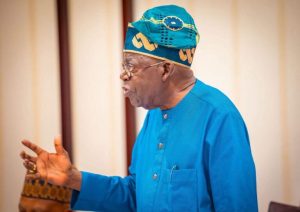
President Bola Tinubu has reiterated his administration’s commitment to delivering economic prosperity, national stability, and inclusive growth, assuring Nigerians that he will not abandon the mandate entrusted to him.
Speaking on Thursday at the State House in Abuja while receiving members of the Renewed Hope Ambassadors (RHA), the President said his government remains focused on dismantling longstanding political and economic barriers that have hindered national development.
“We cannot afford to let Nigerians down,” Tinubu declared, emphasising that ongoing reforms are designed to reposition the economy for broader participation and improved living standards, particularly for vulnerable citizens.
The delegation was led by Hope Uzodimma, who also serves as Director-General of the Renewed Hope Ambassadors.
The meeting drew a high-profile audience, including Vice President Kashim Shettima and the National Chairman of the All Progressives Congress (APC), Nentawe Goshwe Yilwatda.
Several governors were also present, among them Mai Mala Buni, Nasir Idris, Sheriff Oborevwori, Uba Sani, and Hyacinth Alia, among others.
President Tinubu tasked the Renewed Hope Ambassadors with intensifying grassroots engagement to sensitise Nigerians on the impact of his administration’s policies. According to him, citizens participation is essential for building a prosperous and united nation.
“You represent the conscience of a nation that wants to break the shackles of poverty and hopelessness,” he told the group, urging them to sustain mobilisation efforts across communities.
The President stressed that democracy must be anchored on respect for the rule of law, separation of powers, and judicial independence.
“We cannot submit to disobedience of lawful court orders. Whether judgments favour us or not, we must uphold democratic principles,” he said.
Tinubu also dismissed criticisms from opposition figures, accusing them of spreading misinformation about his administration’s policies. He maintained that the reforms, though challenging, are necessary for long-term national progress.
“They want to scare me off? That is not possible,” he said, insisting that Nigeria’s transformation requires resilience and continuity.
In a reflective remark, the President acknowledged continuity between his administration and that of his predecessor, noting that governance is a progressive process that requires correcting past shortcomings and moving forward.
Reiterating his policy direction, Tinubu said his government is committed to creating opportunities for youths and ensuring equitable development across all regions of the country.
He added that Nigeria’s future depends on a shared national vision, urging citizens to remain optimistic despite current economic challenges.
“There is no better place than our country, and no one can build it except us,” he said.
Earlier, Governor Uzodimma briefed the President on the activities of the Renewed Hope Ambassadors, stating that the group has established structures down to the ward and polling unit levels nationwide.
According to him, the initiative is actively engaging markets, schools, professional bodies, and grassroots organisations while compiling data to support political and civic outreach.
“Our structure is not only active but already delivering measurable results across the country,” he said.
Former Katsina State Governor Aminu Bello Masari commended Tinubu’s courage in pursuing difficult reforms, noting that transformative policies often face resistance at the early stages.
He assured the President of strong backing from political leaders in the North-West and pledged continued mobilisation in support of government programmes.
Similarly, APC National Chairman Yilwatda praised what he described as an ongoing infrastructural push driven by the administration’s reform agenda.
Other dignitaries, including former Delta State Governor Ifeanyi Okowa and former Senate President Anyim Pius Anyim, also delivered goodwill messages, expressing confidence in the administration’s direction.
In his concluding remarks, President Tinubu pledged unwavering commitment to both the Renewed Hope Ambassadors and Nigerians at large.
“I will not give up, and I will not run away from the responsibility,” he said. “Together, we will build a nation that works for everyone.”
By Sani Umar
A nation’s greatness is not measured solely by the height of its skyscrapers, the size of its economy, or the abundance of its natural resources, but by the strength of its institutions and the fairness with which justice is administered. At the heart of every stable, prosperous, and egalitarian society lies a firm commitment to the rule of law and an efficient system of justice.
These are not mere abstract ideals, they are the foundations upon which peace, equality, and sustainable development are built. Where laws are respected and fairly enforced, citizens feel protected, businesses thrive, and governments earn legitimacy. Conversely, when justice is delayed or denied, inequality deepens, public trust erodes, and economic progress is hindered.
The rule of law guarantees that no one is above the law and that every citizen is treated equally regardless of status or background. It provides the predictability and stability necessary for investment, innovation, and long-term economic planning. An effective justice system ensures that disputes are resolved fairly and promptly, protecting rights and reinforcing social order.
In such an environment, individuals and institutions can operate with confidence, knowing that their rights and obligations are clearly defined and safeguarded. This is the essence of an egalitarian society, one where fairness is not selective, and opportunity is not reserved for a privileged few.
This connection between justice, equality, and development is evident in the ongoing efforts of Governor Ahmed Aliyu in Sokoto State, where deliberate steps are being taken to strengthen the judiciary as a cornerstone of governance.
In his commitment to providing a better Sokoto State through infrastructure and human capital development, the Governor prioritized reforms that enhance the justice system, recognizing that no meaningful progress can be achieved without a solid legal foundation. The Governor’s actions are rooted in the belief that a sound judicial system is essential for a just, fair, and egalitarian society.
One of the most significant measures undertaken by the administration is the approval of additional judges and khadis. This move is aimed at improving the efficiency of the courts and ensuring that justice is delivered without unnecessary delays. A well-staffed judiciary is critical to reducing case backlogs and expediting the resolution of both civil and criminal matters. When cases are handled promptly, public confidence in the justice system is strengthened, and the perception of fairness is reinforced.
The issue of low public confidence in the justice system, often attributed to delays and perceived corruption, remains a major challenge in many societies. Addressing these concerns requires deliberate action to make justice more accessible, transparent, and efficient. Governor Aliyu therefore, identified this as a priority, emphasizing that justice must neither be delayed nor denied. His administration’s focus on increasing the number of impartial judges reflects a commitment to ensuring that laws are enforced fairly and that all citizens are treated equally under the law.
During the swearing-in ceremony of fourteen judges and khadis, the Governor reaffirmed his administration’s unwavering commitment to judicial independence and the rule of law. He also called on the newly appointed judicial officers to uphold the highest ethical standards, urging them to be impartial, honest, and guided by the principles enshrined in the nation’s constitution. This emphasis on integrity is crucial, as the credibility of the judiciary depends not only on its capacity but also on the character of those who serve within it.
Beyond appointments, the administration further demonstrated its commitment through substantial investment in judicial infrastructure.The construction of additional High Court complexes, the renovation of the Shari’a Court of Appeal, and the provision of official vehicles for judges and khadis are practical steps aimed at enhancing the efficiency and effectiveness of the justice system.
These initiatives by the government are complemented by the award of a ₦4 billion contract for a new High Court complex, as well as contracts for the rehabilitation of the Shari’ah Court of Appeal and the construction of office complexes for the State Ministry of Justice. Such investments are not merely administrative decisions; they are strategic interventions designed to strengthen institutions and improve service delivery.
Governor Aliyu has consistently advocated for a just and egalitarian society. Speaking recently, at the 2026 Caliphate bar law week of the Nigerian Bar Association, Sokoto Branch, themed “Secured Nation, Secured future, “ he reiterated that strengthening the judiciary remains central to his administration’s vision.
He highlighted judicial independence and
efficiency as essential components of national security and sustainable development, emphasising the need for collaboration between the Bar Association, the Bench, and the government, noting that the relationship in Sokoto State has remained cordial and productive.
In further demonstration of support for the legal profession, the administration has sponsored several activities of the NBA Sokoto Branch and donated an 18-seater bus to facilitate its activities. These efforts reflect a broader understanding that a strong justice system requires not only capable courts but also a vibrant and well supported legal community.
Ultimately, the experience of Sokoto State underscores a fundamental truth, that the rule of law and the effective administration of justice are indispensable to building an egalitarian society and achieving sustainable economic growth. By strengthening institutions, investing in infrastructure, and promoting integrity within the judiciary, governments can create a system that fosters trust, ensures fairness, and unlocks economic potential.
A society that places justice at its core lays the foundation for peace, equality, and prosperity, securing not only its present stability but also its future growth.
In a continuous effort of the Command to dismantle criminal networks in the state, the command has recorded another operational success, with the arrest of a suspect found in possession of a large cache of live ammunition.
On 17th April, 2026, at about 0720 hrs vigilant Police operatives deployed at a strategic checkpoint along the Zamfara–Katsina border (Yankara axis) acted on credible intelligence and intercepted a suspicious individual during a routine stop-and-search operation.
The suspect, identified as Umar Sani, a 30-yrs “M” of Magami Village in Gusau Local Government Area, he was apprehended while riding a red Boxer motorcycle en route from Abuja, Federal Capital Territory, to his hometown.
A meticulous search of the motorcycle led to the shocking discovery of one hundred (100) rounds of 7.62mm live ammunition of AK-47 rifles, ingeniously concealed within the fuel tank of the motorcycle.
The suspect is currently in Police custody as detectives at the State Criminal Investigation Department (CID) intensify investigations aimed at uncovering the source of the ammunition and apprehending other members of the criminal network.
This arrest underscores the Command’s proactive approach and unwavering resolve to disrupt the supply chain of illegal arms and ammunition, which fuels criminality in the state.
The Commissioner of Police , CP A.M Bello psc+, Mnips reassures residents of the Command’s commitment to safeguarding lives and property, and urges members of the public to remain vigilant and continue to provide timely, credible information to security agencies.
DSP Yazid Abubakar, ANIPR
Police Public Relations Officer
For: Commissioner of Police
Zamfara State Command, Gusau