Home Blog Page 15

CP AHMAD MUHAMMAD BELLO VISITS POLICE CONSTABLES SCREENING EXERCISE IN GUSAU


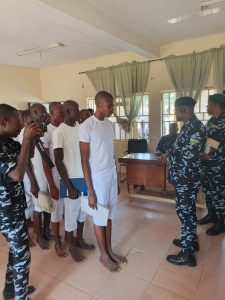
The Commissioner of Police, Zamfara State Command, CP Ahmad Muhammad Bello, psc+, mnips, on 10th April, 2026, conducted a working visit and on-the-spot assessment of the ongoing physical and credential screening exercise for applicants into the Nigeria Police Force.

The screening exercise, currently taking place at the Police Secondary School, Gusau, involves candidates for both General Duty and Specialist Cadres of Police Constables.

During the visit, the Commissioner of Police inspected the screening process to ensure strict compliance with the guidelines established by the Police Service Commission and the Nigeria Police Force. He emphasized the importance of transparency, fairness, and merit in the recruitment process.

CP Bello expressed satisfaction with the level of organization and professionalism displayed by officers and officials conducting the exercise. However, he re-emphasized that the recruitment process is completely free, and warned that any form of corruption, favoritism, or compromise will not be tolerated.

He further urged all applicants to conduct themselves in an orderly manner, adhere strictly to instructions, and ensure that all required documents are genuine and properly presented for verification.

The Commissioner also assured members of the public of the Command’s commitment to a credible recruitment process that will produce competent, disciplined, and service-oriented police personnel.

CP Bello was received by the Police Team Leader, DCP Shehu Sambo, alongside other senior officers of the Command. Representatives of the Police Service Commission, Federal Character Commission, and the Directorate of Recruitment were also present at the screening venue.

DSP Yazid Abubakar, anipr,
Police Public Relations Officer
For: Commissioner of Police, Zamfara State Command

10th April, 2026

POLICE REPEL BANDITS ATTACKS IN MARU AND BUKKUYUM LGAs


“We Are Determined to Overcome Insecurity in the State”

The Zamfara State Police Command has successfully repelled two separate attacks by suspected armed bandits in Maru and Bukkuyum Local Government Areas of the State.

On 9th April, 2026, at about 0730hrs, a group of suspected armed bandits riding approximately ten (10) motorcycles and armed with AK-47 rifles confronted a team of police personnel at a pin-down point along the Kadauri/Kizawa axis in Maru LGA.

The police operatives responded swiftly and engaged the assailants in a gun duel, effectively repelling the attack and forcing the bandits to retreat into the forest with suspected gunshot injuries.

During the encounter, one member of the Kadauri Vigilante Group sustained a gunshot injury and was immediately rushed to the General Hospital, Maru, where he is currently receiving treatment. Normalcy has since been restored in the area, while patrols and monitoring continue.

Similarly, on the same day at about 1345hrs, a large number of armed bandits bearing sophisticated weapons attacked Yar Galma Village in Bukkuyum LGA, shooting sporadically and causing panic among residents. In a swift response, a joint team of police personnel,and vigilantes, mobilized and engaged the attackers, forcing them to retreat into the forest with gunshot injuries.

However, during the encounter, four residents of Yar Galma sustained varying degrees of gunshot injuries. The victims were promptly evacuated to the General Hospital, Bukkuyum, for medical attention. Normalcy has also been restored in the area.

The Zamfara State Police Command reiterates its commitment to safeguarding lives and property and urges members of the public to continue supporting security agencies with credible and timely information.

DSP Yazid Abubakar, anipr
Police Public Relations Officer
For: Commissioner of Police,
Zamfara State Command, Gusau

9th April, 2026.

GORONYO COMMISSIONS ISAH MAI KWARE JUMU’AT MOSQUE, COMMENDS GOVERNOR AHMED ALIYU’S DEVELOPMENT DRIVE


From Muhammad Gazali Garba

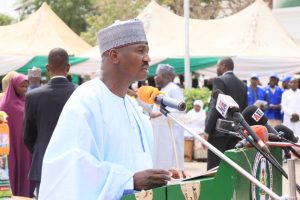
The Minister of State for Works, Barrister Bello Muhammad Goronyo, has commissioned the Isah Mai Kware Jumu’at Mosque in Sokoto State, describing it as a significant contribution to spiritual development, unity, and community progress.

Speaking at the ceremony, the Minister commended the Governor of Sokoto State, Ahmed Aliyu, for his dedication and tireless efforts toward the development of the state across all sectors.

He praised the Governor’s commitment to delivering impactful projects that promote religious harmony, infrastructure development, and improved welfare for the people.

Barrister Goronyo also appreciated Senator Aliyu Magatakarda Wamakko, describing him as a leader whose valuable advice and continuous guidance have contributed significantly to strengthening governance and development initiatives in Sokoto State.

He further expressed gratitude to the President of the Federal Republic of Nigeria, Bola Ahmed Tinubu, for his efforts in driving national development and implementing policies aimed at improving infrastructure, economic growth, and overall national progress.

In his remarks, Governor Ahmed Aliyu reiterated his administration’s commitment to expanding development across all sectors in Sokoto State in line with his nine-point agenda.

He said his government remains focused on improving religious infrastructure, education, health, and social welfare for the benefit of the people.

Governor Aliyu further disclosed that several Jumu’at mosques across Sokoto metropolis and local government areas such as Kware, Wamakko, Yabo, among others, have been renovated and upgraded under his administration, while support continues for no fewer than 91 Jumu’at mosques to ensure proper maintenance and sustainability.

He also commended President Bola Ahmed Tinubu for his visionary leadership and efforts toward national development, describing his policies as impactful in strengthening governance, infrastructure, and economic growth across the country.

Providing historical background, it was gathered that the mosque was originally built in 1975 as a cinema owned by Dikkon Gande, who had intended to convert it into a mosque before his passing.

In 2003, during the administration of Attahiru Dalhatu Bafarawa, the property was acquired with the support of well-meaning individuals, including Senator Aliyu Magatakarda Wamakko, Buhari Siriddawa, and others, and was subsequently converted into a mosque now known as the Isah Mai Kware Jumu’at Mosque.

The Governor noted that the mosque had not undergone any major renovation since its conversion, which informed the decision to remodel and upgrade it to its present standard.

The Chairman of Sokoto North Local Government, Jamilu Umar Gosta, commended the commissioning of the mosque, describing it as a landmark achievement in strengthening faith-based infrastructure in the area.

He pledged continued support for initiatives that promote religious harmony, peaceful coexistence, and community development, while urging residents to properly maintain and utilize the mosque for worship and learning.

The State Commissioner for Religious Affairs, Dr Jabir Sani Maihulla, also commended the event, describing it as a major milestone in promoting religious values and moral development in the state.

He praised Governor Ahmed Aliyu for his consistent efforts in renovating and constructing mosques across the state, noting that such initiatives have strengthened unity and peaceful coexistence among citizens.

Dr Maihulla further urged the Muslim community to take full ownership of the mosque by ensuring its proper maintenance and by actively engaging in prayers, Qur’anic recitations, and Islamic teachings that promote discipline and righteousness.

In his remarks, the Sultan of Sokoto, represented by the Wazirin Sokoto, Sambo Wali Junaidu, emphasized the importance of mosques in promoting moral values, unity, and devotion to Allah.

He commended the government’s efforts in advancing Islamic development and called on residents to sustain the mosque through regular worship and maintenance.

The Chief Imam, while leading special prayers, urged worshippers to make full use of the mosque by observing the five daily prayers, attending Jumu’ah services regularly, and engaging in teachings that promote discipline and righteousness.

The event featured Qur’anic recitations and sermons highlighting the importance of supporting religious infrastructure as a means of strengthening faith and unity.

When the Compass Turns: Kwankwaso, Abba, and the Politics of Foresight

By Abdulkadir Ahmed Ibrahim, FNGE. (Kwakwatawa)

Politics, like life, rarely moves in straight line.  It bends, it twists, and at times, it humbles even the most confident actors. What once appeared firm becomes fluid, and what was seemed as a betrayal yesterday is today looked at as a wisdom.

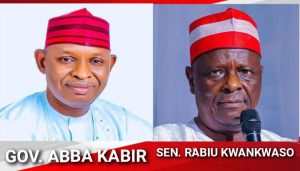
The unfolding political journey of Ex (two terms) Governor of Kano State and former Minister of Defence, Senator Rabiu Musa Kwankwaso and the incumbent Kano State Governor, Abba Kabir Yusuf, presents a defining moment that invites reflection on leadership, responsibility, and the burden of political choices.

There was a time in not too distant past when Governor Abba Kabir Yusuf made a bold political decision to step away from the New Nigeria Peoples Party, NNPP, and joined the All Progressives Congress, APC. That decision was, as expected, greeted with sharp criticism, mostly from his, ostensibly believed, political boss and mentor, Rabi’u Kwankwaso, who described the move in harsh terms.

For many of Kwankwaso’s political supporters and followers of his Kwankwasiyya movement, Governor Abba Yusuf”s change of political platform was a rupture of trust and a departure from a shared vision that had once energized a movement.
Yet, time has a way of revealing truth in layers. Today, the same Rabi’u Kwankwaso has taken a similar path, departing the NNPP for the African Democratic Congress, ADC. This development raises unavoidable questions about consistency, judgment, and the weight of earlier pronouncements.

It is difficult to overlook the contradiction. When a leader condemns a decision only to later embrace the same course, it signals a troubling inconsistency. Leadership demands clarity and firmness of purpose. It calls for alignment between words and actions. In this regard, Kwankwaso’s recent move appears less like a calculated strategy and more like a reluctant adjustment to realities he once dismissed.

More significantly, his current political standing no longer carries the commanding influence it once did. The aura of dominance that defined his earlier years has faded, replaced by a presence that struggles to inspire the same level of confidence or followership. In practical terms, he now appears diminished in weight, a figure whose voice no longer shapes the political direction as it once did.

This reality sharpens the contrast with Abba Kabir Yusuf. Unlike the shifting posture we now witness, Abba’s earlier decision reflects the discipline of a thoughtful strategist and the mindset of a leader guided by duty. He did not act out of impulse or fleeting ambition. He acted with a clear sense of direction, prioritizing the stability and progress of the people he serves.

His alignment with the All Progressives Congress, APC, was not a retreat, but a deliberate repositioning. It was the decision of a leader who understands that governance thrives on structure, access, and strategic partnerships.

In many ways, Abba Kabir Yusuf has demonstrated the qualities of a vigilant protector of public interest, a political figure who approaches leadership with foresight, discipline, and a deep rooted sense of national responsibility.

There is something profoundly patriotic in that approach. It reflects a leader who looks beyond personal loyalties and focuses on collective advancement. While others appear caught in cycles of reaction, Abba chose to define his path early, expanding opportunities for governance and ensuring that his administration remains connected to the levers of national development.

Governor Abba Yusuf”s Kano First Agenda (that kicked out a Movement’s policy of obeying and fulfilling the Personal Wishes and Desires of an Individual) has taken off with many salient socioeconomic development programmes and projects that are critical to his commitment of building a new Kano State.

This is now possible because of the absence of unnecessary distraction from certain quarters on what to and what not do. Kano State Government is no longer remotely controlled. The elected Chief Executive is fully in charge, discharging his responsibilities with the best of his abilities.

A prolific Writer, Good Governance Advocate and Public policy Analyst, Tijjani Sarki, recently opined that, “Kano State is witnessing a defining moment of hope and purposeful leadership”. He described Governor Abba Kabir Yusuf’s recent engagement with members of the National Assembly representing the state, as a welcome development that signals more than political dialogue.

“It represents a deliberate and focused effort to turn unity into transformative development for millions of Kano citizens’. “Amid significant political realignments, including Governor Abba Yusuf’s resignation from the New Nigeria Peoples Party (NNPP) alongside multiple officials, the governor has sent a clear message: the welfare of Kano’s people must rise above partisan considerations. This cooperation opens the door for strategic alignment between the state executive and Kano’s federal legislators, creating a historic opportunity to accelerate projects that will shape the state’s economic and social future”.

Kwankwaso’s departure from the NNPP, by contrast, carries the imprint of delayed judgment. It suggests a leader responding to circumstances rather than shaping them. While his past contributions remain part of the political record, his present trajectory raises difficult questions about relevance and influence.

A leader who once commanded a movement now finds himself searching for footing within another platform, without the same authority or clarity of purpose.

In politics, timing often separates foresight from regret. To act early is to lead. To act late is to follow. Abba Kabir Yusuf acted when it was difficult, when criticism was loud, and when the path ahead was uncertain. Today, that decision stands validated, not by words, but by unfolding reality.

For any politician seeking dignity and respect, consistency remains essential. It is built through clarity of vision, courage in decision making, and the ability to stand by one’s choices even under pressure. Abba’s journey reflects these qualities. He absorbed criticism without retreat, maintained focus, and allowed time to affirm the strength of his judgment.

The broader lesson here is clear. Political leadership is not sustained by past glory alone. It requires continuous relevance, sound judgment, and the ability to anticipate change. Those who fail to adapt in time risk becoming shadows of their former selves, remembered more for what they were than for what they are.

In the final analysis, the contrast is unmistakable. Abba Kabir Yusuf stands as a leader defined by foresight, discipline, and a strong sense of duty to the people.

His decision was not only strategic, but rooted in a desire to serve effectively and responsibly. He represents stability, clarity, and purposeful leadership.

As the political compass turns once again, one truth remains constant. Leadership is not measured by past acclaim, but by present clarity and future direction. In this moment, Abba Kabir Yusuf’s actions stand as a clear expression of foresight and responsible leadership, while others are left to navigate the consequences of choices made too late.

Abdulkadir Ahmed Ibrahim, FNGE (Kwakwatawa), a Veteran Journalist and Media Consultant, wrote from Kano City.

Zamfara CP Condoles Yarkatsinan Laka Community in Bungudu LG Over Bandits Attack


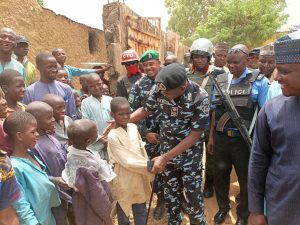
CP Ahmad Muhammad Bello, PSC+, MNIPS with some members of the community

The Commissioner of Police, Zamfara State Command, CP Ahmad Muhammad Bello, PSC+, MNIPS, has  paid a condolence visit to the people of Yarkatsinan Laka Community in Bungudu Local Government Area following a recent bandit attack.

On 7th April 2026, at about 1755hrs, a large number of armed bandits, riding on over 50 motorcycles and carrying sophisticated weapons, invaded Yarkatsinan Laka Community. The Police Strike Unit responded swiftly and engaged the assailants in a gun duel, resulting in the neutralization of eleven (11) armed bandits, while several others escaped with gunshot injuries.

This was contained in a press release issued by the Zamfara state Police Public Relations Officer, DSP Yazid Abubakar, ANIPR.

Regrettably, during the exchange of fire, two police personnel and three civilians lost their lives. One police officer sustained injuries and is currently receiving treatment and is responding positively.

CP  A.M Bello commiserated with the families of the deceased and the entire community over the unfortunate incident. He reassured residents of the Command’s unwavering commitment to strengthening the security architecture and restoring lasting peace and normalcy in the area.

Normalcy has since been restored. The Command urges members of the public to continue supporting security agencies with credible and timely information to enhance effective policing.

A Remarkable Homecoming: Kano Unites in Support of Abba Kabiru Yusuf, Signaling a Strong Endorsement for Bola Ahmed Tinubu in 2027

By: Nasiru Yusuf Gwadabe

Saturday, 4th April 2026 will not fade easily from the living memory of Kano. It is a date that has already secured its place in the history of the ancient city, not through official proclamation, but through the overwhelming expression of its people. From the very moment the aircraft conveying Abba Kabir Yusuf touched down at about noon, Kano transformed into a living theatre of emotion, loyalty, and political meaning. What began as a homecoming soon evolved into something far deeper, a dual expression of confidence in state leadership and a rising chorus of national political alignment.

What followed defied imagination. The governor could barely step forward without being surrounded by a surging crowd, eager not just to see him, but to connect with him. From approximately 12 noon until about 9 o’clock, movement itself became an extraordinary challenge. It was not resistance that slowed the governor’s convoy, but an outpouring of affection so powerful that it turned a simple journey into a historic procession.

The journey from the airport to the Government House, which ordinarily takes not more than fifteen minutes, stretched into nearly ten hours. What should have been a routine drive became a prolonged passage through a sea of humanity. The motorcade moved slowly, almost ceremonially, as if guided by the collective will of the people rather than the force of engines.

At every junction, the story repeated itself. The convoy would halt, not out of necessity, but out of insistence. Citizens stepped forward to offer prayers, raising their hands and voices in supplication for the governor’s success. These were not symbolic gestures. They were deeply felt expressions of hope, trust, and shared destiny. In those pauses, the line between the leader and the people seemed to disappear, replaced by a bond rooted in mutual belief.

Kano is not a city that offers such devotion lightly. It is politically aware,
historically grounded, and known for its ability to assess leadership with clarity. Yet on this day, its verdict was unmistakable. The scale of the reception, the patience of the crowd, and the emotional intensity of the moment all pointed to one undeniable truth. Abba Kabir Yusuf is not merely occupying an office. He is occupying the hearts of his people.

To describe him as a homeboy is to capture the essence of this connection. He is seen not as a distant authority, but as one who understands the rhythm of the streets, the struggles of ordinary citizens, and the aspirations that define Kano’s future. This familiarity has translated into trust, and that trust has now found its most visible expression in the streets.

Yet beyond the celebration of a leader’s return, a second narrative steadily took shape, one that aligned Kano’s political voice with the national leadership of Bola Ahmed Tinubu. What unfolded was not only a reaffirmation of faith in the governor, but also a growing endorsement of the President, expressed through chants, symbols, and the unmistakable enthusiasm of the crowd.

What unfolded on that Saturday goes beyond spectacle. It carries deep political significance. In a system where legitimacy is often contested, moments like these serve as powerful indicators of public confidence. The crowd was not assembled. It emerged. It was not directed. It was inspired. And in its sheer magnitude, it delivered a message louder than any campaign could convey.

That message is clear. Kano believes in Abba Kabir Yusuf. Kano stands with him. At the same time, Kano is increasingly aligning with the leadership of Bola Ahmed Tinubu, projecting a unified political direction that stretches from the state to the centre.

The long hours from noon to night were not a burden to the people. They were an offering. Every minute spent waiting, every step taken alongside the convoy, every prayer raised was a contribution to a shared narrative. It was a way of saying that leadership, when it is genuine, does not stand apart from the people. It walks among them.

While addressing the mammoth gathering that thronged the streets, Governor Abba Kabir Yusuf expressed deep appreciation for the overwhelming show of love and solidarity, describing it as a clear endorsement of his administration’s direction and achievements. He noted that such a reception was not only humbling but also a powerful motivation to intensify efforts toward delivering more developmental projects across all sectors of the state.

He assured the people that their confidence would not be taken for granted, emphasizing that the administration remains committed to consolidating its gains and expanding its impact beyond 2027. In what appeared to be a pointed message to political opponents, the governor remarked that the unprecedented turnout had already sent a strong signal about the future, particularly to those suggesting that his tenure would be limited to a single term. According to him, the people of Kano have, through their actions, demonstrated where their loyalty lies.

“Today’s outing is no doubt an indication of your unalloyed support and endorsement for our administration to continue with the laudable initiatives that will make Kano greater,” he declared, while challenging any political contender to mobilize a similar organic gathering. The statement carried a clear undertone, positioning the event not just as a welcome ceremony, but as an early barometer of political strength ahead of the 2027 elections.

Importantly, the governor used the moment to reaffirm Kano State’s alignment with the Federal Government under the leadership of Bola Ahmed Tinubu. He emphasized that sustained collaboration with the centre remains vital for attracting federal interventions and accelerating development across the state.

In a more direct political appeal, he called on the people of Kano to translate their visible enthusiasm into electoral action by supporting President Bola Ahmed Tinubu in the 2027 general elections. He stressed that continuity at the federal level would not only consolidate ongoing reforms but also guarantee greater opportunities and development for Kano State.

The response from the crowd reinforced this call. From the airport through the major streets, chants in support of the President grew louder, blending seamlessly with those of the governor. Supporters waved party symbols and openly affirmed their readiness to stand with President Bola Ahmed Tinubu, turning the reception into a powerful demonstration of dual loyalty and shared political purpose.

For many observers, this was more than a moment of celebration. It was a declaration of alignment. The people of Kano, through their sheer numbers and visible enthusiasm, projected confidence not only in their governor but also in the leadership at the centre. The endorsement of President Bola Ahmed Tinubu was not staged. It emerged organically, carried on the voices of thousands who see continuity as a pathway to progress.

This groundswell of support speaks to a broader political reality. Kano remains one of the most influential political blocs in the country, and its direction often shapes national outcomes. By rallying behind both Abba Kabir Yusuf and President Bola Ahmed Tinubu, the people have signaled a convergence of interests that could prove decisive in the coming electoral cycle.

The electrifying reception, marked by chants, music, and a sea of party symbols, brought movement across key roads to a standstill as residents came out in solidarity. The massive turnout underscores the governor’s growing political influence and the deepening connection between his administration and the people. It also reflected the role of grassroots mobilization across all levels, drawing participation from party executives, political office holders, traders, youth groups, and entertainers. The crowd took nearly eight hours to escort the governor from the airport to the Government House, a journey that ordinarily lasts just fifteen minutes.

The reception stands as one of the largest in Kano’s recent political history, second only to the massive turnout recorded on 12th January 2024 following the Supreme Court judgment. In both instances, the people’s response has served as a clear signal of political direction and public sentiment.

As the governor finally made his way through the vast crowd late in the evening, the significance of the moment remained unmistakable. This was more than a return from official engagements. It was a reaffirmation of trust, a visible endorsement of leadership, and a powerful reminder of the bond between Kano and its governor.

Saturday, 4th April 2026 will be remembered not just for the crowd, but for what the crowd represented. It will be remembered as the day Kano stood still, not in silence, but in solidarity. A day when the streets spoke, when the people declared their confidence, and when a leader’s journey home became a collective experience.

And as the echoes of that historic welcome continue to ripple across the political landscape, one conclusion rises above all others. This was not merely a reception. It was a statement of strength, a public reaffirmation of mandate, and a quiet but powerful signal of what lies ahead. In the language of politics, moments like these are not accidental.

They are indicators of momentum, of acceptance, and of a growing consensus. If the future is shaped by the will of the people, then Kano has already begun to write its next chapter, one that places Abba Kabir Yusuf firmly at its center, while echoing a resounding and unmistakable endorsement of Bola Ahmed Tinubu as the path forward to 2027.

Nasiru Yusuf Gwadabe, a Veteran

A Progressive Stewardship Deserves Continuity

Gov. Ahmed Aliyu, Sokoto state

By Mohammed Umar
In a couple of days, political parties in the country will commence activities in earnest to select candidates for various elective positions in preparations to 2027 general elections. These include president, governors, senators, members of house of representatives and state assemblies. For the ruling party, APC, President Bola Ahmed Tinubu has clearly indicated his intention to vye for a second term. Similarly, in states some governors are on their final term while the first timers are vying for second term. Among the first timers, is the Sokoto state governor, Dr. Ahmed Aliyu. He is vying for second term slot in response to calls by the people in consideration to his selfless service to the people and remarkable achievements he has so far recorded.
Governor Ahmed Aliyu, to say it loud and clear, has during his first term, demonstrated a clear vision and dedication to the welfare of the people and progress of the state.
On the basis of this, the case for granting him a second term is not merely political but a logical step to consolidate gains, complete transformative projects, and ensure sustainable development for posterity.
Upon taking office in 2023, Governor Aliyu inherited significant security challenges, particularly in the eastern zone of the state. He realized that development cannot thrive in an atmosphere of fear, his administration therefore made security a top priority.
Through strategic collaboration with federal security agencies, community-led initiatives, and increased support for local vigilante groups, Sokoto has witnessed a notable improvement in peace and stability. A second term would allow him to build on this foundation, implementing more permanent solutions and fostering greater inter community harmony.

Governor Aliyu’s tenure has been marked by a deliberate focus on infrastructure as the backbone of economic growth. From the rehabilitation of urban roads in Sokoto metropolis to the construction of critical rural access roads, his administration has worked to connect communities and boost commerce. Notable projects include upgrades to healthcare facilities, renovations in the education sector, and improvements in public utilities. These are not mere projects but investments in the state’s future that require continuity to yield their full benefits.

Sokoto State’s economy is predominantly agrarian. Governor Aliyu recognized this and launched initiatives aimed at modernizing agriculture, providing farmers with improved seedlings and fertilizers both during dry season and rainy season farming.

His administration also prioritized youth and women empowerment through skills acquisition programs and micro-credit schemes, fostering entrepreneurships and reducing dependency thereby creating the spirit of self reliance.

The recent recruitment of 3,000 graduates and NCE holders attested to the governor’s determination to empower the teaming youth.
A second term would enable the scaling up of these programs, transforming subsistence farming into agribusiness and creating lasting job opportunities.

In an era where transparency and accountability are paramount, Governor Aliyu has run an administration notable for its fiscal discipline. By blocking revenue leakages, prioritizing capital projects over recurrent expenditure, and ensuring due process in government contracts, he has restored public confidence in governance. This prudent management aimed to attract development partners and set the stage for greater investment. Continuity in this approach is crucial for long-term economic planning and sustainability.

The governor’s commitment to human development is evident in his policies on education and health. From the renovation of dilapidated schools and the provision of learning materials to the upgrade of primary healthcare centers and the recruitment of medical personnel, his administration has placed people at the center of governance. Education and health are slow-burn sectors; a second term would allow for the deepening of these reforms, ensuring that every child in Sokoto has access to quality education and every citizen can access affordable healthcare.

Governor Ahmed Aliyu’s first term has been characterized by purposeful leadership, strategic development, and a sincere desire to uplift Sokoto State. While significant strides have been made, many initiatives are still in their implementation phase. Interrupting this momentum could stall progress and delay the realization of the state’s full potential.

A second term for Governor Aliyu is not about entitlement; it is about trust earned through performance. It is an opportunity to solidify the gains of the past four years, complete ongoing projects, and lay an even stronger foundation for a prosperous, secure, and united Sokoto State. The people of Sokoto have a chance to choose continuity over uncertainty, and progress over stagnation. Governor Ahmed Aliyu has earned that chance.

Deadly Showdown in Zamfara: Security Forces Kill Over 30 Bandits, Key Kingpins Eliminated

A fierce counter offensive by security forces in Zamfara State has resulted in the killing of more than 30 bandits, including two notorious kingpins, Kachalla Iliya Sarki and Dogo Bete.


According to security sources, the confrontation began late Saturday evening when bandits launched an attack against members of the Civilian Joint Task Force (CJTF) popularly know as “Yan Maiduguri” in Kunchin Kalgo Village, Tsafe Local Government Area. In response, a joint security team swiftly mobilized reinforcements to support the embattled CJTF operatives, leading to an intense gun battle.

“We overpowered them due to superior firepower and pursued them into Munhaye forest, where over 30 bandits were neutralized,” a security operative disclosed. Among those killed was Kachalla Iliya Sarki, reportedly the son of infamous bandit leader Ado Aleiro, alongside another prominent figure, Dogo Bete.

Despite the operational success, the encounter came at a heavy cost. Local sources confirmed that more than 10 CJTF members lost their lives during the clash, while several others remain unaccounted for, revealing the ongoing risks faced by local vigilante groups supporting formal security forces.

In a related incident on Sunday afternoon, CJTF operatives engaged bandits in Kungurki Village, Kaura Namoda Local Government Area. Two bandits were reportedly killed in the clash, with one of them beheaded.

The Zamfara State Commissioner of Police, Ahmad Muhammad Bello, confirmed the development, stating that special forces had been deployed to restore calm, with normalcy returning to the area.

Zamfara State has endured over a decade of violent attacks by armed groups, resulting in widespread loss of life, destruction of property worth billions of naira, and the payment of huge ransoms. While security operations have recorded periodic successes, residents continue to express concern over the persistence of the crisis, urging authorities to adopt more decisive and lasting measures to end the menace.

More Victory ya Allah, kudos to the securities.

Zamfara Police Launch Rescue Operation As Bandits Attack Kurfa Community


Residents flee after bandits attack Kurfa Community as Nigeria Police Force intensify rescue efforts.

A large number of suspected bandits have attacked Kurfa Community in Bukuyum Local Government Area of Zamfara State, abducting several residents and leaving others injured, as security operatives intensify rescue efforts.

The attack, which occurred on Thursday, April 2, saw heavily armed assailants storm the community, firing sporadically and causing panic among residents who fled in different directions for safety.

The Zamfara State Police Command confirmed the incident in a statement signed by its Public Relations Officer, DSP Yazid Abubakar, on behalf of the Commissioner of Police.

According to the statement, the assailants operated for a considerable period before fleeing the scene ahead of the arrival of security personnel.

Police sources said an unspecified number of people were abducted during the raid and taken to an unknown destination.

Several residents who escaped into nearby areas were later located by security operatives and rushed to hospital for treatment, with efforts ongoing to determine the exact number of those kidnapped.

A joint team of police, military, and other security agencies has since been deployed to the area, launching a coordinated rescue operation and pursuing the fleeing attackers.

Authorities say tactical teams are currently on the trail of the attackers as part of intensified operations to restore calm.

The Police Command assured residents of its commitment to restoring peace and security across Zamfara State, adding that further updates on the rescue operation and arrests would be made available as developments unfold.

GRASSROOTS WOMEN MUST NOT BE EXCLUDED FROM DEVELOPMENT

By Sani Umar

The central argument that women are indispensable partners in societal development finds strong resonance in the concerns raised by Hajiya Fatima Ahmed Aliyu during her engagement with women stakeholders in Sokoto State.

Women, as highlighted in the background, are not only the foundation of population growth but also the nurturers of future nation builders. However, their role goes beyond the domestic sphere, they are critical contributors to economic growth, social stability, and community development. For this reason, any meaningful development agenda must deliberately include women as equal stakeholders, particularly those at the grassroots level.

This broader perspective directly aligns with Hajiya Fatima Aliyu’s observation that rural women benefit less from government interventions. Her concern underscores a persistent imbalance in policy implementation, where initiatives, though well designed, often fail to adequately reach the most vulnerable women in rural communities.

This gap reflects the very issue often raised which views, that development efforts become ineffective and “slanted” when they are disproportionately concentrated in urban centres.

By convening the stakeholders’ meeting, Hajiya Fatima Aliyu is essentially advocating for a corrective approach, one that ensures inclusivity, fairness, and equitable distribution of resources. Her emphasis on “fine-tuning strategies” speaks to the need for intentional policy redesign, where delivery mechanisms are strengthened to penetrate grassroots communities.

This is critical because, as noted, rural women face unique challenges such as limited access to information, infrastructure, finance, and markets. In some cases, their plight is more pronounced than that of the urban women.

Furthermore, her office’s interventions, ranging from cash support and food distribution to skills acquisition and agricultural empowerment, demonstrate a practical commitment to women’s development.

However, her acknowledgment that rural women still lag in benefiting from these programmes reinforces the argument that impact is not just about policy creation, but about reach, accessibility, and inclusiveness.

Her call for collective responsibility among stakeholders also reflects an important development principle, that government alone cannot achieve equitable distribution without collaboration from community leaders, institutions, and civil society. This aligns with the idea that a responsible and balanced society is built through shared commitment to fairness.

In addition, the emphasis on empowering women through initiatives such as skills acquisition, entrepreneurship support, and agricultural training highlights the transformative potential of investing in women at the grassroots.

When women are economically empowered, the benefits extend beyond individual households to the wider community, leading to improved education for children, better health outcomes, and enhanced local economies. This multiplier effect further justifies the urgent need to prioritize rural women in policy implementation.

Ultimately, the efforts of Hajiya Fatima Ahmed Aliyu signal a growing recognition that inclusive development must be deliberate and people-centered. By focusing attention on the underserved rural population, her advocacy reinforces the principle that sustainable development can only be achieved when every segment of society, especially women at the grassroots, is given equal opportunity to thrive and contribute meaningfully to national progress.

RECOMMENDED NEWS

POPULAR