Home Blog Page 11

Ganduje and Sanusi II: A Defining Moment of Reconciliation and Kano’s Path to Unity

By: Lamara Garba

In Kano’s evolving political story, certain moments carry a quiet weight that goes beyond ceremony and routine. They do not announce themselves with noise, yet their meaning settles deeply in the public consciousness. The public acknowledgment of Muhammadu Sanusi II by Abdullahi Umar Ganduje as Emir of Kano and Chairman of the Kano State Council of Chiefs is one of such moments. It reflects a shift not only in posture but in perspective, where history, humility, and leadership meet to redefine the direction of a people.

For a state like Kano, where tradition and politics are inseparable threads in the fabric of society, this gesture carries unusual depth. It speaks to memory, to responsibility, and to the rare courage required to move beyond the past. Years ago, it was Ganduje who removed Sanusi from the throne in 2020, a decision that stirred intense reactions and left the state politically divided. That episode became one of the most defining and contentious moments in Kano’s recent history.

Yet time has a way of softening even the hardest edges.

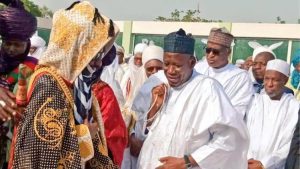
Standing before a distinguished gathering at the Government House, Ganduje chose recognition over resistance. By addressing Sanusi with his full royal title, he did more than observe formal protocol. He embraced a new reality and, in doing so, sent a powerful message that Kano is ready to outgrow its divisions. The applause that followed was not merely for the act itself, but for what it symbolized. It was an affirmation that reconciliation, however delayed, remains possible.

At the heart of this unfolding transformation is Abba Kabir Yusuf, whose Kano First agenda is gradually assuming a deeper meaning. Beyond governance in its conventional sense, his approach reflects a commitment to healing political fractures and restoring collective purpose. Bringing together figures whose histories are marked by sharp differences is not an easy undertaking. It demands patience, persuasion, and a clear vision of what the state can become.

Uniting Ganduje and Emir Sanusi is therefore not just a political development. It is a moral statement. It suggests that leadership is not defined by past disagreements, but by the willingness to rise above them for the greater good.

In all of this, the conduct of Emir Sanusi stands out as a lesson in restraint and faith. Following his removal, he accepted the outcome without public hostility. He neither inflamed tensions nor sought to deepen divisions. Instead, he returned to a quiet life, guided by a firm belief that authority ultimately belongs to Allah, who grants and withdraws as He wills. Such composure in the face of power’s uncertainty reflects a philosophical depth that transcends politics.

There is strength in silence. There is dignity in patience.

Now, with his reinstatement and the open recognition of his authority, that patience finds expression in a restored balance rather than a personal victory. It is not a triumph of one individual over another, but a triumph of wisdom over discord. In this lies the beauty of the moment.

Kano today appears to be rediscovering itself. The coming together of its political and traditional leaders signals a readiness to chart a new course. It suggests that the state is beginning to understand that progress is best pursued in unity. Differences may remain, but they no longer have to define the future.

Governor Yusuf’s role in this process carries a certain quiet elegance. He is not merely administering policies; he is rebuilding relationships. Like a careful craftsman, he is mending what was once broken and aligning interests that once seemed irreconcilable. In doing so, he is creating an environment where governance can thrive without the burden of persistent conflict.

Development does not grow in the soil of division. It flourishes where there is trust, cooperation, and shared purpose. Kano, with its rich heritage and strategic importance, stands to gain immensely from this renewed spirit of unity.

There is something almost poetic in the unfolding reality. The past, once marked by tension, is gradually giving way to understanding. The voices that once stood apart are beginning to find a common rhythm. And within that rhythm lies strength, resilience, and hope.

This moment offers a lesson not just for Kano, but for the wider Nigerian landscape. It demonstrates that reconciliation is not weakness. It is wisdom. It shows that leadership is not about holding on to old battles, but about preparing the ground for future generations.

As Ganduje acknowledges Sanusi, and as Sanusi continues to embody patience and grace, and as Governor Yusuf steadily advances a vision rooted in unity, Kano writes a new chapter for itself. A chapter defined not by conflict, but by convergence. Not by rivalry, but by responsibility.

It is a chapter that reminds us that history can be revisited, not to reopen wounds, but to heal them.

It is a chapter that suggests that when leaders choose understanding over pride, the people will always benefit.

And in this unfolding story, Kano stands not just as a political center, but as a symbol of what becomes possible when unity is given a chance.

In that possibility lies the promise of a stronger, more peaceful, and more prosperous future for the state and its people.

Lamara Garba, a former Chairman of Kano NUJ Correspondents’ Chapel, writes from Kano
SOKOTO GOVT, NUTRITION INTERNATIONAL PLEDGE DEEPER PARTNERSHIP TO TACKLE MALNUTRITION AND STRENGTHEN HEALTHCARE

From Muhammad Gazali Garba


Governor Ahmad Aliyu has reaffirmed his administration’s commitment to deepening collaboration with Nutrition International in efforts to reduce malnutrition and strengthen healthcare delivery for women, children, and vulnerable groups in Sokoto State.

The governor made the pledge on Monday while receiving the Country Director of Nutrition International, Dr. Osita Okonkwo, during a courtesy visit at Government House, Sokoto.

Aliyu said his administration had invested over ₦100 million in child health initiatives and would continue to scale up interventions aimed at improving health outcomes across the state.

He disclosed that the state government had introduced a policy mandating rural postings for health personnel, backed by a 10 per cent monthly salary incentive to encourage service in underserved communities.

Under the arrangement, over 1,500 nurses and midwives have been employed and deployed to rural areas, while 2,400 community health workers have also been engaged to strengthen primary healthcare delivery across the state.

“Human capital development remains central to this administration’s agenda,” the governor said.

He assured development partners of transparency, accountability, and efficient utilization of health resources, while calling for stronger multi-stakeholder collaboration to reduce child mortality, improve maternal health, eliminate gender-based violence, and protect the rights of women and children.

Governor Aliyu also commended the Federal Government and development partners for their continued support to Nigeria’s health sector.

He further reiterated that his administration would continue to prioritise preventive healthcare and nutrition-sensitive interventions as a long-term strategy for breaking the cycle of poverty and disease.

According to him, strengthening primary healthcare systems and expanding community-based nutrition programmes remain central to achieving universal health coverage in the state.

He added that the government would continue to align its health policies with global best practices and Sustainable Development Goals targets to ensure that no community is left behind.

In his remarks, Dr. Osita Okonkwo commended the Sokoto State Government for its increased investment in health and the establishment of an accountability framework for nutrition commodities.

He said Nutrition International has partnered with Sokoto State since 2007, supplying about 2.1 million Vitamin A capsules annually to children under five during Maternal, Newborn and Child Health Weeks. He noted that the intervention, valued at over ₦100 million yearly, has contributed significantly to reducing child morbidity and mortality.

Dr. Okonkwo further disclosed that between 2022 and 2025, the organization supplied 126,000 Zinc and Oral Rehydration Salts (ORS) co-packs to the state, while an additional 45,000 co-packs had recently been procured and delivered to the State Medical Store for distribution.

He attributed the sustained support to funding from the Government of Canada through Global Affairs Canada and GiveWell philanthropy, and called for increased domestic investment in nutrition alongside stronger gcross-sector collaboration to address the multiple causes of malnutrition.

Dr. Okonkwo reaffirmed Nutrition International’s commitment to providing technical support and evidence-based interventions, expressing confidence that the partnership would continue to strengthen healthcare delivery in Sokoto State.

Gov Aliyu Commissions N12.6 Billion, 8.1km Yandaki–Shinkafi–Kofar Sauri Road

The Governor of Sokoto State, Ahmed Aliyu, on Friday evening commissioned the N12.6 billion, 8.1-kilometre Yandaki–Shinkafi–Kofar Sauri road constructed by the Governor of Katsina State, Dikko Umar Radda.
Governor Aliyu commended Governor Radda for executing a project with significant impact on the socio-economic development of communities along the corridor.

He described road infrastructure as critical to fast-tracking economic activities by enabling the efficient movement of goods and services.

“Roads such as this newly dualised corridor play a vital role in improving transportation, enhancing road safety, reducing travel time, and supporting commercial and social activities within our communities,” he said.

He added that the dualisation of the road would ease traffic congestion, improve connectivity, and enhance the overall urban landscape.

According to Governor Aliyu, the project is not only an investment in physical infrastructure but also in economic development, job creation, and urban transformation.

He further noted that the development of modern road infrastructure remains one of the most important drivers of economic growth, urban development, and social integration.

Governor Aliyu commended the Katsina State Government for prioritising infrastructure as a foundation for sustainable growth.

He also expressed appreciation to Governor Radda for the honour of inviting him to participate in the commissioning ceremony, describing the gesture as a reflection of unity, cooperation, and shared commitment to the progress of Sokoto and Katsina States, as well as the nation.

Earlier, Governor Dikko Umar Radda stated that the project represents his administration’s deliberate effort to modernise urban infrastructure, improve mobility, enhance road safety, and build a more organised and economically vibrant state.

He added that his administration has undertaken road construction, rehabilitation, and urban renewal projects covering up to 200 kilometres across both urban and rural areas of Katsina State.

“These efforts are aimed at boosting economic activities, facilitating transportation, and improving the overall quality of life for our citizens,” he said.

Governor Radda urged residents of Yandaki, Shinkafi, Kofar Sauri, and the wider Katsina metropolis to protect and maintain the projects executed for their benefit, ensuring future generations can also enjoy them.

He reassured the people of Katsina State that his administration will continue to prioritise infrastructure development as a key driver of economic growth and social progress.

Governor Ahmed Aliyu was accompanied by the Speaker of the Sokoto State House of Assembly, Rt. Hon. Tukur Bala Bodinga; Member representing Bodinga/Dange Shuni/Tureta, Nasiru Shehu; Sokoto State APC Chairman, Haruna S.G. Adiya; former Member representing Gada/Goronyo Federal Constituency, Musa S. Adar; Senior Special Assistant on Legal and Administration, Barr. Gandi Umar Muhammad; and Governor Aliyu’s political ally, Ahmed Gohe Tafida.

BRIDGING THE GAP BETWEEN HEALTHCARE ACCESS AND UTILISATION IN SOKOTO STATE

By Sani Umar

Across Nigeria, one of the most persistent challenges in maternal and child health is not only the availability of services but their utilisation. Over the years, governments and development partners have invested heavily in building health facilities, training personnel, and supplying essential medicines. Yet, a critical gap remains, many women, particularly in rural communities, still do not take full advantage of these services, especially when it comes to delivering in health facilities under skilled supervision.

Sokoto State reflects this national reality in a pronounced way. While progress has been made in expanding primary healthcare infrastructure and increasing antenatal care attendance, a significant proportion of expectant mothers continue to give birth outside formal health settings.

This disconnect between access and utilisation has continued to fuel preventable maternal and infant deaths, making it clear that addressing infrastructure alone is not enough, there must also be deliberate efforts to influence behaviour, build trust, and strengthen community engagement.

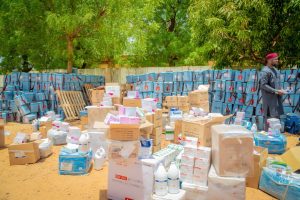
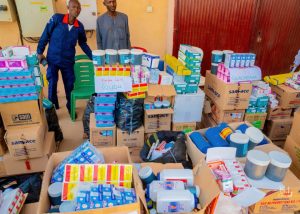
The recent distribution of sexual and reproductive health commodities, equipment, and essential medicines to selected health facilities across the state by the First Lady, Hajiya Fatima Aliyu, offers a timely intervention aimed at closing this gap.

By equipping high-burden primary healthcare centres with critical supplies, the initiative seeks to improve service readiness and ensure that women who choose to seek care are met with quality and reliable services. It also reinforces the message that healthcare facilities are safe, prepared, and capable of handling maternal and child health needs.

Driving the initiative, the Wife of the Governor, Hajiya Fatima Ahmed Aliyu, framed the effort as a practical step toward restoring confidence in the healthcare system. Her emphasis on protecting women and children, particularly in underserved communities, reflects a growing recognition that improving outcomes requires both compassion and sustained advocacy. By engaging directly with stakeholders and frontline workers, she highlighted the importance of not just delivering resources, but ensuring they are used effectively and reach those who need them most.

Her call for accountability and vigilance against the misuse of medical supplies further reinforces the idea that trust in the system is built through transparency. At the same time, her appeal to traditional leaders, community influencers, and security agencies underscores the role of society at large in encouraging women to seek proper care and in safeguarding the integrity of public health interventions.

From a systems standpoint, the Commissioner for Health, Dr Faruku Umar Abubakar, brought attention to the underlying dynamics shaping healthcare outcomes in the state. While acknowledging the progress made in infrastructure and service provision, he pointed to utilisation as the critical missing link.

The reality that only a fraction of women who attend antenatal care proceed to deliver in health facilities highlights deep rooted challenges, including cultural preferences, accessibility concerns, and perceptions about quality of care.

Addressing these issues, he noted, requires a combination of improved service delivery and sustained public enlightenment. By leveraging structured frameworks such as the Basic Healthcare Provision Fund, the state is working to standardise operations, enhance efficiency, and ensure that primary healthcare centres function optimally. These efforts are designed not only to expand access but to make services more responsive and trustworthy.

Providing further insight, the Special Adviser on Primary Healthcare, Dr Bello Marnona, emphasised the importance of aligning infrastructure, workforce, and supply chains to achieve meaningful impact. With an extensive network of healthcare facilities and a growing number of trained personnel, the state is positioning itself to deliver comprehensive services across both urban and rural areas. The deployment of nurses and midwives to underserved communities, in particular, is expected to bring care closer to the people and reduce barriers to access.

However, he stressed that true progress lies in ensuring that these resources translate into improved health seeking behaviour. The distribution of medicines and equipment, therefore, is not an end in itself but part of a broader strategy to rebuild confidence in the healthcare system and encourage greater utilisation of available services.

Ultimately, the emerging focus in Sokoto State is not just on expanding healthcare infrastructure but on making it work for the people. Bridging the gap between access and utilisation requires a balanced approach, one that combines investment in facilities and personnel with sustained community engagement, accountability, and behavioural change initiatives.

As these efforts continue to unfold, their success will depend largely on sustained commitment, effective implementation, and the active participation of communities in embracing safer health practices.

If effectively implemented, these efforts could mark a turning point in reducing maternal and child mortality and in building a healthcare system that truly serves all.

CP AHMAD MUHAMMAD BELLO PSC+, MNIPS LECTURES NYSC CORPS MEMBERS ON PUBLIC SAFETY AND SECURITY

The Commissioner of Police, Zamfara State Command, CP Ahmad Muhammad Bello, psc+, mnips, has delivered a lecture to National Youth Service Corps (NYSC) members on the importance of public safety and security awareness.
The lecture, which took place at the NYSC Orientation Camp, was aimed at educating corps members on their roles in promoting peace, safety, and security within their host communities.

In his address, the Commissioner of Police emphasized the need for vigilance, personal security consciousness, and adherence to the rule of law. He urged the corps members to be law-abiding citizens, avoid involvement in unlawful activities, and always cooperate with security agencies.

CP Bello further advised the corps members to be mindful of their environment, maintain good relationships with members of their host communities, and promptly report any suspicious movements or activities to the nearest security agency.

He reiterated the Command’s commitment to ensuring the safety of all residents, including corps members, and encouraged them to see themselves as partners in the collective effort to enhance security across the state.

The Commissioner also assured the corps members of the Police Command’s readiness to provide necessary support and protection throughout their service year.

DSP Yazid Abubakar, ANIPR
Police Public Relations Officer
For: Commissioner Of Police,Zamfara State Command,Gusau.

30th April 2026

SOKOTO GOV INAUGURATES ALIYU WAMAKKO JUMU’AT MOSQUE, URGES SUSTAINED MAINTENANCE

From Muhammad Gazali Garba

Sokoto State Governor, Dr. Ahmed Aliyu, has called for proper maintenance and sustained cleanliness of the newly inaugurated Aliyu Magatakarda Wamakko Jumu’at Mosque, urging its management committee to preserve the sanctity of the worship centre and ensure it remains conducive for worshippers at all times.

The governor made the call on Friday during the formal commissioning of the mosque, constructed and fully furnished by Senator Aliyu Magatakarda Wamakko along Bodinga Road in Sokoto metropolis as part of his sustained commitment to the promotion of Islam and community development.

Governor Ahmed Aliyu commended Senator Wamakko for his immense contributions to the advancement of Islam, humanitarian service, and societal development, noting that his numerous interventions in religious, educational, and social sectors have continued to positively impact the lives of the people.

He emphasized that maintaining the mosque in excellent condition would not only preserve its spiritual significance but also encourage greater participation in congregational worship.

As part of government support, the governor directed that the mosque be included among Jumu’at mosques benefiting from the state government’s monthly imprest allocated to metropolitan mosques.

He further announced that the Chief Imam, his deputies, and the muazzims of the mosque would be incorporated into the state government’s monthly allowance scheme for religious leaders, as part of broader efforts to strengthen Islamic institutions and support clerics in the discharge of their religious responsibilities.

Speaking at the event, Senator Aliyu Magatakarda Wamakko expressed gratitude to Almighty Allah for granting him the privilege and resources to execute the project, describing the mosque as an act of worship, service to Islam, and a meaningful contribution to the Muslim Ummah.

My desire is to ensure that our people have access to befitting places where they can worship Allah in peace, dignity, and spiritual fulfillment,” Senator Wamakko stated.
Senator Wamakko also praised Governor Ahmed Aliyu for his exemplary leadership, describing him as a hardworking, visionary, and compassionate leader whose administration has demonstrated remarkable commitment to the promotion of Islam, social welfare, infrastructural development, and good governance across Sokoto State.

He noted that Governor Ahmed Aliyu’s dedication to supporting religious activities and critical sectors reflects genuine concern for the well-being, unity, and progress of the people, urging citizens to continue supporting the administration’s developmental initiatives.

Representing the Sultan of Sokoto, His Eminence Alhaji Muhammad Sa’ad Abubakar III, the Wazirin Sokoto, Professor ,Sambo Wali Junaidu, commended Senator Wamakko for his unwavering investment in the promotion of Islam and community development.

He described the construction of the mosque as a noble and enduring legacy that would continue to benefit generations of Muslims, stressing that building and maintaining places of worship remains among the most rewarding acts in Islam.

Professor,Sambo Wali Junaidu urged Muslim faithful to emulate such noble gestures for the spiritual and moral growth of society and offered prayers for Senator Wamakko, Governor Ahmed Aliyu, and the people of Sokoto State, asking Almighty Allah to sustain peace, unity, and prosperity in the state and across the nation.


A major highlight of the event was the turbanning of the mosque’s Chief Imam, Prof. Murtala Yahaya Al-Amin, alongside his deputies, Malam Abdullahi and Malam Mustafa Musa.

The ceremony was performed on behalf of the Sultan of Sokoto by the Wazirin Sokoto, Prof. Sambo Wali Junaidu.

In his remarks, the Chairman of Sokoto South Local Government Area, Malam Yau Danda, described the mosque as a timely intervention that would significantly ease pressure on existing worship centres while promoting religious activities in the area.

Also speaking, the Commissioner for Religious Affairs, Professor,Jabir Sani Maihulla, described the mosque project as a major contribution to Sokoto State’s religious infrastructure and a clear demonstration of Senator Wamakko’s practical leadership and enduring commitment to Islam.

He reaffirmed the state government’s readiness to continue supporting initiatives that foster moral development, peaceful coexistence, and religious advancement.

The ceremony was attended by the Deputy Governor, Engineer Idris Muhammad Gobir; former deputy governors Chuso Abdullahi Dattijo and Barrister Mukhtari Shagari; member representing Bodinga, Tureta, and Dange shuni Federal Constituency, Hon. Nasiru Shehu; Secretary to the State Government, Alhaji Muhammad Bello Sifawa; Chief of Staff, Government House, Aminu Haliru Dikko; commissioners, special advisers, local government chairmen, religious leaders, community leaders, and prominent ulamas, among others.

It was concluded with a two-Raka’at Jumu’at prayer led by the Chief Imam, Professor , Muttaka Yahaya Al-Amin, drawing hundreds of worshippers, dignitaries, and community members in an act of devotion and thanksgiving to Almighty Allah.

The Aliyu Magatakarda Wamakko Jumu’at Mosque stands as one of several impactful religious, humanitarian, and developmental projects executed by Senator Wamakko, further solidifying his longstanding legacy of service to Islam, humanity, and the people of Sokoto State.

SOKOTO DEPUTY GOVERNOR INSPECTS LANDMARK MULTI-BILLION NAIRA PROJECTS IN GADA, APPLAUDS MASSIVE DEVELOPMENT PROGRESS

From Muhammad Gazali Garba

Sokoto State Deputy Governor, Engineer Idris Gobir, has undertaken a comprehensive inspection tour of key infrastructural and developmental projects worth billions of naira currently being executed by the administration of Governor Ahmed Aliyu Sokoto in Gada Local Government Area, reaffirming the government’s unwavering commitment to grassroots development and economic transformation.

The extensive projects inspected include the 21.8-kilometre Kaffe–Kaddi Sabon Gari Road, the 9.5-kilometre Gada–Ila–Tabani Road, the Gada Agro Logistics Centre, the fully renovated Gada General Hospital, and the ongoing construction of the Gada Central Jumu’at Mosque.

During the tour, the Special Adviser to the Governor on Rural Roads, Malami Mohammed Galadanci, briefed the Deputy Governor on the Kaffe–Kaddi Sabon Gari Road project, stating that it was awarded to M/S Gerawa Global Engineering Nigeria Limited at a contract sum exceeding ₦5.1 billion.

He explained that the strategic road project is designed to connect eight communities—Kaffe, Gidan Bawa, Gidan Gyado, Gidan Hashimu, Karangiya, Tsitse, Kaddi Arawa, and Kaddi Sabon Gari—thereby opening up vast agricultural corridors and enhancing socio-economic activities across the region. He further disclosed that the project has reached 52 percent completion.

Deputy Governor Idris Gobir, while assessing the project, expressed satisfaction with the quality, pace, and standard of work, emphasizing that the road would significantly boost economic activities, improve transportation, and unlock the rich agricultural potential of the area, particularly its expansive fadama lands. He assured residents that all technical observations raised during the inspection would be addressed to ensure timely and quality completion.

Traditional leaders from Kaddi Arawa, Kaddi Sabon Gari, and Gidan Hashimu communities described the project as a historic milestone and a long-awaited solution to decades of infrastructural neglect. They recalled that for more than 50 years, residents had suffered severe transportation challenges due to poor road conditions, which negatively impacted farming activities, trade, and access to essential services. The leaders expressed deep gratitude to Governor Ahmed Aliyu for bringing meaningful development to their communities.

At the Gada–Ila–Tabani Road project site, Galadanci informed the Deputy Governor that the road contract was awarded to Anchor Nuel Resources Limited at a cost of ₦2.8 billion and has currently attained 62 percent completion. He noted that the fully tarred road would enhance connectivity, stimulate commerce, and improve living conditions for residents in the benefiting communities.

Deputy Governor Gobir commended the construction company for adhering strictly to contractual specifications and quality standards, reiterating the administration’s resolve to ensure transparency, accountability, and value for public resources through consistent project supervision.

The Deputy Governor also inspected the Gada Agro Logistics Centre, a major agricultural investment designed to strengthen the agricultural supply chain, reduce post-harvest losses, improve market efficiency, and promote large-scale commercial farming.

Galadanci explained that the facility will include dedicated sections for onions, garlic, grains, livestock, and an abattoir, making it a critical economic asset that will position Gada as a major agricultural and commercial hub in Sokoto State.

At the Gada General Hospital, Deputy Governor Gobir inspected the extensive renovation works, which include modernized healthcare facilities and rehabilitated staff quarters.

Chairman of Gada Local Government Area, Alhaji Zayyanu Gada, informed him that the project is nearing completion, noting that he had personally monitored the project through regular inspection visits to ensure quality service delivery.

He commended Governor Ahmed Aliyu’s administration for prioritizing healthcare infrastructure and improving social welfare in the area.

The Deputy Governor concluded his tour at the Gada Central Jumu’at Mosque, where he also expressed satisfaction with the quality and progress of construction, describing it as another vital project aimed at strengthening community development and religious infrastructure.

The inspection tour highlights the Ahmed Aliyu administration’s strategic focus on rural transformation, infrastructural renewal, agricultural modernization, healthcare improvement, and inclusive development, particularly in historically underserved communities across Sokoto State.

PRESS BRIEFING BY DSP YAZID ABUBAKAR, ANIPR POLICE PUBLIC RELATIONS OFFICER, ZAMFARA STATE POLICE COMMAND AT THE COMMAND HEADQUARTERS, GUSAU WEDNESDAY, 29TH APRIL 2026

Ladies and Gentlemen of the Press,

On behalf of the Commissioner of Police, Zamfara State Command, CP Ahmad Muhammad Bello, psc+, mnips, I warmly welcome you all to the Command Headquarters, Gusau, for this press briefing.

This briefing highlights the significant achievements recorded by the Command within one week of his assumption of duty as the 36th Commissioner of Police, Zamfara State Command. These successes are part of renewed efforts to rid the state of criminal elements and ensure the safety and security of lives and property.

1. Arrest of Armed Bandits’ Syndicate Member

Suspect:

Audu Maikano (Kingpin)

Exhibits Recovered:

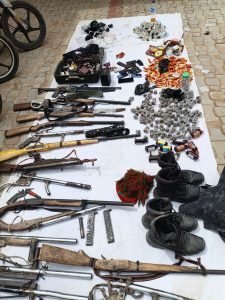
One fabricated AK-47 rifle

Ten rounds of live ammunition

Fourteen locally made dane guns

One locally made pistol

Eleven cutlasses

One axe

One jackknife

Two black boots

One set of CPG uniform

One box of charms

Ten GSM handsets of different types

Six cartridges for pump-action gun

On 29th April 2026 at about 1230 hours, following credible intelligence on the activities of a notorious armed bandits’ syndicate operating at Dan-Makulu Village via Banga District, Kaura Namoda LGA, a joint security operation was conducted.

The syndicate had been terrorizing innocent citizens, particularly along feeder roads between Kaura Namoda and Kasuwar Daji.

A combined team of Police operatives, personnel from Kasuwar Daji Outstation, and the Military carried out the operation, leading to the arrest of the suspect in possession of a fabricated AK-47 rifle and ammunition. A subsequent search of his residence led to the recovery of the listed exhibits.

Investigation is ongoing to apprehend other members of the syndicate and ensure their prosecution.

2. Arrest of Suspects with Large Quantity of Dry Leaves Suspected to be Indian Hemp

Suspects:

Abdullahi Idris

Ibrahim Harisu
(Both of Tudun Faila, Gusau)

Exhibits Recovered:

Two bags of dry leaves suspected to be Indian hemp

On 20th April 2026 at about 1830 hours, Police Riders attached to Central Police Station, while on visibility patrol at Tudun Faila, intercepted and arrested the suspects.

During interrogation, the suspects confessed to dealing in the substance. Investigation is ongoing to arrest other accomplices and prosecute those involved.

3. Recovery of Large Quantity of Illicit Drugs

Exhibits Recovered:

73 bottles of “Shutter”

116 pieces of rubber solution

12 empty bottles of codeine

3 scissors

On 2nd April 2026 at about 2200 hours, a Police patrol team raided a suspected drug hideout at Gangaren Gulbi area, Gusau, based on credible intelligence.

The above exhibits were recovered, while efforts are ongoing to apprehend members of the gang.

4. Arrest of “Yan Arlit” for Reckless Driving and Public Disturbance

Suspects:

Sani Aliyu (25 years)

Umar Lawali (17 years)

Abdulmalik Sani (22 years)

Exhibits Recovered:

Substances suspected to be marijuana

Ice pipes

One knife

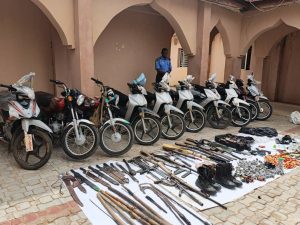
Nine motorcycles

Following complaints from the public regarding reckless driving and disturbances caused by “Yan Arlit” groups, the Command took decisive action.

Three suspects were arrested, while others fled, abandoning motorcycles.

Additionally, on 26th April 2026, Police responded to a distress call from Old Prison Yard, Tudun Wada, Gusau, where “Arlit Boys” caused public disturbance. Four motorcycles were recovered, and efforts are ongoing to arrest fleeing suspects.

5. Criminal Conspiracy and Assault

Suspects:

Wakala Ladan (60 years)

Sharhabilu Wakala (32 years)
(Both of Shiyar Liman, Damba)

Exhibits Recovered:

Cutlasses and sticks

On 16th April 2026 at about 1945 hours, the suspects attacked three victims using dangerous weapons.

Police responded promptly, restored calm, and ensured victims received medical attention. The suspects have been arrested and charged to court.

6. House Trespass and Theft – Recovery of Stolen Tricycle

Suspects:

Salisu Usman (22 years)

Abu Abubakar Ishaka (19 years)

Exhibit Recovered:

One tricycle

Following a theft report on 6th April 2026, Police оперативes acted swiftly, leading to the arrest of the suspects and recovery of the stolen tricycle.

Investigation is ongoing.

7. Criminal Conspiracy, Theft, and Receiving Stolen Property

Suspects:

Aminu Aliyu

Isah Ahmad

Sanusi Sabi’u

Exhibits Recovered:

22 different motorcycle keys

Operatives of the State Intelligence Department arrested the suspects at Labin-Labin Motor Park, Gusau.

The suspects confessed to involvement in motorcycle theft across Zamfara and Katsina States. One stolen motorcycle was recovered, while efforts are ongoing to arrest other accomplices.

Conclusion

The Zamfara State Police Command expresses deep appreciation to the Inspector-General of Police, IGP Olutunji Rilwan Disu, psc, npm, for his continued support and mentorship.

We also commend the Executive Governor of Zamfara State for unwavering support to security agencies.

We sincerely thank the good people of Zamfara State for their cooperation and timely provision of credible intelligence. We urge continued support as we intensify efforts to combat crime.

The Command assures all residents that it will continue to deploy all lawful measures to ensure the safety and security of lives and property across the state.

God bless the Federal Republic of Nigeria
God bless the Nigeria Police Force
God bless Zamfara State

Thank you.

SOKOTO FIRST LADY TAKES ON MATERNAL DEATHS WITH MASSIVE DRUGS DISTRIBUTION

From Muhammad Gazali Garba

The Wife of the Sokoto State Governor, Hajiya Fatima Ahmed Aliyu, has flagged off the distribution of sexual and reproductive health commodities, equipment, and essential medicines to health facilities across the state in a renewed drive to improve maternal and child healthcare services.

Speaking at the ceremony, Hajiya Fatima said the initiative reflects the state government’s continued commitment to safeguarding the health and wellbeing of women and children, particularly in rural communities.

She expressed gratitude to Almighty Allah for the opportunity to witness the commencement of the programme, describing it as a significant step towards strengthening healthcare delivery in the state.

“As a mother, I understand deeply what this moment represents. It gives me great pride to champion this initiative aimed at protecting our women and children,” she said.

The First Lady noted that the administration of Governor Dr Ahmed Aliyu has placed healthcare at the centre of its nine-point smart innovative agenda, stressing that sustainable development cannot be achieved without a healthy population.

She disclosed that the distribution covers sexual and reproductive health commodities, including family planning supplies, to 23 high-burden primary healthcare centres, alongside essential medicines to another 23 facilities across the state.

Hajiya Fatima urged health workers to remain dedicated to their duties and uphold professional ethics, while charging facility managers to ensure transparency and proper utilisation of the items.

“Any diversion or misuse of these items will attract appropriate sanctions,” she warned.

She also appealed to security agencies, traditional rulers, and community leaders to support the protection of the supplies and intensify sensitisation efforts on the importance of antenatal care and skilled hospital deliveries, especially in rural areas.

The First Lady further commended the First Lady of Nigeria, Senator Oluremi Tinubu, for her continued support in advancing maternal and child health interventions across the country.

In his remarks, the Commissioner for Health, Dr Umar Abubakar Wurno, said the initiative forms part of broader efforts to reduce maternal and infant mortality in Sokoto State.

He disclosed that over 150 primary healthcare centres have been constructed or renovated, while general and tertiary health facilities continue to receive sustained government attention. He added that delivery rooms have been upgraded and essential medical equipment and drugs supplied across facilities.

Dr Wurno, however, noted a gap in service utilisation, revealing that while 576 women attended antenatal care in 2025, only 18 per cent delivered in health facilities, underscoring the need for stronger community awareness and behavioural change.

He also explained that the government is implementing a standardised operational framework under the Basic Healthcare Provision Fund to enhance efficiency and service delivery at the primary healthcare level.

Also speaking, the Special Adviser on Primary Healthcare, Dr Bello Marnona, described the programme as a fulfilment of the governor’s campaign promise to revitalise the health sector.

He said Sokoto State currently has over 800 primary healthcare centres, 23 general hospitals, and tertiary institutions, noting that more than 2,000 health workers, including nurses and midwives, have been recruited and deployed, particularly to rural communities.

According to him, the administration’s approach focuses on strengthening infrastructure, expanding human resources, and ensuring a steady supply of essential medicines.

“Today is not just about distributing medicines; it is about restoring hope and building a healthcare system that serves every citizen, regardless of location,” he said.

The event marks another milestone in the state government’s ongoing efforts to strengthen healthcare delivery and improve maternal and child health outcomes across Sokoto State.

ADVANCING UNIVERSAL HEALTH COVERAGE IN SOKOTO

Governor Ahmed Aliyu of Sokoto state

By Sani Umar

Across many parts of Nigeria, the pursuit of accessible and affordable healthcare remains a defining challenge, particularly in states where rural populations face limited access to skilled medical personnel and modern facilities.

In Sokoto State, this reality has underscored the urgent need for deliberate reforms capable of strengthening the health system and improving outcomes, especially for vulnerable groups such as women and children.

It is against this backdrop that Governor Ahmed Aliyu has reaffirmed his administration’s firm commitment to transforming the healthcare landscape through strategic, people-centered policies aimed at achieving universal health coverage.

His renewed pledge came at the 8th Sokoto State Council on Health Meeting, where he outlined a comprehensive vision anchored on accessibility, affordability, and sustainability of healthcare services for all citizens.

At the heart of this vision is a clear recognition of existing healthcare challenges, particularly in maternal and child health. The Governor acknowledged the urgency of improving key health indicators and emphasized the deployment of targeted interventions designed to deliver measurable outcomes.

Accordingly, his administration’s approach reflects not only awareness of the gaps but also a determination to close them through deliberate and inclusive reforms.

A major highlight of the Governor’s strategy is the introduction of a two-year mandatory rural posting policy for nurses and midwives. This initiative is designed to bridge the longstanding disparity in healthcare delivery between urban centres and rural communities.

By ensuring that qualified health professionals serve in underserved areas, the policy directly tackles the shortage of skilled personnel where they are needed most. To reinforce this effort, the government has introduced a 10 percent rural allowance, a practical incentive aimed at boosting morale, encouraging retention, and enhancing service delivery in hard to reach locations.

Beyond human resources, the administration is making significant investments in healthcare infrastructure. The ongoing rehabilitation of 15 general hospitals and 160 primary healthcare centres underscores a large-scale commitment to modernising facilities and improving the quality of care. These projects are expected to expand access to functional and well-equipped medical centres, ultimately bringing healthcare closer to the people.

Complementing these infrastructural upgrades is an aggressive recruitment drive. The employment of over 1,400 nurses and midwives, alongside an additional 2,400 healthcare personnel dedicated to primary healthcare services, signals a decisive move to strengthen the system at its foundation. This expansion of the workforce is critical to building a resilient healthcare structure capable of meeting the growing demands of the population.

Financial commitment has also been a cornerstone of the administration’s strategy. By providing over ₦300 million in counterpart funding to development partners, the government is accelerating critical health interventions and reinforcing collaborative efforts toward universal health coverage. This investment reflects a broader understanding that sustainable healthcare reform requires both local commitment and strategic partnerships.

Governor Aliyu’s healthcare agenda is deeply embedded within his broader 9-Point Agenda, where the health sector occupies a central role. His administration continues to prioritise the revitalisation of primary healthcare, expansion of medical infrastructure, and continuous training of healthcare personnel.

Equally important is the emphasis on collaboration, bringing together government institutions, development partners, health professionals, and community stakeholders to ensure that reforms translate into real impact.

The commissioner for Health, Dr Faruku Umar Abubakar, who is driving these reforms described the council meeting as a vital platform for assessing progress and refining strategies. He highlighted ongoing reforms and innovative programmes that are strengthening service delivery and aligning the state’s health policies with the Governor’s vision.

Ultimately, the direction set by the Aliyu administration reflects a holistic and forward looking approach, one that prioritises the wellbeing of citizens while laying the foundation for long-term socio-economic growth. With sustained investment, strategic reforms, and inclusive collaboration, Sokoto State is steadily positioning itself on the path toward a more efficient, equitable, and responsive healthcare system.

RECOMMENDED NEWS

POPULAR