Home Blog Page 10

CP AHMAD MUHAMMAD BELLO, PSC+, MNIPS, RECEIVES COMMANDANT, MANAGEMENT TEAM, AND STUDENTS OF POLICE SECONDARY SCHOOL GUSAU ON COURTESY VISIT

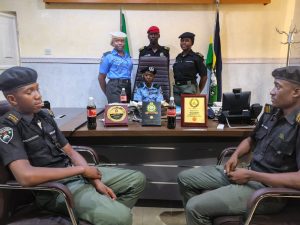
CP A. M Bello, psc+, mnips, the commissioner of police zamfara police command, on Monday, 11th May 2026, received the Commandant of Police Secondary School (PSS) Gusau, SP Alhaji Kabiru Gusau, alongside members of the school management team and students during a courtesy visit to the Command Headquarters in Gusau.

The delegation comprised the School O.C Works, DSP Ajai Mamza; Camp Commandant, ASP Hussaini Salisu; Senior Master, Joseph Zamani; Exam Officer, Nafisa Muhammad; and the Academic Librarian, Fadila Ibrahim. Also present were the Head Boy, Ngalia Alamin; the Head Girl, Chongt Gloria; alongside students from JSS1 to SS3.

During the visit, the Commissioner of Police advised the students to remain disciplined, focused, and dedicated to achieving their aspirations in life. He commended them for their patriotism and ambition, particularly those who expressed interest in joining the Nigeria Police Force in the future.

CP Bello further urged the students to uphold good moral values and serve as worthy ambassadors of their school and the Nigeria Police Force.

The Commissioner also appreciated the management of Police Secondary School Gusau for organizing what he described as a commendable and inspiring visit. He encouraged the staff to continue nurturing and mentoring the younger generation towards becoming responsible leaders of tomorrow.

The visit climaxed with the presentation of an award to the Commissioner of Police by the Commandant of PSS Gusau in recognition of his outstanding leadership, contribution to humanity, dedicated service to the nation, and support towards creating a conducive environment for education in the state.

DSP Yazid Abubakar, anipr
Police Public Relations Officer
For: Commissioner of Police,
Zamfara State Command, Gusau.

12th May, 2026

JOINT SECURITY TEAM CONDUCTS IED CLEARANCE OPERATION ALONG BAGEGA–ANKA ROAD

Following the unfortunate incident that occurred on 07/05/2026 at Tungar Kudaku and Bagega axis along the Bagega–Anka Road, where a Golf 3 vehicle conveying passengers from Bagega to Anka detonated an Improvised Explosive Device (IED) suspected to have been planted by bandits, the Zamfara State Police Command has intensified efforts to ensure the safety of residents in the affected area.

The tragic incident claimed the lives of six (6) persons, while another six (6) victims are currently receiving treatment at a medical facility.
This was contained in a press release by DSP Yazid Abubakar Anipr,the Zamfara state Police Public Relations Officer.
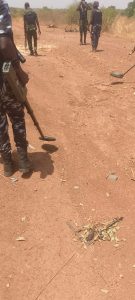
In response to the incident, the Command mobilized a joint clearance operation comprising Police EOD-CBRN , VCRU, and the Military to the affected locations.

During the operation, the joint security team implemented standard Explosive Ordnance Disposal (EOD) procedures and successfully conducted a thorough clearance of the area, after which the route was declared safe for public use.

Additionally, members of the affected communities were sensitized on safety measures and the appropriate steps to take in the event of any suspected explosive devices or explosive-related incidents. Residents were strongly advised to avoid touching suspicious objects and promptly report such discoveries to security agencies.

The Zamfara State Police Command reassures members of the public of its commitment, in collaboration with other security agencies, to combating all forms of criminality and ensuring the safety and security of lives and property across the state.

Laushi: The Honest Leader Jigawa Never Had the Chance to Call Governor

By Lamara Garba Azare

There are deaths that bring sorrow, and there are deaths that leave wounds too deep for words to heal. The tragic killing of Honourable Abba Anas Adamu, fondly known as Laushi, belongs to the latter. His gruesome murder after abduction by men of the underworld along the Kaduna–Abuja express road on Wednesday, 6th May 2026, has thrown family, friends, political associates, and the people of Jigawa State into mourning and disbelief.

Painfully, Laushi was abducted alongside another respected and innocent gentleman, Ali Gantsa, during the unfortunate incident. What made the tragedy even more heartbreaking was the cruel manner in which the abductors reportedly released his lifeless body to his own son after collecting ransom from the family. Such wickedness reflects the frightening depth of moral decay and insecurity confronting our society today.

As we continue to mourn Laushi, we equally pray for Ali Gantsa, who survived the horrifying ordeal and was released alongside the corpse of his friend and companion. May Allah make this traumatic experience an atonement for him, grant him strength and healing, and protect him from ever witnessing such pain again for the rest of his life.

For many of us who knew him closely, Laushi was not merely a political associate or acquaintance; he was a brother, confidant, and dependable companion whose life revolved around humanity, sincerity, and sacrifice. His death is painful not simply because a life was cut short, but because Nigeria has lost one of the few public figures who genuinely understood that leadership is a sacred responsibility and not an avenue for personal enrichment.

In a political environment polluted by greed, deception, and selfish ambitions, Honourable Abba Anas Adamu stood out as a rare symbol of honesty and accountability. He was a comrade, a Mallam, and a politician who played politics with the fear of Allah. His understanding of power was deeply rooted in service to humanity, justice, and societal progress.

Those who encountered him would easily testify to his humility and accommodating nature. His doors were always open to everyone regardless of status or political affiliation. He related with ordinary people with uncommon simplicity and treated everyone with dignity and respect. To the youth, he was a mentor. To the downtrodden, he was hope. To his colleagues, he was trustworthy. To many of us, he represented the kind of politics Nigerians have long prayed for.

Laushi’s political journey itself was a testimony of courage, popularity, and grassroots acceptance. He first emerged as Chairman of Guri Local Government under the platform of the PRP at a time when the party lacked the political machinery and financial strength to confront the ruling powers. Yet, because of his popularity and acceptance among the people, he single-handedly obtained the party’s nomination form and went ahead to defeat the mighty influence of the then ruling PDP in Jigawa State. That victory was not merely political; it was a reflection of the confidence and trust ordinary people reposed in him.

His remarkable performance and sincerity in leadership later earned him greater responsibilities. After defecting to the APP, he continued to build bridges across political divides through humility and service. Former Governor Saminu Turaki later appointed him Commissioner for Education and subsequently Commissioner for Environment, positions he handled with honesty, dedication, and uncommon accountability.

Beyond that, he also served as Executive Secretary of the State Emergency Management Agency (SEMA), where he devoted himself to assisting vulnerable communities and victims of hardship. His compassion for the less privileged was never cosmetic; it was natural and deeply rooted in his character.

Laushi later contested and won election into the House of Representatives under the platform of the PDP, representing the good people of Guri, Kirikasamma, and Birniwa Federal Constituency. His influence within the party also earned him the position of Secretary of the PDP in Jigawa State, where he played important roles in strengthening the party structure and promoting internal understanding among members.

Throughout his public service journey, Laushi distinguished himself as a man of integrity whose conscience could not permit him to betray public trust. Whether as council chairman, commissioner, federal lawmaker, or party administrator, he administered public resources with prudence and transparency.

What made him exceptional was not merely the positions he occupied, but the character he displayed while occupying them. He never saw public office as a means to accumulate wealth illegally. He never enriched himself fraudulently, nor was he associated with embezzlement of public funds. In fact, Laushi belonged to that disappearing generation of leaders who could return unspent government money after completing official assignments. At a time when many desperately seek office for personal gain, he remained content with honesty and accountability.

His greatest concern was always how to redefine leadership into genuine service to humanity. He strongly believed that leadership should improve lives, empower communities, and create opportunities for development. He envisioned a society where leaders would become servants of the people rather than masters over them. That conviction shaped his politics, his relationships, and his public life.

Indeed, Laushi possessed the qualities of a true statesman. He had the courage to speak truth, the humility to listen, and the sincerity to act in the interest of the people. Many who understood his vision often said he was among the best leaders Jigawa State never had the opportunity to elect as Governor. He carried the dreams of the ordinary people in his heart and pursued politics not for fame or wealth, but for impact and societal transformation.

His painful death once again exposes the growing insecurity confronting our nation, where innocent and promising lives are continually wasted by criminal elements. It is heartbreaking that a man who dedicated his life to peace, service, and humanity would meet such a cruel end at the hands of evil men. Yet even in death, his legacy remains stronger than the bullets and brutality that took him away.

Good men never truly die because their deeds continue to speak long after they are gone. The name Laushi will continue to resonate in the hearts of those he touched through kindness, honesty, and selfless service. His life has become a reminder that integrity still exists in leadership, even if only in very few individuals.

As we mourn this painful loss, we also celebrate a life well lived — a life defined by honour, compassion, accountability, and fear of God. Though his absence leaves a vacuum difficult to fill, his memory will continue to inspire those who believe that politics should be about service and not selfishness.

May Allah forgive the shortcomings of Honourable Abba Anas Adamu, reward his countless good deeds, and grant him Aljannatul Firdaus. May Allah comfort his family, friends, associates, and the entire people of Jigawa State during this difficult moment. And may Allah protect our society from the darkness of insecurity and violence that continues to rob us of our finest minds and brightest hopes.

Farewell, Laushi.

A brother has fallen.
A patriot has departed.
A servant leader has returned to his Creator.

Inna lillahi wa inna ilaihi raji’un.

Lamara Garba Azare is a former State Editor of the New Nigerian Newspapers in Jigawa State.

Sokoto Govt Committee Begins On-the-Spot Assessment of Old Market, Motor Park Fire Disasters

From Muhammad Gazali Garba

The committee constituted by the Sokoto State Government to investigate the immediate and remote causes of the recent fire incidents at the Old Market and Central Motor Park has carried out an on-the-spot assessment of the affected areas.

The committee, led by Barrister Gandhi Umar, visited both locations on Tuesday to inspect the level of destruction caused by the infernos and engage directly with affected traders,and other stakeholders in order to obtain firsthand information on the circumstances surrounding the outbreaks.

Speaking during the visit, the chairman explained that shortly after the incidents, the Governor of Sokoto State, Dr. Ahmad Aliyu Sokoto, visited the affected areas to sympathize with victims and assess the extent of the damage. He subsequently constituted a nine-member committee to conduct a detailed investigation into both the immediate triggers and underlying causes of the disasters.

Barrister Gandhi Umar noted that the committee’s mandate is to ensure a thorough, transparent, and fact-based investigation that would help prevent a recurrence of such incidents in the future.

Barrister Gandhi assured victims that the committee would carry out its assignment diligently before submitting its findings and recommendations to the state government.

He further appealed to victims to ensure that only genuinely affected persons are included in the list of beneficiaries, warning against the inclusion of individuals who were not affected by the fire incidents.

According to him, the committee has resolved to carry out a shop-to-shop verification and enumeration exercise to guarantee accuracy, fairness, and transparency in documenting affected traders and business owners.

Barrister Gandhi Umar also commended the efforts of Governor Ahmad Aliyu Sokoto for his prompt response and concern shown to victims of the disasters.

He said the governor’s immediate visit to the affected areas and the establishment of the committee demonstrated the administration’s commitment to the welfare of the people and its determination to address the challenges faced by victims.

He added that only those genuinely affected by the fire disasters would benefit from any assistance or relief that may be provided by the government. He therefore appealed to victims and members of the public to avoid giving false information or making fraudulent claims, stressing that honesty and cooperation are necessary to ensure the success and credibility of the exercise.

Barrister Gandhi Umar further stated that although the government may not be able to fully compensate all losses suffered by victims, it remains committed to providing relief and support to cushion the hardship caused by the disasters.

The committee equally called on members of the public and relevant stakeholders to cooperate by providing useful information that could assist in the investigation.

The fire incidents reportedly destroyed several shops, goods, and other valuable properties, leaving many traders and business owners counting huge losses.

CP A.M BELLO, PSC+, MNIPS, HOLDS TOWN HALL MEETINGS IN KAURA NAMODA, FEGIN MAHE, AND FEGIN KANAWA; PAYS WORKING VISIT TO FEDERAL POLYTECHNIC KAURA NAMODA, REAFFIRMS COMMITMENT TO TACKLING INSECURITY

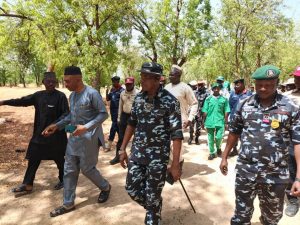
CP A.M Bello, psc+, mnips, Commissioner Of police, Zamfara police command, held town hall meetings with critical stakeholders and members of the public in Kaura Namoda Local Government Area, as well as Fegin Mahe and Fegin Kanawa communities in Gusau Local Government Area, as part of ongoing efforts aimed at building trust, strengthening the security architecture, and enhancing collaboration between the Police and the community.

During the engagements, the Commissioner of Police emphasized the importance of community participation in policing activities. He noted that security is everybody’s responsibility and called on residents to continue supporting security agencies with credible and timely information that would assist in combating criminal activities across the state.

As part of the visit, the CP paid a courtesy visit to His Royal Highness, Sarkin Kiyawa Kaura Namoda, Dr. Sanusi Muhammad Ahmad Asha, FCNA, where issues relating to the security situation in Kaura Namoda and its environs were extensively discussed.

The traditional ruler commended the efforts of the Police Command in addressing security challenges and assured the CP of continued support and cooperation from the community.

The Commissioner of Police also conducted an operational visit to the Federal Polytechnic Kaura Namoda, where he assessed the institution’s existing security architecture with a view to improving safety measures and providing a conducive environment for learning and academic activities.

Furthermore, the CP extended his operational assessment tour to Fegin Mahe and Fegin Kanawa communities, where he reassured residents of the Command’s unwavering commitment and readiness to decisively deal with bandits and their collaborators threatening peace and security in the area.

CP Bello reiterated the resolve of the Zamfara State Police Command to sustain aggressive operations against criminal elements and urged members of the public to remain law-abiding and vigilant at all times.

DSP Yazid Abubakar, anipr,
Police Public Relations Officer.
For: Commissioner Of Police,Zamfara State Command,
Gusau.

11/05/2026

GOVERNOR AHMAD ALIYU BIDS FAREWELL TO FIRST BATCH OF SOKOTO STATE PILGRIMS

The farewell ceremony, according to the Faruku Umar, Head of Information and Communications of the PWA, which took place at the Sultan Abubakar III International Airport, Sokoto, was attended by the State’s Amirul Hajj and Leader of the State Government Delegation Honourable Minister of Labour and Productivity Alhaji Muhammad Maigari Dingyadi, Permanent Secretary of the Agency Alhaji Ibrahim Umar JJ government officials,management members of the State Pilgrims Welfare Agency.
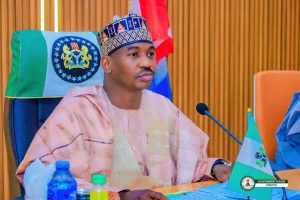
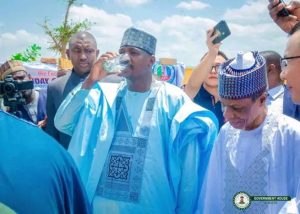
Represented by his Deputy, Alhaji Idris Muhammad Gobir, the Governor congratulated the intending pilgrims for being among those chosen by Almighty Allah to perform the sacred pilgrimage this year.

In his farewell address, Governor Ahmad Aliyu urged the pilgrims to be good ambassadors of Sokoto State and Nigeria by conducting themselves with discipline, patience and fear of Allah throughout their stay in the Holy Land.

He advised them to remain law-abiding, respect the rules and regulations guiding the Hajj exercise and devote themselves to prayers for peace, unity and prosperity of Sokoto State and the nation at large.

The Governor further assured the pilgrims of his administration’s continued support towards ensuring a successful and hitch-free Hajj operation, while commending the Sokoto State Pilgrims Welfare Agency for the arrangements put in place for the welfare and comfort of the pilgrims.

He also prayed for Allah’s guidance and protection upon the pilgrims and wished them a safe journey as well as successful completion of their religious obligations.

Speaking earlier, the Amirul Hajj for the 2026 Hajj exercise and Honourable Minister of Labour and Productivity, Alhaji Muhammad Maigari Dingyadi, congratulated the intending pilgrims on the opportunity granted to them by Allah to perform Hajj.

He urged them to maintain unity, patience and mutual understanding throughout the pilgrimage and to comply with all directives issued by officials and Saudi authorities for the success of the exercise.

The Amirul Hajj also called on the pilgrims to pray fervently for Sokoto State, Nigeria and its leaders, while wishing them safe journey and accepted Hajj.


NIGERIA’S POLITICS OF CONFORMISM

By Sani Umar

Since the return of the country to a multi-party democratic system in 1999, after years of military rule, elections have been held and won by candidates of different political parties. Nigerians trooped out in large numbers with hope and enthusiasm, believing that democracy would usher in accountability, justice, development, and freedom of expression. For many citizens, the end of military dictatorship marked the beginning of a new era where leaders would emerge through the will of the people rather than the barrel of the gun.

These successful candidates were elected by the people to represent them as members of the State and National Assemblies. Governors and Presidents have also emerged through electoral processes that, despite imperfections, gave citizens a sense of participation in governance. What initially began as a democratic experiment gradually blossomed into a political culture that attracted people from different backgrounds and interests. Politics became the new route to prominence, influence, and power.

However, over the years, many Nigerians have become increasingly disillusioned with the country’s democratic experience. What was once celebrated as government of the people has, in the eyes of many citizens, become a system dominated by political opportunists, moneybags, and power brokers who see politics not as service, but as investment. Elections are now often viewed less as contests of ideas and competence, and more as battles of financial strength and political manipulation.

The dream of a people-oriented democracy has steadily given way to a politics of conformism, where loyalty to powerful interests is rewarded more than integrity, competence, or ideological conviction. Many politicians simply align themselves with the prevailing centres of power, abandoning principles and public interest for personal survival and political convenience. Defections from one political party to another have become common, not because of ideological differences, but because of access to power and resources.

One of the greatest setbacks to Nigeria’s democracy is the near absence of clear political manifestos and ideological direction among political parties. In many established democracies, parties are distinguished by policies and principles that guide governance.

In Nigeria, however, parties often appear indistinguishable from one another. Politicians easily move from one party to another without having to explain any major differences in beliefs or programmes. This has weakened democratic accountability and reduced politics to mere competition for power.

Closely related to this is the lack of internal democracy within political parties. Party primaries are frequently manipulated to favour preferred candidates imposed by influential individuals. Aspirants with credibility, competence, and grassroots support are often sidelined because they lack financial strength or powerful political connections. The voices of ordinary party members are suppressed, while decisions are made by a few individuals behind closed doors.

The influence of so called political godfathers has further complicated the democratic process. These powerful individuals often determine who gets nominated, elected, or politically recognised. Their influence extends beyond elections into governance itself, where elected officials sometimes become more accountable to their sponsors than to the electorate. As a result, governance becomes transactional, and public offices are treated as rewards for loyalty rather than responsibilities for public service.

This unhealthy political culture has made it difficult for capable and honest individuals to emerge as leaders. Many Nigerians with genuine intentions are discouraged from participating in politics because they cannot compete with entrenched interests backed by enormous financial resources. Consequently, the majority of citizens, many of whom are trapped in poverty and economic hardship, remain politically marginalized and underrepresented.

Perhaps the saddest irony of Nigeria’s democracy is that many of those who fought courageously for democratic rule now express disappointment over the state of the nation. During the dark years of military dictatorship, pro-democracy activists, journalists, students, labour leaders, and civil society groups risked everything to challenge authoritarian rule. Many endured imprisonment, harassment, torture, and exile. Others paid the supreme price in the struggle for freedom and democratic governance.

The media, in particular, played a heroic role during that period. Newspapers and magazines critical of military regimes were shut down, while journalists were hunted and detained. Yet the press refused to surrender. Determined to keep the flame of resistance alive, journalists resorted to what became known as guerrilla publishing- an underground method of publishing and distributing newspapers secretly to evade state repression. It was a dangerous undertaking, but one driven by patriotism and belief in a better Nigeria.

Today, many of those veterans of the democratic struggle lament that the current democratic order falls far short of their expectations. Their common refrain “this is not what we bargained for”, reflects the frustration of millions of Nigerians who expected democracy to improve their lives. Instead, many citizens continue to grapple with poverty, unemployment, insecurity, corruption, and poor governance despite over two decades of uninterrupted civilian rule.

Yet, despite its imperfections, democracy remains better than military dictatorship. The challenge, therefore, is not to abandon democracy, but to deepen and reform it. Nigeria must build strong institutions capable of resisting manipulation by powerful interests.

Political parties must embrace internal democracy and develop clear ideological visions. Elections must reflect the genuine will of the people, while public office holders must understand that leadership is a trust, not a business venture.

Above all, citizens themselves must refuse to normalize mediocrity, corruption, and political conformity. Democracy can only thrive when the people remain vigilant and demand accountability from those in power.

The future of Nigeria’s democracy depends not only on politicians, but also on the courage of citizens to defend democratic values and insist on leadership driven by service, competence, and integrity rather than greed and opportunism.

CP AHMAD MUHAMMAD BELLO RECEIVES JUMRAWA COMMUNITY LEADERS, REAFFIRMS COMMITMENT TO TACKLING SECURITY CHALLENGES

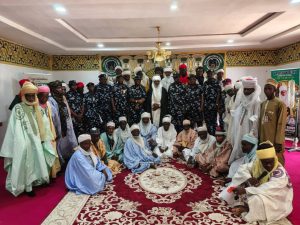
The Commissioner of Police, Zamfara State Command, CP Ahmad Muhammad Bello, psc+, mnips, today received members of the Jumrawa community under Kaura Namoda Local Government Area, led by Malam Muktari Jumrawa, at the Command Headquarters.

The visit was aimed at discussing the prevailing security challenges affecting the area and to seek stronger collaboration with the Police and other security agencies in addressing criminal activities within the community.

This was contained in a press release by DSP Yazid Abubakar, anipr,Zamfara state Police Public Relations Officer

Speaking during the meeting, the leader of the delegation, Malam Muktari Jumrawa, appreciated the efforts of the Zamfara State Police Command under the leadership of CP Ahmad Muhammad Bello in the ongoing fight against banditry and other forms of criminality across the State. He commended the Command for its commitment, resilience, and proactive measures toward restoring peace and stability in affected communities.

In his remarks, the Commissioner of Police assured the delegation of the Command’s unwavering commitment to safeguarding lives and property across the State. He emphasized the importance of community partnership, intelligence sharing, and collective responsibility in combating insecurity.

CP Ahmad Muhammad Bello further urged members of the public to continue supporting security agencies with timely and credible information that would aid in preventing and responding effectively to criminal activities.

The Command reiterates its resolve to sustain aggressive operations against all forms of crime and criminality in Zamfara State.

INVESTING IN NUTRITION: A PATHWAY TO A HEALTHIER AND MORE PRODUCTIVE SOKOTO

Gov. Ahmed Aliyu, Sokoto State

By Sani Umar

Nutrition remains one of the most critical, yet often underappreciated, pillars of human development. It forms the bedrock upon which healthy societies are built, influencing everything from physical growth and cognitive development to economic productivity.

Across developing regions, malnutrition continues to pose a serious threat, particularly among vulnerable groups such as children, adolescents, and pregnant women. Addressing this challenge is not merely a public health priority, it is a developmental imperative.

In Nigeria, the burden of malnutrition is both widespread and deeply consequential. It weakens immune systems, increases vulnerability to disease, and contributes significantly to child mortality.

Beyond its health implications, malnutrition undermines educational attainment and diminishes workforce productivity, ultimately slowing economic growth. For states like Sokoto, where demographic pressures intersect with socio-economic realities, investing in nutrition represents one of the most cost effective pathways to sustainable development.

It is against this backdrop that strategic partnerships have become indispensable in the fight against malnutrition. One such enduring collaboration is between Nutrition International and the Sokoto State Government.

During a recent visit to Governor Ahmed Aliyu on May 5, 2026, the organization’s Country Director Dr Osita Okonkwo, reaffirmed its commitment to improving nutrition outcomes in the state, while also acknowledging the government’s sustained dedication to the wellbeing of its people.

Since 2007, this partnership has steadily evolved, anchored in a shared vision of building a healthier and more productive population. Over the years, measurable progress has been achieved through targeted interventions aimed at improving the nutritional status of children and mothers. These efforts reflect a long-term commitment to addressing one of the region’s most pressing public health challenges.

A major highlight of this collaboration is the annual distribution of approximately 2.1 million Vitamin A capsules to children under five during Maternal, Newborn and Child Health Week. This intervention, valued at over ₦100 million annually, plays a vital role in reducing child morbidity and mortality. Vitamin A supplementation is widely recognized for strengthening immunity and lowering the risk of severe infections, making it a cornerstone of child survival strategies.

In addition, Nutrition International has intensified efforts to combat diarrhoeal diseases, a leading cause of death among young children. Between 2022 and 2025, the organization supported the distribution of 126,000 Zinc and Oral Rehydration Salts (ORS) co-packs across the state. More recently, an additional 45,000 co-packs were procured to further strengthen treatment capacity at the community level. These life saving commodities are currently available thus, reinforcing the healthcare system’s ability to respond effectively.

At the occasion, Governor Ahmed Aliyu outlined a series of strategic nutrition and healthcare interventions aimed at improving child survival and overall health outcomes in Sokoto State. Central to these efforts is a ₦100 million investment in child survival initiatives, with a commitment to expand such programmes through partnerships with development organizations. The Governor underscored that these investments are critical to giving every child a fair start in life and strengthening the state’s healthcare system.

In addition, the administration has introduced a two-year mandatory rural posting policy to ensure equitable distribution of healthcare workers. This has led to the deployment of over 1,500 nurses and midwives to underserved areas, supported by incentives to encourage rural service, alongside the recruitment of 2,400 Community Health Workers to boost staffing at primary healthcare centres. He reaffirmed that prioritizing the wellbeing of women, children, and vulnerable groups, particularly through tackling malnutrition and childhood diseases, remains key to building a healthy, productive population in Sokoto State.

These achievements have been made possible through strong partnerships and sustained international support, particularly from the Government of Canada through Global Affairs Canada. Such collaborations underscore the importance of global solidarity in addressing local challenges, especially in critical sectors like public health and nutrition.

Looking ahead, the focus is on expanding coverage and ensuring that no eligible child is left behind. With additional funding support from GiveWell, efforts are underway to scale up Vitamin A supplementation across all communities in Sokoto State. This ambitious initiative aligns with the broader objective of reducing the high rates of stunting highlighted in the 2023 National Demographic and Health Survey.

Ultimately, the fight against malnutrition requires a coordinated and sustained approach. It demands political will, strategic investment, and active community engagement. Sokoto State’s ongoing collaboration with Nutrition International stands as a compelling example of what can be achieved when these elements come together. By prioritizing nutrition today, the state is laying a solid foundation for a healthier, more resilient, and economically vibrant future.

RESTORING LIFE THROUGH WATER: SOKOTO’S JOURNEY FROM SCARCITY TO SUSTAINABILITY

By Sani Umar

Water is the very essence of life. From the earliest forms of existence to the complexities of modern civilization, access to clean and safe water has remained fundamental to human survival. Every cell in the human body depends on water to function properly, supporting digestion, regulating temperature, and sustaining overall health. Without it, life as we know it would cease to exist.

Beyond human needs, water is equally indispensable to animals and plants. Livestock rely on it for survival and productivity, while crops depend on it for growth and yield. In agriculture-based societies, especially across northern Nigeria, water is not merely a resource, it is the backbone of food security and rural livelihoods. The absence of reliable water sources often translates directly into hunger, poverty, and displacement.

Water also plays a critical role in environmental balance and public health. Clean water prevents the spread of diseases, supports sanitation, and ensures dignified living conditions. Conversely, inadequate water supply leads to outbreaks of waterborne illnesses, strains healthcare systems, and diminishes quality of life. It is within this broader context that the significance of sustainable water infrastructure becomes unmistakably clear.

It was against this backdrop that Governor Ahmed Aliyu assumed office in Sokoto State in May 2023, inheriting what could best be described as an intractable water crisis. The situation on ground was dire. Decades old infrastructure had collapsed under the weight of neglect, vandalism, and lack of maintenance. Water works that once served the metropolis had become largely non-functional, reduced to relics of a system that had long ceased to deliver.

The Sokoto Water Works, a facility over 40 years old, was practically moribund. Critical machines for water treatment and distribution had either broken down or been stripped away. Large transmission pipes installed decades earlier were either damaged or completely removed. The result was a city where dry taps had become the norm, forcing residents to rely on unsafe and expensive alternative sources.

Governor Aliyu’s early response underscored both urgency and intent. His first official visit after inauguration was to the State Water Board, a symbolic and strategic move that revealed the priority his administration placed on addressing the crisis. However, as interventions began, it became evident that the scale of decay was far deeper than initially anticipated. What appeared to be a technical challenge soon revealed itself as a structural collapse requiring comprehensive rebuilding.

The administration’s efforts, as reflected in recent developments, show a deliberate and multi-layered strategy. One of the most significant steps has been the allocation of N6 billion to revamp the aging Sokoto Water Works. This investment is not merely about repairs; it represents a systemic overhaul aimed at restoring functionality to a critical public utility that had long been abandoned.

Complementing this is the expansion of alternative water sources. The completion and energizing of 31 solar-powered boreholes across Sokoto metropolis and its environs signal a pragmatic response to Nigeria’s persistent electricity challenges. By reducing reliance on the erratic power supply from the Kaduna Electricity Distribution Company (KAEDCO), the government is ensuring more consistent water availability while embracing sustainable energy solutions.

In addition, the installation of a 4.2-megawatt solar power project marks a transformative shift in the state’s water infrastructure. With components such as lithium batteries, inverters, and over 10,000 solar panels, the initiative is designed to provide uninterrupted power to water intake, treatment, and distribution systems. This approach directly addresses one of the core bottlenecks that historically crippled water supply in the state, energy instability.

Security, often an overlooked aspect of public utilities, has also been integrated into the reform strategy. By engaging the services of Jedo Security Firm to safeguard water facilities, the government is taking proactive steps to prevent vandalism and ensure the longevity of its investments.

Beyond immediate interventions, the administration has demonstrated a forward looking commitment through the revival of abandoned water schemes. Initially confronted with widespread deterioration, including vandalized equipment and obsolete pipelines, the government returned to the drawing board and opted for a more comprehensive solution. The decision to rehabilitate six major water schemes at a cost of N14.1 billion reflects a recognition that piecemeal fixes would not suffice.

These schemes, located at Old Airport, Tamaje, Mana, Runji Sambo, Gagi, and Ruggar Liman, are expected to deliver a combined 40 million gallons of water per day upon full completion. Early successes, particularly at the Old Airport and Tamaje sites, have already begun to ease the burden on residents. The commissioning of these projects, attended by prominent governors, not only validates the initiative but also highlights its regional significance.

The broader narrative here is one of resilience and recalibration. Governor Ahmed Aliyu’s administration entered office with a clear promise under its 9-point smart agenda to tackle water scarcity. While initial progress provided some relief, the discovery of deeper systemic failures required a shift in strategy, from quick fixes to long-term infrastructure renewal.

In many ways, the unfolding efforts illustrate the complexity of governance in sectors long plagued by neglect. Restoring water supply is not simply about turning taps back on, it involves rebuilding institutions, securing infrastructure, ensuring sustainable energy, and maintaining accountability. The Sokoto experience demonstrates how deeply intertwined these elements are.

As the state moves closer to achieving round-the-clock water supply, the impact on public health, economic activity, and social stability is expected to be profound. Access to clean water will reduce disease burden, support small-scale enterprises, and restore dignity to households that have endured years of scarcity.

Ultimately, the journey from crisis to recovery in Sokoto’s water sector is still ongoing. Yet, the scale and direction of current interventions suggest a decisive break from the past. If sustained, these efforts could redefine water access in the state and serve as a model for addressing similar challenges elsewhere.

RECOMMENDED NEWS

POPULAR