Home Blog Page 25

Sokoto Govt Distances Governor Ahmed Aliyu From Viral Car Gift To TikToker

From M G Gazali

The Sokoto State Government has officially dissociated Governor Ahmed Aliyu from a viral car and shop donation made to a Kaduna-based TikToker, Rahama Saidu, clarifying that the gesture was not carried out in the name of the governor or the state government.

In a statement issued on Sunday by the Director General, Media and Publicity, Government House, Sokoto, Abubakar Bawa, the government explained that the donation, which was captured in a video widely circulated on social media, was a personal act by one Sanin Jaman.

According to the statement, Sanin Jaman described the donation as a private gesture made in appreciation of Rahama Saidu’s support and admiration for the Ahmed Aliyu-led administration.

However, the government stressed that neither Governor Ahmed Aliyu nor the Sokoto State Government had any involvement in the matter.

The statement categorically clarified that the donation was strictly a personal arrangement between the donor and the beneficiary and should not be linked to the governor or the activities of the state government. “I want to make it categorically clear that the said donation has nothing to do with Governor Ahmed Aliyu or the Sokoto State Government.

It was purely personal between the two individuals involved—the giver and the beneficiary,” the statement said.

The government further warned individuals against making donations or carrying out actions in the name of the governor or the Sokoto State Government without proper consultation, noting that there are established and more impactful channels for philanthropic support that directly benefit the people of the state.

The statement noted that the Ahmed Aliyu-led administration remains open to genuine support from well-meaning individuals and organisations, particularly in areas aligned with the government’s nine-point Smart  agenda.

These priority areas include tackling insecurity, promoting moral values, supporting vulnerable groups such as orphans, widows and persons living with disabilities, youth empowerment, environmental sanitation, education and healthcare delivery.

The government also drew attention to the plight of displaced persons affected by banditry and other security challenges, both within the metropolis and in rural communities, stressing that many of them remain in urgent need of assistance despite ongoing government interventions.

While acknowledging the efforts already made by the state government, the statement urged wealthy individuals and corporate organisations to complement these initiatives in a structured manner that aligns with government programmes and policies.

The statement reaffirmed the commitment of the present administration to improving the welfare and well-being of citizens, especially the needy and other vulnerable groups, and called for responsible and coordinated support that contributes meaningfully to the development of Sokoto State.

Tambuwal Community Slams Ex-Sokoto PDP Gov, Hails ₦1.5bn Mega Schools Plan

Stakeholder in Tambuwal Local Government Area of Sokoto State have criticised the immediate past governor, Aminu Waziri Tambuwal, accusing his eight-year administration of failing to deliver meaningful democratic dividends to the people.

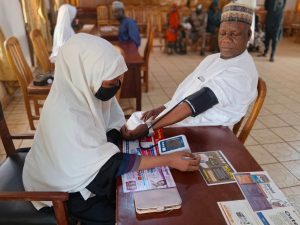
Sokoto Pilgrims Board Lauds Ongoing Pilgrims’ Health Screening

The Sokoto State 2026 Hajj Medical Team has been hailed for their commitment, dedication and professionalism.

The commendation was made by the Permanent Secretary of the Sokoto state Pilgrims Welfare Agency, Alhaji Ibrahim Umar JJ.

According to the Director Information and Communications of the Board, Faruku Umar, Alhaji Ibrahim Umar JJ made the commendation today while monitoring the screening exercise at the Specialist Hospital, Sokoto, noting that the process was orderly and in line with required medical standards for Hajj operations.

The Permanent Secretary reiterated the satisfaction of the Chairman of the Agency, Alhaji Aliyu Musa, as well as that of the Board members, Management, and staff of the Agency with the progress recorded so far in the screening exercise.

He called on all intending pilgrims who are yet to undergo the mandatory health screening to do so promptly, stressing that no intending pilgrim will be issued a visa by the Saudi Arabian authorities without a valid medical certificate.

Earlier, while briefing the Permanent Secretary, the Team Leader of the Medical Team, Dr. Bello Abubakar Attahiru, disclosed that the team has successfully covered all the 23 Local Government Areas of the state.

Dr. Attahiru described the exercise as successful and commended the Sokoto State Pilgrims Welfare Agency for its continuous support, which he said contributed significantly to the smooth conduct of the screening.


SOKOTO STATE: A HALF-CENTURY OF CHANGE AND DEVELOPMENT


By Bello Shehu Tamaje

Sokoto State, fifty years after its creation, stands as one of Nigeria’s most historically significant and culturally grounded states, whose journey reflects both the promise and the challenges of national development. From its early days as a vast administrative territory carved out in 1976, Sokoto has undergone profound political, social and economic transformations that continue to shape its identity today.

The evolution of the state has been closely tied to its role as the seat of the Sokoto Caliphate, a centre of Islamic scholarship and traditional authority, while modern state institutions have gradually expanded in areas such as education, healthcare, infrastructure and economic empowerment. Over the decades, successive administrations have sought to balance respect for tradition with the demands of contemporary development.

Created on 3rd February 1976 from the defunct North-Western State, Sokoto emerged as a modern political entity already weighted with centuries of influence as the seat of the Sokoto Caliphate, a civilisation renowned for learning, justice, administration, and trans-Saharan trade. That inheritance has shaped the state’s worldview, values, and aspirations over the past fifty years, anchoring modern governance in a deep tradition of scholarship and leadership.

The early years of Sokoto State were defined by institution building under military administration. The pioneer military governor, Police Commissioner Usman Faruk, presided over the difficult but necessary task of setting up ministries, departments, and agencies, establishing the civil service, and giving the new state administrative coherence. His successors consolidated these foundations, maintained public order, and ensured continuity during periods of national uncertainty. The last of the military administrators, Group Captain Rufai Garba DanAsabe, handed over a streamlined and functioning bureaucracy to civilian rule of Governor Attahiru Bafarawa in 1999.

Governance during this era focused largely on stability, modest infrastructure expansion, and rural administration, even as national economic pressures limited ambition. Two major historical moments tested Sokoto’s resilience: the creation of Kebbi State in 1991 and Zamfara State in 1996. These developments significantly reduced Sokoto’s territorial size and economic base, yet successive administrations managed the transitions, asset redistribution, and civil service realignment without institutional collapse. By 1999, Sokoto had been politically seasoned and administratively intact.

Civilian rule brought a different tempo. Alhaji Shehu Kangiwa, the state’s first civilian governor, established a culture of moderation, consensus, and respect for institutions. His tenure emphasised education, agriculture, and public infrastructure, while the later emergence of Alhaji Shehu Aliyu Shagari as Nigeria’s President elevated Sokoto’s national stature and pride, reinforcing its historical role as an administrative and moral centre.

Between 1999 and 2007, Alhaji Attahiru Dalhatu Bafarawa focused on rebuilding democratic institutions, expanding education, and strengthening local government administration at a time when the Fourth Republic itself was still fragile. From 2007 to 2015, Alhaji Aliyu Magatakarda Wamakko left a visible physical imprint through extensive road construction, expansion of educational and health facilities, and social welfare interventions that reshaped both urban and rural landscapes.

Aminu Waziri Tambuwal’s tenure as Governor of Sokoto State 2015–2023 attempted to focus no some reforms but without results.His administration made some investments in education and healthcare. However, his time in office was often overshadowed by perceptions that he prioritized national political ambitions, including his eventual presidential pursuits, over the immediate needs and development of Sokoto. Many residents believed that opportunities to accelerate state transformation were missed, leaving a mixed legacy of reform efforts tempered by unfulfilled expectations.

Under the leadership of Governor Ahmed Aliyu, education has remained a cornerstone of the state’s growth agenda. The government has constructed more than 140 new classrooms and renovated several others across the state, providing improved learning environments for students. These efforts include the provision of boreholes for clean water, sanitation facilities and school fencing to enhance safety and hygiene.

Teacher training and retraining programmes have been implemented across all local government education authorities to strengthen instructional quality. These investments form part of a broader commitment to human capital development, reflecting the administration’s belief that education is central to long-term progress.

Healthcare delivery has equally witnessed renewed attention. Primary healthcare centres across the state are being upgraded with solar-powered facilities, improved maternity wards and essential medical supplies. More nurses and midwives have been recruited and deployed to underserved communities, expanding access to maternal and child health services. The government has also invested significantly in maternal care programmes, including the distribution of medical kits and the expansion of outreach services, contributing to improved antenatal attendance and better outcomes for mothers and newborns.

Infrastructure development remains a visible marker of Sokoto’s transformation. Road construction and rehabilitation projects now link metropolitan and rural communities more effectively, enhancing mobility and stimulating local commerce. Urban renewal initiatives in Sokoto metropolis, alongside new housing projects in areas such as Gidan Salanke, Wajake and Sokoto New City, are gradually reshaping the physical outlook of the state and addressing housing needs for a growing population.

Agriculture, long the backbone of Sokoto’s economy, has also experienced renewed focus. Irrigation schemes, including the expansion of the Kware Irrigation Project, now support year-round farming of rice, vegetables and other staples, strengthening food security and farmer incomes. The distribution of modern farming equipment, fertilizer and water pumps to rural communities has improved productivity.

Peace and security, recognised as prerequisites for development, have been reinforced through sustained support for security agencies and the establishment of community-based security structures to enhance grassroots intelligence and response. These measures have helped to improve stability in vulnerable areas.

As Sokoto marks a half-century of existence, its story is one of steady transformation shaped by history, leadership and the aspirations of its people. The strides recorded in education, healthcare, infrastructure, agriculture and digital inclusion demonstrate what purposeful governance can achieve when guided by clarity of vision and disciplined implementation.

The road ahead will demand sustained commitment to climate resilience, industrial growth and inclusive economic policies. Governor Ahmed Aliyu’s development blueprint, anchored on his 9-Point Smart Innovative Agenda, provides a framework for consolidating past gains while preparing the state for future challenges. With emphasis on security, human capital development and infrastructure, the agenda seeks to position Sokoto on a path of equitable and sustainable growth.

UN Secretary-General Condemns Killings Of 170 In Kwara

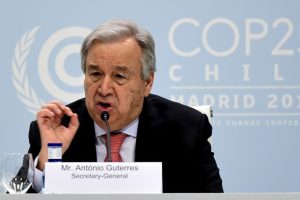
United Nations Secretary General António Guterres

The Secretary-General of the United Nations, António Guterres, has condemned the terrorists attack in Kwara State which claimed 170 lives.

On Tuesday, terrorists launched a deadly attack on Woro community in Kaiama Local Government Area of Kwara State, resulting in the death of the victims, as several other persons were declared missing.

In a statement issued on Thursday, Stéphane Dujarric, Spokesman to the Secretary-General, reaffirmed the United Nations’ solidarity with Nigeria and its support for the government’s efforts to combat terrorism.

The statement reads, “The Secretary-General conveys his heartfelt condolences to the families of the victims and to the people and Government of Nigeria. He wishes a speedy recovery to the injured.

“The Secretary-General reiterates the solidarity of the United Nations with the Government and people of Nigeria in their efforts to fight terrorism and violent extremism and stresses the importance of bringing the perpetrators to justice.”


AFFORESTATION AS VEGETATION COVER AGAINST DESERTIFICATION

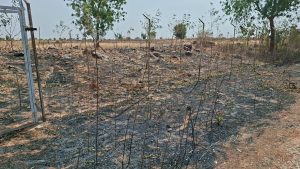
Burnt shelter belt

By Sani Umar

Tree planting is as old as human existence. Trees are planted to beautify the environment and to provide shelter and fruits for consumption. In fact, human life is closely complemented by trees, flowers, and plants. The vegetation cover provided by plants and trees makes them indispensable to human survival, as they regulate climate, protect the soil, and sustain both human and animal life.

Societies that live in tropical regions have historically maximized the use of trees and plants more than those in other climatic zones. Across the world, the value of vegetation differs according to environmental conditions and patterns of human settlement.

Nevertheless, the importance of trees and plants as natural endowments cannot be overemphasized, as they serve as a buffer against harsh weather conditions and environmental degradation.

In recent times, afforestation has evolved from a traditional practice into a deliberate public policy in many countries, including Nigeria. Governments and environmental agencies now recognize tree planting not merely as an aesthetic exercise but as a strategic response to climate change, soil erosion, and desertification.

In Northern Nigeria, where erosion and desert encroachment have become increasingly prevalent, afforestation has assumed greater urgency as a tool for safeguarding farmlands, settlements, and sources of livelihood.The steady advance of the desert and the loss of fertile land have posed serious threats to food security and rural stability in the Northern Nigeria.

Consequently, both federal and state governments have introduced afforestation and reforestation programmes aimed at restoring vegetation cover and checking the spread of desertification. These initiatives also seek to promote environmental awareness among communities, encouraging citizens to see tree planting as a collective responsibility rather than a government obligation alone.

In Sokoto State, these policy commitments have been translated into concrete actions. The state government has launched large-scale annual tree-planting campaigns across the 23 local government areas, distributing hundreds of thousands of seedlings to communities, schools, markets, and public institutions.

In collaboration with the National Agency for the Great Green Wall (NAGGW), shelter belts and green corridors have been established in desert-prone areas such as Goronyo, Gudu, Sabon Birni, and Illela to reduce wind erosion and protect farmlands and settlements from desert encroachment.

Furthermore, the Sokoto State Government has announced ambitious plans to plant up to one million trees as part of a long-term strategy to combat land degradation and strengthen environmental sustainability. The state has also committed counterpart funding to the Agro-Climatic Resilience in Semi-Arid Landscapes (ACReSAL) project, a programme designed to restore degraded lands, expand vegetation cover, and enhance climate resilience in northern Nigeria.

These initiatives reflect a coordinated effort to integrate environmental protection with agricultural productivity and rural development.

Regrettably, however, these efforts and the resources committed to mitigating land degradation and protecting the environment are being undermined by the activities of some unscrupulous individuals who persistently engage in the destruction of shelter belts and newly planted trees. Trees are felled and, in some cases, shelter belts are deliberately set ablaze for the purpose of obtaining firewood and other domestic materials.

Over the years, public enlightenment campaigns on the dangers of indiscriminate tree felling have largely fallen on deaf ears, as those bent on sabotaging afforestation schemes continue to act with impunity. Although laws have been enacted to curb these harmful practices, their impact has remained limited, largely due to weak enforcement.

It was against this troubling backdrop that Governor Ahmed Aliyu expressed deep dismay and disappointment during his recent visit to Wurno Local Government Area. What he encountered was a clear case of blatant and willful destruction of shelter belts and trees, many of which had either been felled or set ablaze. His swift directive for the immediate investigation and prosecution of those responsible underscored the seriousness with which his administration views the protection of afforestation projects and environmental assets.

Beyond environmental protection, afforestation plays a critical role in addressing the broader challenges of climate change and sustainable development. Tree planting improves soil fertility, reduces carbon emissions, and supports agricultural productivity, which remains the backbone of the state’s economy. It also aligns with Nigeria’s commitments under international climate frameworks and the Sustainable Development Goals, particularly those related to climate action, food security, and ecosystem preservation.

Sokoto State’s renewed emphasis on afforestation and environmental management therefore represents not only a response to desertification but also a strategic investment in long-term development. By strengthening enforcement, expanding public education, and sustaining community participation, the state can safeguard its natural environment while ensuring that present and future generations benefit from a healthier and more resilient ecosystem.

Bauchi At Fifty: A State That Learned to Become

.

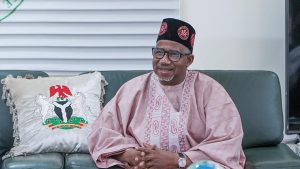
Gov. Bala Mohammed, Bauchi State

By Lamara Garba Azare

Bauchi was not born in silence. On the third day of February 1976, it arrived with the quiet dignity of history unfolding, carved out of the old North Eastern State, not merely as a political entity but as a promise. A promise that people mattered. A promise that governance could be closer to the heartbeat of the land. A promise that a place shaped by savannah winds, ancient footsteps, and resilient souls deserved its own name and destiny.

In those earliest days, the founding leaders stood before an unformed canvas. There were no clear roads, only directions. No settled institutions, only intentions. Men like Mohammed Bello Kaliel and the first set of military administrators did not inherit comfort. They inherited responsibility. With discipline and restraint, they laid the skeletal frame of a state yet to find its voice. Ministries were formed, public service took its first breath, and order was introduced where uncertainty once loomed. Their service was not loud, but it was consequential. They held Bauchi together when it was most fragile, and history must remember them not for what was absent, but for what they preserved.

Then came the gentle dawn of civilian rule and with it the reassuring presence of Abubakar Tatari Ali. His leadership spoke directly to the soul of the people. Roads stretched outward as symbols of connection, farms rose as declarations of self belief, industries emerged as statements of confidence, and Bauchi began to imagine itself beyond survival. He governed with faith in possibility and left behind a lesson that development is not only measured in concrete and steel, but in hope restored and dignity affirmed.

The years that followed were long and demanding. Military administrators came and went, each carrying the weight of stewardship in difficult times. Mohammed Sani Sami, Chris Abutu Garuba, Joshua Madaki, Abu Ali, Wing Commander James Yana Kalau, Rasheed Adisa Raji, Theophilus Bamigboye and Abdul Adamu Mshelia each, in their own seasons, kept the machinery of governance alive. These were years of holding the centre, of completing water projects so thirst would not rule, of strengthening hospitals so life could be preserved, of nurturing sports and social cohesion so the human spirit would not be crushed. Bauchi learned patience in those years. It learned that progress does not always arrive with celebration, but often with quiet persistence.

The brief return of democracy in the early nineties under Dahiru Mohammed rekindled hope, only for it to be interrupted again. Yet the idea of civilian choice never died. It waited patiently in the consciousness of the people. And when it returned in 1999, it returned with purpose.

Ahmadu Adamu Muazu’s era marked a turning point that still echoes across the state. Schools multiplied, classrooms filled, enrolment soared, and Bauchi found itself counted among Nigeria’s strongest performers in education. Roads stitched communities together, water flowed where scarcity once reigned, electricity reached villages long forgotten by the grid, and healthcare gained renewed attention. His leadership proved that when people are placed at the centre of policy, development responds naturally. Many families still live inside the outcomes of those years, sometimes without knowing the names of the policies that made them possible.

Isa Yuguda and Mohammed Abdullahi Abubakar governed in times shaped by complexity. Economic pressure, national uncertainty, and rising security concerns tested the limits of leadership. Yet governance continued. Roads were maintained, institutions sustained, and the state was kept standing when the ground beneath Nigeria often felt unsteady. Their stewardship reminded the people that leadership is not always about expansion, but about preservation, about ensuring that the house does not collapse while waiting for renovation.

Today, under Bala Mohammed, Bauchi speaks again in the language of renewal. Roads are being rebuilt not just as infrastructure but as arteries of opportunity. Schools are being restored, health facilities revived, urban spaces reimagined, and economic empowerment extended to women and youths who for too long stood at the margins. Investment summits invite the world to see Bauchi differently, not as an afterthought, but as a land of promise. His leadership reflects a belief that governance must listen, that peace must be cultivated, and that development must feel human.

As Bauchi marks fifty years, this is not merely a roll call of leaders. It is a collective tribute. To those who laid foundations when there was little applause. To those who governed in difficult seasons without surrender. To those who expanded opportunity and those who protected stability. To civil servants who kept institutions alive, teachers who shaped minds in overcrowded classrooms, farmers who planted hope in stubborn soil, and communities who believed that this state belonged to them.

As Bauchi steps into the future, it does so with memory in its hands and hope in its eyes. The past has spoken through sacrifice, the present breathes through responsibility, and the future waits for courage. What remains certain is this: Bauchi has never been defined by the ease of its journey, but by the strength of its will. From those who laid the first stones to those who now carry the torch, the story continues not as an echo of yesterday, but as a call to tomorrow. And as long as its people believe in the dignity of service, the power of unity, and the promise of becoming better than before, Bauchi will not merely endure. It will rise, again and again.

Lamara Garba Azare, a veteran journalist, writes from Kano

Sokoto Governor Orders Probe into Burning of Shelter Belt in Wurno

From M G Gazali

Sokoto State Governor, Dr. Ahmed Aliyu, has directed security agencies to investigate and apprehend those responsible for the recent burning of the shelter belt in Wurno Local Government Area of the state.

The governor described the act as “dangerous and unacceptable,” noting that it poses a serious threat to the environment and agricultural productivity in the area.

The Governor gave the directives today in Wurno during the flag-off of the sale and distribution of fertiliser for the 2026 dry season farming.

Speaking at the event, Dr. Aliyu emphasised the importance of protecting shelter belts, which serve as vital barriers against wind erosion, help conserve soil moisture, and improve crop yields for local farmers.

He said the government will not tolerate illegal cutting down of trees and urged community leaders and residents to remain vigilant and support security agencies in identifying and bringing the perpetrators to justice. “We cannot allow acts that undermine our agricultural development and threaten food security in the state,” he added.

Governor Aliyu also reiterated the state government’s commitment to modernising agriculture in Sokoto.

He assured farmers that more initiatives would be introduced to provide quality inputs, improve irrigation systems, and offer technical support to ensure increased productivity during both the rainy and dry seasons.

He further stressed the need for collective responsibility, calling on farmers, local communities, and government officials to work together in protecting natural resources. “The protection of our environment is not only the duty of the government but also of every citizen.

Together, we can safeguard our lands, conserve our forests, and secure the future of farming in Sokoto State,” he said.

The flag-off event also saw the distribution of fertiliser to farmers at subsidised rates, aimed at boosting dry season farming and ensuring food sufficiency across Sokoto State.

Governor Aliyu encouraged farmers to take advantage of the initiative and assured them of the state government’s continued support in enhancing agricultural productivity.

Gov. Aliyu Flags Off ₦3bn Fertiliser Sale for Dry-Season Farming

From M G Gazali

Sokoto State Governor, Dr Ahmed Aliyu, has flagged off the sale of 102 trucks of fertiliser valued at ₦3 billion to farmers across the 23 local government areas of the state, as part of efforts to boost agricultural productivity and support dry-season farming.

Sokoto Government Receives Judicial Commission Report On Eight Years of Tambuwal’s Administration

From MG Gazali

The Sokoto State Government on Tuesday formally received the report of the judicial commission of inquiry set up to investigate the activities of the immediate past administration of former Governor Aminu Tambuwal.

Receiving the report on behalf of the state government, Governor Ahmed Aliyu commended the commission for its diligent, impartial, and evidence-driven work.

He emphasized that the establishment of the commission was not intended as an act of vendetta, nor to settle political scores.

“The purpose of this commission has always been to promote accountability, reinforce good governance, and ensure that every public office holder understands the need for transparency in managing state resources,” Governor Aliyu said.

He assured that the state government would carefully review the report and its recommendations, promising to take appropriate actions within the framework of the law. “We will use the findings to strengthen fiscal discipline, reform public financial processes, and prevent future mismanagement,” the governor added.

To ensure a structured and transparent response, Governor Aliyu announced that a White Paper Committee, composed of people of proven integrity, would be assigned to examine the commission’s findings in detail and produce a white paper. The document is expected to outline the government’s position on each finding, recommend specific actions, and serve as a public record of the state’s response.

“The handover of this report, along with the forthcoming white paper, marks critical steps in ensuring that Sokoto State continues to uphold the principles of accountability and good governance,” Governor Aliyu added.

Speaking before presenting the report,Justice Mu’azu Pindiga, Chairman of the Commission, said the panel conducted its work with the highest degree of professionalism and impartiality. “We carried out thorough investigations, verified documents, and heard testimonies from officials and stakeholders to ensure that our findings were fair, accurate, and evidence-based,” he stated.

The chairman further disclosed that the commission’s work revealed allegations of financial mismanagement amounting to over ₦117 billion during the eight-year tenure of the former administration. The panel highlighted breaches of financial regulations, questionable contract awards, and instances of non-compliance with due process in public expenditure, improper sales of government assets and other financial irregularities, all of which were carefully examined and verified by the commission.

Justice Pindiga emphasized that the commission’s mandate was to provide clarity and accountability, not to target any individual politically. He noted that the work involved extensive examination of official records, contracts, and public accounts to ensure that all conclusions were supported by concrete evidence.

The commission’s work, which began nearly three years ago, included public hearings and meticulous scrutiny of all financial and administrative activities of the Tambuwal administration.

RECOMMENDED NEWS

POPULAR