

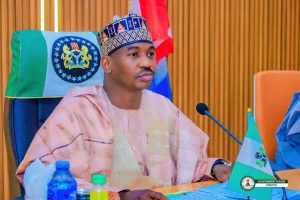
Sokoto State Governor, Dr Ahmed Aliyu, has reaffirmed his administration’s unwavering commitment to transforming the healthcare sector through strategic policies aimed at achieving universal health coverage for all citizens.
Speaking at the opening ceremony of the 8th Sokoto State Council on Health Meeting, themed _“Accelerating Universal Health Coverage through the Implementation of the Health Component of the 9-Point Agenda of the Governor of Sokoto State,”_ Governor Aliyu stated that his administration remains resolute in improving access to quality, affordable, and sustainable healthcare services across the state.
The Governor described the council meeting as an important platform for reviewing the state’s health sector performance, assessing progress made, and formulating practical strategies to address pressing healthcare challenges.
He noted that his administration is fully aware of the current health indices in the state, particularly in the areas of maternal and child health, and is committed to implementing targeted interventions that will significantly improve healthcare outcomes.
As part of efforts to ensure equitable healthcare delivery across Sokoto State, Governor Aliyu disclosed that his administration has introduced a two-year mandatory rural posting policy for all nurses and midwives.
According to him, the policy is designed to address the shortage of skilled healthcare personnel in rural communities, strengthen healthcare services in underserved areas, and ensure that residents in remote locations have access to qualified medical professionals.
He further revealed that healthcare workers deployed to rural areas under the policy are entitled to an additional 10 percent rural allowance on their salaries as an incentive to encourage commitment, boost morale, and enhance effective service delivery in hard-to-reach communities.
Governor Aliyu emphasised that this incentive package demonstrates his administration’s dedication to supporting frontline health workers while promoting equitable distribution of healthcare services across both urban and rural areas.
The Governor also revealed that, as part of ongoing efforts to revamp the healthcare sector, 15 general hospitals are currently undergoing comprehensive rehabilitation, alongside 160 primary healthcare centres across the state.
He explained that these large-scale rehabilitation projects are aimed at upgrading healthcare infrastructure, improving the quality of medical services, and ensuring that citizens across Sokoto State have better access to modern healthcare facilities.
Governor Aliyu said his administration has employed over 1,400 nurses and midwives to strengthen healthcare service delivery across the state.
He added that an additional 2,400 healthcare personnel were specifically employed for primary healthcare centres, in a major effort to address workforce shortages and improve healthcare delivery at the grassroots level.
According to the Governor, the recruitment drive is part of his administration’s broader commitment to building a resilient healthcare system capable of meeting the growing health needs of Sokoto State’s population.
*Governor Aliyu further disclosed that his administration has committed over ₦300 million as counterpart funding to development partners to scale up health interventions and fast-track the attainment of universal health coverage in the state.*
He noted that the health sector occupies a central position in his administration’s 9-Point Agenda, emphasising that quality healthcare delivery is essential to the socio-economic development of Sokoto State.
He explained that his administration has continued to prioritise the revitalisation of primary healthcare centres, expansion of medical infrastructure, recruitment and training of healthcare personnel, and implementation of policies that will strengthen healthcare services at all levels.
Governor Aliyu further stressed the importance of collaboration among government agencies, development partners, health professionals, and community stakeholders in ensuring the successful implementation of universal health coverage initiatives.
He reiterated that the state government remains committed to addressing critical health challenges, improving maternal and child healthcare, combating preventable diseases, and ensuring that even the most vulnerable populations have access to essential health services.
Governor Aliyu urged participants at the meeting to engage in productive deliberations that would generate practical solutions for advancing healthcare delivery in line with his administration’s vision.
He also reaffirmed his resolve to sustain investments in the health sector as part of broader efforts to improve the wellbeing of the people and build a healthier, more prosperous Sokoto State.
In his remarks, the Sokoto State Commissioner for Health, Dr Faruku Umar Abubakar, described the council meeting as a critical platform for reviewing progress made in the health sector and charting a more effective path toward achieving universal health coverage in the state.
Dr Faruku stated that the Ministry of Health has continued to implement key reforms and innovative healthcare programmes designed to strengthen service delivery, improve health outcomes, and align the state’s health policies with the broader objectives of Governor Aliyu’s 9-Point Agenda.
He commended the Governor for his strong political will and sustained support for the health sector, noting that such commitment has significantly boosted healthcare interventions, infrastructural development, and the overall performance of the state’s medical services.
The Commissioner further emphasised the need for stronger partnerships among healthcare institutions, development organisations, and community leaders to effectively address emerging health challenges and ensure equitable healthcare access for all residents of Sokoto State.
Representatives of the World Health Organization, United Nations Population Fund, and UNICEF delivered goodwill messages, commending the Sokoto State Government for its sustained commitment to healthcare development and implementation of policies geared toward achieving universal health coverage.
The development partners praised Governor Aliyu’s healthcare initiatives, particularly efforts aimed at strengthening primary healthcare systems, improving maternal and child health services, and expanding access to essential medical care for vulnerable populations.
They reaffirmed their organisations’ continued support and readiness to collaborate with the Sokoto State Government in implementing sustainable health programmes, capacity building initiatives, and strategic interventions that will further enhance healthcare delivery across the state.
The representatives also stressed the importance of sustained investments, data-driven decision-making, and multi-sectoral collaboration in addressing public health challenges and ensuring long-term improvements in health outcomes for the people of Sokoto State.
The meeting brought together key stakeholders in the health sector, policymakers, development partners, and government officials to review progress, exchange ideas, and develop actionable strategies for strengthening Sokoto State’s healthcare system.