

Monday December 15, 2025
By Sani Umar
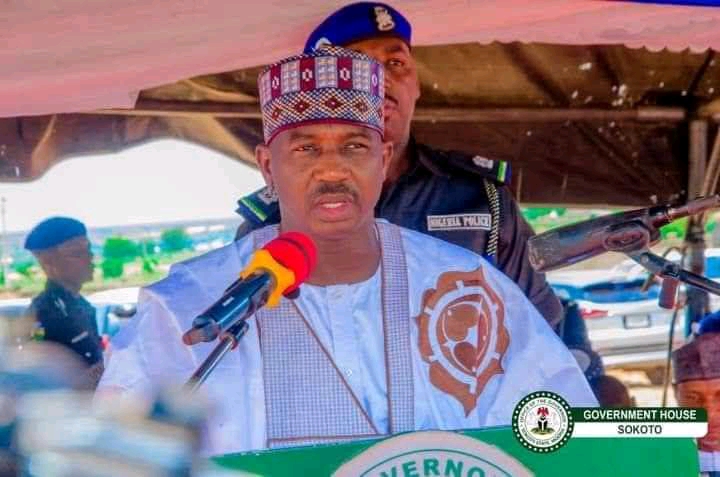
In an era when public trust is earned through results rather than rhetoric, the administration of His Excellency, Dr. Ahmed Aliyu Sokoto, FCNA, has steadily carved a reputation defined by substance, compassion, and deliberate investment in human capital. Within just two years, his government has pursued a far reaching education and student focused agenda that speaks not only to access and infrastructure, but also to dignity, inclusion, and the future competitiveness of Sokoto State.
From the very first days of the administration, education was treated as an emergency and a priority. One of the earliest interventions was the release of funds to clear registration and tuition obligations for Sokoto State students at Usmanu Danfodiyo University, Sokoto, including payments initiated immediately after the swearing-in of the government.
This commitment, according to the Special Adviser on Students Affairs, Abubakar Salame, has been sustained across academic sessions, ensuring that no student is denied access to classrooms due to financial hardship. Similar interventions included the payment of tuition fees for students of Shehu Shagari College of Education, Sokoto, affiliated with Ahmadu Bello University, Zaria, and Usman Danfodio University thereby reinforcing the administration’s resolve to safeguard uninterrupted learning.
Beyond local institutions, Governor Ahmed Aliyu extended decisive support to Sokoto students studying outside the state and even beyond Nigeria’s borders. Medical students in Sudan, Ukraine relocated students at Baze University, postgraduate students across several countries, and students in India benefited from tuition payments, accommodation support, feeding allowances, visa renewals, and structured plans for settling verified liabilities. These interventions sent a clear message, that Sokoto State does not abandon its children, regardless of where knowledge takes them.
Professional and career-defining pathways were also carefully nurtured. Law students received registration support alongside the provision of computer sets, while medical and engineering students benefited from continuous allowances designed to ease the intensity of their demanding training. WAEC and NECO fees were paid annually for both indigene and non-indigene students, reflecting a governance philosophy anchored on equity rather than exclusion.
Recognizing that access to education begins long before university admission, the administration made bold moves in pre tertiary preparation. The purchase and distribution of JAMB and Direct Entry forms, combined with structured pre-JAMB training and sensitization programmes, the first of their kind in Sokoto State helped demystify examinations and expand opportunity for thousands of prospective candidates. Special attention was also given to IJMB candidates through the payment of application fees, further widening alternative routes to higher education.
Governor Ahmed Aliyu’s education agenda has not been limited to fees and forms; it has been matched with heavy investment in infrastructure and learning environments. Across tertiary institutions, funds were released to restore electricity supply, repair water systems, rehabilitate hostels, renovate academic departments damaged by fire or natural disasters, and reconstruct structures affected by windstorms and erosion. Drainage systems were constructed, landscapes were beautified, libraries furnished, and essential books supplied to colleges and polytechnics across the state.
Not only that, accreditation and quality assurance received equal attention. Programmes at Shehu Shagari College of Education, Sokoto State University, Sultan Abdurrahman College of Health Technology, Gwadabawa, and other institutions underwent accreditation exercises backed by timely government funding. Over ten thousand NCE certificates were produced at Shehu Shagari College of Education alone, unlocking academic progression for graduates who might otherwise have been stalled.
Female education and welfare featured prominently in the administration’s priorities. Two-storey hostel buildings for female students were completed or funded at Gwadabawa and SSCOE, strengthening safety, dignity, and access for young women pursuing higher education. Convocations at colleges of nursing, legal and Islamic studies were supported, reinforcing institutional pride and academic culture.
Human capacity development extended beyond students to staff and administrators. ICT personnel across tertiary institutions received targeted training, while safety sensitization programmes were conducted in partnership with the Federal Road Safety Commission. Vehicles essential for institutional operations were repaired, and monthly cash allocations to the supervising ministry were restored to ensure administrative stability.
Perhaps most telling is the humane dimension of Governor Ahmed Aliyu’s approach. Students affected by drug abuse were rehabilitated and reintegrated, while students with disabilities received free education within and outside the state, and over four hundred students were supported to conduct research projects across sciences, social sciences, arts, and medical disciplines.
Entrepreneurship centres across state owned tertiary institutions were upgraded, aligning education with employability and innovation.
Taken together, these interventions form more than a checklist of achievements; they reveal a coherent philosophy of governance, one that sees education as the foundation of security, prosperity, and social cohesion. Governor Ahmed Aliyu’s student-centred policies demonstrate that meaningful leadership is not always loud, but it is always felt in the lives it transforms.
In just two years, Sokoto State has witnessed a quiet but profound reset of its education sector, one rooted in responsibility, foresight, and an unshakable belief that when you invest in students, you invest in the destiny of the state itself.